













Suggested Searches

Stratospheric Aerosol and Gas Experiment (SAGE)

The Stratospheric Aerosol and Gas Experiment, SAGE, is a series of instruments designed by NASA to observe stratospheric ozone, aerosols, and water vapor from space. In the mid-1980s, scientists realized there was a problem with Earth’s protective coat of ozone...it was thinning. The SAGE family of instruments was pivotal in making accurate measurements of the amount of ozone loss in Earth’s atmosphere and helped leaders around the world institute an international treaty banning products containing harmful chemicals that destroy stratospheric ozone. SAGE is a key part of NASA’s mission to provide crucial, long-term measurements that will help humans better understand and care for Earth’s atmosphere.

SAGE III/ISS Science Highlight

Updated status on stratospheric aerosols using recently released public data from SAGE III/ISS

Figure 1 below shows the bulk of the stratospheric aerosol layer around 10S latitude with slightly larger amounts in the Southern Hemisphere. This spatial distribution has been similar since early 2022 following the eruption of the Hunga Tonga–Hunga Haʻapai volcano in January 2022. However, Figure 2 shows that the core of the layer was actually refreshed somewhat by the eruption of Ruang in April 2024. This variable, but somewhat consistent, enhancement of the stratospheric aerosol layer compared to the first part of the SAGE III/ISS mission (2017) has produced a less than 1% shading of the Earth’s surface. Though small, it is non-negligible when balancing the energy budget of the Earth system, especially when examining changes in greenhouse gas contributions on these time scales.
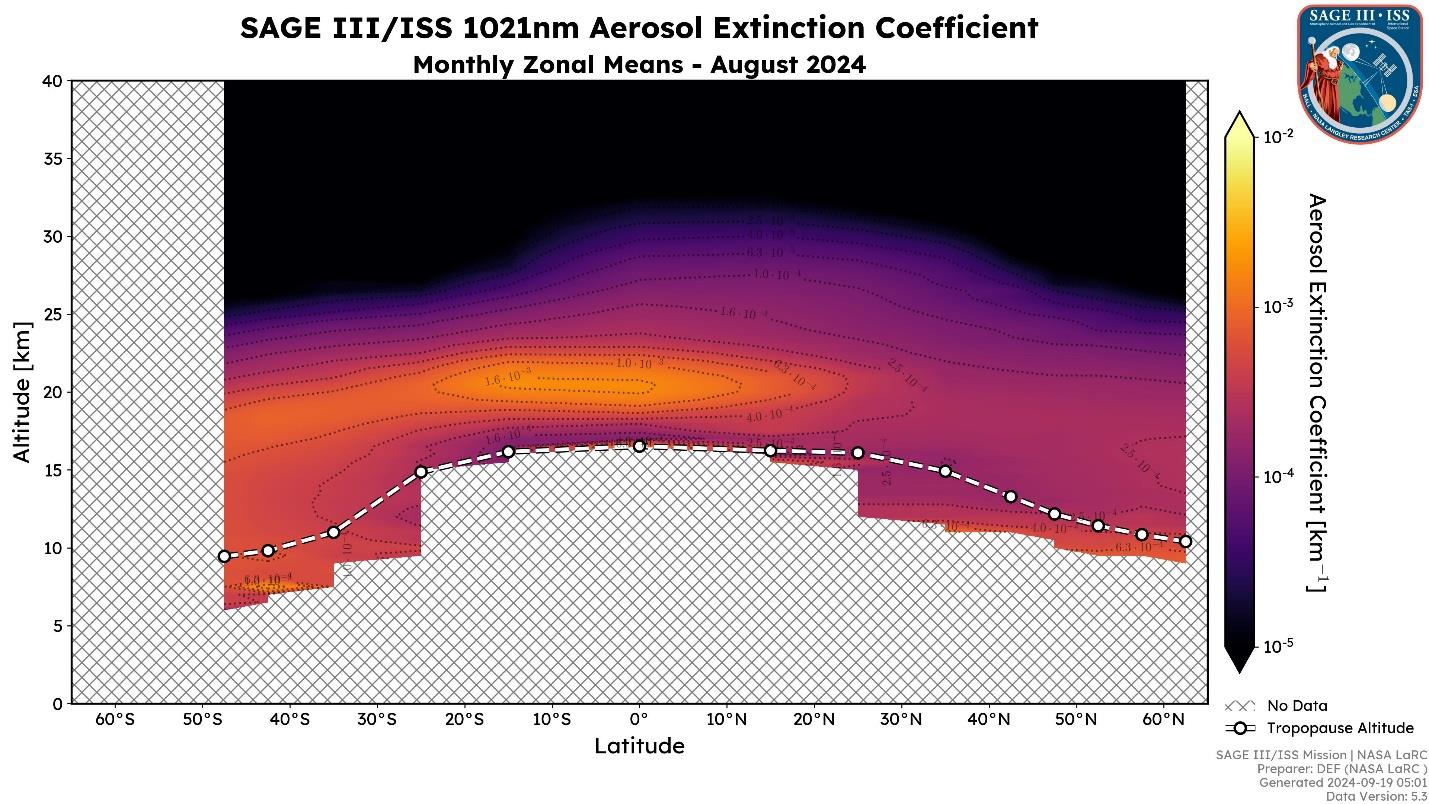
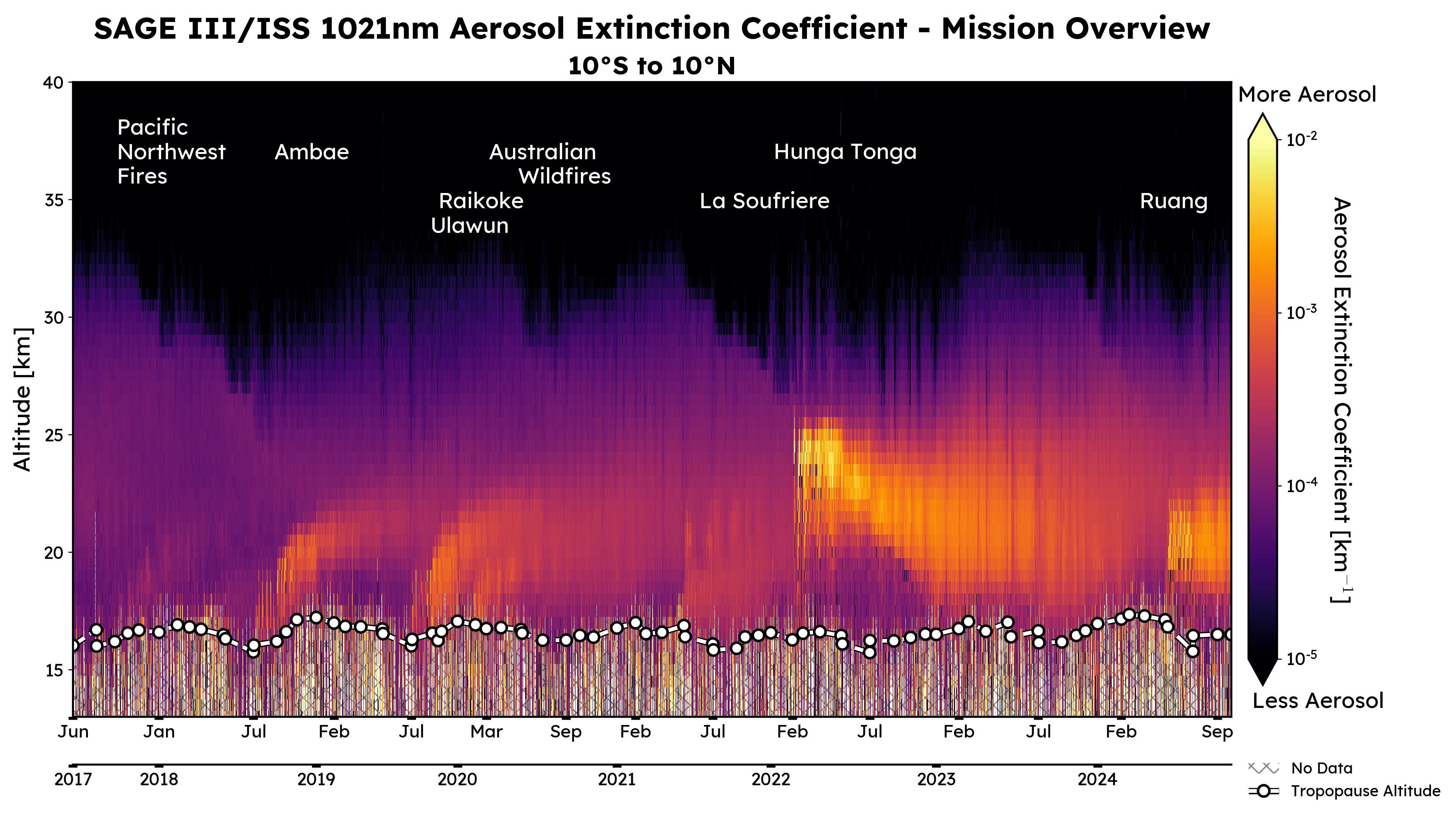
Figure 1: Latitude – altitude cross-section of SAGE III/ISS stratospheric aerosol extinction coefficient for August 2024.

Figure 2: Aerosol extinction time series for tropics during the SAGE III/ISS mission. Most notable recent events are January 2022 eruption of Hunga Tonga and April 2024 eruption of Ruang.