























Helio and You: August 2026
Here on Earth, we're lucky to get total solar eclipses from time to time. But did you know that eclipses can happen on other worlds, too? Find out all about eclipses on Earth and elsewhere.
Studying Eclipses Near and Far
What is an Eclipse?
Every so often, people on Earth get the chance to experience a total solar eclipse. Recent examples include the eclipses that swept across North America in 2017 and 2024 and the one that visited Spain and other parts of Europe and Canada in August 2026. These celestial events happen somewhere on the planet about every 18 months or so, and any given spot on Earth experiences a total solar eclipse only every few hundred years. For this reason, many people travel hundreds or even thousands of miles to see them in person.
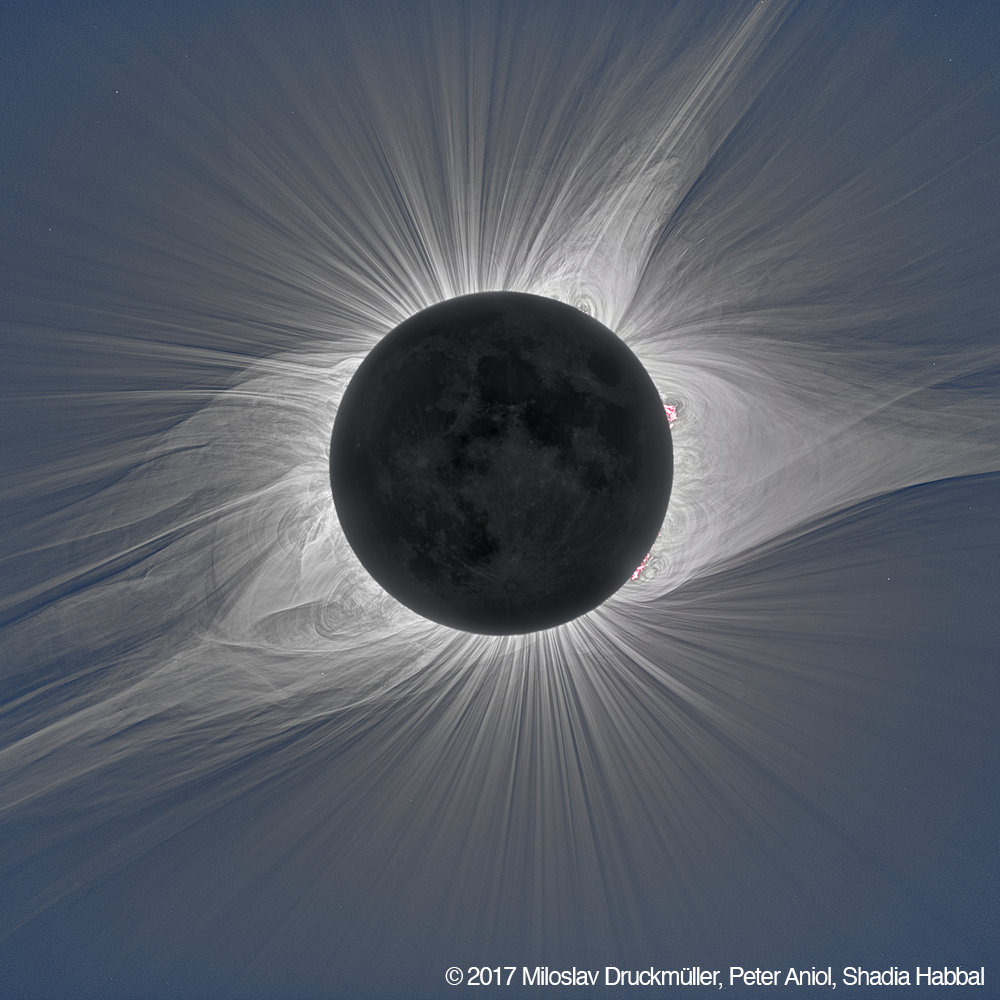
An eclipse happens when the Moon passes directly between the Sun and Earth, blocking the Sun’s light for a short time. This allows those in the path of the Moon's fullest shadow (which is called totality) to experience unique lighting conditions that resemble 360-degree sunrise or sunset. Animals may also behave strangely during these eclipses, and scientists can study those responses.
The Moon is just the right size (about 400 times smaller than the Sun) and just the right distance away from the Earth (about 400 times closer than the Sun) to perfectly block the Sun when it comes between the Sun and Earth. With the bright photosphere (surface of the Sun) blocked by the Moon, observers are able to see the Sun’s wispy outer atmosphere (the corona). This is actually how the corona was discovered in the first place!
But Earth is not the only planet with eclipses. Any time a moon or planet goes between a star and an observer (called a transit), the object passing in front of the star eclipses part of that star’s light. Any planet with a moon large enough, round enough, and with the right distance to size ratio compared to the local star could have total solar eclipses like ours. So, what would the eclipses be like on these other planets?
Do Other Planets Get Eclipses, Too?
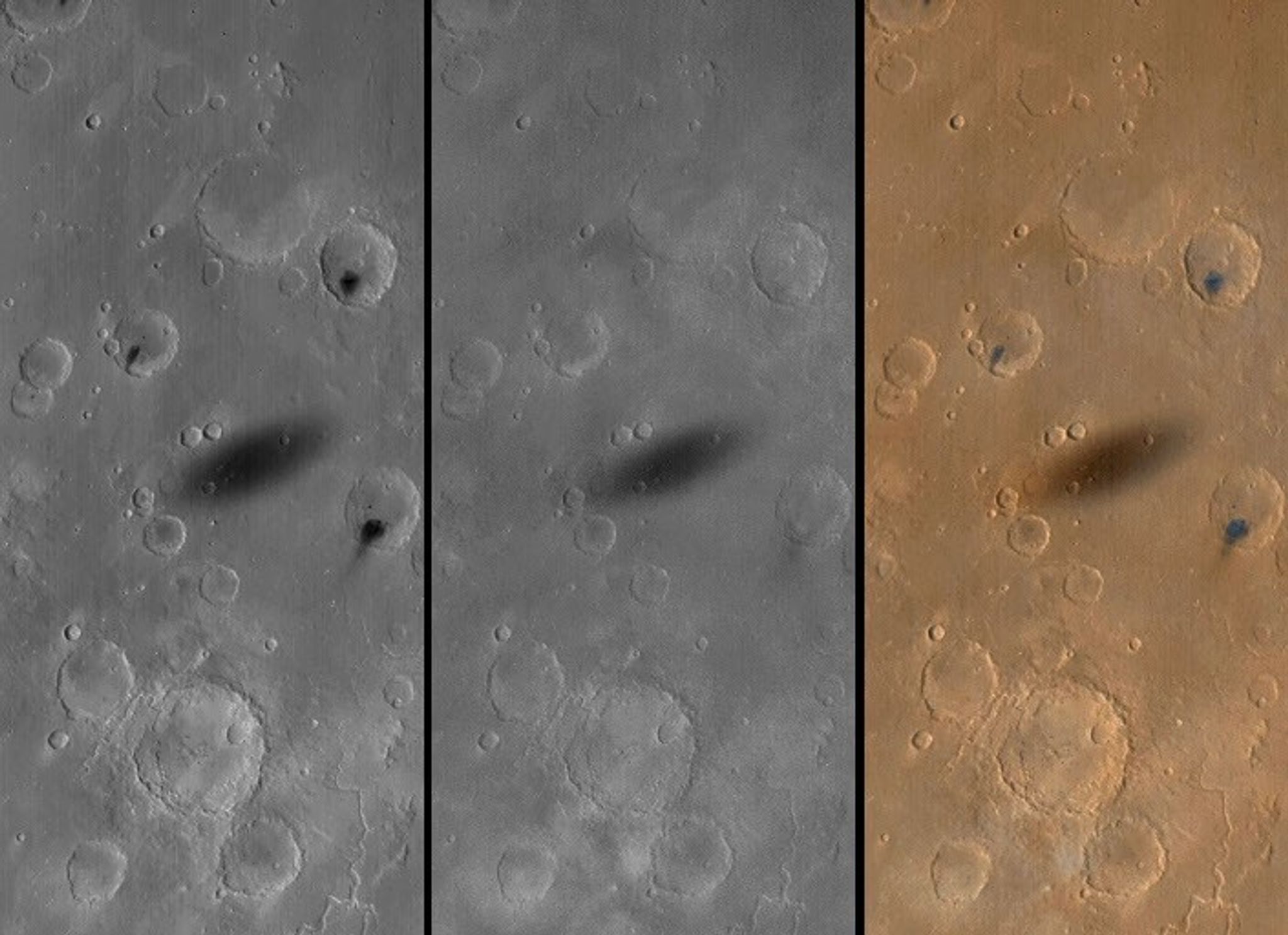
In our solar system, some planets (like Mercury and Venus) have no moons, so eclipses are impossible. Other planets (like Jupiter and Saturn) have lots of moons, but most of them aren’t big enough or at the right distance to fully block the Sun’s light. Mars’ two small, potato-shaped moons, Phobos and Deimos, are not large enough to do anything more than partially obscure the Sun when they do pass in front of it. These transits can make for interesting viewing for rovers down on the surface of Mars, but they are only seeing a partial solar eclipse.
Many of the moons of the gas giants are also too small or too distant (or both) for them to block anything more than a small part of the Sun’s light. Saturn and Uranus, for example, don’t have any moons big enough or close enough to cause total solar eclipses. But there are a few locations where the combination of moon size and distance would make it possible to have total solar eclipses like the ones here on Earth.
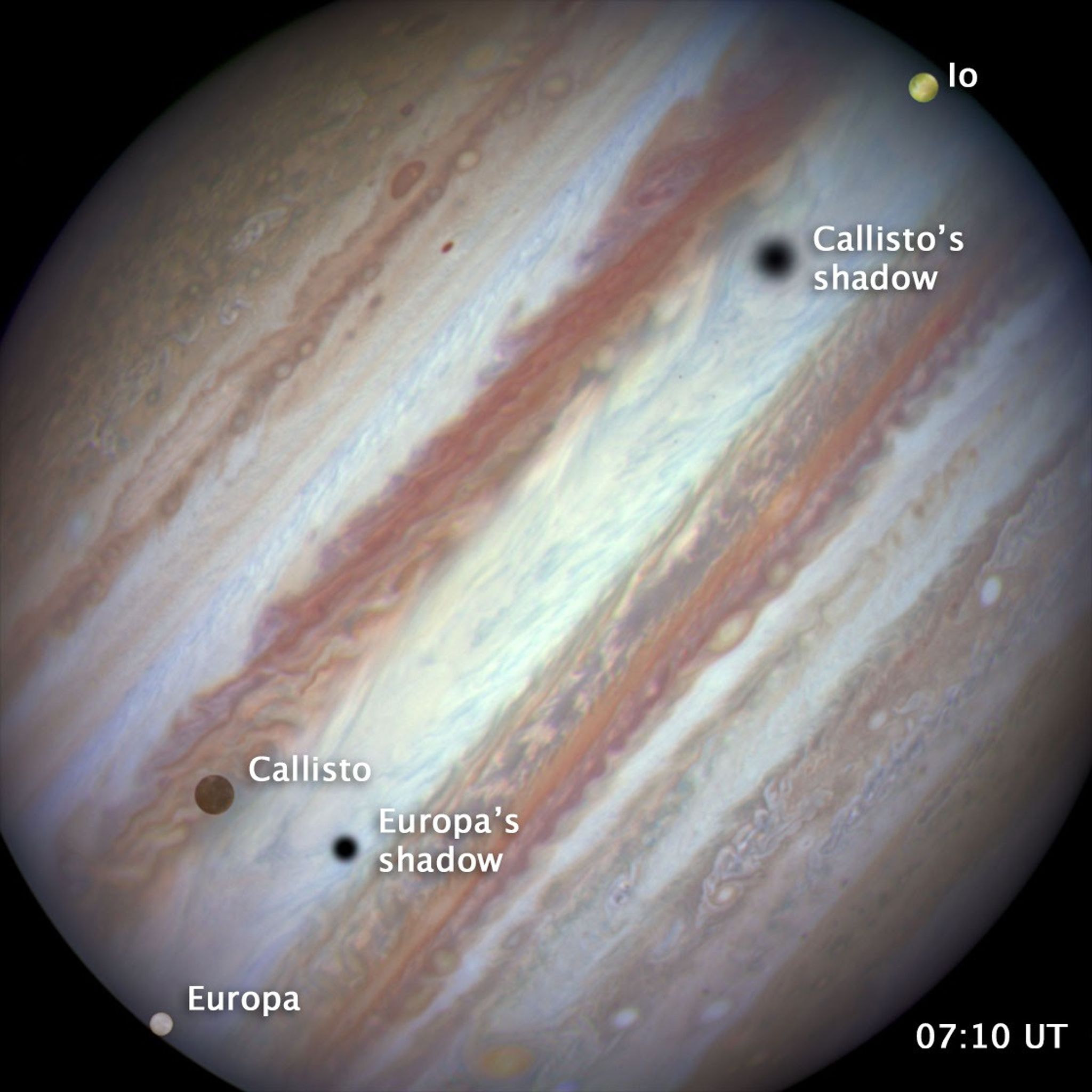
Jupiter’s second largest moon, Callisto, is just the right size and the right distance away from Jupiter to cause total solar eclipse like the ones here on Earth. Callisto would also cause eclipses at Jupiter about every 16 days for three years at a time (although there would then be a three-year period with none). While Jupiter’s other large moons (Io, Europa, and Ganymede) are too close for the corona to be visible when they eclipse the sun, future visitors to Jupiter might experience a double or even rarer triple total solar eclipse when the moons align.
But perhaps the best eclipses beyond Earth would take place on Saturn. While many of Saturn’s moons (including Titan) aren’t right for total solar eclipses, the moons Janus, Pandora, Prometheus, and Epimetheus are all the right size and distance from Saturn to block sunlight like our Moon does here. Thanks to their relative closeness, size, and irregular shape, they could also cause partial and annular (ring of fire) eclipses, too.
There could be eclipses in other star systems, too. As our catalogue of known exoplanets grows (that’s worlds orbiting stars other than the Sun), we find more and more systems with multiple planets orbiting a single star. In the small, tightly packed systems which exist round red dwarf stars like TRAPPIST-1, where seven terrestrial planets all orbit in an orbital radius smaller than that of Mercury, it might even be possible for multiple of the planets in one star system to eclipse their star in each other’s skies.

What Can We Learn From Eclipses?
With all of this in mind, you might be asking yourself why scientists take such care to study eclipses in the first place. These celestial events allow us to study the Sun’s outer atmosphere, or corona, which is invisible to the naked eye when the main body of the Sun is not hidden behind the Moon. This is because sunlight from its surface (the photosphere) is simply too powerful for the corona to be visible during normal viewing conditions.
But during a total solar eclipse, the light of the photosphere is blocked by the Moon. It’s important to always remember that the only time it is safe to remove solar viewing glasses during an eclipse event is during totality, or when 100% of the Sun's light is blocked by the Moon. While scientists can use instruments called coronagraphs to block the Sun’s light and study the corona at any time, eclipses provide a unique opportunity for them to see the parts of the corona closest to the Sun, which cannot be seen with a coronagraph. Observations made during total solar eclipses offered some of the first insights into what the inner corona was really like.
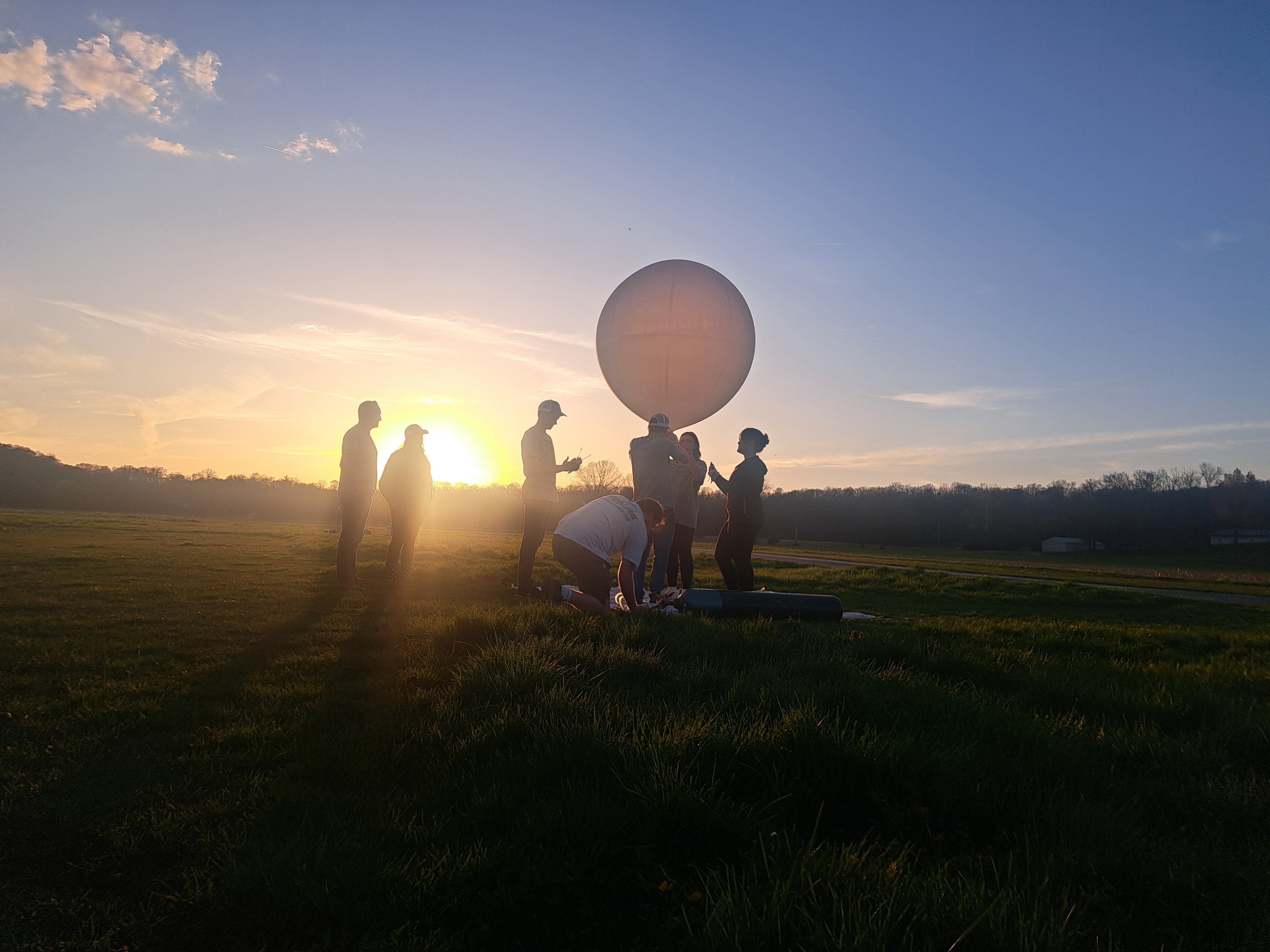
A total solar eclipse also helped prove Einstein’s theory of relativity. The May 29, 1919, total solar eclipse allowed scientists to see Einstein’s theory in action when they detected the gravitational lensing the theory predicted firsthand. In short, the Sun is so massive that its gravity pulls on the light of distant galaxies, warping that light so that galaxies “behind” the Sun are visible around its edges — but this is only possible during a total solar eclipse.
Eclipses also help us find out more about planets beyond our solar system. Based on data in NASA’s Exoplanet Archive, there were about 6,300 confirmed exoplanets in July 2026. Almost 4,700 of them (that's over 74 percent) were discovered using the transit method. This method of detection involves scanning other stars to perceive the slight dip in light intensity as an exoplanet crosses between us and the star — in other words, a transit. That means these distant eclipses are responsible for almost 74 percent of confirmed exoplanet detections.
Total solar eclipses can teach us about Earth, too. For one thing, a total solar eclipse changes the behavior of Earth’s atmosphere in the Moon’s shadow. Scientists can then study the Sun’s effects on the upper atmosphere (the ionosphere), which is home to many low-Earth orbit satellites as well as communications signals vital to us down on Earth. These studies are therefore useful for protecting our global communications network.
Could Our Eclipses End Someday?
As amazing as they are, we should understand that even the total solar eclipses we are used to enjoying on Earth will one day become a thing of the past. As the Moon orbits Earth, tidal forces (the same ones which cause tides in our oceans) caused by the Moon’s pull on Earth also pull on the Moon in an equal and opposite direction, as described in Newton's Laws. This exchange of tidal energy causes the Moon’s orbit to grow by about 4 centimeters per century. In other words, the Moon is getting farther away from Earth.
This means that a few billion years ago, the Moon orbited so close to Earth that total solar eclipses would have completely hidden the corona and caused total darkness more like nighttime. It also means that someday the Moon will be too far away for total solar eclipses to be possible. In another half a billion to a billion years, there will be a final total solar eclipse on Earth. So the next time you get the chance to experience an eclipse, remember how lucky we are that the conditions are right for us here on Earth to enjoy them at all.
But even though the circumstances on Earth are right for us to view total solar eclipses today, they are still a rare occurrence. After all, most of the planet is covered in water, and a good deal of what isn’t is not inhabited by humans. So if one happens to come through your backyard, or even your state, or even your county, take some time to check it out. They truly are a once in a solar system kind of opportunity.
Resources for Educators ↓
Related Educational Resources
Stay up-to-date with the latest content from NASA's Heliophysics Resource Database (HRD) as we explore the universe and discover more about the Sun and our Solar System.

We are in the Golden Age of Solar Eclipses, but only for the moment. In fact, we may already be…

Solar eclipses don't just happen here on earth - moons of other planets also pass between those planets and the…

This activity includes two informative coloring book pages covering Eclipses, extracted from the "Journey Through the Heliosphere" booklet. Perfect pairing…
Helio and You
Find the full collection of Helio and You articles here, as well as additional resources to assist with Heliophysics education.
Learn More
Related Articles
Keep up with the latest news in NASA heliophysics and the Science Activation portfolio.

Christine Shupla and Claire Ratcliffe Adams, from the NASA Science Activation program’s NASA@ My Library project, facilitated a professional development Co-Design Space Science, Technology, Engineering, & Mathematics (STEM) Workshop for Tribal libraries on August 29, 2024, hosted at the New…
Total Solar Eclipse in South America – December 14, 2020 NASA Space Science Education Consortium (NSSEC) members delivered products, gave presentations, and collaborated with NASA en Español, Office of Communications, and Pontificia Universidad Católica de Chile to engage many with…
In January, the American Museum of Natural History (AMNH) hosted its monthly planetarium program, offering attendees an insightful journey into the study of our solar system’s star. On January 23, 2024, Dr. Nour Raouafi, project scientist of the Parker Solar…
Helio and You
Find the full collection of past and future Helio and You articles here, as well as additional information about Heliophysics education.
Learn More