











Transmitter Display
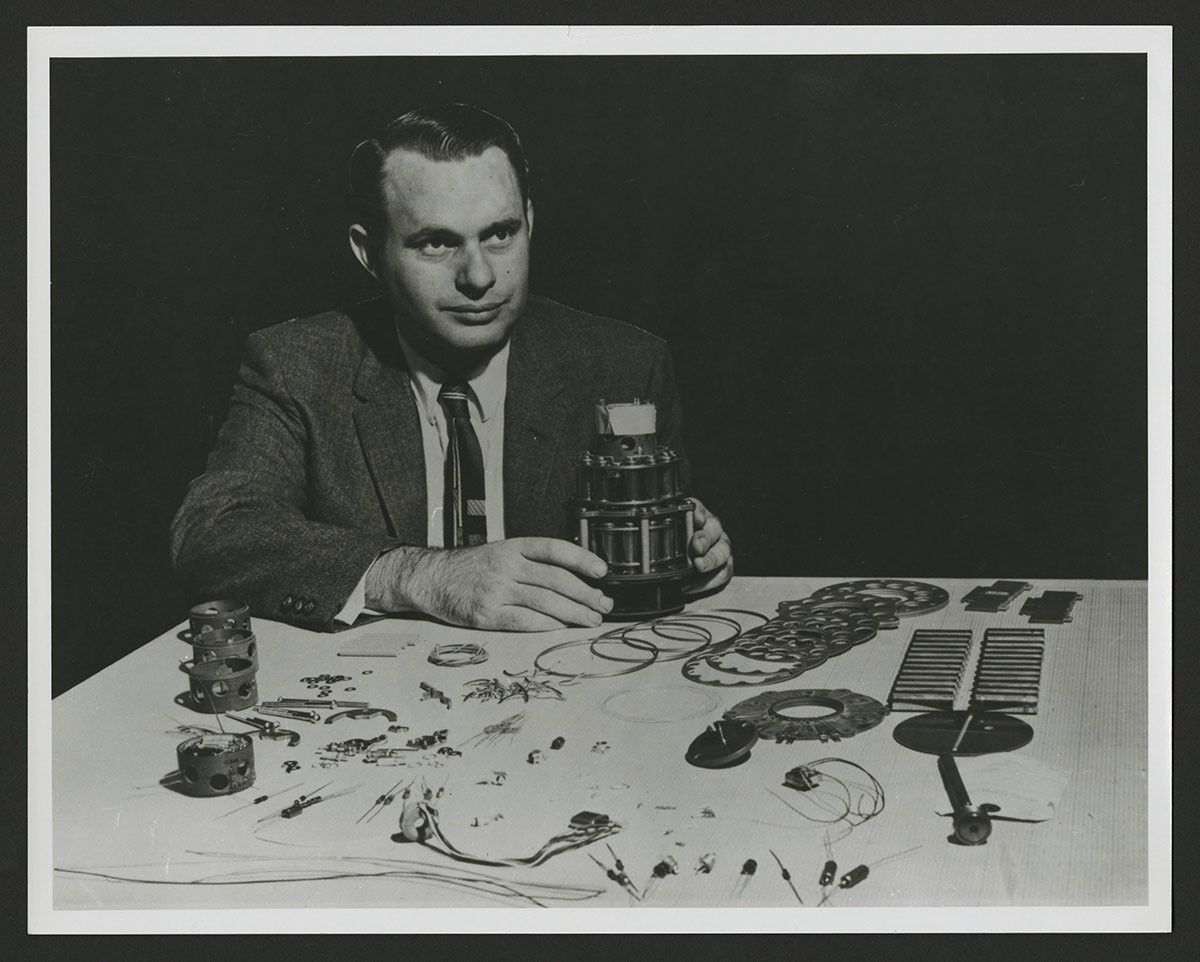
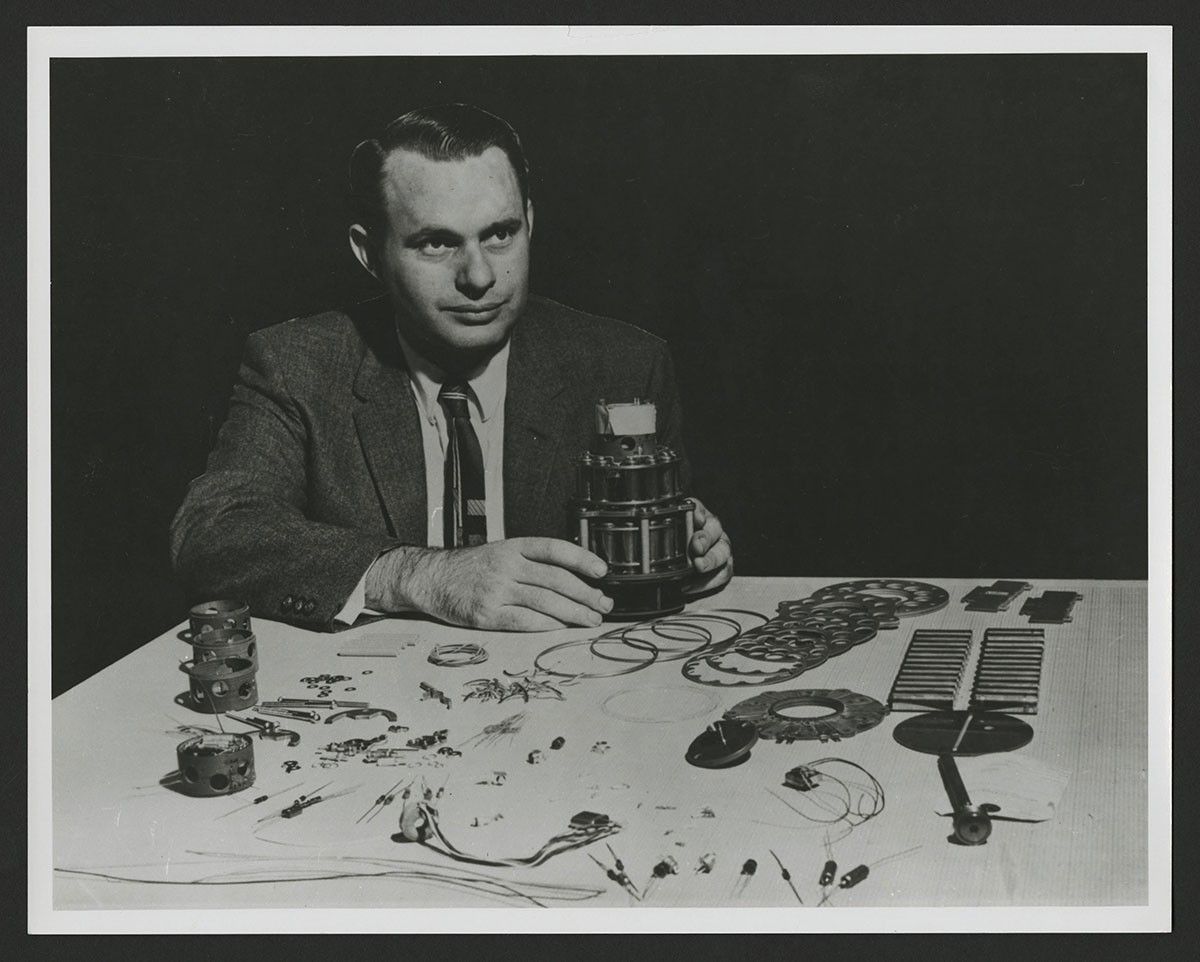
Henry Richter, section chief at the Jet Propulsion Laboratory, shows one of the Explorer 1 transmitters in this U.S. Army Photograph. Data collected by Explorer 1 were sent to the ground by a 60-milliwatt transmitter operating on 108.03 megacycles and a 10-milliwatt transmitter operating on 108.00 megacycles. Transmitting antennas consisted of two fiberglass slot antennas in the body of the satellite itself and four flexible whips forming a turnstile antenna. The rotation of the satellite about its long axis kept the flexible whips extended. Electrical power was provided by Mallory type RM mercury cells that operated the high-power transmitter for 31 days and the low-power transmitter for 105 days.
Image Credit: James A. Van Allen Papers (RG 99.0142), University Archives, The University of Iowa Libraries
- X
https://science.nasa.gov/image-detail/amf-2c380add-1282-43c2-813a-211454c51e17/
Image CreditJames A. Van Allen Papers (RG 99.0142), University Archives, The University of Iowa Libraries
Size1200x962px