













How NASA’s Webb Helped Rule Out Asteroid’s Chance of 2032 Lunar Impact
Editor’s Note: This post highlights data from Webb science in progress, which has not yet been through the peer-review process. These results were reported as part of NASA’s role in the International Asteroid Warning Network.
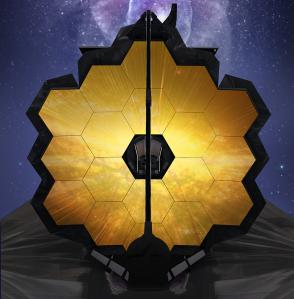
NASA’s James Webb Space Telescope recently made new observations of the asteroid 2024 YR4, which we already knew poses no significant threat to Earth in 2032 and beyond. Webb’s new observations – among the faintest ever observations of an asteroid, in a challenging application of the telescope’s unique capabilities – helped determine that the asteroid also will safely pass the Moon in 2032.
We spoke with Andy Rivkin of the Johns Hopkins University Applied Physics Laboratory in Laurel, Maryland, and Julien de Wit of the Massachusetts Institute of Technology in Cambridge, the two co-principal investigators of the Webb Director’s Discretionary Time program used to refine our knowledge of the asteroid’s orbit.

What is most important for people to know about these Webb observations?
We requested director’s discretionary time on Webb because there was a possibility for 2024 YR4 to impact the Moon in 2032. Without Webb, we would have needed to wait until 2028 with a large amount of uncertainty about what might happen, but with these observations that uncertainty is removed. Webb first constrained the asteroid’s size in 2025 and has now extended its observational arc to refine the orbit of 2024 YR4, demonstrating in practice how its sensitivity can support planetary-defense assessments for extremely faint objects long before they become observable again from Earth.
Why is Webb the only observatory that can measure the asteroid’s position prior to 2028?
2024 YR4 is exceedingly faint right now, reflecting about as much light as an almond at the distance of the Moon. It glows at a magnitude of about 30, which is 4 billion times fainter than the faintest star visible to the unaided eye. Webb is the only observatory that could hope to make these measurements, as it is the only one with the required sensitivity and stability combined with precise moving-target tracking needed to follow and study objects like this. This allowed Webb to make several hour-long exposures of 2024 YR4 without the asteroid moving even a pixel in any of them. No other observatory can make these measurements until 2028 during the asteroid’s next passage through the inner solar system.
How does the Webb data enable us to better predict 2024 YR4’s trajectory?
Two things help us do a better job of predicting the paths of asteroids: getting very accurate positions and increasing the amount of time over which they’ve been observed. These measurements of 2024 YR4 are very precise, and even more importantly extend the date of the most recent observations from May 2025 to late February 2026. This almost doubles the length of time the asteroid 2024 YR4 has been observed and allows orbital dynamicists to be very confident in predicting where it will be in 2032.
What have you learned?
With these observations, NASA has further refined the orbit of 2024 YR4 well enough to know it will miss the Moon in 2032, meaning a lunar impact will be one fewer thing for satellite operators — as well as astronauts — to worry about in the future. Also critically important, however, was the experience we gained using Webb to make these measurements. The extreme faintness of 2024 YR4 at the time of the measurements provided a challenge because it is difficult or impossible to get good images containing both something as faint as the asteroid and something as bright as some of the stars used to precisely measure its location on the sky. The excellent quality of Webb’s NIRCam (Near-Infrared Camera) design and optics allowed us to develop techniques that worked wonders, however, and that gives us confidence that we can make such measurements again if necessary in the future, and we will not need to learn how to do it from scratch.
How do the Webb observations fit within the larger picture of the study of this asteroid (and other near-Earth asteroids)?
Webb observations of 2024 YR4 were critical for our understanding of that asteroid. Specifically, they helped to constrain the object’s size and its orbit. In a larger sense, these observations demonstrate the utility of Webb for planetary defense — its unique capabilities for measuring the position and physical properties of an object beyond the capabilities of any other facility. Webb provides a unique capability to support such assessments well before objects return to the inner solar system. If and when NASA’s planetary defense assets discover another potentially hazardous object of interest, we will know that we could make these measurements in practice, not just in theory, and we have gained important experience in designing and analyzing those measurements.
Looking at an even larger picture, Webb is not the only NASA Astrophysics mission with planetary defense applications. For example, NASA’s next flagship science mission, the Nancy Grace Roman Space Telescope, will capture asteroids as it surveys the universe and could also help better constrain their orbits. And NASA’s Habitable Worlds Observatory mission concept will have unprecedented sensitivity unlike any space telescope before it, a powerful potential tool to help with earlier orbit refinement. NASA is also developing the Near-Earth Object Surveyor, bringing NASA’s space telescope heritage directly to bear on the asteroid hazard and demonstrating the strong collaboration across NASA Science in meeting NASA’s planetary defense objectives.
About the Authors
Andy Rivkin, a planetary astronomer at the Johns Hopkins University Applied Physics Laboratory, and Julien de Wit, a professor at the Massachusetts Institute of Technology, are co-principal investigators of the Webb Director’s Discretionary Time program (DD 9441) used to study asteroid 2024 YR4.
Related Links
Asteroid 2024 YR4 Minor Planet Center Database Entry
Research Notes by A. S. Rivkin et al.