















Impact Flash!
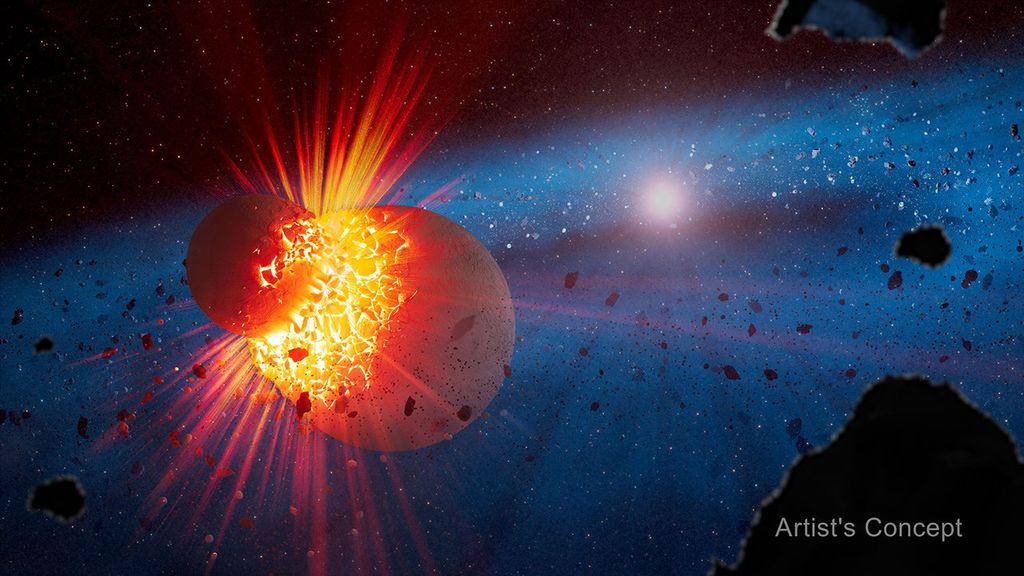
Small space rocks—from grains of sand to ones as big as boulders—hit the Moon all the time. They travel extremely fast, at tens of kilometers per second. Most of the energy from these crashes goes into making the craters we see on the Moon’s surface. But a tiny amount of that energy (less than 1%) turns into a brief flash of light. These flashes can be seen by spacecraft orbiting the Moon, and sometimes even by telescopes on Earth if conditions are right.
These flashes are vital to scientists who study the Moon. By tracking when and where they happen, scientists can learn how often impacts of different sizes occur, what kinds of craters they create, and how the shock waves travel through the Moon’s interior.
As the Artemis program ushers in a new age of Moon exploration, recording these flashes is more important than ever. Thanks to modern robotic telescopes and video equipment, it’s also easier to do. Join a global community and take part in this exciting work!
project task
Collecting data with an amateur telescope
division
Planetary
where
Outdoors
launched
2026

What you'll do:
- Use your telescope to record video footage of the dark side of the Moon in hope of catching a flash.
- Share your Moon observation videos to help scientists learn more about the frequency of meteoroid impacts and the hazards they pose.
Requirements
- Time: Two nights’ observing at a minimum.
- Equipment: 4” diameter or bigger telescope equipped with video recording equipment. Impact flashes are relatively rare on the Moon, so the project scientists recommend using a robotic telescope and recording equipment to make the job easier.
- Knowledge: Operational knowledge of your telescope and recording equipment.
Get started!
- Visit the project website.
- Read the guide on how to observe impact flashes.
- Make your observations and submit your data!
Learn more:
The project website offers tips and guidance on how to observe and document impact flashes for science.

Get to know the people of Impact Flash!



Ariel Deutsch
NASA Ames Research Center, Artemis II Science Team, Science Themes Lead

Kelsey Young
NASA Goddard Space Flight Center, Artemis II Science Lead, Flight Operations Science Officer

Maria Banks
NASA Goddard Space Flight Center, Artemis II Science Team Vehicle Camera Lead

Jennifer Heldmann
NASA Ames Research Center, Artemis II Science Team Impact Flash Theme Lead