















While NASA imagery has shown evidence of ancient rivers and lakes on Mars that transitioned to dry dunes, uncertainty remains over the timing of the environmental changes that may have contributed to these shifts.
Now, data collected by NASA’s Curiosity rover has revealed that individual crystals in the iron oxide hematite can be used as a mineralogical marker of changes to Mars’ ancient climate. Because the shape and structure of these crystallites reflect the conditions – such as temperature and water presence – under which they were formed, they can serve as an indicator of when these changes occurred.
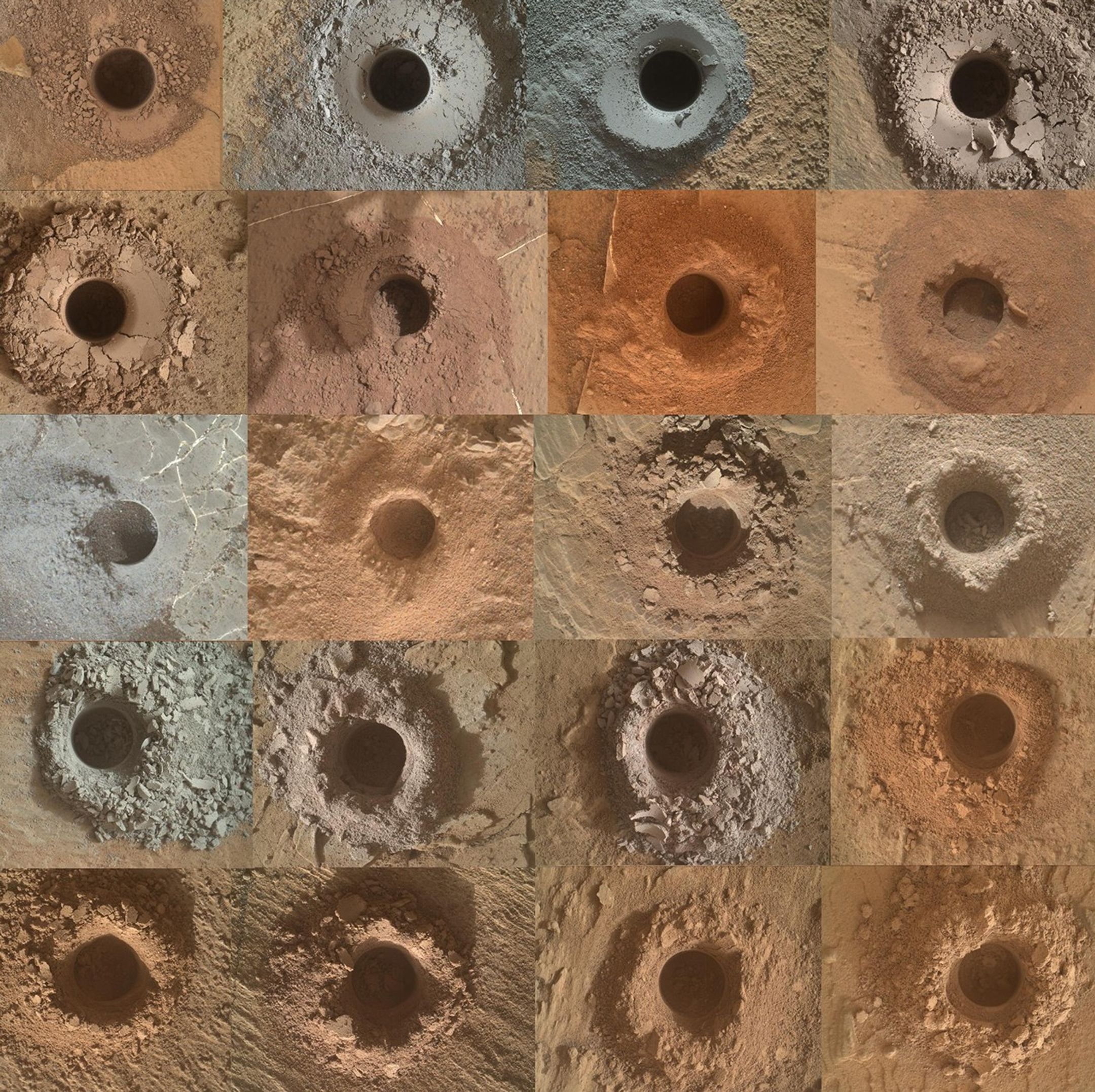
Scientists studied 20 samples collected by Curiosity across various elevations throughout Gale Crater for a paper published Thursday in Science. Gale Crater’s walls reveal Mars’ environmental history layer by layer, with deeper elevations capturing its earliest years. The team analyzed data from the rover’s Chemistry and Minerology (CheMin) instrument and discovered that hematite showed different crystallite sizes at different elevations. They also discovered that goethite, a mineral that typically forms alongside hematite, was absent in samples from lower elevations but still present in samples from higher elevations. This suggests that warm groundwater might have remained for up to 4.7 million years in the deepest layers of Gale Crater and that during much of this time, these long-lived aquifers could have been potentially habitable.
“What we found was that warm and wet conditions were present for extended periods in buried rocks, despite Mars’ climate becoming colder,” said Tanya Peretyazhko, co-first author of the study and planetary scientist in the Astromaterials Research and Exploration Science division at NASA’s Johnson Space Center in Houston. “It means that deep in those rocks, those warmer conditions could have made for habitable conditions for much longer periods of time, provided that other essential factors were present.”
Iron oxides are considered indicators of water activity because they form in its presence. This study shows that hematite can also be a marker of climate changes based on its crystallite sizes and structures, which change under different temperatures. The scientists found that hematite crystallites from higher elevations in Gale Crater were less than 10 nanometers in size, while crystallites from lower locations were generally larger, reaching up to 65 nanometers. These findings aligned with the observations that samples from higher elevations contained both hematite and goethite, while lower elevation samples lacked goethite.
What we found was that warm and wet conditions were present for extended periods in buried rocks, despite Mars’ climate becoming colder."

Tanya Peretyazhko
Planetary Scientist
They concluded that, under warmer conditions when the pH of water is neutral or slightly alkaline, goethite can transform into hematite. These warmer conditions also favored an increase in hematite crystallite size in the deeper layers of Gale Crater through a process known as Ostwald ripening, in which smaller crystallites dissolve and contribute to the growth of larger ones.
“This can tell you that the top layers were colder and didn’t have enough water, or the water presence was relatively short-lived, so the crystallites didn’t have sufficient time and conditions to grow in size,” said Peretyazhko. “But the lower layers had longstanding warm water that allowed those crystallites to grow.”
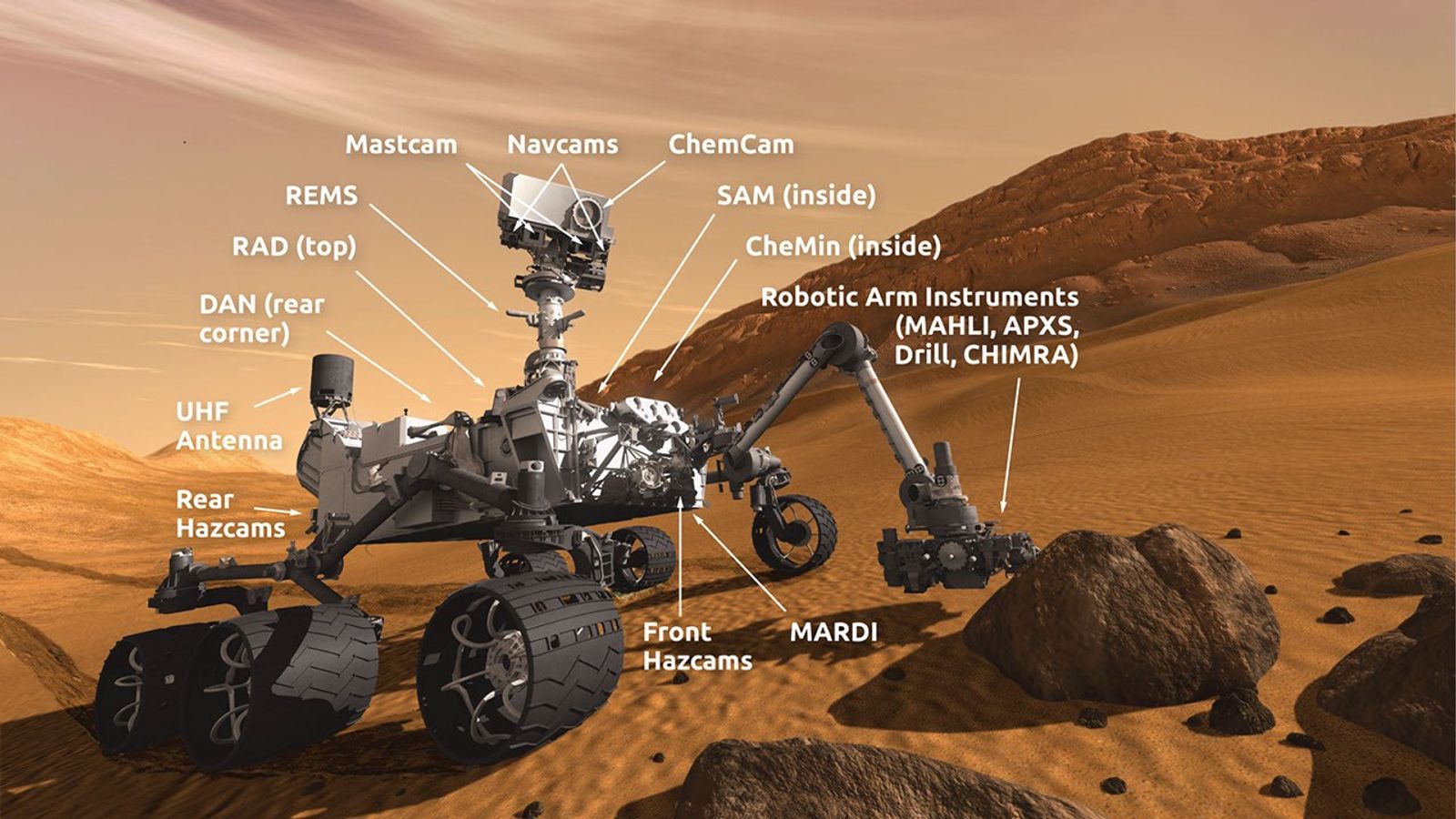
A unique highlight of this study is that the data comes from Martian samples, rather than from theoretical modeling. Curiosity’s robotic arm delivered powdered rock to CheMin’s input funnel, where it was analyzed. “With CheMin’s X-ray diffraction patterns, we can look at the hematite crystal’s size and dimensions, information that that can’t be gathered from satellite analysis of the Martian surface.” said Tom Bristow, principal investigator of the CheMin instrument at NASA’s Ames Research Center in California’s Silicon Valley.
Ashwin Vasavada, Curiosity’s project scientist at NASA’s Jet Propulsion Laboratory in Southern California, said CheMin is capable of making measurements with extraordinary scientific fidelity.
“It doesn’t just tell you there is hematite," Vasavada explained. "One can use the data to extract the size and shape of the hematite crystallites and the presence of other related minerals, all of which were necessary to produce this result.”
More about Curiosity
Curiosity was built by NASA JPL, which is managed by Caltech in Pasadena, California. NASA JPL leads the mission on behalf of NASA’s Science Mission Directorate in Washington as part of NASA’s Mars Exploration Program portfolio. CheMin, led by NASA Ames , is one of 10 science instruments aboard Curiosity and has a cross-country team of scientists, including researchers at NASA Ames, University of Arizona, California Institute of Technology, Planetary Science Institute, Carnegie Institution for Science, Lunar and Planetary Institute, JPL, NASA’s Goddard Space Flight Center in Greenbelt, Maryland, and NASA’s Johnson. The team combines expertise in mineralogy, petrology, materials science, astrobiology and soil science, with experience studying terrestrial, lunar and Martian rocks.
For more information on NASA’s Curiosity rover, visit:
https://science.nasa.gov/mission/msl-curiosity
Karen Fox / Alana Johnson
Headquarters, Washington
240-285-5155 / 202-672-4780
karen.c.fox@nasa.gov / alana.r.johnson@nasa.gov
Victoria Segovia
Johnson Space Center, Houston
281-483-5111
victoria.segovia@nasa.gov