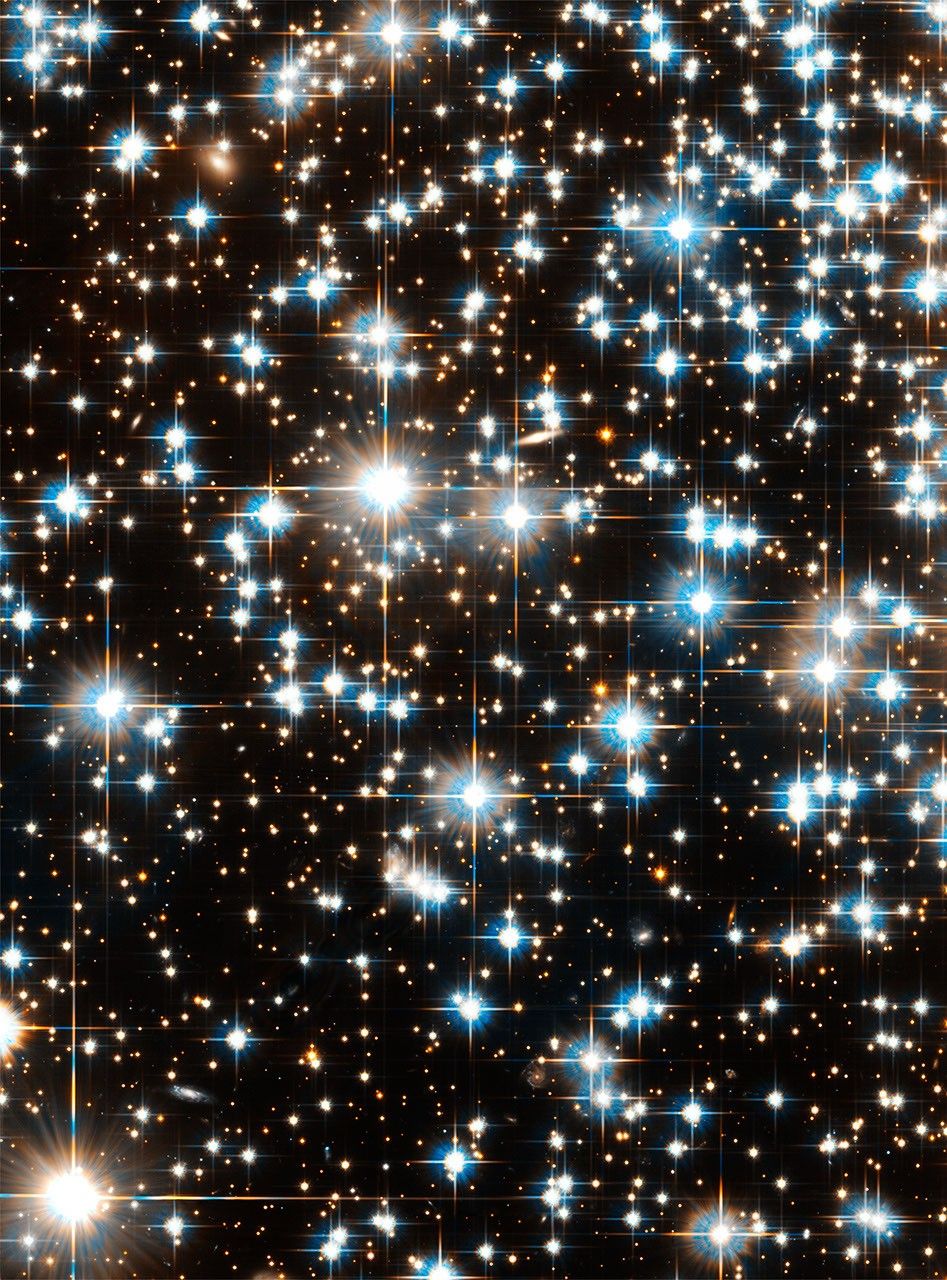

















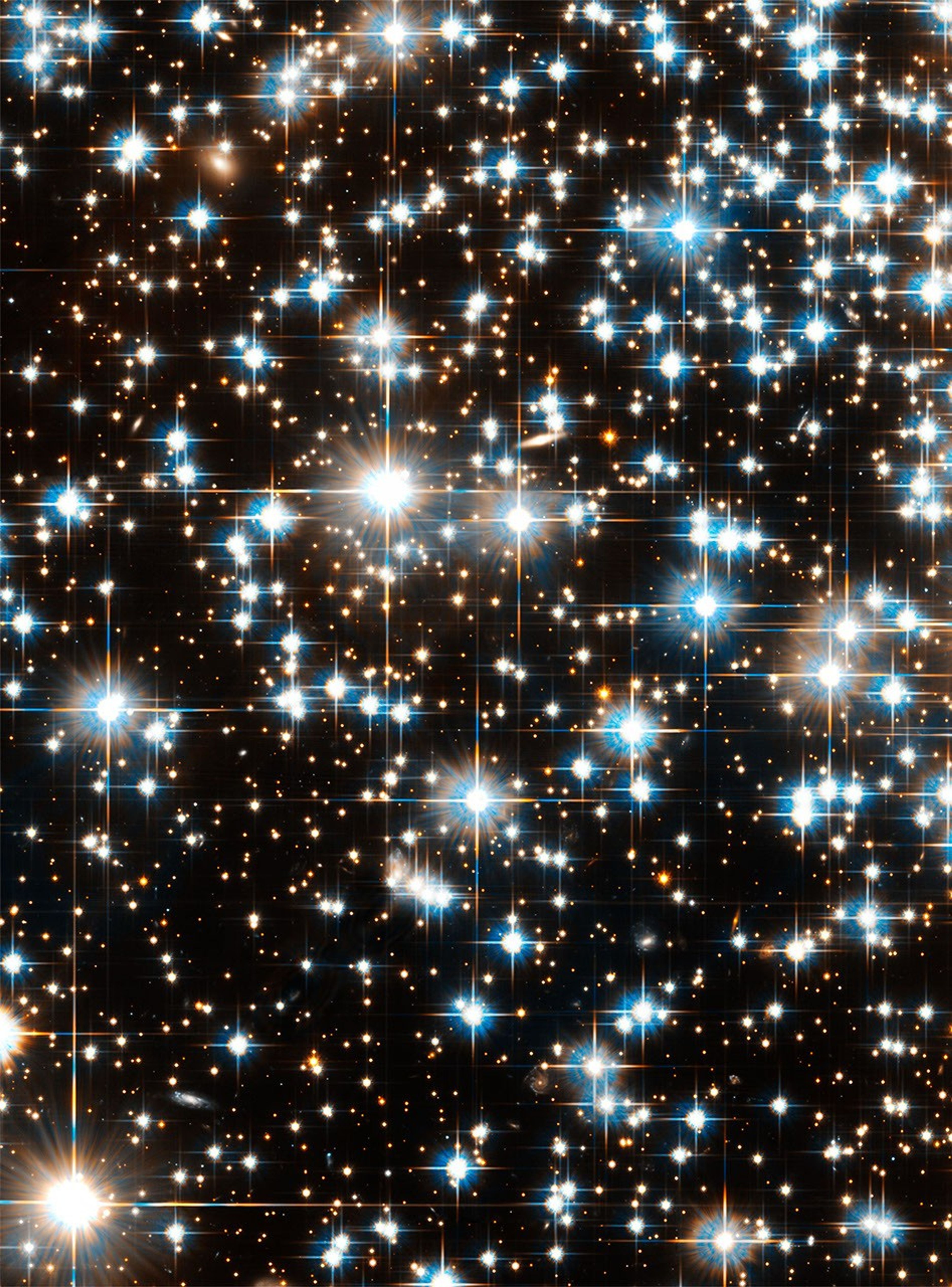
Faint Stars in Globular Cluster NGC 6397
Hubble uncovered what astronomers called the dimmest stars ever seen in any globular star cluster. A globular cluster's dimmest stars have eluded astronomers because their light is too feeble. Hubble probed deep within this cluster for nearly five days to capture the faint stars, resulting in a different look than other Hubble images of NGC 6397. Globular clusters are spherical concentrations of hundreds of thousands of stars. Hubble completed a census of two distinct stellar populations in NGC 6397, one of the globular clusters nearest to Earth. Hubble surveyed the faintest red dwarf stars, which fuse hydrogen in their cores like our Sun, and the dimmest white dwarfs, which are the burned-out relics of normal stars. The light from these faint stars is as dim as the light produced by a birthday candle on the Moon seen from Earth. Analyzing the burned-out remnants of stars that died long ago, Hubble showed that the dimmest white dwarfs have such low temperatures that they are undergoing a chemical change in their atmospheres that makes them appear bluer rather than redder as they cool. This phenomenon had been predicted, but never observed. These white dwarfs are the relics of stars up to eight times as massive as the Sun, which have exhausted the fuel capable of supporting nuclear reactions in their cores. Stars that were initially even more massive died as supernovae very early in the cluster's life, leaving behind neutron stars, black holes, or no debris at all.
Image Credit: NASA, ESA, and H. Richer (University of British Columbia)
- X
https://science.nasa.gov/image-detail/amf-175f9712-19e1-4d56-9f9a-1bd2aa68cda0/
Image CreditNASA, ESA, and H. Richer (University of British Columbia)
Size3750x5066px