




























Galaxy NGC 6753: More Than Meets the Eye
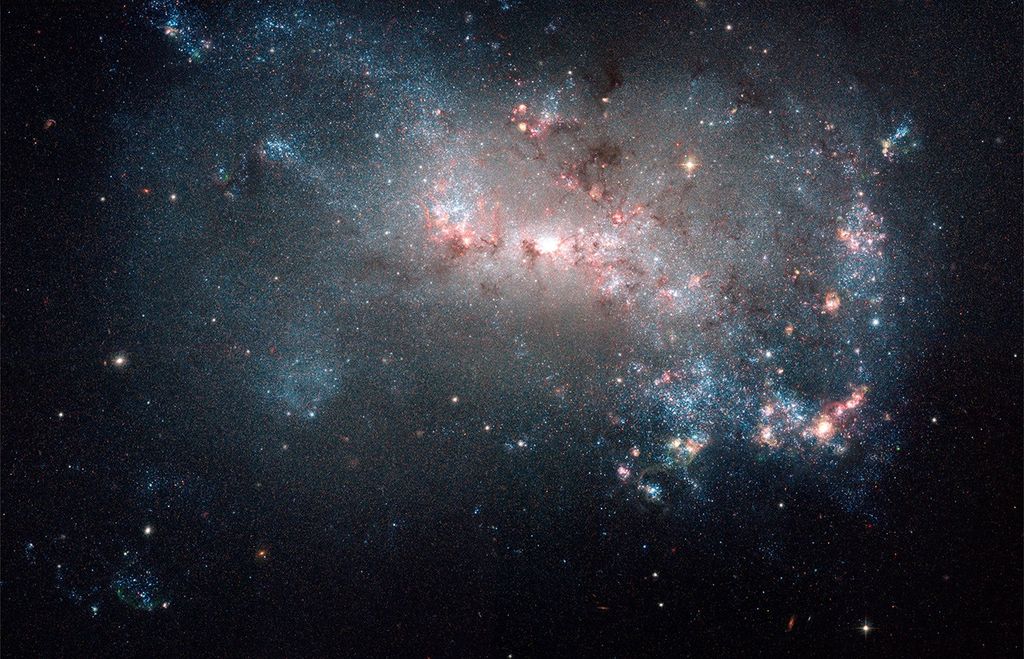
The process of galaxy formation remains an open question in astronomy. To determine which formation model is correct (if any), astronomers hunt for the telltale signs of various physical processes. One example of this is galactic coronas, which are huge, invisible regions of hot gas that surround a galaxy’s visible bulk, forming a spheroidal shape. Galactic coronas are so hot that they can be detected by their X-ray emission, far beyond the optical radius of the galaxy. But because they are so wispy, these coronas are extremely difficult to detect. In 2013, astronomers highlighted NGC 6753 as one of only two known spiral galaxies that were both massive enough and close enough to permit detailed observations of their coronas. The galaxy is nearly 150 million light-years from Earth. NGC 6753 is a whirl of color in this image — the bursts of blue throughout the spiral arms are regions filled with young stars glowing brightly in ultraviolet light, while redder areas are filled with older stars emitting in the cooler near-infrared.
Image Credit: ESA/Hubble & NASA; Acknowledgment: Judy Schmidt
- X
https://science.nasa.gov/image-detail/more-than-meets-the-eye-3/
Image CreditESA/Hubble & NASA; Acknowledgment: Judy Schmidt
Size1103x1101px