


















Description
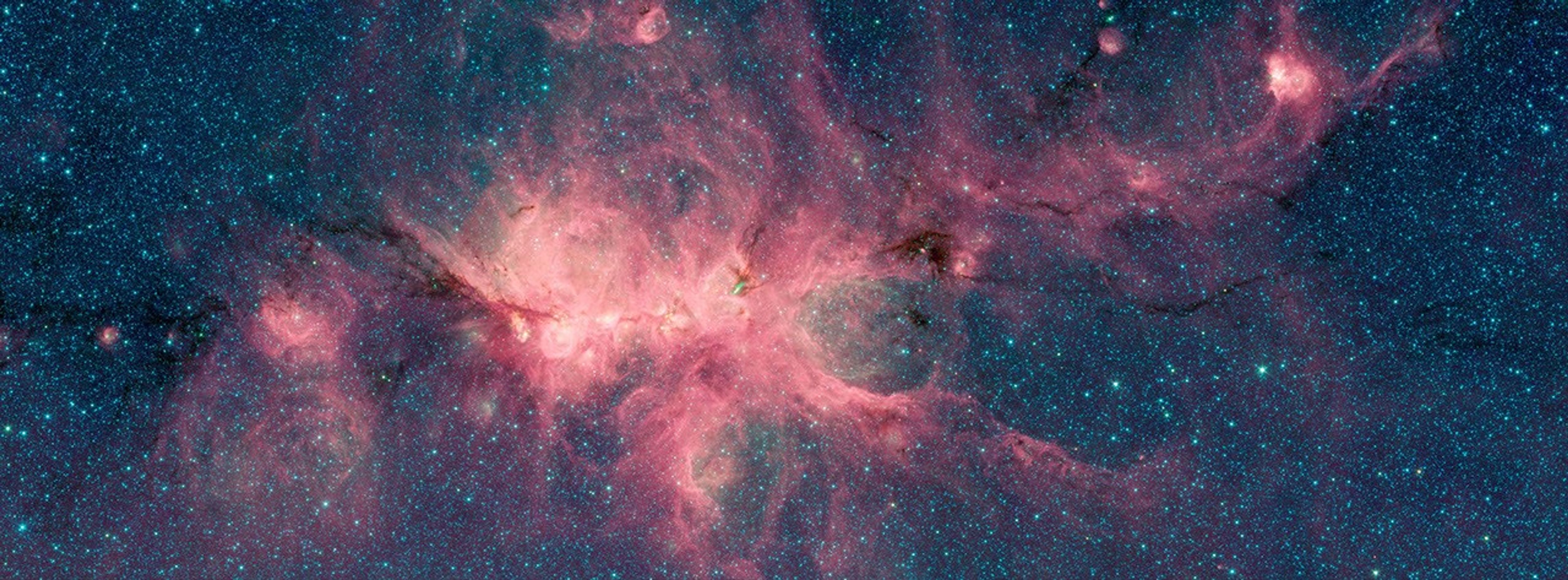
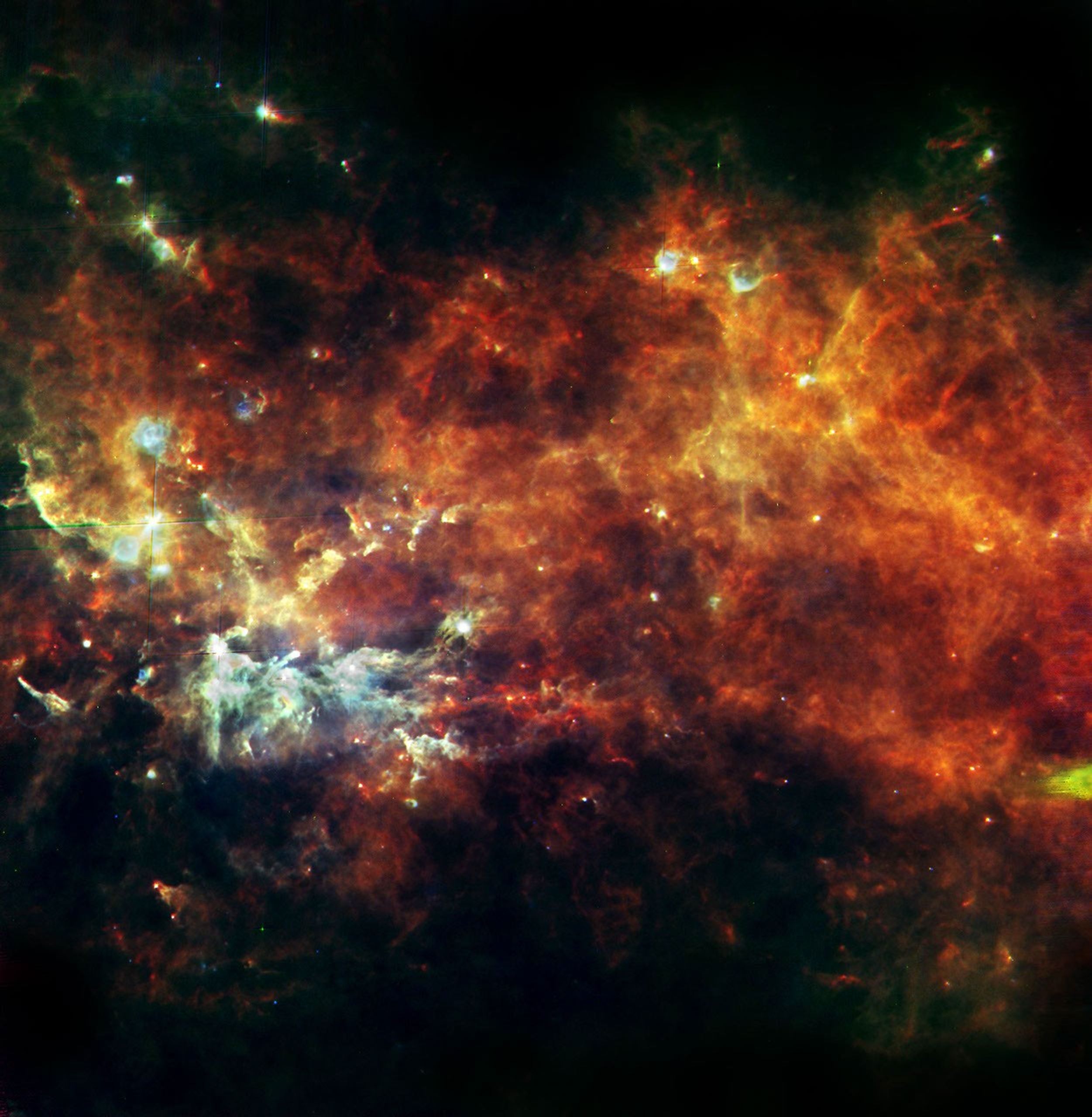
This image, in the constellation of Vulpecula, shows an entire assembly line of newborn stars. The diffuse glow reveals the widespread cold reservoir of raw material that our Milky Way galaxy has in stock for building stars.
Large-scale turbulence from the giant colliding galactic flows causes this material to condense into the web of filaments that we see all over the image. These are the "pregnant" entities where the material becomes colder and denser. At this point, gravitational forces take over and fragment these filaments into chains of stellar embryos that can finally collapse to form baby stars.
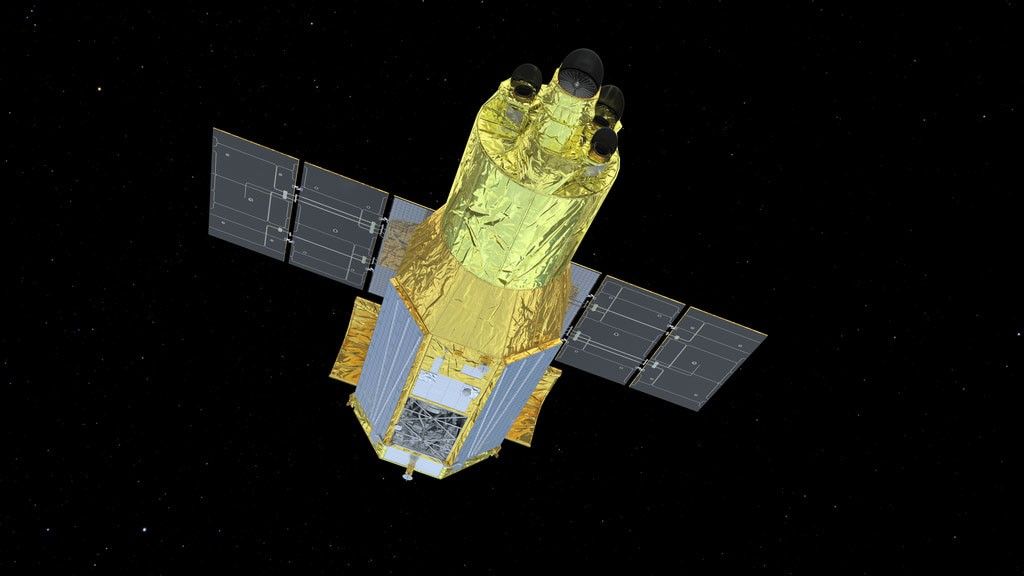
Herschel is a European Space Agency cornerstone mission, with science instruments provided by consortia of European institutes and with important participation by NASA. NASA's Herschel Project Office is based at NASA's Jet Propulsion Laboratory. JPL contributed mission-enabling technology for two of Herschel's three science instruments. The NASA Herschel Science Center, part of the Infrared Processing and Analysis Center at the California Institute of Technology in Pasadena, supports the United States astronomical community. Caltech manages JPL for NASA.