















3.5. How can we tell if something is alive or not?
A core learning question from the Astrobiology Learning Progressions
Astrobiology Learning Progressions Navigation


Grades K-2 or Adult Naive Learner
As we look around a classroom, our homes, in a forest, or anywhere we go, we can tell things that are alive from things that are not alive. You are alive, so is a bug, a fish, and your teacher. But things like a desk, a rock, a pencil, or a building are not alive. Things that are alive do certain things, like move and grow and sometimes change. If you sit and watch a pencil for a long time without using it, it won’t change or grow at all. It will just keep on being a pencil.
Disciplinary Core Ideas
LS1.A: Structure and function: All organisms have external parts. Different animals use their body parts in different ways to see, hear, grasp objects, protect themselves, move from place to place, and seek, find, and take in food, water and air. Plants also have different parts (roots, stems,leaves, flowers, fruits) that help them survive and grow. (1-LS1-1)
LS1.C: Organization for Matter and Energy Flow in Organisms: All animals need food in order to live and grow. They obtain their food from plants or from other animals. Plants need water and light to live and grow. (K-LS1-1)
LS1.D: Information Processing: Animals have body parts that capture and convey different kinds of information needed for growth and survival. Animals respond to these inputs with behaviors that help them survive. Plants also respond to some external inputs. (1-LS1-1)
ESS3.A: Natural Resources: Living things need water, air, and resources from the land, and they live in places that have the things they need. Humans use natural resources for everything they do. (K-ESS3-1)
ESS2.E: Biogeology: Plants and animals can change their environment. (K-ESS2-2)
Crosscutting Concepts
Patterns: Patterns in the natural world can be observed, used to describe phenomena,and used as evidence. (1-LS1-2, 1-LS3-1) ▪ Structure and Function: The shape and stability of structures of natural and designed objects are related to their function(s). (1-LS1-1)
Big Ideas: Living things may seem very different, but they all have certain things in common. For example, they have the ability to grow and move.
Boundaries: In this grade band, the needs of living things are arranged into patterns. Examples of patterns could include that animals need to take in food but plants do not; the different kinds of food needed by different types of animals; the requirement of plants to have light; and that all living things need water. (K-LS1-1)
No appropriate content for this grade level. Please use the navigation arrows to switch levels.

Grades 3-5 or Adult Emerging Learner
Everywhere you look there are things that are alive and things that are not alive. Things that are alive have common characteristics even though they are very different from each other. For example, living things grow and move and nonliving things often do not grow or move on their own. Living things can be hurt and can repair themselves, like when you get a scratch. Living things at some point will die. Living things also reproduce and can have babies or produce seeds to make new life. Non-living things cannot heal themselves or reproduce. There is a huge variety of both living and nonliving things on our planet. As we explore the rest of the solar system and beyond, it may be that we cannot always easily tell the difference between living and nonliving things in places beyond Earth.
Disciplinary Core Ideas
LS1.A: Structure and Function: Plants and animals have both internal and external structures that serve various functions in growth, survival, behavior, and reproduction. (4-LS1-1)
LS1.C: Organization for Matter and Energy Flow in Organisms: Food provides animals with the materials they need for body repair and growth and the energy they need to maintain body warmth and for motion. (5-LS1-1)
LS1.D: Information Processing: Different sense receptors are specialized for particular kinds of information, which may be then processed by the animal’s brain. Animals are able to use their perceptions and memories to guide their actions. (4-LS1-2)
LS2.B: Cycles of Matter and Energy Transfer in Ecosystems: Matter cycles between the air and soil and among plants, animals, and microbes as these organisms live and die. Organisms obtain gases, and water, from the environment, and release waste matter (gas, liquid, or solid) back into the environment. (5-LS2-1)
LS1.B: Growth and Development of Organisms: Reproduction is essential to the continued existence of every kind of organism. Plants and animals have unique and diverse life cycles. (3-LS1-1)
LS3.A: Inheritance of Traits: Many characteristics of organisms are inherited from their parents. (3-LS3-1) Other characteristics result from individuals’ interactions with the environment, which can range from diet to learning. Many characteristics involve both inheritance and environment. (3-LS3-2)
LS3.B: Variation of Traits: Different organisms vary in how they look and function because they have different inherited information. (3-LS3-1) The environment also affects the traits that an organism develops. (3-LS3-2)
Crosscutting Concepts
Patterns: Similarities and differences in patterns can be used to sort and classify natural phenomena. (3-LS3-1) Patterns of change can be used to make predictions. (3-LS1-1)
Big Ideas: It is sometimes difficult to determine the difference between living and non-living things just by looking at them. There are basic characteristics that help separate living things and non-living things. Living things all have the potential for movement, growth, self repair, death, and reproduction. Understanding these basic characteristics helps to sort the huge variety of living and nonliving things on our planet.
Boundaries: In this grade band, students cover the unique and diverse life cycles organisms exhibit with a particular emphasis on the commonalities of birth, growth, reproduction, and death. Does not include details of human reproduction. (3-LS1-1)
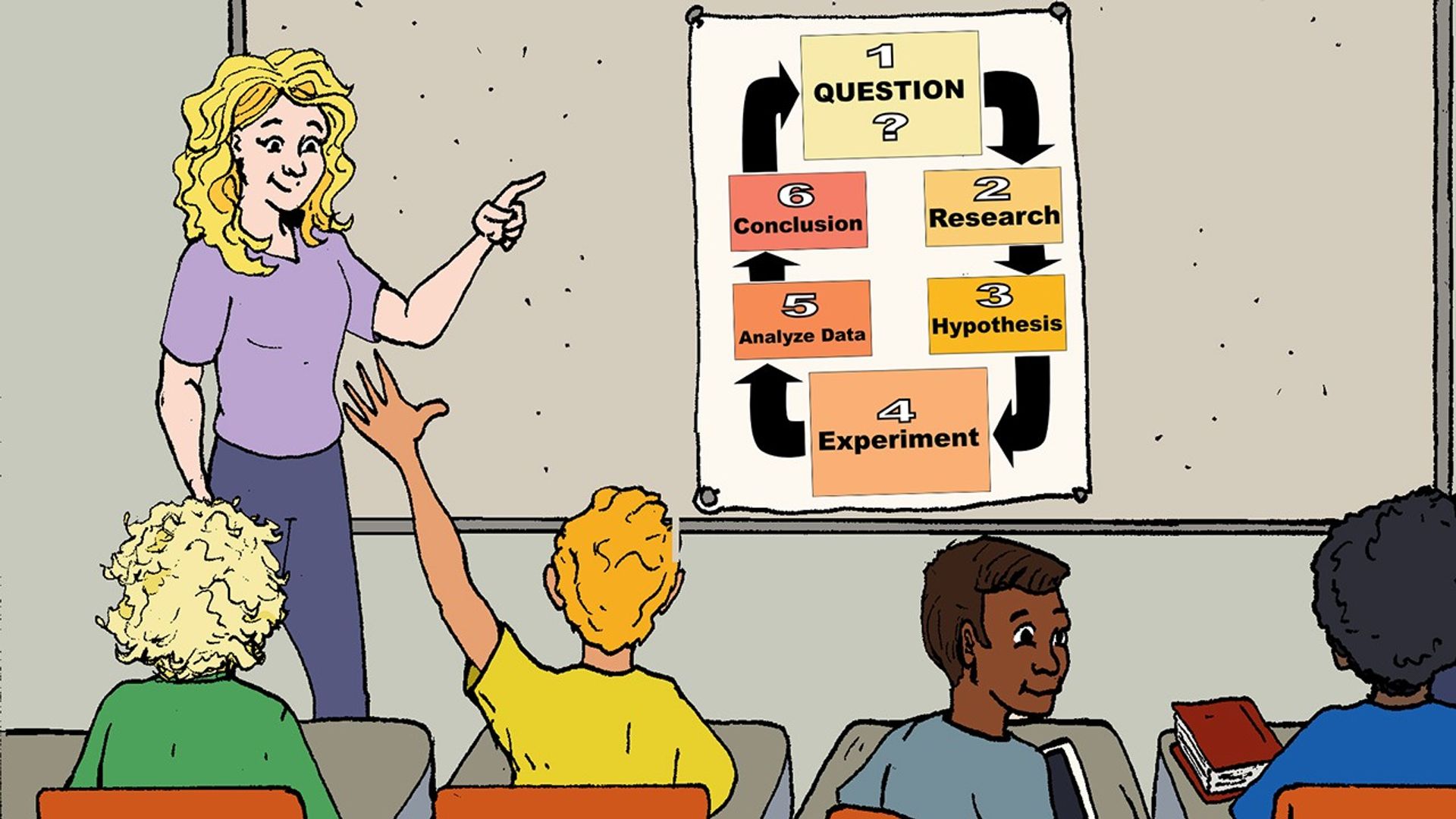
3-12 Mars Activities: Searching for Life on Mars. (Lesson 5, page 33) Students research characteristics of living organisms and develop a chart that help them define important features of a living organism. They then use their definition to determine whether there is anything alive in three different soil samples, an experiment similar to the Mars Viking Lander in 1976 that looked for signs of life. This lesson is a part of a collection of lessons designed to engage students with a focus on hands-on active learning. These activities are not arranged in a unit and can be used to enhance many different current units on astronomy, biology, Earth science, and mathematics or could be collected into a unit aimed at Mars. ASU /JPL/NASA. https://mars.nasa.gov/classroom/pdfs/MSIP-MarsActivities.pdf
Grades 6-8 or Adult Building Learner
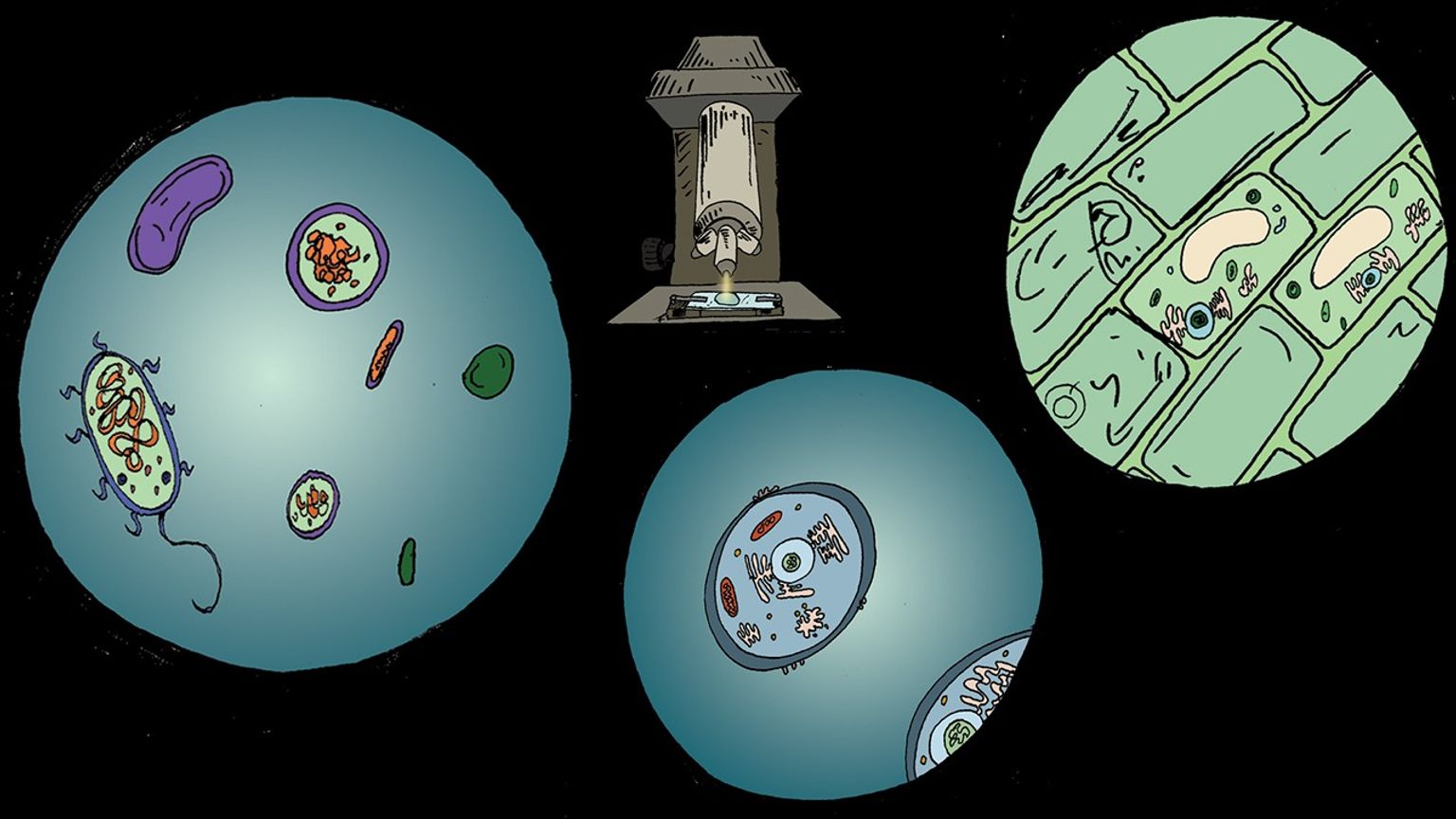
What defines something as living or nonliving? It turns out that it’s not as easy to define as you might think, but we can look at the characteristics living things have in common to better understand what life is. For instance, living things are made of cells, maintain homeostasis (a stable internal environment), grow and develop, reproduce, metabolize, respond to the environment, and over time, evolve. Although many nonliving things could have a few of these characteristics they do not have all of them. As we look out beyond Earth in order to find life we must consider what being alive means. On Earth, we do not have much trouble figuring out what is living and what is nonliving, however, when exploring beyond Earth we’ll need to design our spacecraft so that we can detect living from nonliving things.
Disciplinary Core Ideas
LS1.A: Structure and Function: All living things are made up of cells, which is the smallest unit that can be said to be alive. An organism may consist of one single cell (unicellular) or many different numbers and types of cells (multicellular). (MS-LS1-1) ▪ Within cells, special structures are responsible for particular functions, and the cell membrane forms the boundary that controls what enters and leaves the cell. (MS-LS1-2) ▪ In multicellular organisms, the body is a system of multiple interacting subsystems. These subsystems are groups of cells that work together to form tissues and organs that are specialized for particular body functions. (MS-LS1-3)
LS1.C: Organization for Matter and Energy Flow in Organisms: Plants, algae (including phytoplankton), and many microorganisms use the energy from light to make sugars (food) from carbon dioxide from the atmosphere and water through the process of photosynthesis, which also releases oxygen. These sugars can be used immediately or stored for growth or later use. (MS-LS1-6) ▪ Within individual organisms, food moves through a series of chemical reactions in which it is broken down and rearranged to form new molecules, to support growth, or to release energy. (MS-LS1-7)
LS2.A: Interdependent Relationships in Ecosystems: Organisms, and populations of organisms, are dependent on their environmental interactions both with other living things and with nonliving factors. (MS-LS2-1)
LS2.C: Ecosystem Dynamics, Functioning, and Resilience: Biodiversity describes the variety of species found in Earth’s terrestrial and oceanic ecosystems. The completeness or integrity of an ecosystem’s biodiversity is often used as a measure of its health. (MS-LS2-5)
LS1.B: Growth and Development of Organisms: Organisms reproduce, either sexually or asexually, and transfer their genetic information to their offspring.
Crosscutting Concepts
Structure and Function: Complex and microscopic structures and systems can be visualized, modeled, and used to describe how their function depends on the relationships among its parts, therefore complex natural structures/systems can be analyzed to determine how they function. (MS-LS1-2)
Systems and System Models: Systems may interact with other systems; they may have sub-systems and be a part of larger complex systems. (MS-LS1-3)
Big Ideas: Living things are made of cells, maintain homeostasis (a stable internal environment), grow and develop, reproduce, metabolize, respond to the environment, and over time, evolve. It is fairly easy to study life on Earth. To explore the possibility of life beyond Earth, it is important to accurately detect living from nonliving things.
Boundaries: Emphasis is on developing evidence that living things are made of cells, distinguishing between living and non-living things, and understanding that living things may be made of one cell or many and varied cells (MS-LS1-1)
3-12 Mars Activities: Searching for Life on Mars. (Lesson 5, page 33) Students research characteristics of living organisms and develop a chart that help them define important features of a living organism. They then use their definition to determine whether there is anything alive in three different soil samples, an experiment similar to the Mars Viking Lander in 1976 that looked for signs of life. This lesson is a part of a collection of lessons designed to engage students with a focus on hands-on active learning. These activities are not arranged in a unit and can be used to enhance many different current units on astronomy, biology, Earth science, and mathematics or could be collected into a unit aimed at Mars. ASU /JPL/NASA. https://mars.nasa.gov/classroom/pdfs/MSIP-MarsActivities.pdf
6-12 Astrobiology Math. This collection of math problems provides an authentic glimpse of modern astrobiology science and engineering issues, often involving actual research data. Students explore concepts in astrobiology through calculations. Relevant topics include DNA and the Genome (page 15) and Evolution of Nucleotides and Genes (page 19). NASA . https://www.nasa.gov/pdf/637832main_Astrobiology_Math.pdf
Grades 9-12 or Adult Sophisticated Learner
As we search for possible life beyond Earth, it’s important for us to consider what exactly life is. It turns out that it’s not as easy to define life as you might think, but we can at least look at the characteristics that living things have in common to better understand life. For instance, life is made of cells, maintains homeostasis, grows and develops, has the ability to reproduce, metabolizes, responds to the environment, and, over time, evolves. However, just having some of these characteristics doesn’t necessarily make something alive. There are examples of nonliving phenomena on Earth such as fire, crystals, computer algorithms, and even artificial intelligence that have many of the characteristics of life. Additionally, there are living things that also only hit most of the characteristics. For instance, mules are animals that come from a mix of a horse and a donkey and actually cannot reproduce.
Defining life has proven to be a difficult task, even though many of us can look at most things and tell if they’re alive or not. The most widely accepted scientific definition for life right now is this: “life is a self-sustaining chemical system capable of Darwinian evolution”. However, there are still problems with this definition. For instance, viruses further blur the distinction between life and non-life since they cannot live without a living host and yet they have their own genetic material, they act as biological machines, and they evolve. As we continue to consider how life works on Earth and how we might best be able to find extraterrestrial life if it exists, we’ll continue to improve our understanding of what life really is.
Disciplinary Core Ideas
LS1.A: Structure and Function: Systems of specialized cells within organisms help them perform the essential functions of life. (HS-LS1-1) All cells contain genetic information in the form of DNA molecules. Genes are regions in the DNA that contain the instructions that code for the formation of proteins, which carry out most of the work of cells. (HS-LS1-1)
LS1.B: Growth and Development of Organisms: In multicellular organisms individual cells grow and then divide via a process called mitosis, thereby allowing the organism to grow.
LS1.C: Organization for Matter and Energy Flow in Organisms: The process of photosynthesis converts light energy to stored chemical energy by converting carbon dioxide plus water into sugars plus released oxygen. (HS-LS1-5) The sugar molecules thus formed contain carbon, hydrogen, and oxygen: their hydrocarbon backbones are used to make amino acids and other carbon-based molecules that can be assembled into larger molecules (such as proteins or DNA ), used for example to form new cells. (HS-LS1-6) As matter and energy flow through different organizational levels of living systems, chemical elements are recombined in different ways to form different products. (HS-LS1-6),(HS-LS1-7)
LS3.A: Inheritance of Traits: Each chromosome consists of a single very long DNA molecule, and each gene on the chromosome is a particular segment of that DNA . The instructions for forming species’ characteristics are carried in DNA . All cells in an organism have the same genetic content, but the genes used (expressed) by the cell may be regulated in different ways. (HS-LS3-1)
LS2.B: Cycles of Matter and Energy Transfer in Ecosystems: Photosynthesis and cellular respiration (including anaerobic processes) provide most of the energy for life processes. (HS-LS2-3)
LS4.C: Adaptation: Changes in the physical environment, whether naturally occurring or human induced, have thus contributed to the expansion of some species, the emergence of new distinct species as populations diverge under different conditions, and the decline – and sometimes the extinction – of some species. (HS-LS4-6)
Crosscutting Concepts
Systems and System Models: Models (e.g., physical, mathematical, computer models) can be used to simulate systems and interactions — including energy, matter, and information flows — within and between systems at different scales. (HS-LS2-5)
Big Ideas: Astrobiologists study life on Earth in their quest to look for life beyond Earth. Living things all have the potential for movement, cellular composition, homeostasis, growth and development, reproduction, metabolism, response to their environment, and evolution over time. There are non-living things on Earth (fire, artificial intelligence) that can seem life-like. Looking beyond Earth for life challenges Astrobiologists to carefully define what is living and what is not.
Boundaries: Students in this grade band construct an explanation based on evidence that the process of evolution primarily results from four factors: (1) the potential for a species to increase in number, (2) the heritable genetic variation of individuals in a species due to mutation and sexual reproduction, (3) competition for limited resources, and (4) the proliferation of those organisms that are better able to survive and reproduce in the environment. Does not include other mechanisms of evolution, such as genetic drift, gene flow through migration, and co-evolution. (HS-LS4-2)
3-12 Mars Activities: Searching for Life on Mars. (Lesson 5, page 33) Students research characteristics of living organisms and develop a chart that help them define important features of a living organism. They then use their definition to determine whether there is anything alive in three different soil samples, an experiment similar to the Mars Viking Lander in 1976 that looked for signs of life. This lesson is a part of a collection of lessons designed to engage students with a focus on hands-on active learning. These activities are not arranged in a unit and can be used to enhance many different current units on astronomy, biology, Earth science, and mathematics or could be collected into a unit aimed at Mars. ASU /JPL/NASA. https://mars.nasa.gov/classroom/pdfs/MSIP-MarsActivities.pdf
6-12 Astrobiology Math. This collection of math problems provides an authentic glimpse of modern astrobiology science and engineering issues, often involving actual research data. Students explore concepts in astrobiology through calculations. Relevant topics include DNA and the Genome (page 15) and Evolution of Nucleotides and Genes (page 19). NASA . https://www.nasa.gov/pdf/637832main_Astrobiology_Math.pdf