























Astrobiology Coloring Pages
Download free coloring and activity pages from NASA Astrobiology! Show us your skills by posting your work on social media and tagging @NASASolarSystem.

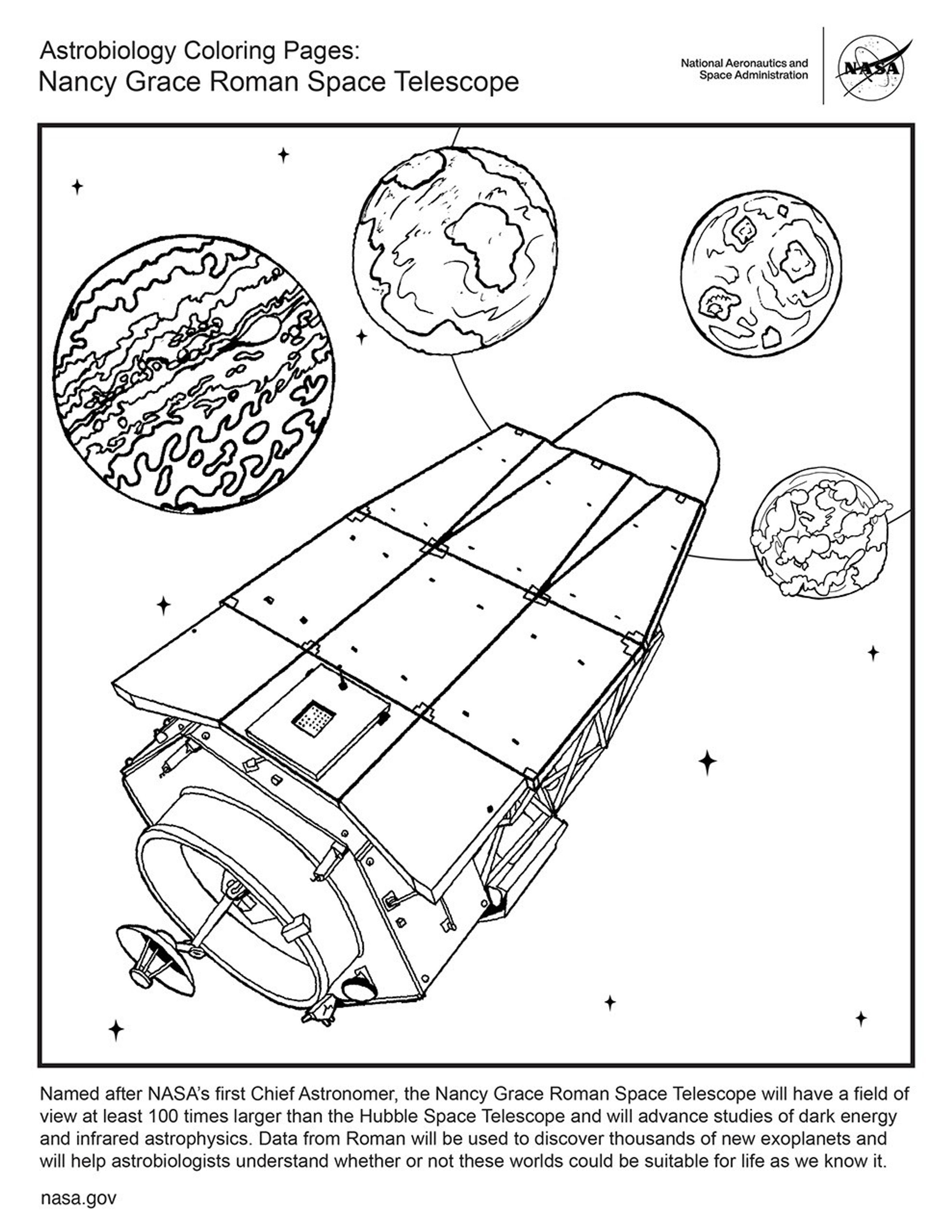


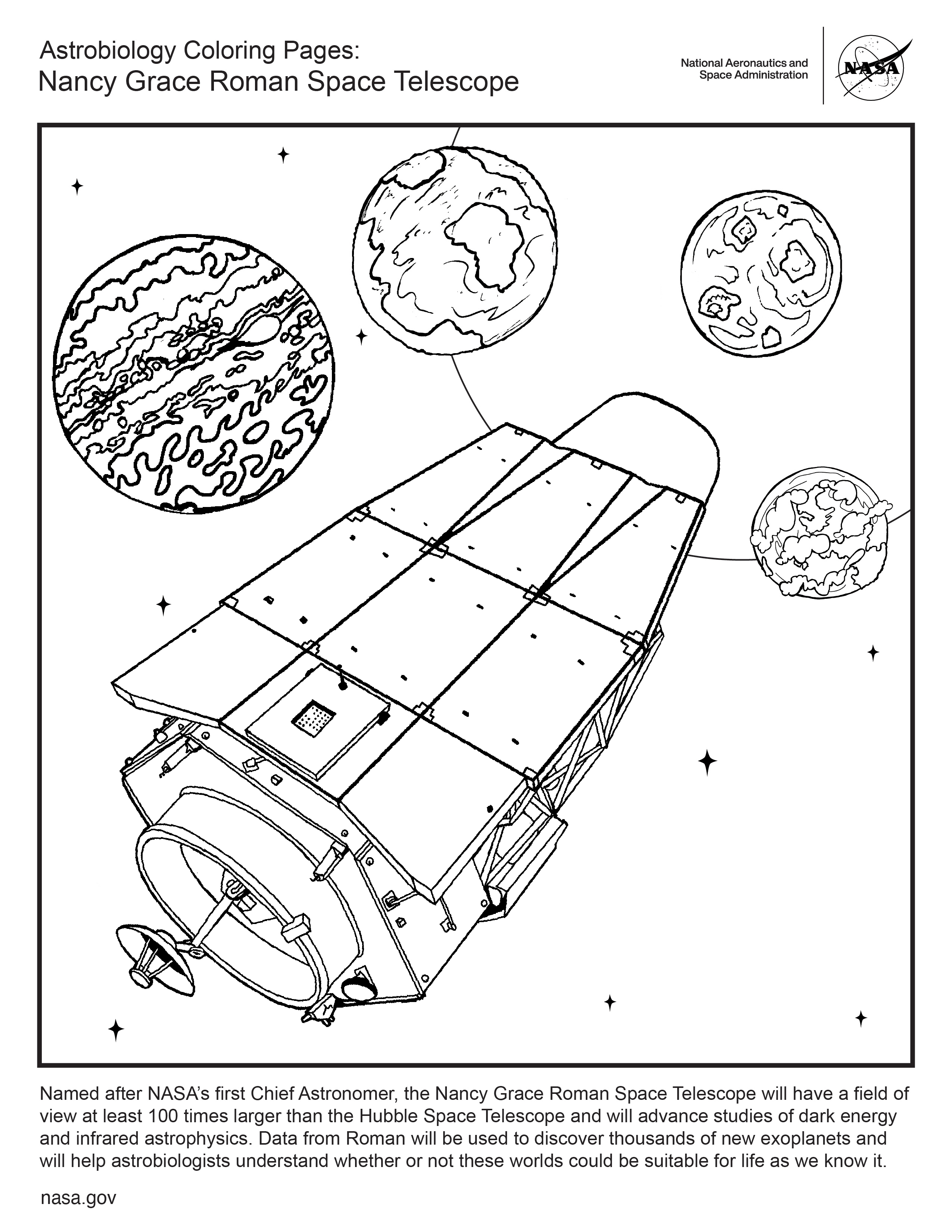
Nancy Grace Roman Space Telescope
Download free coloring pages to celebrate the legacy of Nancy Grace Roman, NASA's first Chief Astronomer, and the space telescope named in her honor! Get your paints and crayons ready and bring life to the extrasolar planets the mission discovers!

Color Me Mars!
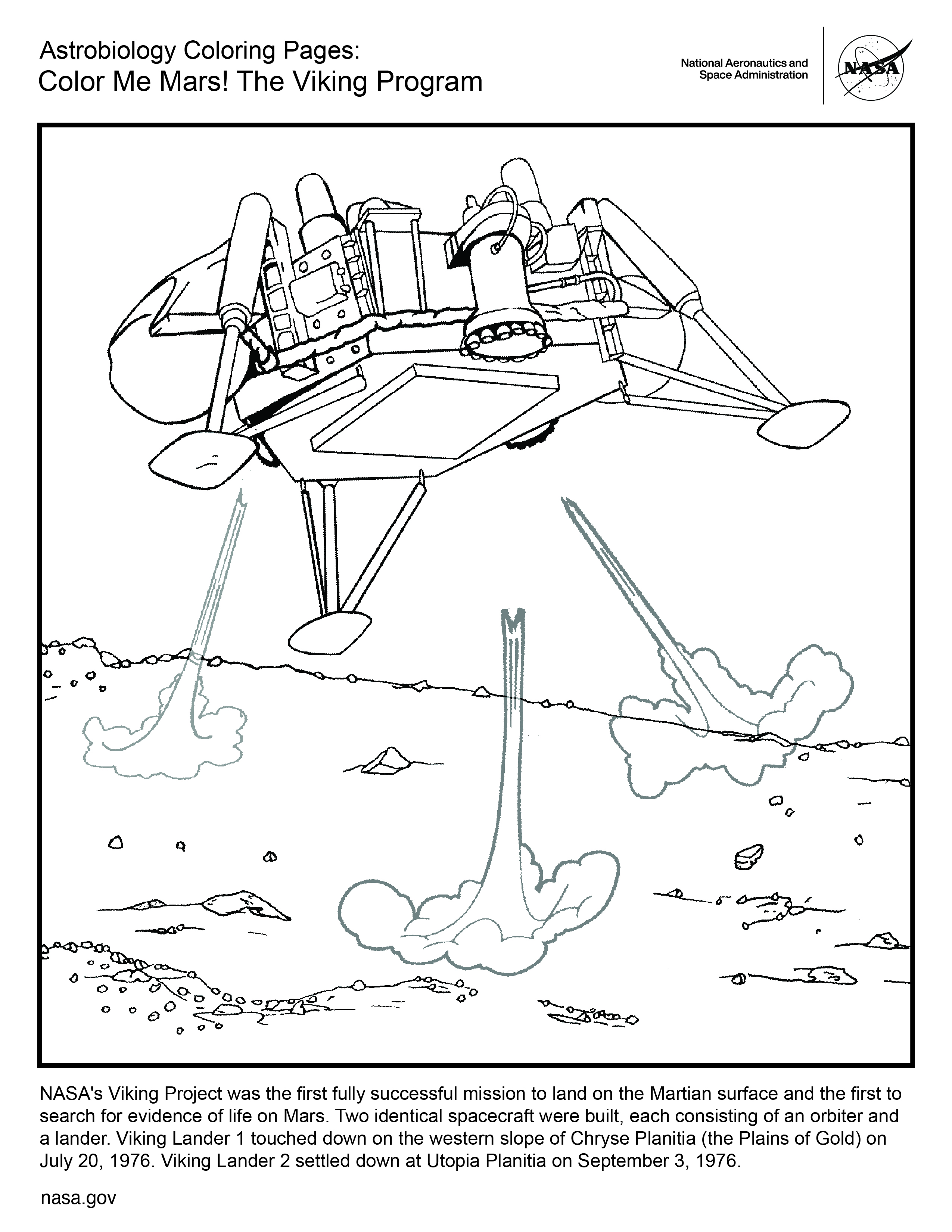
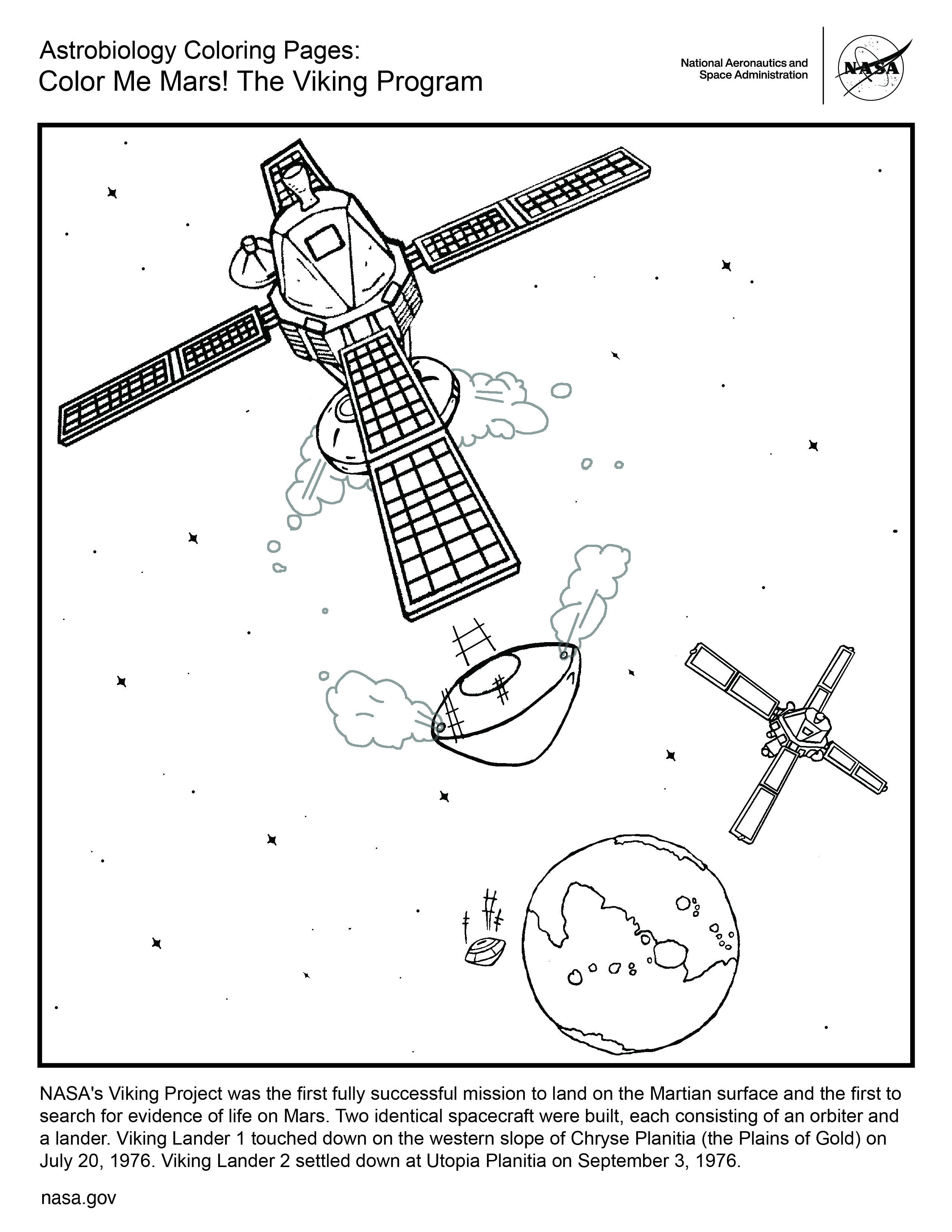
Download free coloring pages celebrating the successful landing of Viking Lander 1 on the surface of Mars! NASA's Viking Project was the first fully successful mission to land on the Martian surface and the first to search for evidence of life on Mars. Viking Lander 1 touched down on July 20, 1976. Dig out your markers, paints, and crayons and add some color to NASA's exploration of Mars!
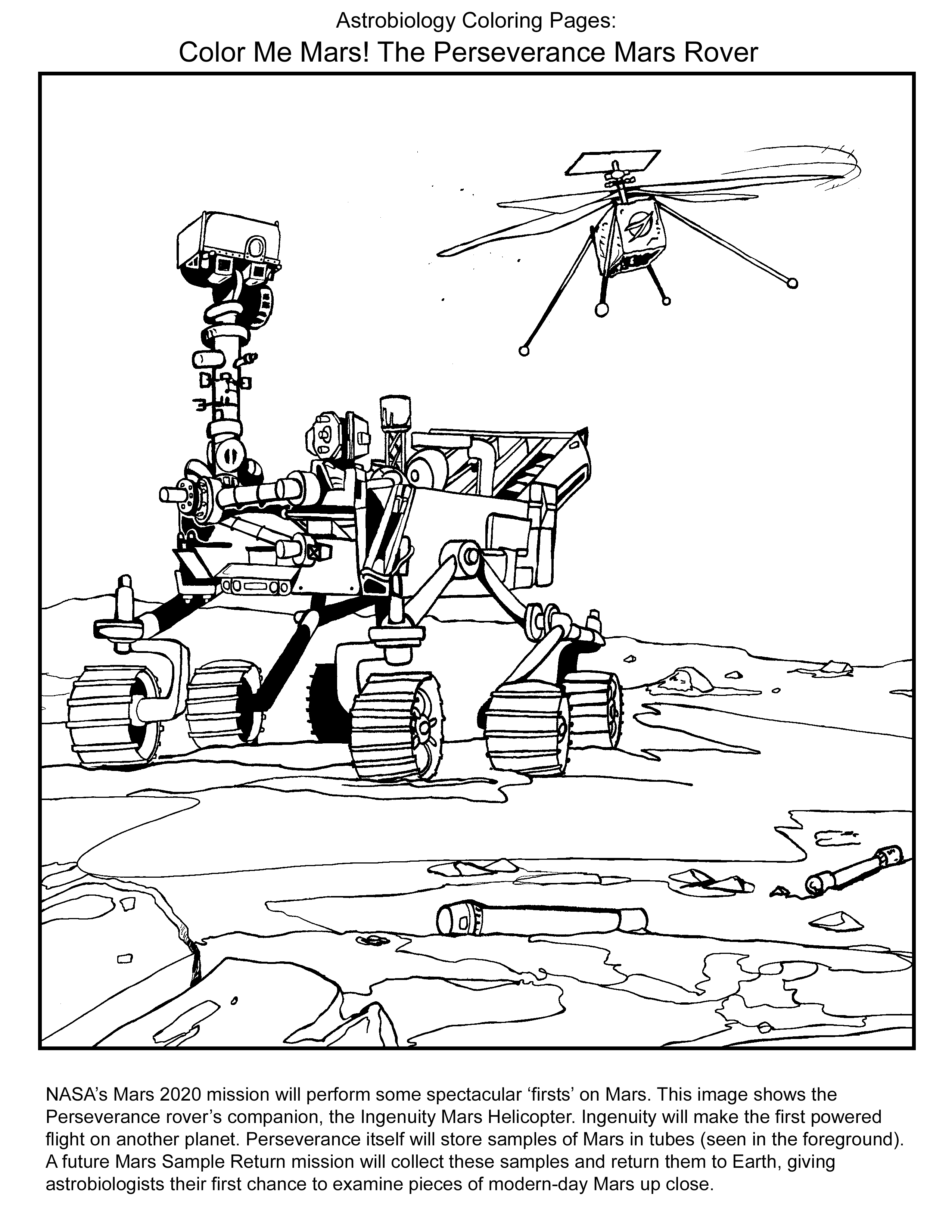
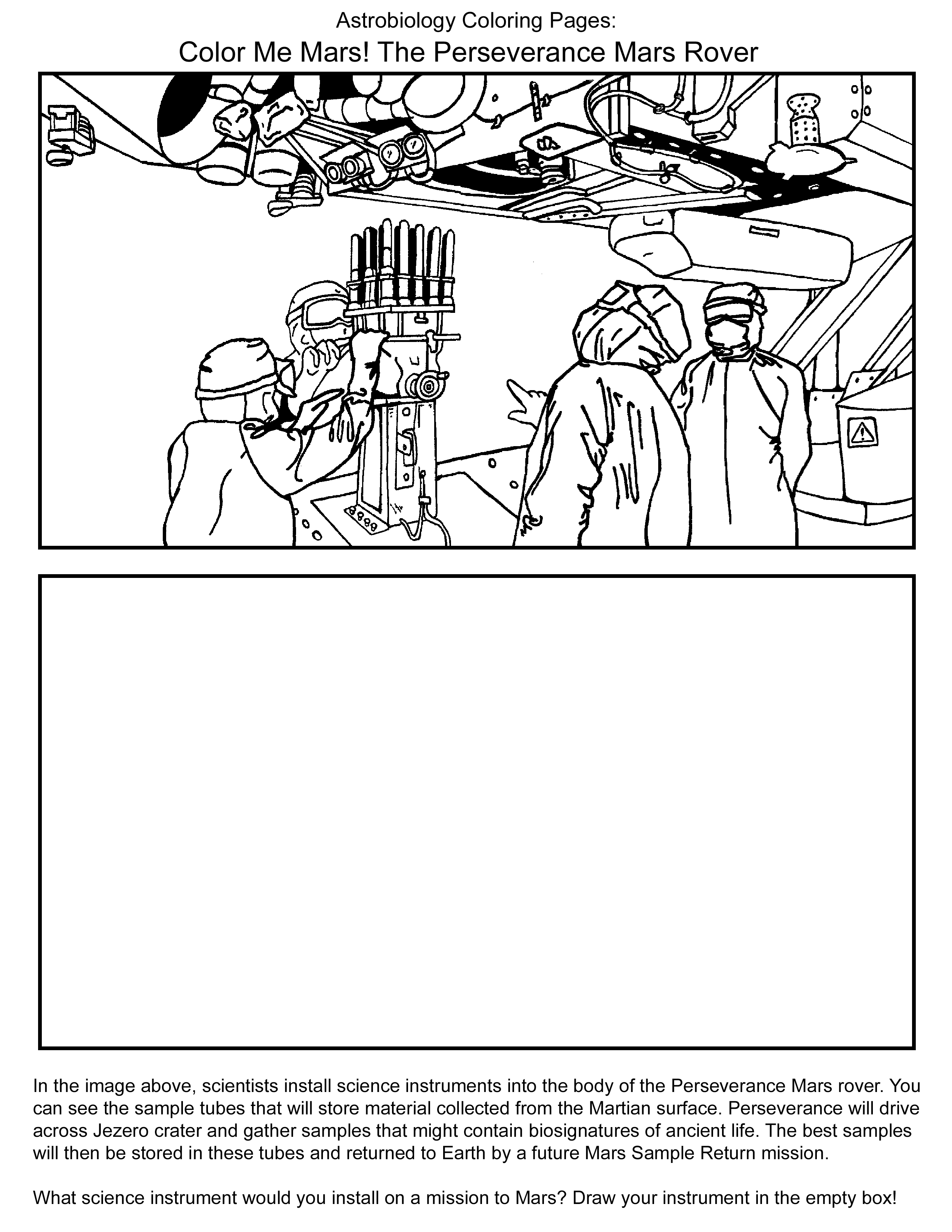
Also check out these additional coloring pages in the Color Me Mars series featuring the Perseverance rover. The artwork has been adapted from the Astrobiology Graphic Histories, and features moments in Perseverance’s mission to gather samples from the Martian surface at Jezero crater. Files are available as pdf files or image files.
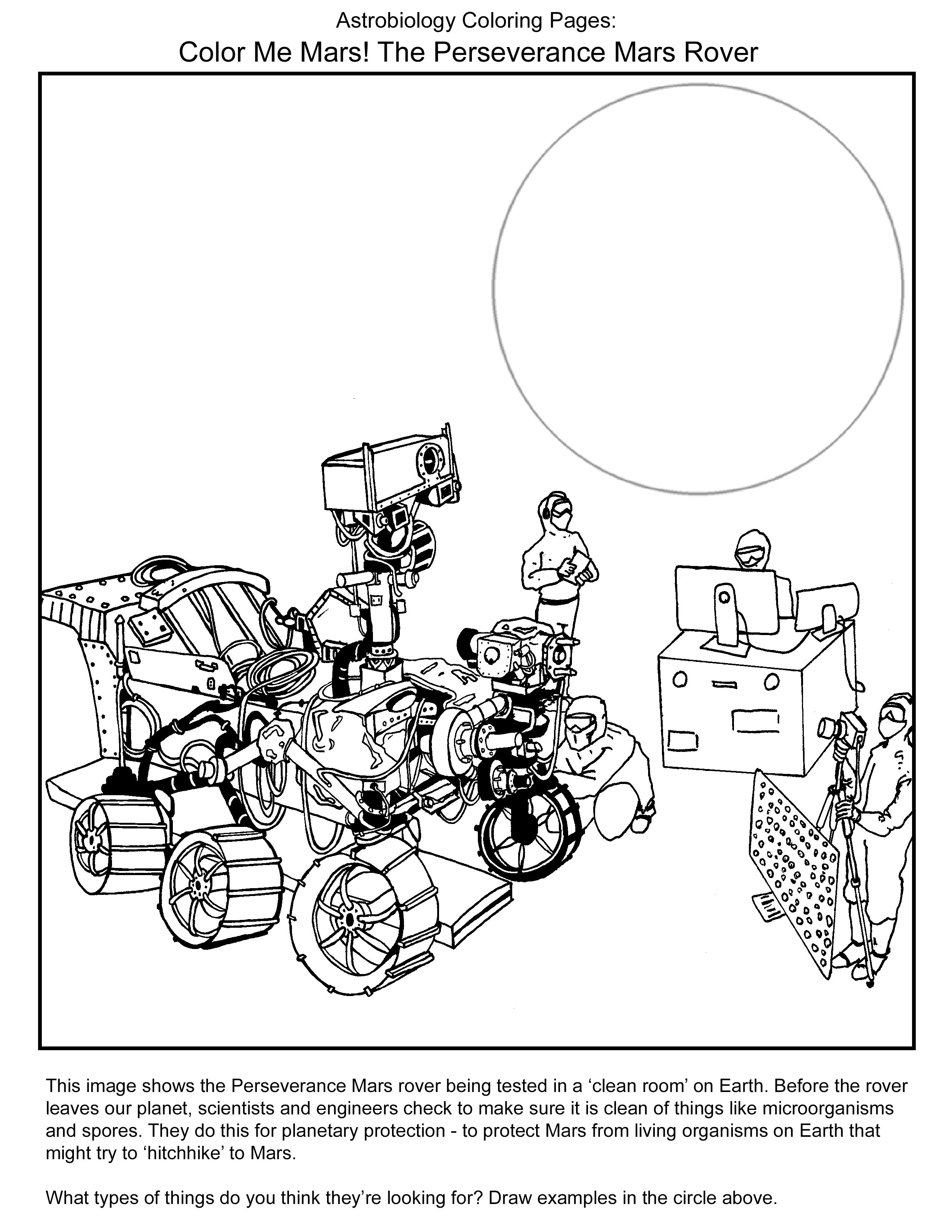
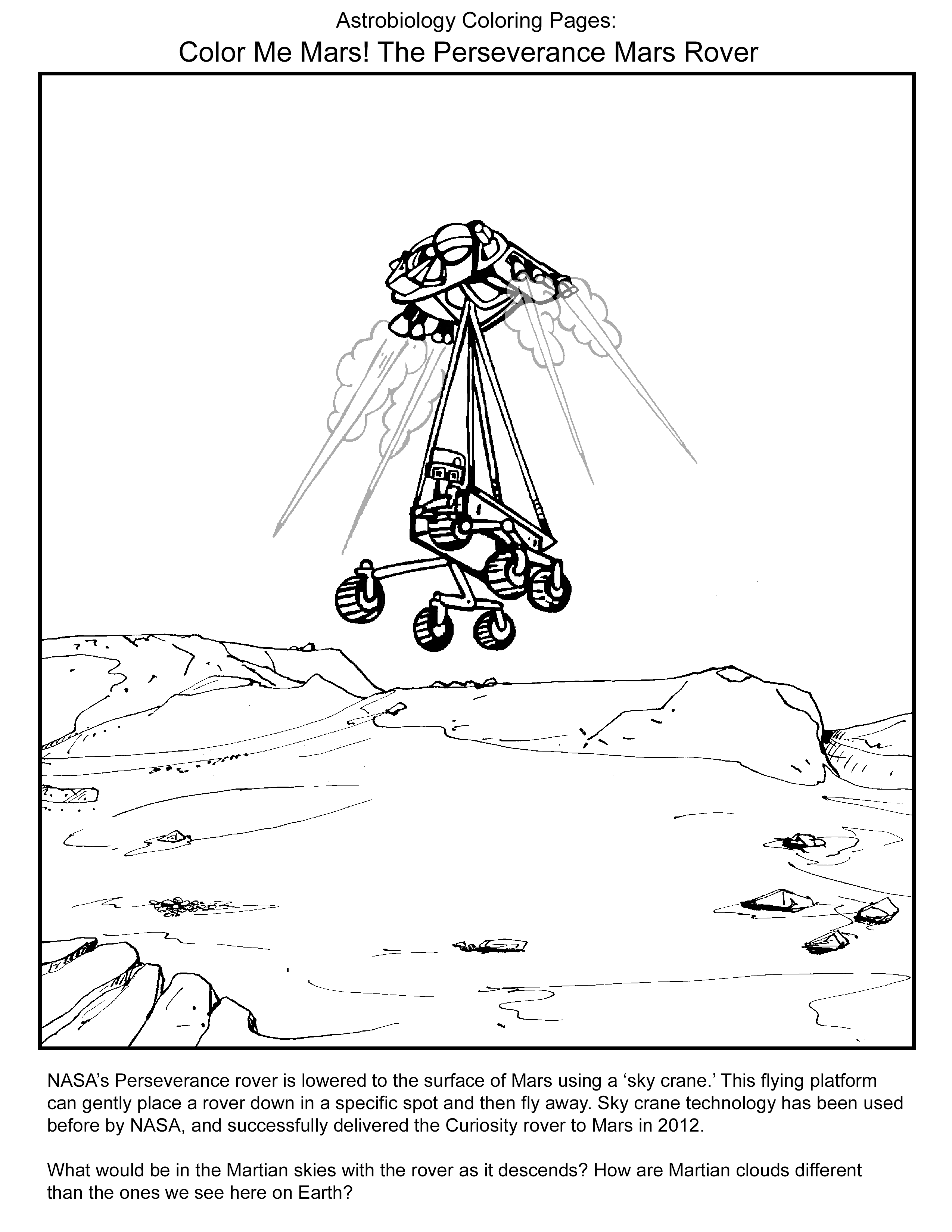
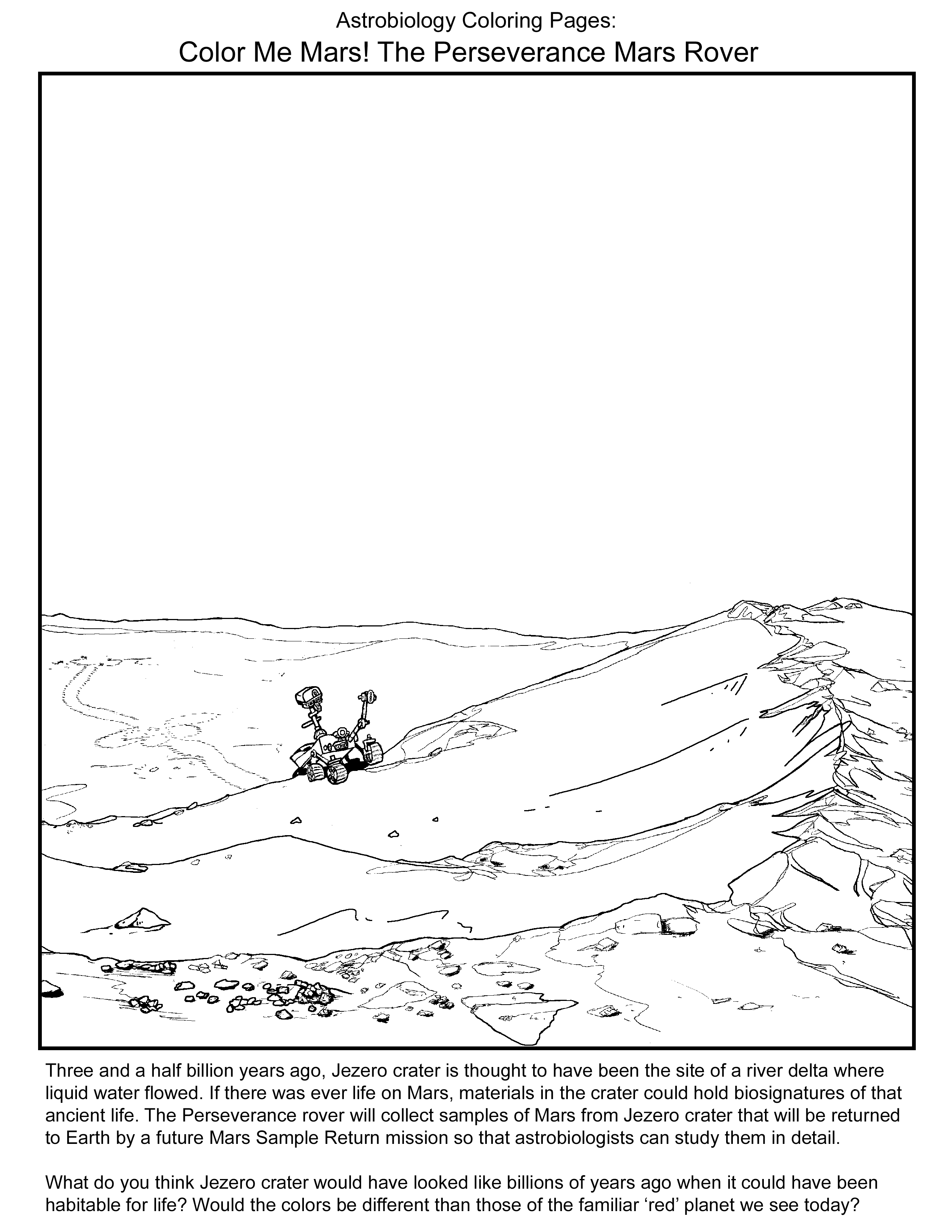
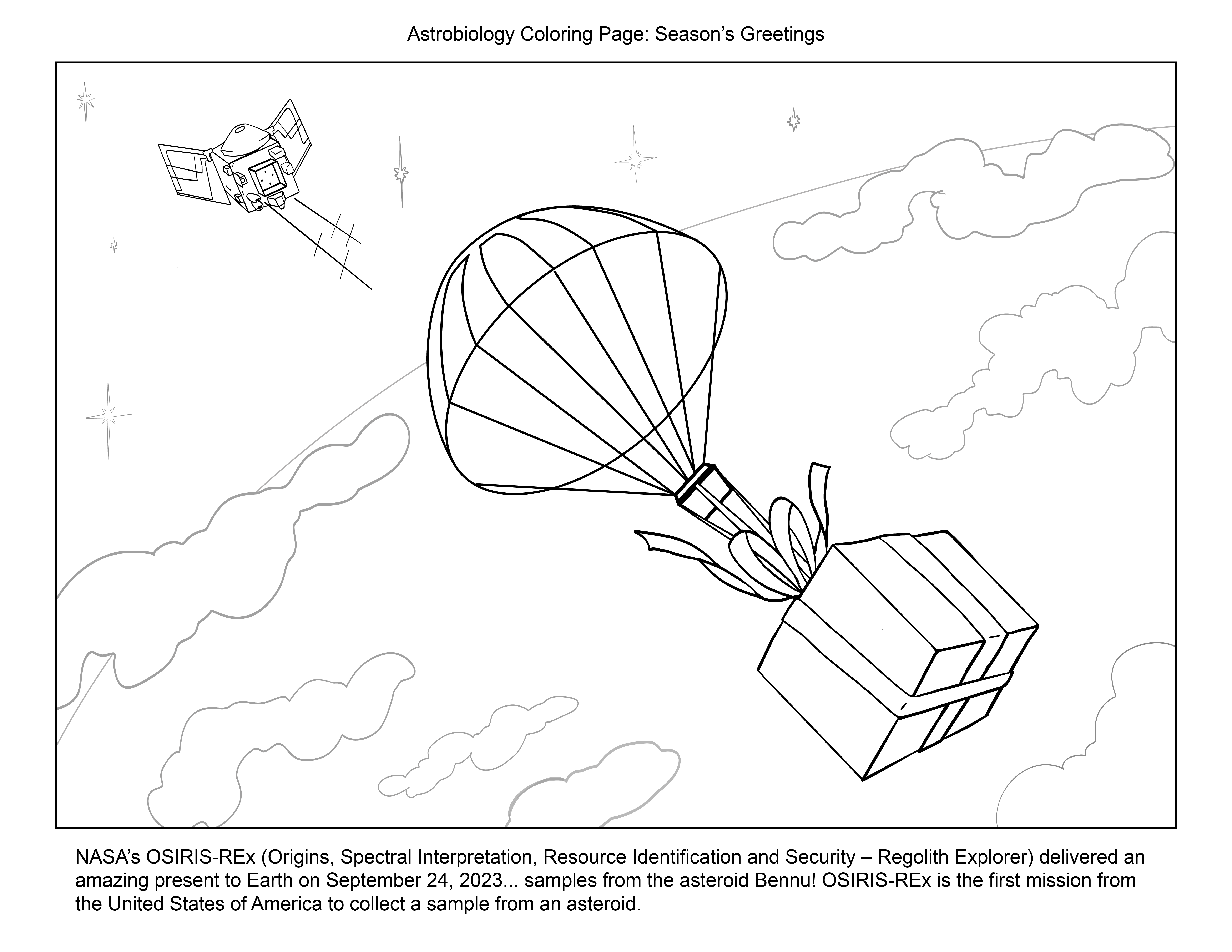
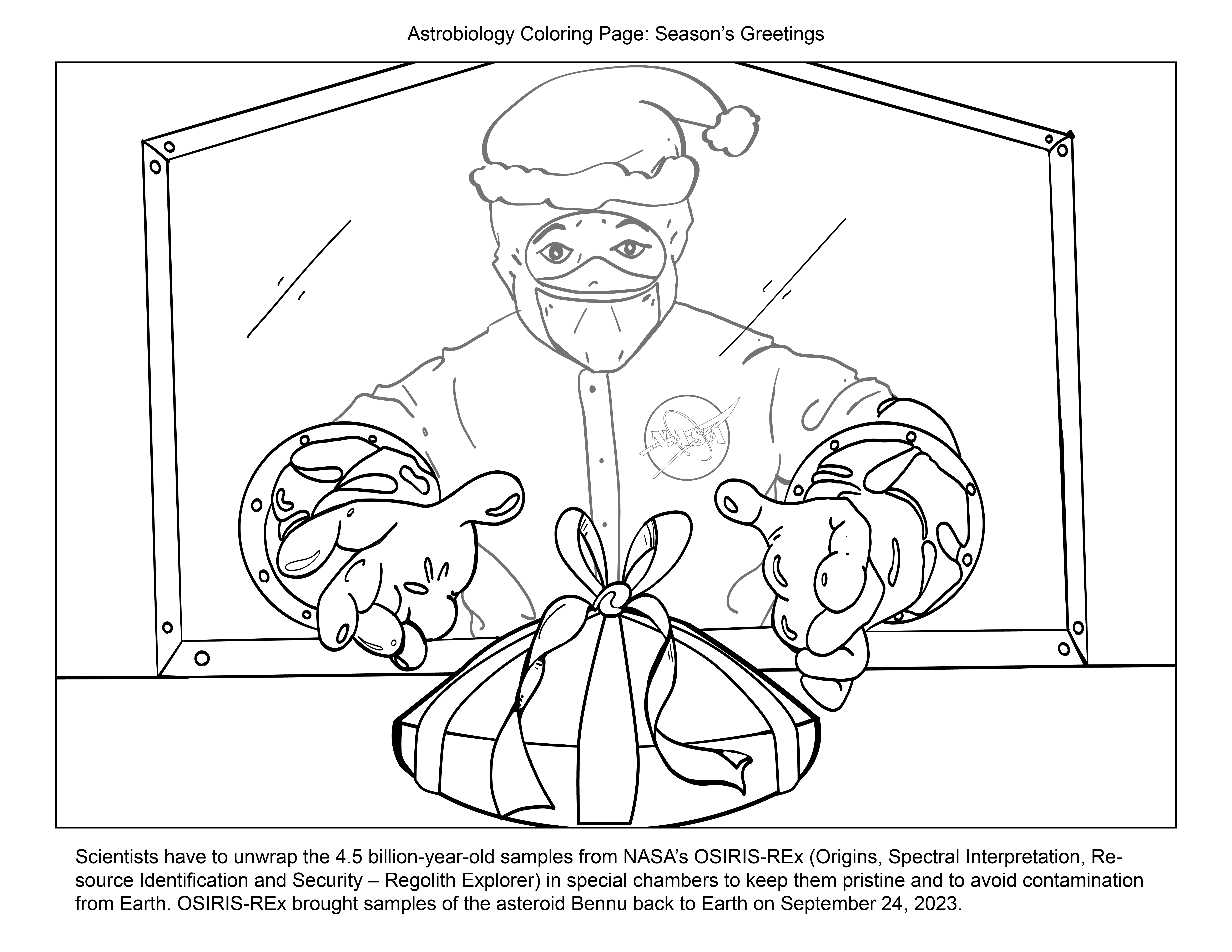
OSIRIS-REx Samples an Asteroid!
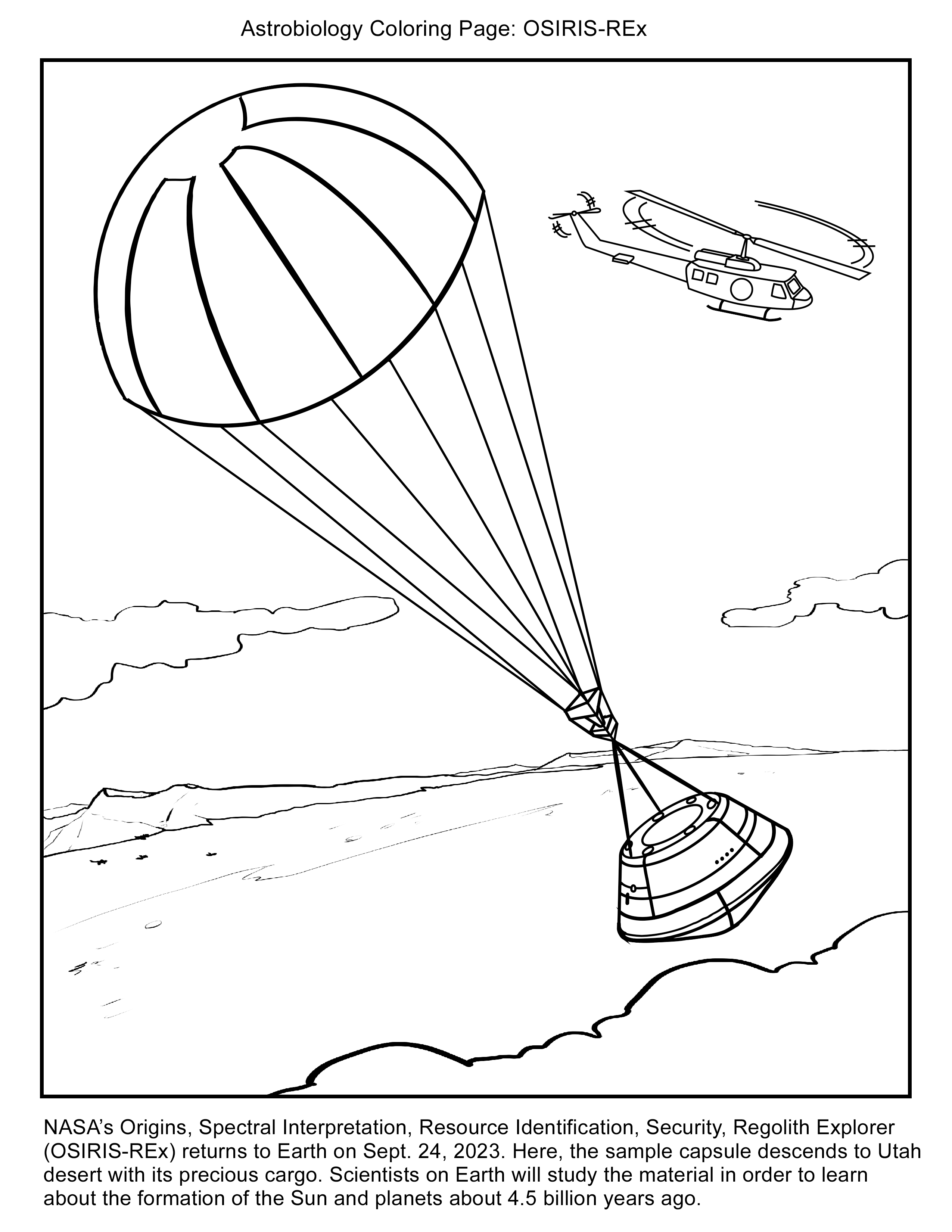
Download free coloring pages based on NASA’s Origins, Spectral Interpretation, Resource Identification, and Security-Regolith Explorer, or OSIRIS-REx, spacecraft! The artwork has been adapted from the Astrobiology Graphic Histories, and features the spectacular mission of OSIRIS-REx to collect samples from the asteroid Bennu and return them to scientists on Earth. Files are available as pdf files or png images.

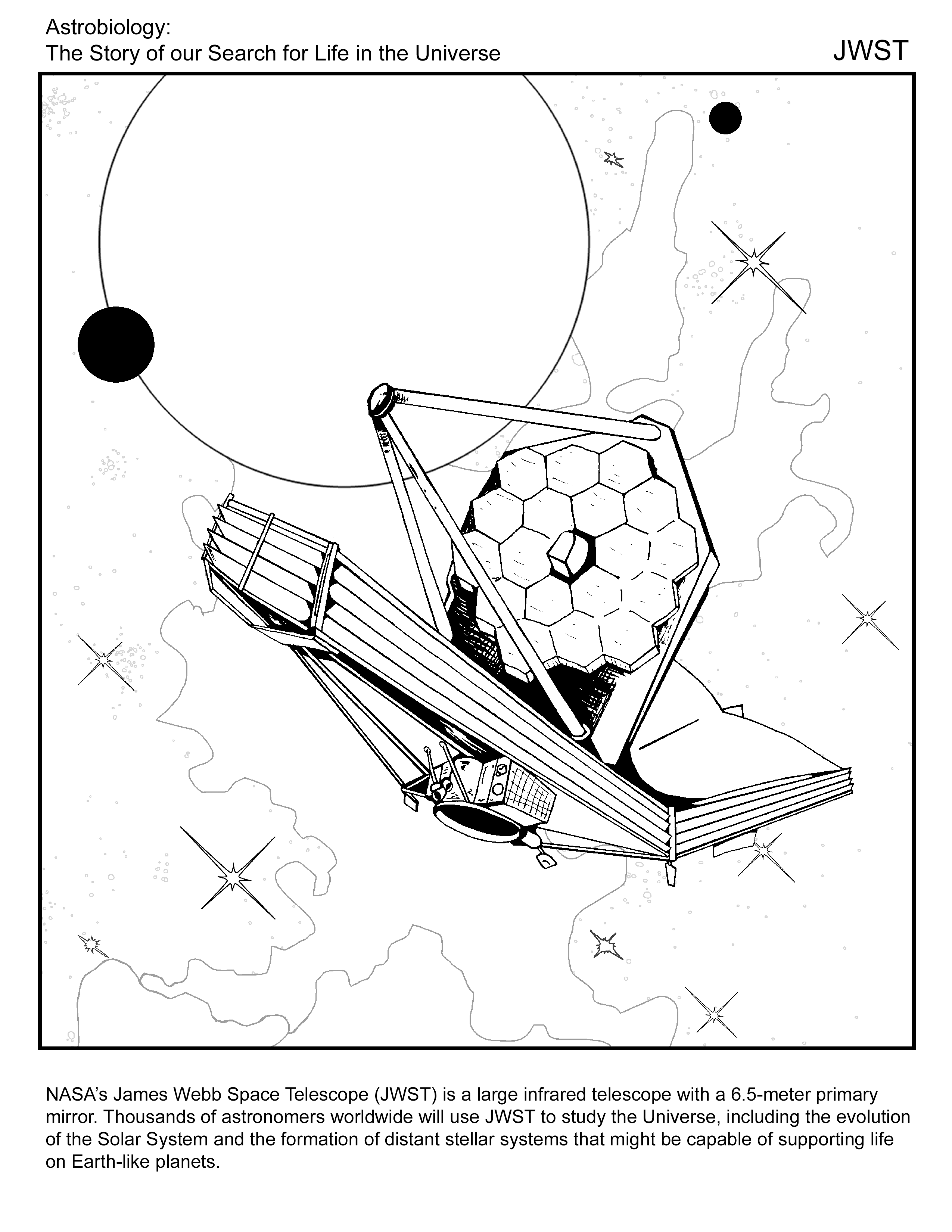
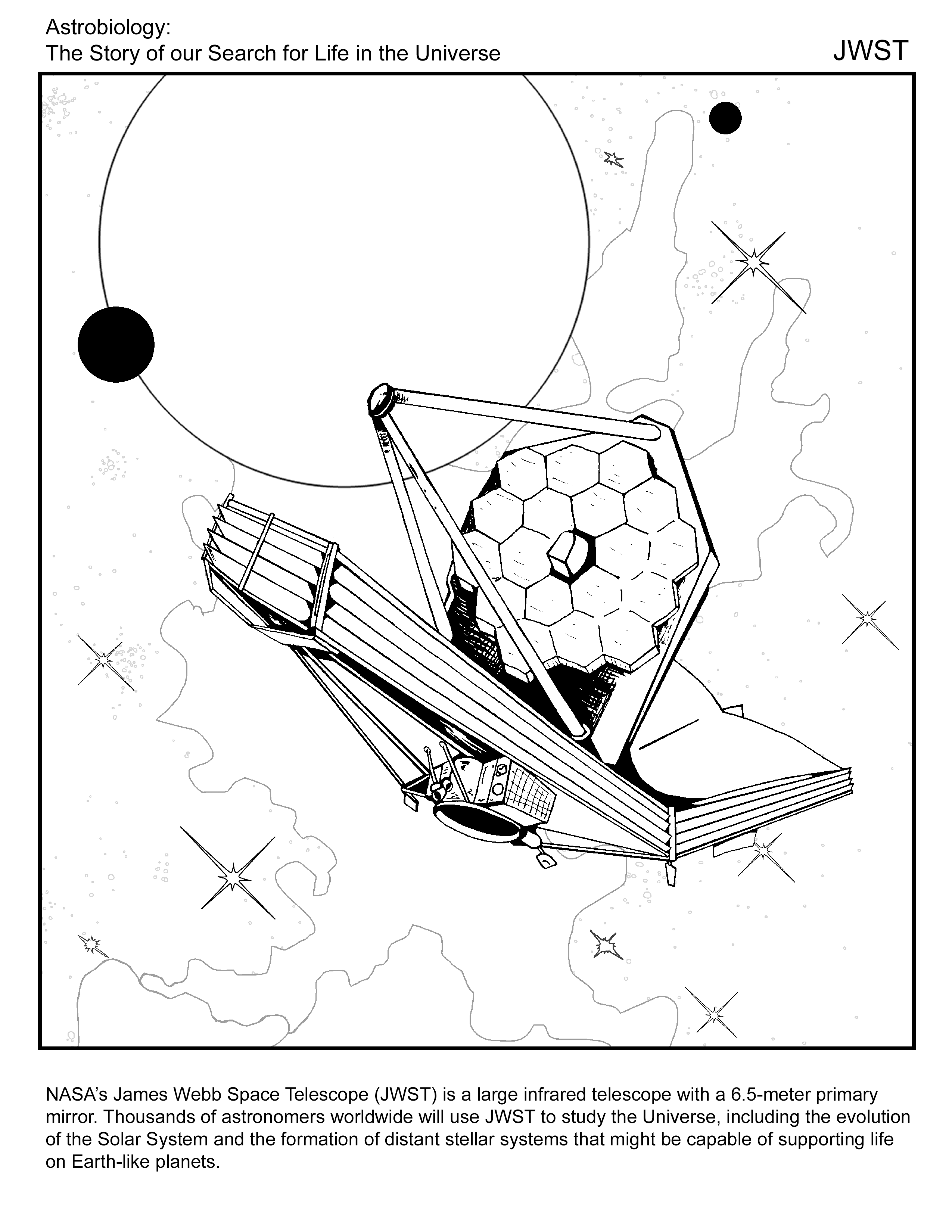
The James Webb Space Telescope
Download free coloring pages from NASA Astrobiology featuring the James Webb Space Telescope. The artwork has been adapted from the Astrobiology Graphic Histories, and features NASA’s newest, most powerful telescope in space. Files are available as pdf files or png images.
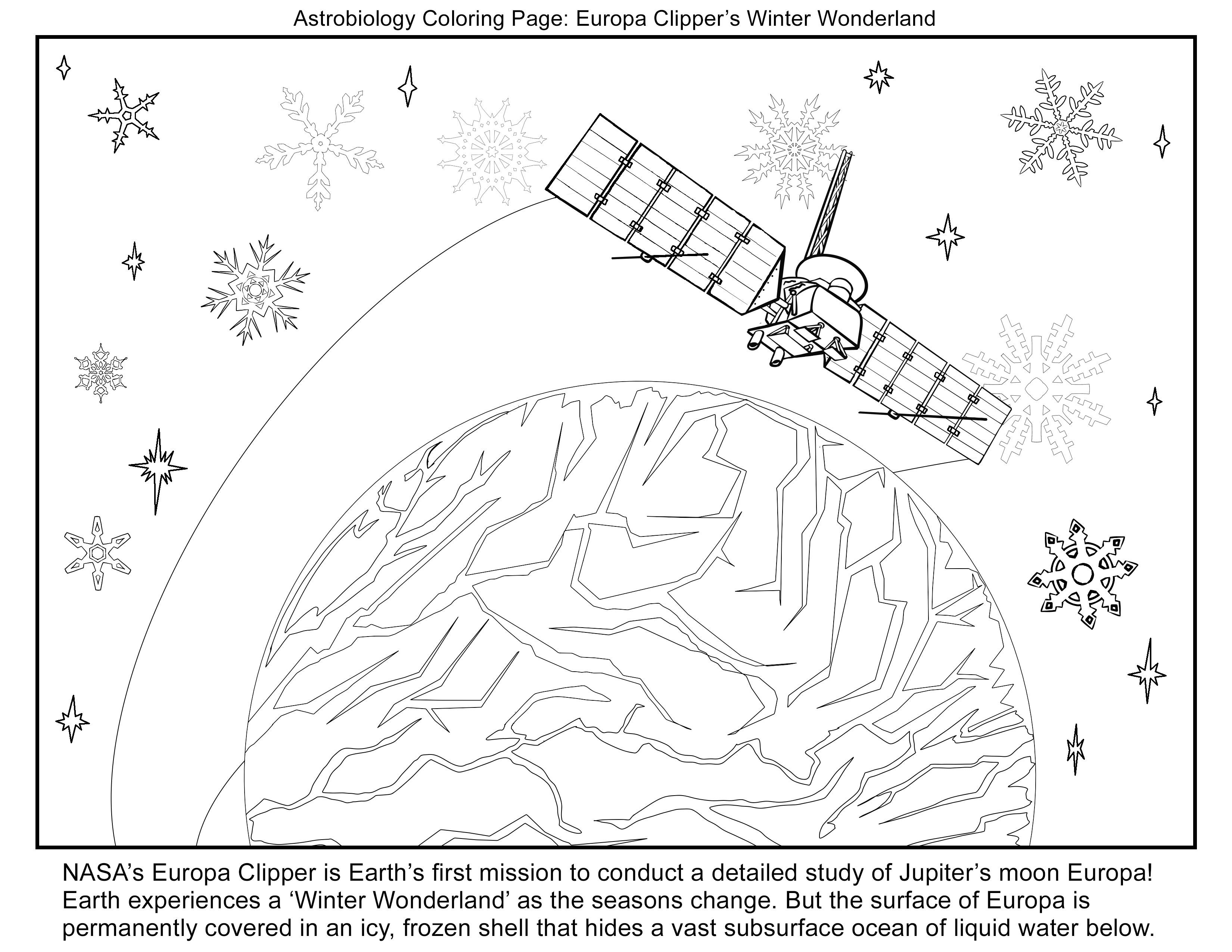
Clipper's Winter Wonderland and Other Seasonal Pages
Europa Clipper is Earth’s first mission to conduct a detailed study of Jupiter’s moon Europa. Earth experiences a 'Winter Wonderland' as the seasons change. But the surface of Europa is permanently covered in an icy, frozen shell that hides a vast subsurface ocean of liquid water. Download this free coloring page of Europa Clipper that has been adapted from the Astrobiology Graphic Histories. Files are available in pdf and png.

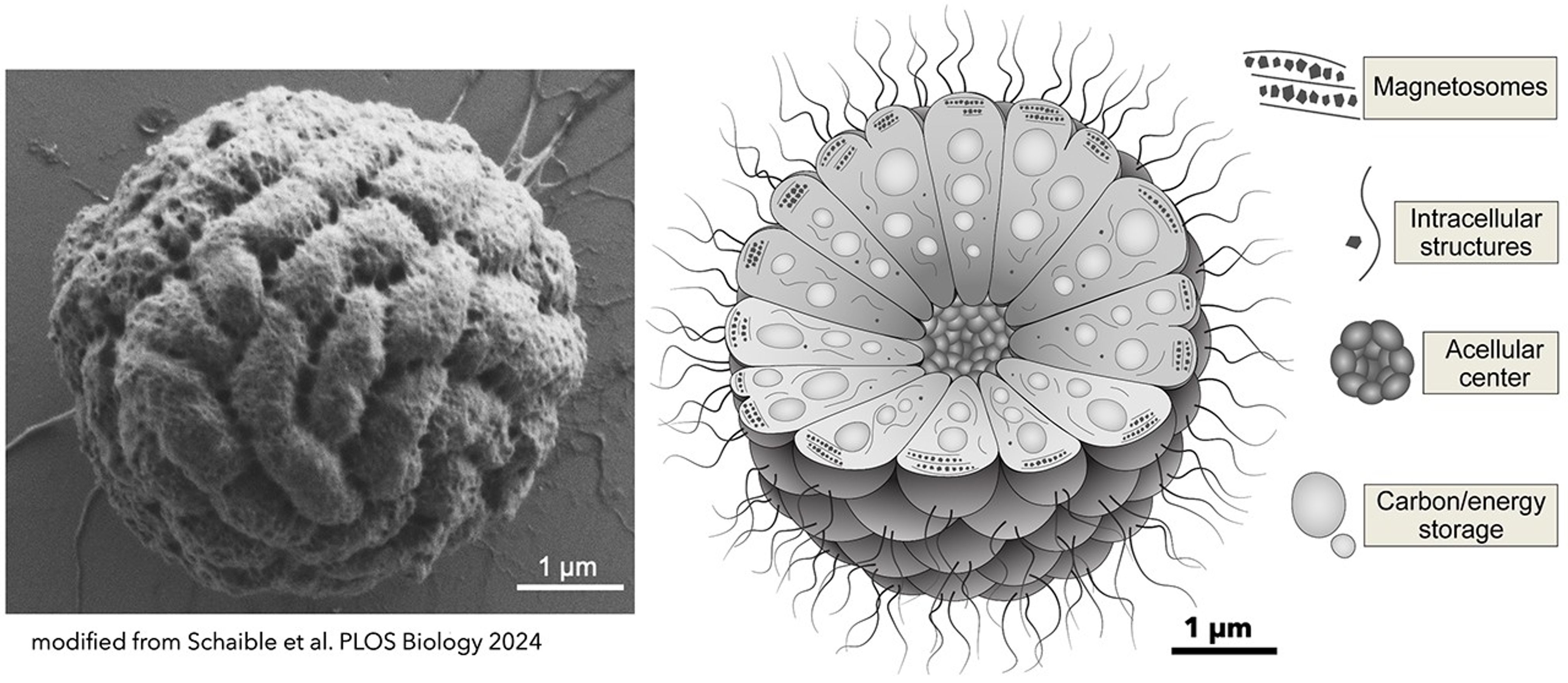
Draw Your Version of Extreme Life
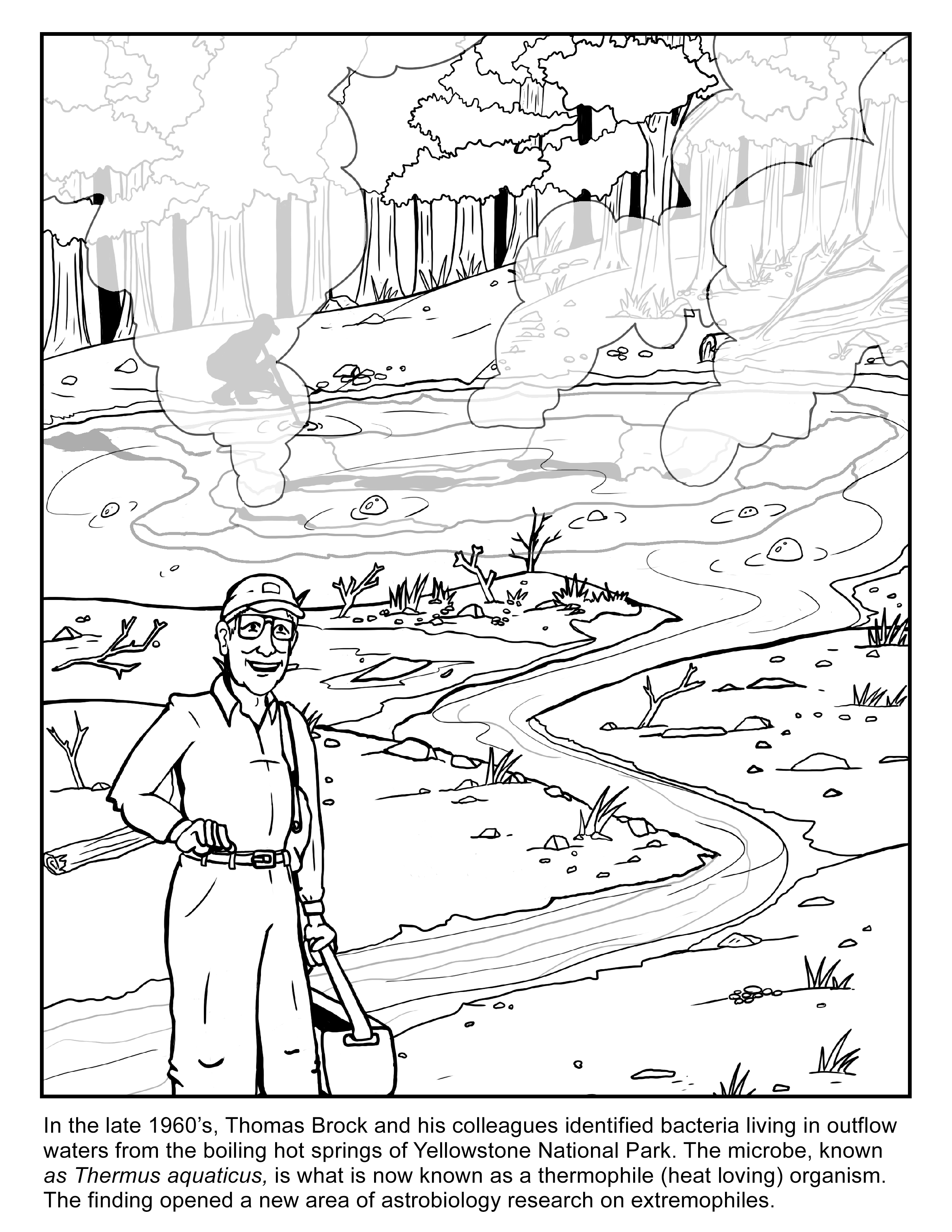
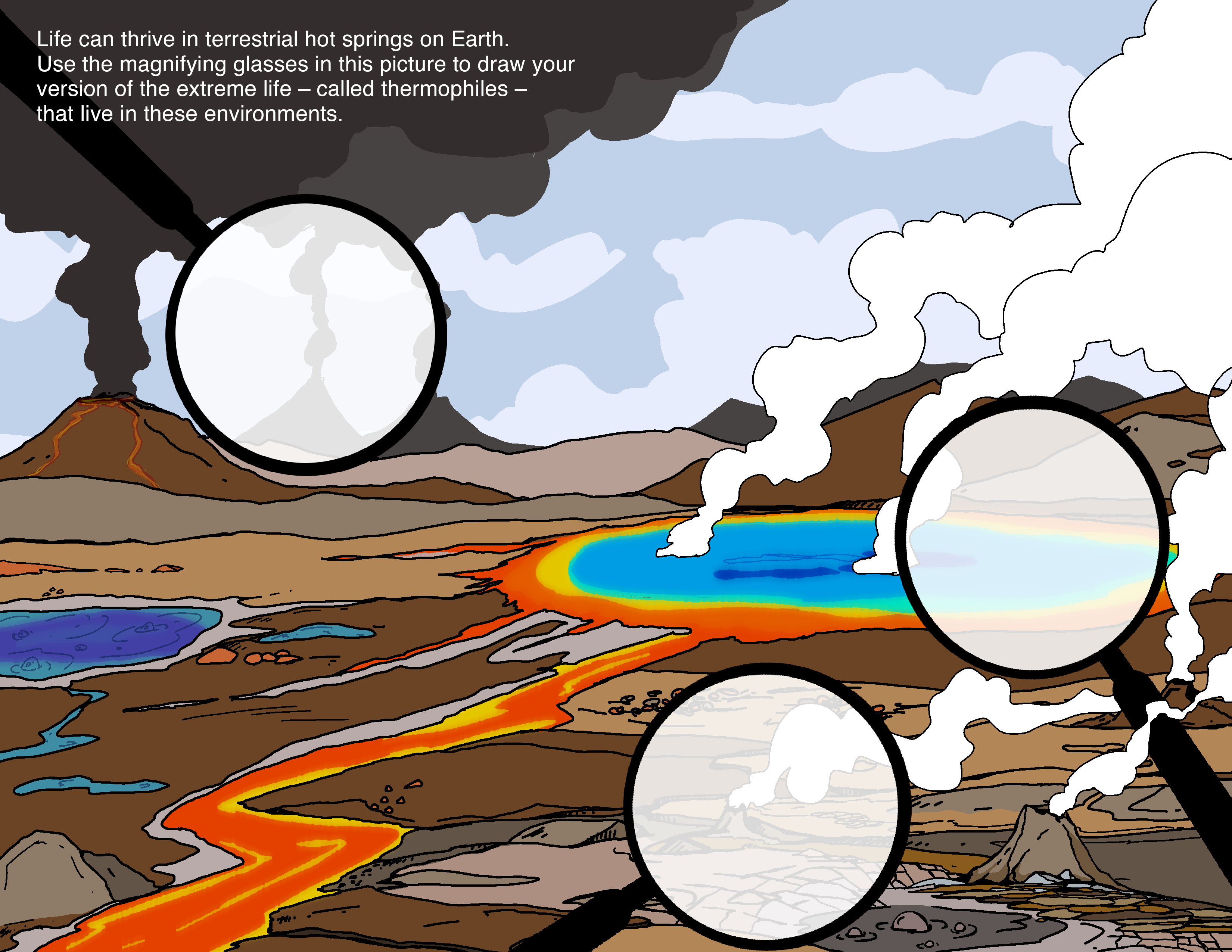
Go on a journey to understand Earth’s extremophiles. Scientists examine harsh environments on Earth in order to identify the mechanisms that life uses to survive at the limits of habitability. This information could provide clues as to whether or not life as we know it might live on other worlds in the Universe.
For NASA coloring pages directed at younger audiences, check out the NASA Science Space Place. Here you will find coloring pages featuring Perseverance, Mars, and other locations in the Solar System.
Even more coloring resources available from NASA Science: Share the Science, at: