





















7.2. How do we explore within our own Solar System for signs of life?
A core learning question from the Astrobiology Learning Progressions
Astrobiology Learning Progressions Navigation


Grades K-2 or Adult Naive Learner
We are all born scientists. We are curious. We look for patterns. We compare and contrast new things to our past experiences. For example, we all know our own homes well. We know what it looks like, sounds like, and feels like. When we visit a new place our minds naturally begin to compare and contrast to what we know. If you have ever changed homes, then you know we spend a lot of time and thought on what is similar and what is different. When we do this, we are using our scientific mind. Explorers in new lands do this in much the same way. Science is a way of thinking and learning.
Disciplinary Core Ideas
ESS1.A: The Universe and its Stars: Patterns of the motion of the Sun, moon, and stars in the sky can be observed, described, and predicted. (1-ESS1-1)
ETS1.A: Defining and Delimiting an Engineering Problem: Asking questions, making observations, and gathering information are helpful in thinking about problems. (K-ESS3-2)
ETS1.C: Optimizing the Design Solution: Because there is always more than one possible solution to a problem, it is useful to compare and test designs. (K-2-ETS1-3)
ETS1.A: Defining and Delimiting Engineering Problems: Asking questions, making observations, and gathering information are helpful in thinking about problems. (K-2-ETS1-1) ▪ Before beginning to design a solution, it is important to clearly understand the problem. (K-2-ETS1-1)
Crosscutting Concepts
Cause and Effect: Simple tests can be designed to gather evidence to support or refute student ideas about causes. (K-PS2-1, K-PS2-2)
Patterns: Patterns in the natural and human designed world can be observed and used as evidence. (K-LS1-1) ▪ Patterns in the natural world can be observed, used to describe phenomena, and used as evidence. (1-LS1-2, -LS3-1)
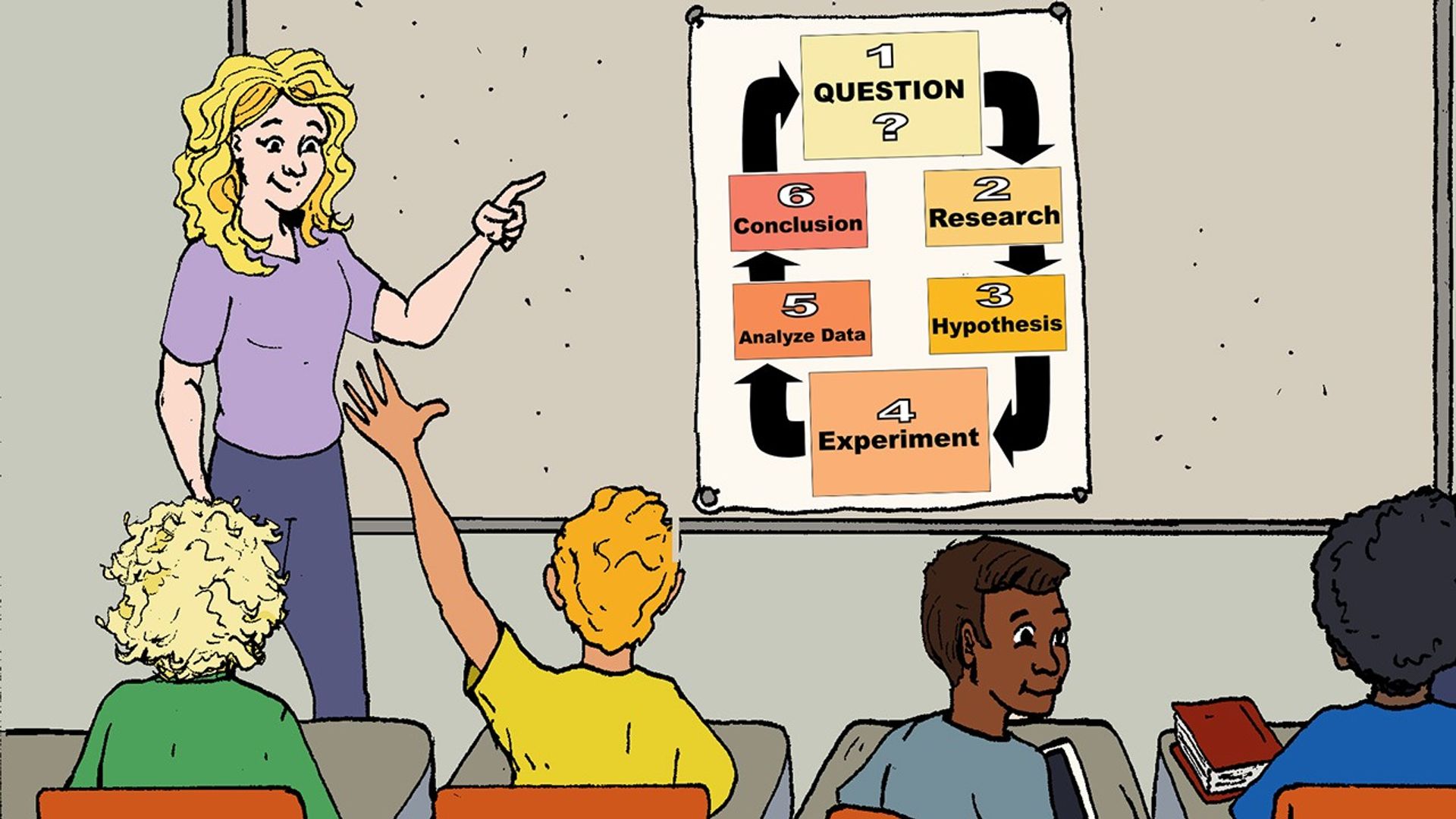
Big Ideas: Exploration and curiosity are hallmarks of being a scientist. Looking for patterns and understanding life on Earth helps in the search for life on other planets.
Boundaries: At this level, students can focus on thinking about exploring and how they do it through asking questions, observing, and thinking about what they learn.
K-5 Life in Icy Places. This is a lesson (two-three 45-minute sessions) about the field of astrobiology, the study of life in the universe, and ice as a preservative for evidence of life. Learners consider the relationship between ice and life as they investigate the conditions required for life to exist and sustain itself. They study the impact of freezing on microbes and life processes and learn about extremophiles, organisms that live in extreme conditions. Activities include small group miming, speaking, drawing, and/or writing. This is lesson 8 of 12 in the unit, Exploring Ice in the Solar System. Johns Hopkins Applied Physics Lab/Carnegie Science/NASA. http://messenger.jhuapl.edu/Learn/pdf/ice_icy.pdf
K-6 Soda Straw Rockets. In this challenging and fun 5E lesson (90 minutes), students build a paper rocket. Students investigate how a nose cone variation influences distance of flight. Aligned to standards in Science Education and Mathematics, this activity helps build 21st Century Skills in creativity, innovation, collaboration, information literacy, productivity, leadership and more and supports student exploration of planetary bodies, such as Mars, in the solar system. Arizona State University/NASA. http://marsed.asu.edu/soda-straw-rockets
K-12 Art and the Cosmic Connection. These lessons (three-eight 60 minute lessons) use the elements of art including shape, line, color, texture, value, to have students make sense of images of planets, asteroids, comets and moons to hone their observation skills and inspire them to ask questions. Learners of all ages can create a beautiful piece of art while learning to recognize the geology on planetary surfaces. The lessons begin with what we know here on Earth and then uses that awareness to help students interpret features on distant objects in the solar system. JPL /California Institute of Technology. https://www.jpl.nasa.gov/edu/teach/activity/art-the-cosmic-connection/

Grades 3-5 or Adult Emerging Learner
We can learn about our world by using our senses such as sight, hearing, smelling, and touching. We also investigate using measurement tools such as rulers and by using tools that enhance our senses like telescopes and microscopes. The type of tool we choose depends on what we want to learn about and how hard it is to investigate. For example, if we want to learn about a fish here on Earth, we might watch them, count them, and even catch and weigh them. When we think about learning more about our solar system, we must consider what we want to learn and what tools we could use. Also, we have to keep in mind getting to other places in our solar system can be hard because other planets are really far away.
So far, we’ve only sent humans to the Moon and back, and we’ve been using robots to explore other planets. Some of our spacecraft fly past a planet and take pictures. Other spacecraft have gone into orbit around other planets and stayed there to learn more. We’ve even sent out some robots that have landed on other worlds to explore. We send along special tools on these spacecraft that send information back to Earth so we can study those other worlds. There is much to learn about the other worlds in our solar system. Some places we think might even have living things on them. For us to find out, we need to keep exploring and sending our spacecraft out to these other worlds. We all think like scientists when we ask questions, investigate, and compare and contrast new things we find to things we already know. Similarly, the scientists who are looking for possible signs of life in other places in our solar system will compare and contrast those place with what we find here on Earth. In order to understand more of the nature of our universe we must continue to explore, use our senses and instruments, and consider how similar and different these places are. Then, we have to ask, “Why?”
Disciplinary Core Ideas
PS3.A: Definitions of Energy: Temperature is a measure of the average kinetic energy of particles of matter. The relationship between the temperature and the total energy of a system depends on the types, states, and amounts of matter present. (MS-PS3-3, MS-PS3-4)
PS3.D: Energy in Chemical Processes and Everyday Life: The chemical reaction by which plants produce complex food molecules (sugars) requires an energy input (i.e., from sunlight) to occur. In this reaction, carbon dioxide and water combine to form carbon-based organic molecules and release oxygen.
LS2.C: Ecosystem Dynamics, Functioning, and Resilience: Biodiversity describes the variety of species found in Earth’s terrestrial and oceanic ecosystems. The completeness or integrity of an ecosystem’s biodiversity is often used as a measure of its health. (MS-LS2-5)
ESS1.A: The Universe and Its Stars: Patterns of the apparent motion of the Sun, the Moon, and stars in the sky can be observed, described, predicted, and explained with models. (MS-ESS1-1) ▪ Earth and its solar system are part of the Milky Way galaxy, which is one of many galaxies in the universe. (MS-ESS1-2)
ESS1.B: Earth and the Solar System: The solar system consists of the Sun and a collection of objects, including planets, their moons, and asteroids that are held in orbit around the Sun by its gravitational pull on them. (MS-ESS1-2, MS-ESS1-3)
ESS2.A: Earth’s Materials and Systems: All Earth processes are the result of energy flowing and matter cycling within and among the planet’s systems. This energy is derived from the Sun and Earth’s hot interior. The energy that flows and matter that cycles produce chemical and physical changes in Earth’s materials and living organisms. (MS-ESS2-1)
ESS2.C: The Roles of Water in Earth’s Surface Processes: Water continually cycles among land, ocean, and atmosphere via transpiration, evaporation, condensation and crystallization, and precipitation, as well as downhill flows on land. (MS-ESS2-4) ▪ Global movements of water and its changes in form are propelled by sunlight and gravity. (MS-ESS2-4)
ESS3.A: Natural Resources: Humans depend on Earth’s land, ocean, atmosphere, and biosphere for many different resources. Minerals, fresh water, and biosphere resources are limited, and many are not renewable or replaceable over human lifetimes. These resources are distributed unevenly around the planet as a result of past geologic processes. (MS-ESS3-1)
ESS2.D: Weather and Climate: Weather and climate are influenced by interactions involving sunlight, the ocean, the atmosphere, ice, landforms, and living things. These interactions vary with latitude, altitude, and local and regional geography, all of which can affect oceanic and atmospheric flow patterns. (MS-ESS2-6) ▪ The ocean exerts a major influence on weather and climate by absorbing energy from the Sun, releasing it over time, and globally redistributing it through ocean currents. (MS-ESS2-6)
ETS1.A: Defining and Delimiting an Engineering Problem: Asking questions, making observations, and gathering information are helpful in thinking about problems. (K-ESS3-2)
ETS1.C: Optimizing the Design Solution: Because there is always more than one possible solution to a problem, it is useful to compare and test designs. (K-2-ETS1-3)
ETS1.A: Defining and Delimiting Engineering Problems: Asking questions, making observations, and gathering information are helpful in thinking about problems. (K-2-ETS1-1) ▪ Before beginning to design a solution, it is important to clearly understand the problem. (K-2-ETS1-1)
Crosscutting Concepts
Patterns: Similarities and differences in patterns can be used to sort and classify natural phenomena. (3-LS3-1) Patterns of change can be used to make predictions. (3-LS1-1, 4-PS4-1, 4-PS4-3, 5-ESS1-2)
Big Ideas: Exploration and curiosity are hallmarks of being a scientist. Looking for patterns and understanding life on Earth helps in the search for life on other planets. Scientists use their senses to learn about the world. They also use tools to study Earth and beyond. Spacecraft are used to explore other planets from space. Exploring other parts of the solar system helps increase knowledge about Earth, the solar system, and possible signs of life elsewhere.
Boundaries: At this level, students can begin thinking about tools that extend the information we get through our senses like telescopes and microscopes and what we can learn through their use.
K-5 Life in Icy Places. This is a lesson (two-three 45-minute sessions) about the field of astrobiology, the study of life in the universe, and ice as a preservative for evidence of life. Learners consider the relationship between ice and life as they investigate the conditions required for life to exist and sustain itself. They study the impact of freezing on microbes and life processes and learn about extremophiles, organisms that live in extreme conditions. Activities include small group miming, speaking, drawing, and/or writing. This is lesson 8 of 12 in the unit, Exploring Ice in the Solar System. Johns Hopkins Applied Physics Lab/Carnegie Science/NASA. http://messenger.jhuapl.edu/Learn/pdf/ice_icy.pdf
K-6 Soda Straw Rockets. In this challenging and fun 5E lesson (90 minutes), students build a paper rocket. Students investigate how a nose cone variation influences distance of flight. Aligned to standards in Science Education and Mathematics, this activity helps build 21st Century Skills in creativity, innovation, collaboration, information literacy, productivity, leadership and more and supports student exploration of planetary bodies, such as Mars, in the solar system. Arizona State University/NASA. http://marsed.asu.edu/soda-straw-rockets
K-12 Art and the Cosmic Connection. These lessons (three-eight 60 minute lessons) use the elements of art including shape, line, color, texture, value, to have students make sense of images of planets, asteroids, comets and moons to hone their observation skills and inspire them to ask questions. Learners of all ages can create a beautiful piece of art while learning to recognize the geology on planetary surfaces. The lessons begin with what we know here on Earth and then uses that awareness to help students interpret features on distant objects in the solar system. JPL /California Institute of Technology. https://www.jpl.nasa.gov/edu/teach/activity/art-the-cosmic-connection/
3-5 Red Planet: Read, Write, Explore. Lesson 1: A Quick Trip to Mars. Mars is one of the top places beyond Earth in the search for habitable conditions for past or present life. Using Google Earth/Mars and the recommended reading, students compare and contrast Earth and Mars using graphic organizers. This lesson is a part of a collection of six lessons that can be used individually or as a unit. Topics include Mars history, potential habitability, exploration, extreme life, gravity and changes over time. These lessons are flexible, standards-based, and focused on student reading and writing. University of Colorado/NASA. http://lasp.colorado.edu/home/maven/education-outreach/for-educators/red-planet/
3-5, 6-12 Rover Races. In this challenging and fun kinesthetic lesson (105 minutes), students begin to understand the challenges in communications that engineers face on NASA missions to Mars and other planetary surfaces. Students learn the limitations of operating a planetary rover and problem solving solutions by using this hands-on simulation. Aligned to standards in scientific and engineering practices, Rover Races help students learn to define problems, plan, coordinate and communicate. This activity for grades 3-12 engages students’ communication skills in a team environment. Arizona State University/NASA. http://marsed.asu.edu/lesson-plans-rover-races
5-12 Astrobiology Graphic Histories. Issue 3: Missions to the Inner Solar System. These astrobiology related graphic books are ingenious and artfully created to tell the story of astrobiology in a whole new way. The complete series illustrates the backbone of astrobiology from extremophiles, to exploration within and beyond the solar system. This issue chronicles the multitude of missions that have explored the region of our solar system that rests inside the asteroid belt. NASA . https://astrobiology.nasa.gov/resources/graphic-histories/
5-12 Astrobiology Graphic Histories. Issue 4: Missions to the Outer Solar System. These astrobiology related graphic books are ingenious and artfully created to tell the story of astrobiology in a whole new way. The complete series illustrates the backbone of astrobiology from extremophiles, to exploration within and beyond the solar system. This issue features missions to locations in the outer Solar System. NASA . https://astrobiology.nasa.gov/resources/graphic-histories/
6-12 (3-5 adaptable) Project Spectra! – Building a Fancy Spectroscope. In this activity, students build and decorate their own spectrographs using simple materials and holographic diffraction gratings. Spectrometry is a powerful tool in the search for life and the conditions for life in the solar system and beyond ( CLQ 7.1 ,7.3). After building the spectrographs, they observe the spectra of different light sources as a homework activity. University of Colorado, Boulder/NASA. http://lasp.colorado.edu/home/wp-content/uploads/2017/10/Building-a-Fancy-Spectrograph.pdf
6-12 (3-5 adaptable) Project Spectra! – Using a Fancy Spectroscope. In this activity, students use the spectrograph and homework from the activity “Building a Fancy Spectrograph.” Students look at various light sources and make conjectures about composition. Spectrometry is a powerful tool in the search for life and the conditions for life in the solar system and beyond ( CLQ 7.1, 7.3). University of Colorado, Boulder/NASA. http://lasp.colorado.edu/home/wp-content/uploads/2011/08/Using_Fancy_Spectrograph.pdf
6-12 (3-5 adaptable) Project Spectra! – A Spectral Mystery. In this lesson, students use the spectrograph from the “Building a Fancy Spectrograph” lesson to gather data about light sources. Using the data they’ve collected, students are able to make comparisons between different light sources and make conjectures about the composition of a mystery light source. Spectrometry is a powerful tool in the search for life and the conditions for life in the solar system and beyond ( CLQ 7.1, 7.3). University of Colorado, Boulder/NASA. http://lasp.colorado.edu/home/wp-content/uploads/2011/08/A_Spectral_Mystery.pdf
6-12 (3-5 adaptable) Project Spectra! – Designing and Open Spectrograph. In this two-class lesson, students build an open spectrograph to calculate the angle the light is transmitted through a holographic diffraction grating. After finding the desired angles, the students design their own spectrograph using the information learned. Spectrometry is a powerful tool in the search for life and the conditions for life in the solar system and beyond ( CLQ 7.1, 7.3). University of Colorado, Boulder/NASA. http://lasp.colorado.edu/home/wp-content/uploads/2017/10/Designing-an-Open-Spectrograph.pdf
6-12 (3-5 adaptable) Project Spectra! – Marvelous Martian Mineralogy. In the Marvelous Martian Mineralogy lesson, students use reflectometers to determine which minerals are present (from a set of knowns) in a sample of Mars soil simulant. This rich activity can be done with data only, with ALTA ii reflectometers and real mineral samples or with computer simulation. Identifying minerals through spectrometry is a powerful tool in the search for life and the conditions for life in the solar system and beyond. University of Colorado, Boulder/NASA. http://lasp.colorado.edu/home/wp-content/uploads/2011/08/Marvelous_Martian_Mineralogy.pdf
6-12 (3-5 adaptable) Project Spectra! – Star Light, Star Bright? Finding Remote Atmospheres. In “Star Light Star Bright? Finding Remote Atmospheres,” students explore stellar occultation events to determine if an imaginary dwarf planet “Snorkzat” has an atmosphere. Characterizing planetary bodies through spectrometry is a powerful tool in the search for life and the conditions for life in the solar system and beyond. University of Colorado, Boulder/NASA. http://lasp.colorado.edu/home/wp-content/uploads/2011/10/starlight_starbright_teacher.pdf
6-12 (3-5 adaptable) Project Spectra! – Enceladus, I Barely Knew You. In “Enceladus, I Barely Knew You” students establish whether Saturn’s small moon Enceladus has an atmosphere, whether the atmosphere encircles the whole moon, and whether it contributed to Saturn’s E-ring. Through data analysis students hypothesize attributes of Enceladus, a planet that has evidence of a water ocean under its icy crust. Characterizing planetary bodies through spectrometry is a powerful tool in the search for life and the conditions for life in the solar system and beyond. University of Colorado, Boulder/NASA. http://lasp.colorado.edu/home/wp-content/uploads/2011/10/starlight_starbright_teacher.pdf
6-12 (3-5 adaptable) Project Spectra! – Planet Designer: What’s Trending Hot? In the activity (two 50-minute lessons) Planet Designer: “What’s Trending Hot?” students use a computer game format of a featureless planet to deduce what variables affect the temperature of the planet. They control the distance to the Sun, Albedo, Density, size and greenhouse gases. Using computer simulation is a powerful tool in the search for life and the conditions for life in the solar system and beyond. University of Colorado, Boulder/NASA. http://lasp.colorado.edu/home/wp-content/uploads/2013/06/TrendingHot_teacher_20130617.pdf
Grades 6-8 or Adult Building Learner
Do you think Earth is the only place in our solar system that has life? Even though we haven’t discovered life anywhere else in our own solar system yet, there are many people who wonder if there was ever life, or might even be life right now, on other worlds right here around our own star. If there are some living things on maybe Mars or Enceladus, in the atmosphere of Venus or on a comet, how would we find it? We humans can learn a lot by interacting with the world and using our own senses to make discoveries. It is pretty hard to physically send humans to other worlds to explore. So far, the furthest humans have ever traveled away from our planet is just beyond the Moon. In 1970, the crew of Apollo 13 set the current record when they swung around the Moon at 248,655 miles (400,171 km) away from Earth. For us to send humans to worlds like Mars and the moons of the outer solar system, it’s going to take some time. In the meantime, we send out robotic spacecraft as explorers for us. Sometimes we send spacecraft that will fly by another world and collect information. They may even go into orbit around the planet or other object in order to study it. We also send robots that can land on the surface in order to look at these other worlds close-up!
When we design our spacecraft, we have to consider the kinds of instruments that we want to send along. They can include cameras and a variety of tools for studying the chemical and physical environments of the worlds the spacecraft are exploring. The instruments that we put on the spacecraft will depend on the type of spacecraft it is and if it’s going into orbit around a planet or landing and drive around, for instance, on the goals of the mission, and where it’s going. Because of the spacecraft that have observed Europa, a moon of Jupiter, we now know this moon is a world with an icy shell on top of a deep liquid water ocean. Our first images of Europa up close came from the spacecraft Pioneer 10 and 11 and Voyager 2 in the 1970s. With Voyager, we saw for the first time that the icy crust of Europa had dark streaked lines all over it. These lines (which we refer to as “lineae”) were the first indication that the icy surface could be cracked and might have an ocean below. The Galileo spacecraft, which spent 14 years studying Jupiter and its moons (from 1995 to 2003), had an instrument onboard for measuring magnetism. If you’ve ever put one magnet close to another, you’ve seen the effects of magnetism. We have tools that allow us to measure the effects of magnetism and they’re called “magnetometers”. In fact, a compass is actually a very simple type of magnetometer. Just as we can use a compass to tell us which way is north on Earth, a magnetometer can tell us about the magnetism coming from a planet or a moon. The magnetometer on Galileo showed us that Europa must have a salty liquid water ocean down below its surface. Can you think of why a liquid water ocean could be so important when looking for life?
On Earth, hydrothermal vents are a source of heat and energy on the ocean floor and have developed ecosystems around them where sunlight isn’t needed for energy. Could there be hydrothermal vent ecosystems within the ocean of Europa? With future spacecraft, we’ll fly by and even orbit Europa, taking pictures and looking for potential organic materials at, or near the surface. We may one day soon land a spacecraft there to dig into the ice and look for signs of life. There’s quite an interest in drilling down through the ice to look for life directly in the ocean. Since the ice is very thick, that will be a huge undertaking. Though challenging, it could be a really important step in looking for life in an ocean of an icy moon like Europa.
You may have heard about our exploration of Mars. We’ve sent quite a few spacecraft to Mars. There have been flybys and orbiters, landers, and even rovers that drive around on the surface. Mars is a cold, rocky planet with a thin atmosphere, but it’s also one of the key places that we’re looking at right now as a place where life might have happened. Long ago, Mars had rivers and lakes and maybe even an ocean of water at the surface. It had a denser atmosphere than it does today and many active volcanoes. Ancient Mars had the chemical ingredients for life: there was energy (solar, geothermal, and possibly chemical), and plenty of water. When we send our orbiters, landers, and rovers to Mars, we’re keeping an eye out for potential signs of ancient life. For instance, the Curiosity rover, which is active on Mars right now, has cameras for looking at the structure of the rocks and minerals, it has instruments for looking at organic molecules in the Martian soil, and it also has an instrument for learning about the kinds of minerals that are present in samples of rock. Using these tools, Curiosity is looking for signs of past habitable environments on Mars. There may even be some potential places on Mars where things are living right now. Mars has lava tubes (caves formed by volcanoes), water ice in the ice caps identified by the Mars Reconnaissance Orbiter ( MRO ), and might have places in the subsurface where water is liquid and where life could be present. Orbiters, landers, and rovers will continue to reveal more information about Mars and whether it had, or maybe even has, life.
We’re only just beginning in our work to better explore our solar system and use our spacecraft and various instruments to look for possible signs of past or present life. With some skillful engineering and a little imagination, we’ll be able to design and build better tools for studying the solar system. We may even one day send humans out to search for signs of extraterrestrial life in the solar system. Our exploration has only just begun.
Disciplinary Core Ideas
ESS1.A: The Universe and Its Stars: Patterns of the apparent motion of the Sun, the moon, and stars in the sky can be observed, described, predicted, and explained with models. (MS-ESS1-1) ▪ Earth and its solar system are part of the Milky Way galaxy, which is one of many galaxies in the universe. (MS-ESS1-2)
ESS1.B: Earth and the Solar System: The solar system consists of the Sun and a collection of objects, including planets, their moons, and asteroids that are held in orbit around the Sun by its gravitational pull on them. (MS-ESS1-2, MS-ESS1-3)
ESS1.C: The History of Planet Earth: The geologic time scale interpreted from rock strata provides a way to organize Earth’s history. Analyses of rock strata and the fossil record provide only relative dates, not an absolute scale. (MS-ESS1-4)
PS1.A: Structure and Properties of Matter: Substances are made from different types of atoms, which combine with one another in various ways. Atoms form molecules that range in size from two to thousands of atoms. (MS-PS1-1)
ETS1.A: Defining and Delimiting an Engineering Problem: The more precisely a design task’s criteria and constraints can be defined, the more likely it is that the designed solution will be successful. Specification of constraints includes consideration of scientific principles and other relevant knowledge that is likely to limit possible solutions.
ETS1.B: Developing Possible Solutions: There are systematic processes for evaluating solutions with respect to how well they meet the criteria and constraints of a problem.
ETS1.C: Optimizing the Design Solution: Although one design may not perform the best across all tests, identifying the characteristics of the design that performed the best in each test can provide useful information for the redesign process — that is, some of the characteristics may be incorporated into the new design. (MS-PS1-6) ▪ The iterative process of testing the most promising solutions and modifying what is proposed on the basis of the test results leads to greater refinement and ultimately to an optimal solution.
PS2.B: Types of Interactions: Electric and magnetic (electromagnetic) forces can be attractive or repulsive, and their sizes depend on the magnitudes of the charges, currents, or magnetic strengths involved and on the distances between the interacting objects. (MS-PS2-3) ▪ Gravitational forces are always attractive. There is a gravitational force between any two masses, but it is very small except when one or both of the objects have large mass — e.g., Earth and the Sun. (MS-PS2-4) ▪ Forces that act at a distance (electric, magnetic, and gravitational) can be explained by fields that extend through space and can be mapped by their effect on a test object (a charged object, or a ball, respectively). (MS-PS2-5)
PS4.C: Information Technologies and Instrumentation: Digitized signals (sent as wave pulses) are a more reliable way to encode and transmit information. (MS-PS4-3)
Crosscutting Concepts
Cause and Effect: Cause and effect relationships may be used to predict phenomena in natural or designed systems. (MS-ESS2-5) Systems and System Models ▪ Models can be used to represent systems and their interactions — such as inputs, processes and outputs — and energy, matter, and information flows within systems. (MS-ESS2-6)
Big Ideas: There may be other places in the solar system where life exists or once existed. Exploring beyond Earth is difficult and requires specialized tools carried on spacecraft. Exploration within the solar system has primarily focused on locations most likely to have a potential for life. Extreme environments on Earth might be similar to those that will be found on other worlds. Hydrothermal vents on Earth are a source of heat and energy on the ocean floor allowing ecosystems around them to flourish. Evidence suggests analogous geological structures may be present in other worlds, like on Jupiters moon Europa. Scientific and technological advancements have not yet advanced enough to send humans to many of these other worlds. However, robotic exploration has allowed humans to learn about enviroments they have not traveled to yet.
Boundaries: At this level, students are starting to think about how we explore beyond Earth to places we cannot yet go. Buildng on their understanding of how tools extend our ability to collect data, they consider spacecraft that carry instruments to analyze the chemical and physical properties of locations beyond Earth to search for signs of life.
K-6 Soda Straw Rockets. In this challenging and fun 5E lesson (90 minutes), students build a paper rocket. Students investigate how a nose cone variation influences distance of flight. Aligned to standards in Science Education and Mathematics, this activity helps build 21st Century Skills in creativity, innovation, collaboration, information literacy, productivity, leadership and more and supports student exploration of planetary bodies, such as Mars, in the solar system. Arizona State University/NASA. http://marsed.asu.edu/soda-straw-rockets
K-12 Art and the Cosmic Connection. These lessons (three-eight 60 minute lessons) use the elements of art including shape, line, color, texture, value, to have students make sense of images of planets, asteroids, comets and moons to hone their observation skills and inspire them to ask questions. Learners of all ages can create a beautiful piece of art while learning to recognize the geology on planetary surfaces. The lessons begin with what we know here on Earth and then uses that awareness to help students interpret features on distant objects in the solar system. JPL /California Institute of Technology. https://www.jpl.nasa.gov/edu/teach/activity/art-the-cosmic-connection/
3-5, 6-12 Rover Races. In this challenging and fun kinesthetic lesson (105 minutes), students begin to understand the challenges in communications that engineers face on NASA missions to Mars and other planetary surfaces. Students learn the limitations of operating a planetary rover and problem solving solutions by using this hands-on simulation. Aligned to standards in scientific and engineering practices, Rover Races help students learn to define problems, plan, coordinate and communicate. This activity for grades 3-12 engages students’ communication skills in a team environment. Arizona State University/NASA. http://marsed.asu.edu/lesson-plans-rover-races
5-12 Astrobiology Graphic Histories. Issue 3: Missions to the Inner Solar System. These astrobiology related graphic books are ingenious and artfully created to tell the story of astrobiology in a whole new way. The complete series illustrates the backbone of astrobiology from extremophiles, to exploration within and beyond the solar system. This issue chronicles the multitude of missions that have explored the region of our solar system that rests inside the asteroid belt. NASA . https://astrobiology.nasa.gov/resources/graphic-histories/
5-12 Astrobiology Graphic Histories. Issue 4: Missions to the Outer Solar System. These astrobiology related graphic books are ingenious and artfully created to tell the story of astrobiology in a whole new way. The complete series illustrates the backbone of astrobiology from extremophiles, to exploration within and beyond the solar system. This issue features missions to locations in the outer Solar System. NASA . https://astrobiology.nasa.gov/resources/graphic-histories/
6-8 SpaceMath Problem 335: Methane Lakes on Titan. Students use a recent Cassini radar image of the surface of Titan to estimate how much methane is present in the lakes that fill the image, and compare the volume to that of the freshwater lake, Lake Tahoe. [Topics: estimating irregular areas; calculating volume from area x height; scaled images] https://spacemath.gsfc.nasa.gov/astrob/6Page148.pdf
6-8 SpaceMath Problem 267: Identifying Materials by their Reflectivity. The reflectivity of a material can be used to identify it. This is important when surveying the lunar surface for minerals, and also in creating ‘green’ living environments on Earth. [Topics: percentage, interpreting tabular data, area] https://spacemath.gsfc.nasa.gov/astrob/MMM1.pdf
6-8 or 9-12 Question Mars. This three-hour standalone lesson is part of an exploration unit – Mars Student Imaging Project ( MSIP ). Students act as planetary geologists and learn about how to identify the geologic history of Mars with an eye toward its habitability. Students mirror the actions of planetary scientists as they follow their curiosity in order to create a researchable question that can be investigated through real scientific data/images. Arizona State University/NASA. http://marsed.asu.edu/msip-question-mars
6-12 Astrobiology Math. This collection of math problems provides an authentic glimpse of modern astrobiology science and engineering issues, often involving actual research data. Students explore concepts in astrobiology through calculations. Relevant topics include Lakes of Methane on Titan (page 53) and Another Look at Solar Energy (page 45). NASA . https://www.nasa.gov/pdf/637832main_Astrobiology_Math.pdf
6-12 (3-5 adaptable) Project Spectra! – Building a Fancy Spectroscope. In this activity, students build and decorate their own spectrographs using simple materials and holographic diffraction gratings. Spectrometry is a powerful tool in the search for life and the conditions for life in the solar system and beyond ( CLQ 7.1 ,7.3). After building the spectrographs, they observe the spectra of different light sources as a homework activity. University of Colorado, Boulder/NASA. http://lasp.colorado.edu/home/wp-content/uploads/2017/10/Building-a-Fancy-Spectrograph.pdf
6-12 (3-5 adaptable) Project Spectra! – Using a Fancy Spectroscope. In this activity, students use the spectrograph and homework from the activity “Building a Fancy Spectrograph.” Students look at various light sources and make conjectures about composition. Spectrometry is a powerful tool in the search for life and the conditions for life in the solar system and beyond ( CLQ 7.1, 7.3). University of Colorado, Boulder/NASA. http://lasp.colorado.edu/home/wp-content/uploads/2011/08/Using_Fancy_Spectrograph.pdf
6-12 (3-5 adaptable) Project Spectra! – A Spectral Mystery. In this lesson, students use the spectrograph from the “Building a Fancy Spectrograph” lesson to gather data about light sources. Using the data they’ve collected, students are able to make comparisons between different light sources and make conjectures about the composition of a mystery light source. Spectrometry is a powerful tool in the search for life and the conditions for life in the solar system and beyond ( CLQ 7.1, 7.3). University of Colorado, Boulder/NASA. http://lasp.colorado.edu/home/wp-content/uploads/2011/08/A_Spectral_Mystery.pdf
6-12 (3-5 adaptable) Project Spectra! – Designing and Open Spectrograph. In this two-class lesson, students build an open spectrograph to calculate the angle the light is transmitted through a holographic diffraction grating. After finding the desired angles, the students design their own spectrograph using the information learned. Spectrometry is a powerful tool in the search for life and the conditions for life in the solar system and beyond ( CLQ 7.1, 7.3). University of Colorado, Boulder/NASA. http://lasp.colorado.edu/home/wp-content/uploads/2017/10/Designing-an-Open-Spectrograph.pdf
6-12 (3-5 adaptable) Project Spectra! – Marvelous Martian Mineralogy. In the Marvelous Martian Mineralogy lesson, students use reflectometers to determine which minerals are present (from a set of knowns) in a sample of Mars soil simulant. This rich activity can be done with data only, with ALTA ii reflectometers and real mineral samples or with computer simulation. Identifying minerals through spectrometry is a powerful tool in the search for life and the conditions for life in the solar system and beyond. University of Colorado, Boulder/NASA. http://lasp.colorado.edu/home/wp-content/uploads/2011/08/Marvelous_Martian_Mineralogy.pdf
6-12 (3-5 adaptable) Project Spectra! – Star Light, Star Bright? Finding Remote Atmospheres. In “Star Light Star Bright? Finding Remote Atmospheres,” students explore stellar occultation events to determine if an imaginary dwarf planet “Snorkzat” has an atmosphere. Characterizing planetary bodies through spectrometry is a powerful tool in the search for life and the conditions for life in the solar system and beyond. University of Colorado, Boulder/NASA. http://lasp.colorado.edu/home/wp-content/uploads/2011/10/starlight_starbright_teacher.pdf
6-12 (3-5 adaptable) Project Spectra! – Enceladus, I Barely Knew You. In “Enceladus, I Barely Knew You” students establish whether Saturn’s small moon Enceladus has an atmosphere, whether the atmosphere encircles the whole moon, and whether it contributed to Saturn’s E-ring. Through data analysis students hypothesize attributes of Enceladus, a planet that has evidence of a water ocean under its icy crust. Characterizing planetary bodies through spectrometry is a powerful tool in the search for life and the conditions for life in the solar system and beyond. University of Colorado, Boulder/NASA. http://lasp.colorado.edu/home/wp-content/uploads/2011/10/starlight_starbright_teacher.pdf
6-12 (3-5 adaptable) Project Spectra! – Planet Designer: What’s Trending Hot? In the activity (two 50-minute lessons) Planet Designer: “What’s Trending Hot?” students use a computer game format of a featureless planet to deduce what variables affect the temperature of the planet. They control the distance to the Sun, Albedo, Density, size and greenhouse gases. Using computer simulation is a powerful tool in the search for life and the conditions for life in the solar system and beyond. University of Colorado, Boulder/NASA. http://lasp.colorado.edu/home/wp-content/uploads/2013/06/TrendingHot_teacher_20130617.pdf
8-10 SpaceMath Problem 275: Water on the Moon! Students estimate the amount of water on the moon using data from Deep Impact/EPOXI and NASA ’s Moon Mineralogy Mapper experiment on the Chandrayaan-1 spacecraft. [Topics: geometry, spherical volumes and surface areas, scientific notation] https://spacemath.gsfc.nasa.gov/moon/6Page11.pdf
8-10 SpaceMath Problem 264: Water on Planetary Surfaces. Students work with watts and Joules to study melting ice. [Topics: unit conversion, rates] https://spacemath.gsfc.nasa.gov/astrob/Astro3.pdf
8-10 SpaceMath Problem 263: Ice or Water? Whether a planetary surface contains ice or liquid water depends on how much heat is available. Students explore the concepts of Specific heat and Latent Heat of Fusion to better understand and quantify the energy required for liquid water to exist under various conditions. [Topics: unit conversion, scientific notation] https://spacemath.gsfc.nasa.gov/astrob/Astro1.pdf
8-10 SpaceMath Problem 121: Ice on Mercury? Since the 1990’s, radio astronomers have mapped Mercury. An outstanding curiosity is that in the polar regions, some craters appear to have ‘anomalous reflectivity’ in the shadowed areas of these craters. One interpretation is that this is caused by subsurface ice. The MESSENGER spacecraft hopes to explore this issue in the next few years. In this activity, students measure the surface areas of these potential ice deposits and calculate the volume of water that they imply. [Topics: area of a circle; volume, density, unit conversion] https://spacemath.gsfc.nasa.gov/astrob/4Page23.pdf
Grades 9-12 or Adult Sophisticated Learner
The scientific exploration of potentially habitable locations within our solar system is one of the most intriguing and exciting undertakings in human history. Even though we haven’t discovered life anywhere else yet, there are a lot of people who wonder if there was ever life, or might even be life right now, on other worlds right here around our own star. What do you think? If there is some form of alien life here in our solar system, how would we go about finding it? We humans can learn a lot by interacting with the world and using our own senses to make discoveries, but it turns out to be pretty hard to send humans to other worlds to explore. So far, the furthest humans have ever traveled away from our planet is just beyond the Moon. But, for us to send humans to worlds like Mars and the moons of the outer solar system it’s going to take some time. So, in the meantime, we send out robotic spacecraft as explorers for us. Sometimes we send spacecraft that will fly by another world and collect information, sometimes they go into orbit around the planet or other object in order to study it, and sometimes we even send robots that can land on the surface in order to look at these other worlds close-up!
When we design our spacecraft, we have to consider the kinds of tools that we want to send along in order to study things. The instruments that we put on the spacecraft will depend on the type of spacecraft it is, on the goals of the mission, and on where it’s going. Flyby and orbiter missions will often have cameras that are meant for getting pictures of worlds from afar and instruments that are good at characterizing atmospheres or measuring radiation around the world. Landers and rovers will gather data about the geology and history of the surface of another world. They might even look for signs of life by measuring organic molecules in surface samples. Future technologies for our exploration might include things like ice drills, submarines, underground robots, and spacecraft that can survive in the atmospheres of gas giants.
Mars is a good example of a place where we’ve been looking for signs of past or present life. Mars is a cold, rocky planet with a thin atmosphere, but, long ago, Mars had rivers and lakes and maybe even an ocean of water at the surface. It had a denser atmosphere than it does today and lots of active volcanoes. Ancient Mars had the chemical ingredients for life, there was energy, and plenty of water. When we send our orbiters, landers, and rovers to Mars, we keep an eye out for potential signs of ancient life. Our orbiters around Mars, like the Mars Reconnaissance Orbiter ( MRO ), can help in the search for life by taking really good pictures that give us a broad view of the environments on the surface and by using spectroscopy to measure the composition of surface environments. Spectroscopy is a fundamental technique in science where we measure how light interacts with matter to learn more about the chemical nature of that matter. Spectroscopy onboard our orbiters around Mars can allow us to measure the general types of minerals that are present over large regions of the Martian surface. Putting together information from these orbital pictures and spectroscopy allows us to pick the best places to send our landers and rovers. The Curiosity rover, which is active on Mars right now, has cameras for looking at the structure of the rocks and minerals up close, it has instruments for looking at organic molecules in the Martian soil, and it also has an instrument for learning about the kinds of minerals that are present in samples or rock. Using these tools, Curiosity is looking for signs of past habitable environments on Mars, like places where the minerals show signs of having formed in a watery environment. Although Curiosity isn’t necessarily looking directly for things that are alive now, there may be some potential places on Mars where things are living today. Mars has lava tubes (caves formed by volcanoes), water ice in the ice caps identified by the Mars Reconnaissance Orbiter ( MRO ), and might have places in the subsurface where water is liquid and where live could be present. Orbiters, landers, and rovers will continue to reveal more information about Mars and whether it had, or maybe even has, life.
Another place we’re exploring using spacecraft and specialized instruments is Europa, a moon of Jupiter. We now know that this world has an icy shell on top of a deep liquid water ocean. Our first images of Europa up-close came from the spacecraft Pioneer 10 and 11 and Voyager 2\. With Voyager 2, we saw for the first time that the icy crust of Europa has dark streaked lines all over it. These lines (which we refer to as “lineae”) were the first indication that the icy surface could be cracked and might have an ocean below. The Galileo spacecraft, which spent 8 years studying Jupiter and its moons (from 1995 to 2003), had an instrument onboard for measuring magnetism in the space environment. If you’ve ever put one magnet close to another, you’ve seen the effects of magnetism. We have tools that allow us to measure the effects of magnetism and they’re called “magnetometers”. Just as we can use a compass to tell us which way is north on Earth, a magnetometer can tell us about the magnetism coming from a planet or a moon. Our Earth produces a magnetic field due to the liquid metal outer core, which spins around and produces the field. Jupiter has the biggest and strongest magnetosphere in the solar system, and we’re pretty sure it’s formed by the movement of an ocean of liquid metallic hydrogen that acts as Jupiter’s outer core. The magnetometer instrument that was on the Galileo spacecraft showed us that Jupiter’s magnetic field is being disrupted around Europa due to a small magnetic field coming from Europa itself. This told scientists that there must be a salty liquid water ocean down below its surface.
On Earth, hydrothermal vents are a source of heat and energy on the ocean floor and have developed ecosystems around them where sunlight isn’t needed for energy. Could there be hydrothermal vent ecosystems within the ocean of Europa? With future spacecraft, we’ll flyby and even orbit Europa, taking pictures and looking for potential organic materials at or near the surface. The Europa Clipper mission will tell us more about Europa’s ocean, study the chemistry and geology of the surface ice, and will help us to figure out where we might want to send a lander. A lander mission to Europa will likely dig into the ice, just beneath the surface, to look at the chemistry and geology of the ice and to potentially look for organic molecules and isotopes that indicate the activity of life. There’s also a lot of interest in possibly drilling down through the ice to look for life directly in the ocean. That will be a big undertaking, since the ice is very thick, but could be a really important step in looking for life in an ocean of icy moon like Europa.
There are other icy moons in the solar system that we’re considering for possible signs of life. These include moons like Enceladus, Titan, Triton, and Ganymede. There have also been some proposals that there could be signs of life to be found in the clouds of Venus or maybe even within the icy material at the surface of a comet. We’re only just beginning in our work to better explore our solar system and use our spacecraft and various instruments to look for possible signs of past or present life. With some skillful engineering and a little imagination, we’ll be able to design and build better and better tools for studying the solar system and may even one day send humans out to search for signs of extraterrestrial life in the solar system. Our exploration has only just begun.
Disciplinary Core Ideas
ESS1.A: The Universe and Its Stars: The star called the Sun is changing and will burn out over a lifespan of approximately 10 billion years. (HS-ESS1-1) ▪ The study of stars’ light spectra and brightness is used to identify compositional elements of stars, their movements, and their distances from Earth. (HS-ESS1-2, HS-ESS1-3)
ESS1.C: The History of Planet Earth: Continental rocks, which can be older than 4 billion years, are generally much older than the rocks of the ocean floor, which are less than 200 million years old. (HS-ESS1-5) Although active geologic processes, such as plate tectonics and erosion, have destroyed or altered most of the very early rock record on Earth, other objects in the solar system, such as lunar rocks, asteroids, and meteorites, have changed little over billions of years. Studying these objects can provide information about Earth’s formation and early history. (HS-ESS1-6)
ESS2.C: The Roles of Water in Earth’s Surface Processes: The abundance of liquid water on Earth’s surface and its unique combination of physical and chemical properties are central to the planet’s dynamics. These properties include water’s exceptional capacity to absorb, store, and release large amounts of energy, transmit sunlight, expand upon freezing, dissolve and transport materials, and lower the viscosities and melting points of rocks. (HS-ESS2-5)
ETS1.A: Defining and Delimiting Engineering Problems: Criteria and constraints also include satisfying any requirements set by society, such as taking issues of risk mitigation into account, and they should be quantified to the extent possible and stated in such a way that one can tell if a given design meets them.
ETS1.B: Developing Possible Solutions: When evaluating solutions, it is important to take into account a range of constraints, including cost, safety, reliability, and aesthetics, and to consider social, cultural, and environmental impacts. (HS-ETS1-3) Both physical models and computers can be used in various ways to aid in the engineering design process. Computers are useful for a variety of purposes, such as running simulations to test different ways of solving a problem or to see which one is most efficient or economical. (HS-ETS1-4)
ETS1.C: Optimizing the Design Solution: Criteria may need to be broken down into simpler ones that can be approached systematically, and decisions about the priority of certain criteria over others (trade-offs) may be needed. (HS-ETS1-2) Although one design may not perform the best across all tests, identifying the characteristics of the design that performed the best in each test can provide useful information for the redesign process — that is, some of the characteristics may be incorporated into the new design. (MS-PS1-6) ▪ The iterative process of testing the most promising solutions and modifying what is proposed on the basis of the test results leads to greater refinement and ultimately to an optimal solution.
PS2.B: Types of Interactions: Newton’s law of universal gravitation and Coulomb’s law provide the mathematical models to describe and predict the effects of gravitational and electrostatic forces between distant objects. (HS-PS2-4) ▪ Forces at a distance are explained by fields (gravitational, electric, and magnetic) permeating space that can transfer energy through space. Magnets or electric currents cause magnetic fields; electric charges or changing magnetic fields cause electric fields. (HS-PS2-4, HS-PS2-5)
PS3.D: Energy in Chemical Processes: The main way that solar energy is captured and stored on Earth is through the complex chemical process known as photosynthesis.
PS4.A: Wave Properties: The wavelength and frequency of a wave are related to one another by the speed of travel of the wave, which depends on the type of wave and the medium through which it is passing. (HS-PS4-1) Information can be digitized (e.g., a picture stored as the values of an array of pixels); in this form, it can be stored reliably in computer memory and sent over long distances as a series of wave pulses. (HS-PS4-2, HS-PS4-5)
PS4.B: Electromagnetic Radiation: Electromagnetic radiation (e.g., radio, microwaves, light) can be modeled as a wave of changing electric and magnetic fields or as particles called photons. The wave model is useful for explaining many features of electromagnetic radiation, and the particle model explains other features. (HS-PS4-3)
PS4.C: Information Technologies and Instrumentation: Multiple technologies based on the understanding of waves and their interactions with matter are part of everyday experiences in the modern world (e.g., medical imaging, communications, scanners) and in scientific research. They are essential tools for producing, transmitting, and capturing signals and for storing and interpreting the information contained in them. (HS-PS4-5)
LS1.C: Organization for Matter and Energy Flow in Organisms: The process of photosynthesis converts light energy to stored chemical energy by converting carbon dioxide plus water into sugars plus released oxygen. (HS-LS1-5)
Crosscutting Concepts
Systems and System Models: Models (e.g., physical, mathematical, computer models) can be used to simulate systems and interactions — including energy, matter, and information flows — within and between systems at different scales. (HS-LS2-5)
Stability and Change: Much of science deals with constructing explanations of how things change and how they remain stable. (HS-LS2-6, HS-LS2-7)
Big Ideas: There may be other places in the solar system where life exists or once existed. Exploring beyond Earth is difficult and requires specialized tools carried on spacecraft. Exploration within the solar system has primarily focused on locations most likely to have a potential for life. Extreme environments on Earth might be similar to those that will be found on other worlds. For example, hydrothermal vents are geological structures on Earth’s ocean floor that are a great source of heat and energy. Consequently, ecosystems around these hydrothermal vents tend to flourish. Evidence suggests analogous geological structures may be present in other worlds, like on Jupiter’s moon Europa. Scientific and technological advancements have not yet advanced enough to send humans to many of these other worlds. However, robotic exploration has allowed humans to learn about environments they have not yet traveled to. Space missions continue to explore Mars as well as other locations such as the moons of Jupiter and Saturn where conditions, although extreme, may exist that can support life.
Boundaries: At this level, student start to look at the other areas NASA has explored and what data has been collected by what instruments. This more in-depth look looks at the specific instruments and the data they are collecting to piece together an understanding of the characteristics and the extent to which they indicate the presence of life.
K-12 Art and the Cosmic Connection. These lessons (three-eight 60 minute lessons) use the elements of art including shape, line, color, texture, value, to have students make sense of images of planets, asteroids, comets and moons to hone their observation skills and inspire them to ask questions. Learners of all ages can create a beautiful piece of art while learning to recognize the geology on planetary surfaces. The lessons begin with what we know here on Earth and then uses that awareness to help students interpret features on distant objects in the solar system. JPL /California Institute of Technology. https://www.jpl.nasa.gov/edu/teach/activity/art-the-cosmic-connection/
3-5, 6-12 Rover Races. In this challenging and fun kinesthetic lesson (105 minutes), students begin to understand the challenges in communications that engineers face on NASA missions to Mars and other planetary surfaces. Students learn the limitations of operating a planetary rover and problem solving solutions by using this hands-on simulation. Aligned to standards in scientific and engineering practices, Rover Races help students learn to define problems, plan, coordinate and communicate. This activity for grades 3-12 engages students’ communication skills in a team environment. Arizona State University/NASA. http://marsed.asu.edu/lesson-plans-rover-races
5-12 Astrobiology Graphic Histories. Issue 3: Missions to the Inner Solar System. These astrobiology related graphic books are ingenious and artfully created to tell the story of astrobiology in a whole new way. The complete series illustrates the backbone of astrobiology from extremophiles, to exploration within and beyond the solar system. This issue chronicles the multitude of missions that have explored the region of our solar system that rests inside the asteroid belt. NASA . https://astrobiology.nasa.gov/resources/graphic-histories/
5-12 Astrobiology Graphic Histories. Issue 4: Missions to the Outer Solar System. These astrobiology related graphic books are ingenious and artfully created to tell the story of astrobiology in a whole new way. The complete series illustrates the backbone of astrobiology from extremophiles, to exploration within and beyond the solar system. This issue features missions to locations in the outer Solar System. NASA . https://astrobiology.nasa.gov/resources/graphic-histories/
6-8 or 9-12 Question Mars. This three-hour standalone lesson is part of an exploration unit – Mars Student Imaging Project ( MSIP ). Students act as planetary geologists and learn about how to identify the geologic history of Mars with an eye toward its habitability. Students mirror the actions of planetary scientists as they follow their curiosity in order to create a researchable question that can be investigated through real scientific data/images. Arizona State University/NASA. http://marsed.asu.edu/msip-question-mars
6-12 Astrobiology Math. This collection of math problems provides an authentic glimpse of modern astrobiology science and engineering issues, often involving actual research data. Students explore concepts in astrobiology through calculations. Relevant topics include Lakes of Methane on Titan (page 53) and Another Look at Solar Energy (page 45). NASA . https://www.nasa.gov/pdf/637832main_Astrobiology_Math.pdf
6-12 (3-5 adaptable) Project Spectra! – Building a Fancy Spectroscope. In this activity, students build and decorate their own spectrographs using simple materials and holographic diffraction gratings. Spectrometry is a powerful tool in the search for life and the conditions for life in the solar system and beyond ( CLQ 7.1 ,7.3). After building the spectrographs, they observe the spectra of different light sources as a homework activity. University of Colorado, Boulder/NASA. http://lasp.colorado.edu/home/wp-content/uploads/2017/10/Building-a-Fancy-Spectrograph.pdf
6-12 (3-5 adaptable) Project Spectra! – Using a Fancy Spectroscope. In this activity, students use the spectrograph and homework from the activity “Building a Fancy Spectrograph.” Students look at various light sources and make conjectures about composition. Spectrometry is a powerful tool in the search for life and the conditions for life in the solar system and beyond ( CLQ 7.1, 7.3). University of Colorado, Boulder/NASA. http://lasp.colorado.edu/home/wp-content/uploads/2011/08/Using_Fancy_Spectrograph.pdf
6-12 (3-5 adaptable) Project Spectra! – A Spectral Mystery. In this lesson, students use the spectrograph from the “Building a Fancy Spectrograph” lesson to gather data about light sources. Using the data they’ve collected, students are able to make comparisons between different light sources and make conjectures about the composition of a mystery light source. Spectrometry is a powerful tool in the search for life and the conditions for life in the solar system and beyond ( CLQ 7.1, 7.3). University of Colorado, Boulder/NASA. http://lasp.colorado.edu/home/wp-content/uploads/2011/08/A_Spectral_Mystery.pdf
6-12 (3-5 adaptable) Project Spectra! – Designing and Open Spectrograph. In this two-class lesson, students build an open spectrograph to calculate the angle the light is transmitted through a holographic diffraction grating. After finding the desired angles, the students design their own spectrograph using the information learned. Spectrometry is a powerful tool in the search for life and the conditions for life in the solar system and beyond ( CLQ 7.1, 7.3). University of Colorado, Boulder/NASA. http://lasp.colorado.edu/home/wp-content/uploads/2017/10/Designing-an-Open-Spectrograph.pdf
6-12 (3-5 adaptable) Project Spectra! – Marvelous Martian Mineralogy. In the Marvelous Martian Mineralogy lesson, students use reflectometers to determine which minerals are present (from a set of knowns) in a sample of Mars soil simulant. This rich activity can be done with data only, with ALTA ii reflectometers and real mineral samples or with computer simulation. Identifying minerals through spectrometry is a powerful tool in the search for life and the conditions for life in the solar system and beyond. University of Colorado, Boulder/NASA. http://lasp.colorado.edu/home/wp-content/uploads/2011/08/Marvelous_Martian_Mineralogy.pdf
6-12 (3-5 adaptable) Project Spectra! – Star Light, Star Bright? Finding Remote Atmospheres. In “Star Light Star Bright? Finding Remote Atmospheres,” students explore stellar occultation events to determine if an imaginary dwarf planet “Snorkzat” has an atmosphere. Characterizing planetary bodies through spectrometry is a powerful tool in the search for life and the conditions for life in the solar system and beyond. University of Colorado, Boulder/NASA. http://lasp.colorado.edu/home/wp-content/uploads/2011/10/starlight_starbright_teacher.pdf
6-12 (3-5 adaptable) Project Spectra! – Enceladus, I Barely Knew You. In “Enceladus, I Barely Knew You” students establish whether Saturn’s small moon Enceladus has an atmosphere, whether the atmosphere encircles the whole moon, and whether it contributed to Saturn’s E-ring. Through data analysis students hypothesize attributes of Enceladus, a planet that has evidence of a water ocean under its icy crust. Characterizing planetary bodies through spectrometry is a powerful tool in the search for life and the conditions for life in the solar system and beyond. University of Colorado, Boulder/NASA. http://lasp.colorado.edu/home/wp-content/uploads/2011/10/starlight_starbright_teacher.pdf
6-12 (3-5 adaptable) Project Spectra! – Planet Designer: What’s Trending Hot? In the activity (two 50-minute lessons) Planet Designer: “What’s Trending Hot?” students use a computer game format of a featureless planet to deduce what variables affect the temperature of the planet. They control the distance to the Sun, Albedo, Density, size and greenhouse gases. Using computer simulation is a powerful tool in the search for life and the conditions for life in the solar system and beyond. University of Colorado, Boulder/NASA. http://lasp.colorado.edu/home/wp-content/uploads/2013/06/TrendingHot_teacher_20130617.pdf
8-10 SpaceMath Problem 275: Water on the Moon! Students estimate the amount of water on the moon using data from Deep Impact/EPOXI and NASA ’s Moon Mineralogy Mapper experiment on the Chandrayaan-1 spacecraft. [Topics: geometry, spherical volumes and surface areas, scientific notation] https://spacemath.gsfc.nasa.gov/moon/6Page11.pdf
8-10 SpaceMath Problem 264: Water on Planetary Surfaces. Students work with watts and Joules to study melting ice. [Topics: unit conversion, rates] https://spacemath.gsfc.nasa.gov/astrob/Astro3.pdf
8-10 SpaceMath Problem 263: Ice or Water? Whether a planetary surface contains ice or liquid water depends on how much heat is available. Students explore the concepts of Specific heat and Latent Heat of Fusion to better understand and quantify the energy required for liquid water to exist under various conditions. [Topics: unit conversion, scientific notation] https://spacemath.gsfc.nasa.gov/astrob/Astro1.pdf
8-10 SpaceMath Problem 121: Ice on Mercury? Since the 1990’s, radio astronomers have mapped Mercury. An outstanding curiosity is that in the polar regions, some craters appear to have ‘anomalous reflectivity’ in the shadowed areas of these craters. One interpretation is that this is caused by subsurface ice. The MESSENGER spacecraft hopes to explore this issue in the next few years. In this activity, students measure the surface areas of these potential ice deposits and calculate the volume of water that they imply. [Topics: area of a circle; volume, density, unit conversion] https://spacemath.gsfc.nasa.gov/astrob/4Page23.pdf
9-12 SpaceMath Problem 338: Asteroids and Ice. Students calculate how much ice may be present on the asteroid 24-Themis based on recent discoveries by NASA [Topics: mass=density x volume; volume of a spherical shell] https://spacemath.gsfc.nasa.gov/astrob/6Page154.pdf
9-12 Mission: Find Life. These brief video clips (8) are from The Mission: Find Life! exhibit at the Pacific Science Center in Seattle, WA. They show how astrobiologists search for life elsewhere in the Universe, studying extreme environments to understand the potential habitability of extraterrestrial environments, and examining how life might arise on planets orbiting stars different from our Sun. The exhibit features research at the Virtual Planetary Laboratory and ran March 18-September 4, 2017. VPL . https://www.youtube.com/playlist?list=PLaKWGoQCqpVDiJl9NBwJ4E7Nwf3tn-yzB
9-12 (6-8 adaptable) Project Spectra! – Designing a Spectroscopy Mission. In this project (3-5 weeks), students find and calculate the angle that light is transmitted through a holographic diffraction grating using trigonometry. After finding this angle, the students build their own spectrographs in groups and research and design a ground or space-based mission using their creation. Spectrometry is a powerful tool in the search for life and the conditions for life in the solar system and beyond ( CLQ 7.1, 7.3). University of Colorado, Boulder/NASA. http://lasp.colorado.edu/home/wp-content/uploads/2017/10/Designing-a-Spectroscopy-Mission.pdf
9-12 Modeling Hot and Cold Planets Activities A-C. These three activities (five-eight 45 minute lessons) can be used together or separate. There is a real world scenario to consider prior to these activities which focuses on the planning for a future Mars base. Students then experiment with both physical and computer modeling of planetary surfaces. Through the experiment, students discover many factors that affect the surface temperature of a planet and habitability. NASA . https://icp.giss.nasa.gov/education/modules/eccm/eccm_student_2.pdf#page=3
10-12 SpaceMath Problem 332: Hubble: The Changing Atmosphere of Pluto. Based on a recent press release, students determine the aphelion and perihelion of Pluto’s elliptical orbit using the properties of ellipses, then calculate the temperature of Pluto at these distances to estimate the thickness of Pluto’s atmosphere and its changes during its orbit around the sun. [Topics: properties of ellipses; evaluating an algebraic function] https://spacemath.gsfc.nasa.gov/astrob/6Page142.pdf