
























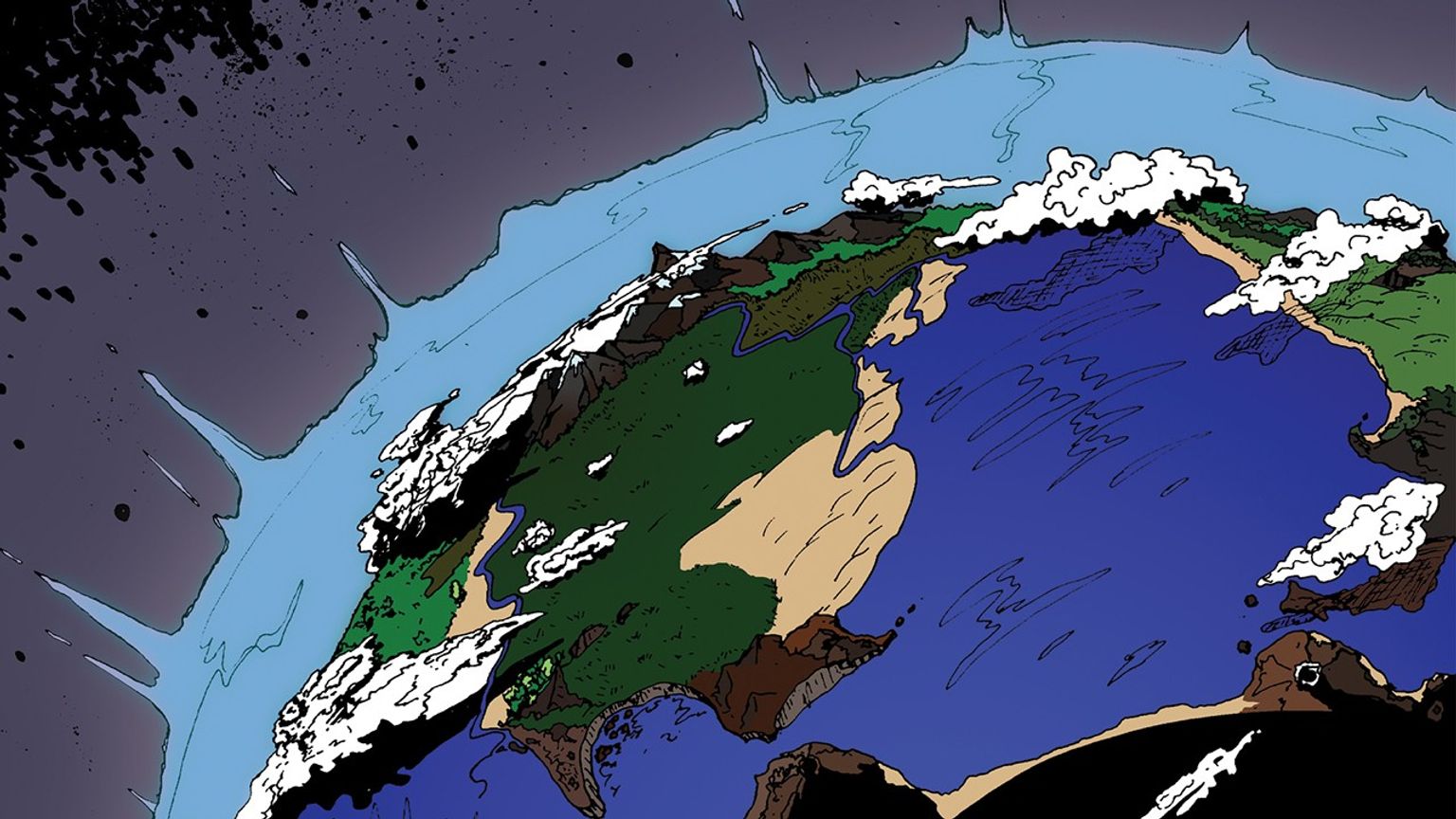
6.1. How did life on Earth come to occupy so many different environments?
A core learning question from the Astrobiology Learning Progressions
Astrobiology Learning Progressions Navigation


Grades K-2 or Adult Naive Learner
Have you ever seen a litter of kittens or puppies? They don’t all look alike. Some have different colored fur, or different shaped faces, or are different sizes. Some may even act different from each other, with some being more playful and others just relaxing. All living things have a lot in common, but there are also a lot of differences. When we go to the zoo we see many different animals that come from all kinds of places in the world. Some of these animals can’t be found in our own backyards or in forests or lakes near where we live because the places in the world that they come from are really different. Living things really need to live in the places that fit them best.
Disciplinary Core Ideas
LS1.A: Structure and Function: All organisms have external parts. Different animals use their body parts in different ways to see, hear, grasp objects, protect themselves, move from place to place, and seek, find, and take in food, water and air. Plants also have different parts (roots, stems, leaves, flowers, fruits) that help them survive and grow. (1-LS1-1)
LS1.B: Growth and Development of Organisms: Adult plants and animals can have young. In many kinds of animals, parents and the offspring themselves engage in behaviors that help the offspring to survive. (1-LS1-2)
LS1.D: Information Processing: Animals have body parts that capture and convey different kinds of information needed for growth and survival. Animals respond to these inputs with behaviors that help them survive. Plants also respond to some external inputs. (1-LS1-1)
LS3.A: Inheritance of Traits: Young animals are very much, but not exactly, like their parents. Plants also are very much, but not exactly, like their parents. (1-LS3-1)
LS3.B: Variation of Traits: Individuals of the same kind of plant or animal are recognizable as similar but can also vary in many ways. (1-LS3-1)
LS4.D: Biodiversity and Humans: There are many different kinds of living things in any area, and they exist in different places on land and in water. (2-LS4-1)
ESS1.C: The History of Planet Earth: Some events happen very quickly; others occur very slowly, over a time period much longer than one canobserve. (2-ESS1-1)
Crosscutting Concepts
Patterns: Patterns in the natural world can be observed, used to describe phenomena,and used as evidence. (1-LS1-2, 1-LS3-1)
Big Ideas: At birth, offspring can look different and act different from their parents. All living things have some things in common and some things that are different. Living things survive because of how well they can live in their surroundings. Different kinds of organisms live in different places on Earth.
Boundaries: Students in this grade band compare the diversity of life in different habitats. Emphasis is on the diversity of living things in each of a variety of different habitats. Assessment does not include specific animal and plant names in specific habitats. (2-LS4-1)
No appropriate content for this grade level. Please use the navigation arrows to switch levels.

Grades 3-5 or Adult Emerging Learner
Have you ever seen a litter of kittens or puppies? Even though they’re all siblings (brothers and sisters), they’re not all exactly the same. Some have different colored fur, or different shaped faces, or are different sizes. Some may even act different from each other, with some being more playful and others more quiet. These qualities are things they were born with. All living things have some qualities that the same, but there’s a lot of variation as well.
Many living things are better able to live in certain areas, for example, a camel can live quite well in most hot deserts while a polar bear would not do so well in a desert. It would be hard for the polar bear to survive. Living things have different qualities and survive best in the conditions that most suit them. However, one thing that happens sometimes in nature is that conditions change. If an environment gets hotter or colder or maybe drier or it floods, then the plants and animals and other living things that have the qualities that best allow them to survive the new changed area will also be the things that are the best at living there. Over time and many generations this can lead to changes in living things.
If we go to just about any place on Earth, we will find living things. From forest and deserts to the Arctic tundra and the bottom of the ocean. This is because in any group of living things some will have qualities that can survive in that type of area. From the bottom of the ocean to the top of a mountain, from the hottest desert to the coldest glacier, living things are found everywhere on Earth.
Disciplinary Core Ideas
LS1.A: Structure and Function: Plants and animals have both internal and external structures that serve various functions in growth, survival, behavior, and reproduction. (4-LS1-1)
LS3.A: Inheritance of Traits: Many characteristics of organisms are inherited from their parents. (3-LS3-1) Other characteristics result from individuals’ interactions with the environment, which can range from diet to learning. Many characteristics involve both inheritance and environment. (3-LS3-2)
LS3.B: Variation of Traits: Different organisms vary in how they look and function because they have different inherited information. (3-LS3-1) The environment also affects the traits that an organism develops. (3-LS3-2)
LS4.B: Natural Selection: Sometimes the differences in characteristics between individuals of the same species provide advantages in surviving, finding mates, and reproducing. (3-LS4-2)
LS4.C: Adaptation: For any particular environment, some kinds of organisms survive well, some survive less well, and some cannot survive at all. (3-LS4-3)
LS4.D: Biodiversity and Humans: Populations live in a variety of habitats, and change in those habitats affects the organisms living there. (3-LS4-4)
LS2.C: Ecosystem Dynamics, Functioning, and Resilience: When the environment changes in ways that affect a place’s physical characteristics, temperature, or availability of resources, some organisms survive and reproduce, others move to new locations, yet others move into the transformed environment, and some die. (3-LS4-4)
ESS1.C: The History of Planet Earth: Local, regional, and global patterns of rock formations reveal changes over time due to earth forces, such as earthquakes. The presence and location of certain fossil types indicate the order in which rock layers were formed. (4-ESS1-1)
Crosscutting Concepts
Patterns: Similarities and differences in patterns can be used to sort and classify natural phenomena. (3-LS3-1)
Big Ideas: All living things have some things in common and some things that are different. At birth, offspring can have differences in variation. Variation can help offspring survive. Living things survive because of how well they can live in their environment. Over time, these small changes can lead to larger changes in the organism and species.
Boundaries: Students in this grade band use evidence to argue that in a particular habitat some organisms can survive well, some survive less well, and some cannot survive at all. Examples of evidence could include needs and characteristics of the organisms and habitats involved. The organisms and their habitat make up a system in which the parts depend on each other. (3-LS4-3)
No appropriate content for this grade level. Please use the navigation arrows to switch levels.
Grades 6-8 or Adult Building Learner
When organisms reproduce, like when a kangaroo has a litter of joeys or there’s a nest of baby birds or a bunch of seeds fall from a tree, there will be differences among the offspring. These differences not only help make living things on Earth so beautiful (think of all the colors and shapes of dogs and cats, for instance), but they also allow life to adapt to its surroundings and evolve. By having lots of differences, it means that some organisms will be better fitted to their environment. Maybe it’s their toughness or their color, their size, or whether or not they can eat certain kinds of food that are available to them, but some will be better suited to the environment they live in. As organisms compete to survive and reproduce the best suited for the environment will survive. Over many generations this can change a population of a species, causing them to slowly become different from other populations of the same species. Not only that, but sometimes the environment itself can change, and so some organisms will be better than others at surviving the change.
Nearly every environment at or close to the surface of Earth is full of life. From the driest deserts to the coldest glaciers in Antarctica, from the depths of the ocean to the top of mountains – life is there. That’s because life has had a very long time to adapt and evolve to all of these different environments on Earth. Certainly, if we were to travel way back in time and visit the very early Earth, we might be able to find a time when life hadn’t yet adapted to living everywhere. The earliest life may have only been able to survive in a few places on the planet. But then, as the years passed, from thousands of years passed to millions, tens of millions and hundreds of millions of years have passed on Earth, life began adapting and spreading out to new environments.
Did you know that there have been times in the history of our planet when nearly every living things was killed and most species went extinct? These were times of great change for the planet and are known as mass extinctions. Mass extinctions appear to have been triggered by a variety of things, like impacts from space and large volcanic eruptions. These things caused the climate to change so fast that most living things couldn’t adapt to the new environments. However, even though mass extinctions caused the loss of lots of organisms, they also seem to be really important in causing new kinds of life to evolve on Earth. For instance, the event that caused the mass extinction of the dinosaurs some 66 million years ago ended the great reign of the dinosaurs on Earth, but also allowed for the evolution of larger and more varied mammals that eventually led to us!
Looking back in the fossil record, we see that most of the history of life on Earth is dominated by microorganisms. For well over 3 billion years, microbial life was the only kind of life that was found everywhere. It was only around 700 million years ago that the first multi-celled living things seem to appear in the fossil record. Yet, in just those few hundred millions of years, multi-cellular life has adapted and evolved and spread around the entire planet. By studying the fossil record and the geological record as well as looking at how life is adapting and evolving to changes on Earth right now, we can better learn about how life and Earth have changed through time together.
Disciplinary Core Ideas
LS1.A: Structure and Function: All living things are made up of cells, which is the smallest unit that can be said to be alive. An organism may consist of one single cell (unicellular) or many different numbers and types of cells (multicellular). (MS-LS1-1) ▪ Within cells, special structures are responsible for particular functions, and the cell membrane forms the boundary that controls what enters and leaves the cell. (MS-LS1-2)
LS1.B: Growth and Development of Organisms: Organisms reproduce, either sexually or asexually, and transfer their genetic information to their offspring. (secondary to MS-LS3-2) ▪ Animals engage in characteristic behaviors that increase the odds of reproduction. (MS-LS1-4)
LS2.A: Interdependent Relationships in Ecosystems: Organisms, and populations of organisms, are dependent on their environmental interactions both with other living things and with nonliving factors. (MS-LS2-1) In any ecosystem, organisms and populations with similar requirements for food, water, oxygen, or other resources may compete with each other for limited resources, access to which consequently constrains their growth and reproduction. (MS-LS2-1) ▪ Growth of organisms and population increases are limited by access to resources. (MS-LS2-1)
LS4.D: Biodiversity and Humans: Changes in biodiversity can influence humans’ resources, such as food, energy, and medicines, as well as ecosystem services that humans rely on — for example, water purification and recycling. (secondary to MS-LS2-5)
LS3.A: Inheritance of Traits: Genes are located in the chromosomes of cells, with each chromosome pair containing two variants of each of many distinct genes. Each distinct gene chiefly controls the production of specific proteins, which in turn affects the traits of the individual. Changes (mutations) to genes can result in changes to proteins, which can affect the structures and functions of the organism and thereby change traits. (MS-LS3-1) ▪ Variations of inherited traits between parent and offspring arise from genetic differences that result from the subset of chromosomes (and therefore genes) inherited. (MS-LS3-2)
LS3.B: Variation of Traits: In sexually reproducing organisms, each parent contributes half of the genes acquired (at random) by the offspring. Individuals have two of each chromosome and hence two alleles of each gene, one acquired from each parent. These versions may be identical or may differ from each other. (MS-LS3-2) ▪ In addition to variations that arise from sexual reproduction, genetic information can be altered because of mutations. Though rare, mutations may result in changes to the structure and function of proteins. Some changes are beneficial, others harmful, and some neutral to the organism. (MS-LS3-1)
LS4.A: Evidence of Common Ancestry and Diversity: The collection of fossils and their placement in chronological order (e.g., through the location of the sedimentary layers in which they are found or through radioactive dating) is known as the fossil record. It documents the existence, diversity, extinction, and change of many life forms throughout the history of life on Earth. (MS-LS4-1) ▪ Anatomical similarities and differences between various organisms living today and between them and organisms in the fossil record, enable the reconstruction of evolutionary history and the inference of lines of evolutionary descent. (MS-LS4-2) ▪ Comparison of the embryological development of different species also reveals similarities that show relationships not evident in the fully-formed anatomy. (MS-LS4-3)
LS4.B: Natural Selection: Natural selection leads to the predominance of certain traits in a population, and the suppression of others. (MS-LS4-4)
LS4.C: Adaptation: Adaptation by natural selection acting over generations is one important process by which species change over time in response to changes in environmental conditions. Traits that support successful survival and reproduction in the new environment become more common; those that do not become less common. Thus, the distribution of traits in a population changes. (MS-LS4-6)
LS2.C: Ecosystem Dynamics, Functioning, and Resilience: Ecosystems are dynamic in nature; their characteristics can vary over time. Disruptions to any physical or biological component of an ecosystem can lead to shifts in all its populations. (MS-LS2-4)
ESS1.C: The History of Planet Earth: The geologic time scale interpreted from rock strata provides a way to organize Earth’s history. Analyses of rock strata and the fossil record provide only relative dates, not an absolute scale. (MS-ESS1-4)
ESS2.A: Earth’s Materials and Systems: The planet’s systems interact over scales that range from microscopic to global in size, and they operate over fractions of a second to billions of years. These interactions have shaped Earth’s history and will determine its future. (MS-ESS2-2)
ESS3.A: Natural Resources: Humans depend on Earth’s land, ocean, atmosphere, and biosphere for many different resources. Minerals, fresh water, and biosphere resources are limited, and many are not renewable or replaceable over human lifetimes. These resources are distributed unevenly around the planet as a result of past geologic processes. (MS-ESS3-1)
Crosscutting Concepts
Cause and Effect: Cause and effect relationships may be used to predict phenomena in natural systems. (MS-LS3-2)
Phenomena may have more than one cause, and some cause and effect relationships in systems can only be described using probability. (MS-LS1-4, MS-LS1-5, MS-LS4-5)
Big Ideas: Life exists in every place on Earth. Historically, large changes to Earth have caused mass extinctions and opened up possibilities for those organisms that survived. The fossil record and comparisons of anatomical similarities between organisms enables the inference of lines of evolutionary descent. The fossil record also documents changes in Earth and in organisms. Both environmental and genetic factors lead to changes in organisms that can make them better able to reproduce and survive in their environment. Over time, changes that help organisms survive and reproduce accumulate and those that do not go extinct.
Boundaries: Students in this grade band use evidence to explain how genetic variations of traits in a population increase some individuals’ probability of surviving and reproducing in a specific environment. Emphasis is on using simple probability statements and proportional reasoning to construct explanations. (MS-LS4-4)
6-12 Big Picture Science: Geology is Destiny. Geologists learn about events going back billions of years that influenced – and even made possible – our present-day existence and shaped our society. SETI scientist Seth Shostak hosts this radio show on various topics in science, cosmology, physics, astronomy and astrobiology. Shostak interviews experts and explains important discoveries and concepts in his weekly 50-minute shows. http://www.bigpicturescience.org/Astrobiology_Index
http://www.bigpicturescience.org/episodes/geology-destiny
6-12 Big Picture Science: Hidden History. Sometimes when we dig around in the past, we can change our understanding of how we got to where we are. Digging into our genetic past can turn up surprising – and sometimes uncomfortable truths – from ancestral origins to genes that code for disease. SETI scientist Seth Shostak hosts this radio show on various topics in science, cosmology, physics, astronomy and astrobiology. Shostak interviews experts and explains important discoveries and concepts in his weekly 50-minute shows. http://www.bigpicturescience.org/episodes/Hidden_History
http://www.bigpicturescience.org/episodes/geology-destiny
6-12 Astrobiology Math. This collection of math problems provides an authentic glimpse of modern astrobiology science and engineering issues, often involving actual research data. Students explore concepts in astrobiology through calculations. Relevant topics include How Rapidly are New Species Formed in Nature? (page 5) and Genetic Determinants of Species Intelligence (page 27). NASA . https://www.nasa.gov/pdf/637832main_Astrobiology_Math.pdf
Grades 9-12 or Adult Sophisticated Learner
When organisms reproduce, like when a kangaroo has a litter of joeys or there’s a nest of baby birds or a bunch of seeds fall off of a tree, there will be differences among the offspring. Have you ever thought about what drives these differences? Even more, did you know that these kinds of differences can eventually lead to the process of biological evolution? Every living thing on Earth is made of one or many cells, with each cell containing the DNA of the organism. That DNA is like a recipe book. It tells the cells how to make the molecules that are needed to give that organism the characteristics that make it unique. One important thing about DNA is that when it gets copied by the cells so that the organism can reproduce, there are often mistakes in how the DNA gets copied. These little mistakes are called mutations. While some mutations can be bad for the organism, some mutations can actually be good. For instance, a mutation in an organism’s DNA might cause it to make a protein just a little different than other members of the same species. If that protein functions just a little better than the proteins of the other members, then this new characteristic might make this one organism slightly better suited to surviving in its environment. The process of slow and gradual change to the DNA of organisms, allowing them to better adapt to environments and/or to be better suited to changing environments, is what we call biological evolution. It’s the change in life over time. All of the accumulated differences in living things, from their colorations that might allow them to be camouflaged in a certain habitat to how they use their fins or their legs or their wings, not only allowed for living things on Earth to become so diverse and so beautiful, but they also allow life to adapt to changes in the environment.
Nearly every environment at or close to the surface of Earth is full of life. From the driest deserts to the coldest glaciers in Antarctica, from the depths of the ocean to the top of mountains – life is there. That’s because life has had a very long time to adapt and evolve to all of these different kinds of environments on Earth. Certainly, if we were to travel back in time and visit the very early Earth, we might be able to find a time when life hadn’t yet adapted to living everywhere. The earliest life may have only been able to survive in a few places on the planet. But then, as the years started passing by and eventually billions of years passed by, life began adapting and spreading out to new environments.
Did you know that there have been times in the history of our planet when nearly every living things was killed and most species went extinct? These were times of great change for the planet and are known as mass extinctions. Mass extinctions appear to have been triggered by a variety of things, like impacts from space and large volcanic eruptions. These things caused the climate to change so fast that most living things couldn’t adapt to the new environments. However, even though mass extinctions caused the loss of lots of organisms, they also seem to be really important in causing new kinds of life to evolve on Earth. For instance, the event that caused the mass extinctions of the dinosaurs some 66 million years ago ended the great reign of the dinosaurs on Earth, but also allowed for the evolution of larger and more varied mammals that eventually led to us!
We now know that Earth and life have changed together through time. As living things started spreading out around Earth, the effects of their metabolisms and other living processes also started changing Earth. Understanding how life has evolved cannot be untangled from how Earth itself has changed. For instance, if we were to go back in time 3 billion years, we would see an Earth with a very different atmosphere than what it has today. Back then, oxygen wasn’t present as O2 in the atmosphere and organisms like us wouldn’t have been able to survive. However, around 2.5 billion years ago, living things on Earth started producing a lot of oxygen. So much so, that it started to change the chemistry of the oceans and the atmosphere. This caused a lot of living things that can’t survive in the presence of oxygen to die, but it also allowed for the evolution of whole new groups of living things that were able to breathe in oxygen, eventually leading to us breathing in and using oxygen. We can see the effects of this great change in life in the changes it caused in the oceans and atmosphere, as well as in the rocks. The Earth before this event, which is known as the Great Oxygenation Event ( GOE ), was a much different place than what it is now.
Looking back in the fossil record, we see that most of the history of life on Earth is dominated by microorganisms. For well over 3 billion years, microbial life was the only kind of life that would be found everywhere. It was only around 700 million years ago that the first multi-celled living things appear in the fossil record. Yet, in just those few hundred million years, multi-cellular life has adapted and evolved and spread around the entire planet. By studying the fossil record and the geological record as well as looking at how life is adapting and evolving to changes on Earth right now, we can better learn about how life and Earth have changed through time together. In every niche on planet Earth there is a deep and varied story of the evolution of the environment and of life.
Disciplinary Core Ideas
ESS2.E: Biogeology: The many dynamic and delicate feedbacks between the biosphere and other Earth systems cause a continual co-evolution of Earth’s surface and the life that exists on it. (HS-ESS2-7)
LS1.A: Structure and Function: Systems of specialized cells within organisms help them perform the essential functions of life. (HS-LS1-1) All cells contain genetic information in the form of DNA molecules. Genes are regions in the DNA that contain the instructions that code for the formation of proteins, which carry out most of the work of cells. (HS-LS1-1)
LS3.A: Inheritance of Traits: Each chromosome consists of a single very long DNA molecule, and each gene on the chromosome is a particular segment of that DNA . The instructions for forming species’ characteristics are carried in DNA . All cells in an organism have the same genetic content, but the genes used (expressed) by the cell may be regulated in different ways. Not all DNA codes for a protein; some segments of DNA are involved in regulatory or structural functions, and some have no as-yet known function. (HS-LS3-1)
LS3.B: Variation of Traits: In sexual reproduction, chromosomes can sometimes swap sections during the process of meiosis (cell division), thereby creating new genetic combinations and thus more genetic variation. Although DNA replication is tightly regulated and remarkably accurate, errors do occur and result in mutations, which are also a source of genetic variation. Environmental factors can also cause mutations in genes, and viable mutations are inherited. (HS-LS3-2) ▪ Environmental factors also affect expression of traits, and hence affect the probability of occurrences of traits in a population. Thus, the variation and distribution of traits observed depends on both genetic and environmental factors. (HS-LS3-2, HS-LS3-3)
LS4.A: Evidence of Common Ancestry and Diversity: Genetic information provides evidence of evolution. DNA sequences vary among species, but there are many overlaps; in fact, the ongoing branching that produces multiple lines of descent can be inferred by comparing the DNA sequences of different organisms. Such information is also derivable from the similarities and differences in amino acid sequences and from anatomical and embryological evidence. (HS-LS4-1)
LS4.B: Natural Selection: Natural selection occurs only if there is both (1) variation in the genetic information between organisms in a population and (2) variation in the expression of that genetic information — that is, trait variation — that leads to differences in performance among individuals. (HS-LS4-2, HS-LS4-3) The traits that positively affect survival are more likely to be reproduced, and thus are more common in the population. (HS-LS4-3)
LS2.A: Interdependent Relationships in Ecosystems: Ecosystems have carrying capacities, which are limits to the numbers of organisms and populations they can support. These limits result from such factors as the availability of living and nonliving resources and from such challenges such as predation, competition, and disease. Organisms would have the capacity to produce populations of great size were it not for the fact that environments and resources are finite. This fundamental tension affects the abundance (number of individuals) of species in any given ecosystem. (HS-LS2-1, HS-LS2-2)
LS2.C: Ecosystem Dynamics, Functioning, and Resilience: A complex set of interactions within an ecosystem can keep its numbers and types of organisms relatively constant over long periods of time under stable conditions. If a modest biological or physical disturbance to an ecosystem occurs, it may return to its more or less original status (i.e., the ecosystem is resilient), as opposed to becoming a very different ecosystem. Extreme fluctuations in conditions or the size of any population, however, can challenge the functioning of ecosystems in terms of resources and habitat availability. (HS-LS2-2, HS-LS2-6)
LS2.D: Social Interactions and Group Behavior: Group behavior has evolved because membership can increase the chances of survival for individuals and their genetic relatives. (HS-LS2-8)
LS4.C: Adaptation: Changes in the physical environment, whether naturally occurring or human induced, have thus contributed to the expansion of some species, the emergence of new distinct species as populations diverge under different conditions, and the decline – and sometimes the extinction – of some species. (HS-LS4-6)
LS4.D: Biodiversity and Humans: Biodiversity is increased by the formation of new species (speciation) and decreased by the loss of species (extinction). (secondary to HS-LS2-7) Humans depend on the living world for the resources and other benefits provided by biodiversity.
LS1.A: Structure and Function: Systems of specialized cells within organisms help them perform the essential functions of life. (HS-LS1-1) ▪ All cells contain genetic information in the form of DNA molecules. Genes are regions in the DNA that contain the instructions that code for the formation of proteins, which carry out most of the work of cells. (HS-LS1-1) ▪ Feedback mechanisms maintain a living system’s internal conditions within certain limits and mediate behaviors, allowing it to remain alive and functional even as external conditions change within some range. Feedback mechanisms can encourage (through positive feedback) or discourage (negative feedback) what is going on inside the living system. (HS-LS1-3)
Crosscutting Concepts
Cause and Effect: Empirical evidence is required to differentiate between cause and correlation and make claims about specific causes and effects. (HS-LS2-8, HS-LS4-6)
Scale, Proportion, and Quantity: The significance of a phenomenon is dependent on the scale, proportion, and quantity at which it occurs. (HS-LS2-1) Using the concept of orders of magnitude allows one to understand how a model at one scale relates to a model at another scale. (HS-LS2-2)
Big Ideas: DNA contains the instructions for living things. Changes can occur in the DNA when cells divide and may lead to phenotypic changes. Changes that help the organism reproduce and survive accumulate in the species. Evolution results primarily from genetic variation of individuals in a species, competition for resources, and proliferation of organisms better able to survive and reproduce. Adaptation means that the distribution of traits in a population, as well as species expansion, emergence or extinction, can change when conditions change. Over long periods of time, new species can evolve through this process. Studies of DNA reveal connections between all living things on Earth. Large scale changes in life occur after dramatic changes to Earth, such as glaciation and asteroid impacts.
Boundaries: Students in this grade band evaluate the claims, evidence, and reasoning that the complex interactions in ecosystems maintain relatively consistent numbers and types of organisms in stable conditions, but changing conditions may result in a new ecosystem. Examples of changes in ecosystem conditions could include modest biological or physical changes, such as moderate hunting or a seasonal flood; and extreme changes, such as volcanic eruption or sea level rise. (HS-LS2-6)
6-12 Big Picture Science: Geology is Destiny. Geologists learn about events going back billions of years that influenced – and even made possible – our present-day existence and shaped our society. SETI scientist Seth Shostak hosts this radio show on various topics in science, cosmology, physics, astronomy and astrobiology. Shostak interviews experts and explains important discoveries and concepts in his weekly 50-minute shows. http://www.bigpicturescience.org/Astrobiology_Index
http://www.bigpicturescience.org/episodes/geology-destiny
6-12 Big Picture Science: Hidden History. Sometimes when we dig around in the past, we can change our understanding of how we got to where we are. Digging into our genetic past can turn up surprising – and sometimes uncomfortable truths – from ancestral origins to genes that code for disease. SETI scientist Seth Shostak hosts this radio show on various topics in science, cosmology, physics, astronomy and astrobiology. Shostak interviews experts and explains important discoveries and concepts in his weekly 50-minute shows. http://www.bigpicturescience.org/episodes/Hidden_History
http://www.bigpicturescience.org/episodes/geology-destiny
6-12 Astrobiology Math. This collection of math problems provides an authentic glimpse of modern astrobiology science and engineering issues, often involving actual research data. Students explore concepts in astrobiology through calculations. Relevant topics include How Rapidly are New Species Formed in Nature? (page 5) and Genetic Determinants of Species Intelligence (page 27). NASA . https://www.nasa.gov/pdf/637832main_Astrobiology_Math.pdf
10-12 The Rules of Life. The goal of this podcast about the big idea of the rules of life is to address how we predict the phenotype, the structure, function and behavior of an organism, based on what we know about its genes and environment. If we can identify some of the basic rules of life across scales of time, space and complexity, we may be able to predict how cells, brains, bodies and biomes respond to changing environments. NSF . https://www.nsf.gov/discoveries/disc_summ.jsp?cntn_id=242752&WT.mc_id=USNSF_1