




















2.3. Where could life have gotten started on Earth?
A core learning question from the Astrobiology Learning Progressions
Astrobiology Learning Progressions Navigation


Grades K-2 or Adult Naive Learner
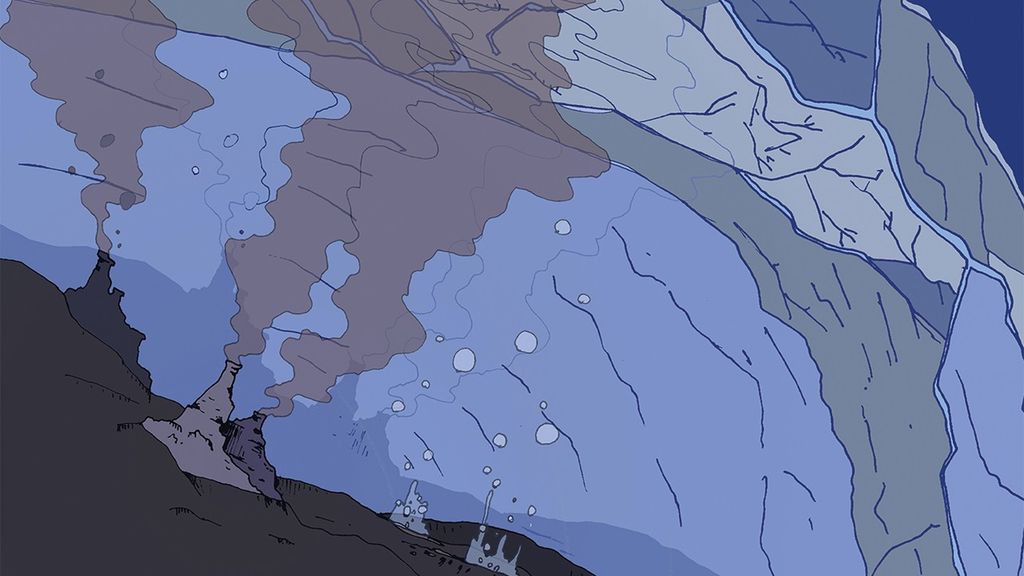
As the early Earth began to “grow up,” it changed in many ways. Places like oceans and lakes and mountains formed on Earth. Each of these different places could have been a home for living things, as long as there was some water and a source of energy, like the Sun. Life needs energy to live – just like we eat breakfast to get us started for the day, early life on early Earth needed energy to get started.
Disciplinary Core Ideas
LS1.C: Organization for Matter and Energy Flow in Organisms: All animals need food in order to live and grow. They obtain their food from plants or from other animals. Plants need water and light to live and grow. (K-LS1-1)
LS4.D Biodiversity and Humans: There are many different kinds of living things in any area, and they exist in different places on land and in water. (2-LS4-1)
ESS2.E: Biogeology: Plants and animals can change their environment. (K-ESS2-2)
ESS3.A: Natural Resources: Living things need water, air, and resources from the land, and they live in places that have the things they need. (K-ESS3-1)
PS3.B: Conservation of Energy and Energy Transfer: sunlight warms Earth’s surface. (K-PS3-1,K-PS3-2)
ESS1.C: The History of Planet Earth: Some events happen very quickly; others occur very slowly, over a time period much longer than one can observe. (2-ESS1-1)
ESS2.A: Earth Materials and Systems: Wind and water can change the shape of the land. (2-ESS2-1)
ESS2.B: Plate Tectonics and Large-Scale System Interactions: Maps show where things are located. One can map the shapes and kinds of land and water in any area. (2-ESS2-2)
ESS2.C: The Roles of Water in Earth’s Surface Processes: Water is found in the ocean, rivers, lakes, and ponds. Water exists as solid ice and in liquid form. (2-ESS2-3)
Crosscutting Concepts
Stability and Change: Things may change slowly or rapidly. (2-ESS1-1),(2-ESS2-1)
Big Ideas: The Earth has changed in many ways. Over time, oceans, lakes, and mountains formed. Life could begin on early Earth because there was plenty of water and energy from the Sun.
Boundaries: Timescales cover “quick” events or processes like earthquakes, or “slow” processes like the erosion of rocks, but not quantitative measurements of time. (2-ESS1-1)
No appropriate content for this grade level. Please use the navigation arrows to switch levels.

Grades 3-5 or Adult Emerging Learner
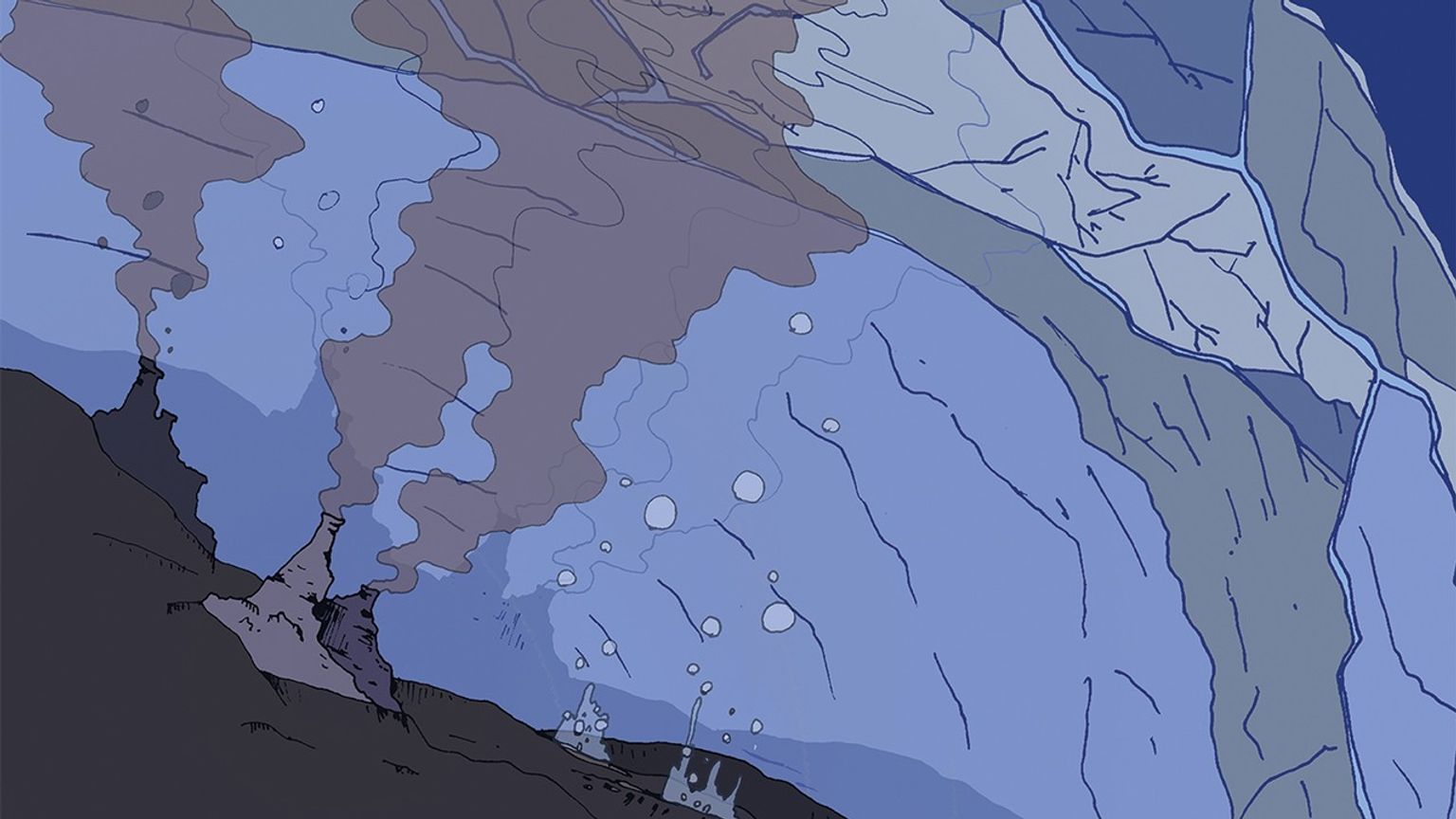
As Earth continued to change and develop, all kinds of environments formed. There was the land (the geosphere), the ocean (the hydrosphere) and the air (atmosphere); but also places like beaches, rivers, and even icebergs floating in the ocean. Each environment was unique and could have helped life get started in different ways. We know that life needs water and life needs energy. Some places might have gotten energy from lightning or from sunlight. There were also small volcanoes on the ocean floor that were shaped kind of like chimneys. Many of the building blocks needed for life could have come up from below and passed through the chimney where they interacted closely. The hot water that also came through the chimneys brought energy. On the early Earth, there were many places where life could have gotten off to a good start.
Disciplinary Core Ideas
ESS2.A: Earth Materials and Systems: Earth’s major systems are the geosphere (solid and molten rock, soil, and sediments), the hydrosphere (water and ice), the atmosphere (air), and the biosphere (living things, including humans). These systems interact in multiple ways to affect Earth’s surface materials and processes. The ocean supports a variety of ecosystems and organisms, shapes landforms, and influences climate. Winds and clouds in the atmosphere interact with the landforms to determine patterns of weather. (5-ESS2-1)
ESS2.B: Plate Tectonics and Large-Scale System Interactions: The locations of mountain ranges, deep ocean trenches, ocean floor structures, earthquakes, and volcanoes occur in patterns. Most earthquakes and volcanoes occur in bands that are often along the boundaries between continents and oceans. Major mountain chains form inside continents or near their edges. Maps can help locate the different land and water features areas of Earth. (4-ESS2-2)
ESS1.C: The History of Planet Earth: Local, regional, and global patterns of rock formations reveal changes over time due to earth forces, such as earthquakes. The presence and location of certain fossil types indicate the order in which rock layers were formed. (4-ESS1-1)
ESS2.E: Biogeology: Living things affect the physical characteristics of their regions. (4-ESS2-1)
PS3.A: Definitions of Energy: The faster a given object is moving, the more energy it possesses. (4-PS3-1) *Energy can be moved from place to place by moving objects or through sound, light, or electric currents. (4-PS3-2, 4-PS3-3)
PS3.D: Energy in Chemical Processes and Everyday Life: The expression “produce energy” typically refers to the conversion of stored energy into a desired form for practical use. (4-PS3-4)
LS1.C: Organization for Matter and Energy Flow in Organisms: Food provides animals with the materials they need for body repair and growth and the energy they need to maintain body warmth and for motion. ( 5-PS3-1) *Plants acquire their material for growth chiefly from air and water. (5-LS1-1)
Crosscutting Concepts
Energy and Matter: Energy can be transferred in various ways and between objects. (4-PS3-1), (4-PS3-2),(4-PS3-3),(4-PS3-4) Patterns: Patterns can be used as evidence to support an explanation. (4-ESS1-1),(4-ESS2-2)
Big Ideas: On the early Earth, similar to today, there were a variety of environments making the start of life possible. Energy likely played a key role and was available from the Sun, lightening, and ocean floor volcanoes. Biologists study life in all areas of Earth to get a better understanding of how life might have begun on Earth.
Boundaries: Assessment does not include quantitative measurements of energy. When considering the geosphere, hydrosphere, atmosphere and biosphere, students focus on interactions of two systems at a time. (5-ESS2-1)
5-8 SpaceMath Problem 222: Kelvin Temperatures and Very Cold Things. Students convert from Celsius to Fahrenheit degrees and to Kelvin using three linear equations. [Topics: evaluating simple linear equations for given values] https://spacemath.gsfc.nasa.gov/astrob/5Page78.pdf
5-12 Astrobiology Graphic Histories. Issue 7: Prebiotic Chemistry and the Origin of Life. These astrobiology related graphic books are ingenious and artfully created to tell the story of astrobiology in a whole new way. This issue illustrates prebiotic chemistry and the Origin of life on Earth. NASA . https://astrobiology.nasa.gov/resources/graphic-histories/
Grades 6-8 or Adult Building Learner
The early Earth continued to change and evolve into a place where life could have gotten started. Oceans, beaches, rock surfaces, volcanoes, and other unique environments took shape as the young planet began to mature. Life arose through the interaction of life’s building blocks, or raw materials (small compounds like carbon dioxide, methane, and other carbon-containing molecules), in specialized environments on the early Earth where energy was available. These interactions led to the building of larger chemical compounds such as amino acids and the precursors to DNA . Where did these interactions take place?
One answer that some scientists think is likely is that these chemical reactions leading to life started in or around the early ocean, which was very different than today’s ocean. Just like salt from ocean water can form a crust on rocks near tide pools we see today, water from the early oceans that contained these raw materials could have evaporated, leaving them behind and concentrating them on the surfaces of nearby rocks where their chances of interacting are much higher than if they were swirling around in the vast ocean. Similarly, in hydrothermal vents (hydro=water; thermal=heat) on the ocean floor, the raw materials and hot water shot up through chimney-like vents and spewed into the cold water surrounding them. This environment may have provided a secluded place for the raw materials to interact as well as energy to facilitate the interactions. But wherever it happened, the key components to life’s initial emergence were the presence of raw materials, bringing them together so they can interact, and ensuring an energy source.
Disciplinary Core Ideas
ESS2.A: Earth’s Materials and Systems: The planet’s systems interact over scales that range from microscopic to global in size, and they operate over fractions of a second to billions of years. These interactions have shaped Earth’s history and will determine its future. (MS-ESS2-2) All Earth processes are the result of energy flowing and matter cycling within and among the planet’s systems. This energy is derived from the Sun and Earth’s hot interior. The energy that flows and matter that cycles produce chemical and physical changes in Earth’s materials and living organisms. (MS-ESS2-1)
ESS2.B: Plate Tectonics and Large-Scale System Interactions: Maps of ancient land and water patterns, based on investigations of rocks and fossils, make clear how Earth’s plates have moved great distances, collided, and spread apart. (MS-ESS2-3)
ESS2.C: The Roles of Water in Earth’s Surface Processes: Water’s movements — both on the land and underground — cause weathering and erosion, which change the land’s surface features and create underground formations. (MS-ESS2-2)
ESS1.C: The History of Planet Earth: The geologic time scale interpreted from rock strata provides a way to organize Earth’s history. Analyses of rock strata and the fossil record provide only relative dates, not an absolute scale. (MS-ESS1-4) *Tectonic processes continually generate new ocean sea floor at ridges and destroy old seafloor at trenches. (HS.ESS1.C GBE )
LS1.C Organization for Matter and Energy Flow in Organisms: Plants, algae (including phytoplankton), and many microorganisms use the energy from light to make sugars (food) from carbon dioxide from the atmosphere and water through the process of photosynthesis, which also releases oxygen. These sugars can be used immediately or stored for growth or later use. Animals obtain food from eating plants or eating other animals. (MS-LS1-6)
PS1.A: Structure and Properties of Matter: Substances are made from different types of atoms, which combine with one another in various ways. Atoms form molecules that range in size from two to thousands of atoms. (MS-PS1-1)
PS1.B: Chemical Reactions: Substances react chemically in characteristic ways. In a chemical process, the atoms that make up the original substances are regrouped into different molecules, and these new substances have different properties from those of the reactants. (MS-PS1-3)
PS3.A: Definitions of Energy: The term “heat” as used in everyday language refers both to thermal energy (the motion of atoms or molecules within a substance) and the transfer of that thermal energy from one object to another. In science, heat is used only for this second meaning; it refers to the energy transferred due to the temperature difference between two objects. (MS-PS1-4)
PS3.B: Conservation of Energy and Energy Transfer: Energy is spontaneously transferred out of hotter regions or objects and into colder ones. (MS-PS3-3)
PS3.D: Energy in Chemical Processes and Everyday Life: The chemical reaction by which plants produce complex food molecules (sugars) requires an energy input (i.e., from sunlight) to occur. In this reaction, carbon dioxide and water combine to form carbon-based organic molecules and release oxygen. (MS-LS1-6)
Crosscutting Concepts
Patterns: Macroscopic patterns are related to the nature of microscopic and atomic-level structure. (MS-PS1-2)Patterns in rates of change and other numerical relationships can provide information about natural systems. (MS-ESS2-3) Scale, Proportion, and Quantity- Time, space, and energy phenomena can be observed at various scales using models to study systems that are too large or too small. (MS-PS1-1)
Big Ideas: Conditions on Earth made early life possible. The beginning of life on Earth was likely a result of a complex combination of available energy from the Sun, lightening, and ocean floor volcanoes as well as the presence of the building blocks of life in liquid water. Hydrothermal vents on the ocean floor are a highly likely place for the first life to have developed because of the presence of energy and building blocks from the water and vented material.
Boundaries: In reference to the History of Earth, this grade band does not include recalling specific periods or epochs and events within them.
5-8 SpaceMath Problem 222: Kelvin Temperatures and Very Cold Things. Students convert from Celsius to Fahrenheit degrees and to Kelvin using three linear equations. [Topics: evaluating simple linear equations for given values] https://spacemath.gsfc.nasa.gov/astrob/5Page78.pdf
5-12 Astrobiology Graphic Histories. Issue 7: Prebiotic Chemistry and the Origin of Life. These astrobiology related graphic books are ingenious and artfully created to tell the story of astrobiology in a whole new way. This issue illustrates prebiotic chemistry and the Origin of life on Earth. NASA . https://astrobiology.nasa.gov/resources/graphic-histories/
6-8 SpaceMath Problem 403: The Goldilocks Planets – Not too hot or cold. Students use a table of the planets discovered by the Kepler satellite, and estimate the number of planets in our Milky Way galaxy that are about the same size as Earth and located in their Habitable Zones. They estimate the average temperature of the planets, and study their tabulated properties using histograms. [Topics: averaging; histogramming] https://spacemath.gsfc.nasa.gov/astrob/7Page66.pdf
6-8 SpaceMath Problem 267: Identifying Materials by their Reflectivity. The reflectivity of a material can be used to identify it. This is important when surveying the lunar surface for minerals, and also in creating ‘green’ living environments on Earth. [Topics: percentage, interpreting tabular data, area] https://spacemath.gsfc.nasa.gov/astrob/MMM1.pdf
6-12 Astrobiology Math. This collection of math problems provides an authentic glimpse of modern astrobiology science and engineering issues, often involving actual research data. Students explore concepts in astrobiology through calculations. Relevant topics include The Origin of Life (page 3) and The Largest Known Extraterrestrial Molecules (page 11). NASA . https://www.nasa.gov/pdf/637832main_Astrobiology_Math.pdf
6-12 Virtual Field Trips: Ancient Records of Life on Earth: Australia. VFT ’s are topic-based interactive and educationally rich experiences captured during real expeditions with scientists doing current research. The Trezona Formation is a group of sedimentary rocks found in southern Australia. This “field trip” is highly immersive and full of interactive material and rich scientific content covering early organisms on Earth, evolution and Earth’s properties. Arizona State University. http://vft.asu.edu/ and
https://vft.asu.edu/VFTEnoramaH5/panos/tf1h5main/tf1h5main.html
6-12 Microbes@NASA. The website has activities, visualizations, videos and more about microbial mats and why NASA is interested in them. The site includes a photo gallery, interactive web features in which students can conduct remote experiments on a real microbial mat in a NASA laboratory, numerous classroom activities, and a seven-minute animated film taking you for a ride through a microbial mat. These microbial mats can be used to understand the origin and early life on Earth, how the Earth and life co-evolve and the search for life beyond Earth. NASA . https://spacescience.arc.nasa.gov/microbes/
Cyanobacteria Races: Cyanobacteria Motility Experiment for a classroom. By studying fossil records of cyanobacteria motility on Earth, scientists are better able to identify fossil records in their search for life in the universe and beyond. In this experiment, students expose cultures of freshwater cyanobacteria to a directional light source, measuring their movement toward this light source with a ruler and recoding measurements https://spacescience.arc.nasa.gov/microbes/download/pdf/Cyanobacteria_Races.pdf
Microbial Mat Web Lab. Profiles of oxygen concentration reveal a great deal about what is going on inside a microbial mat. Using this activity, classes can remotely operate an experimental setup containing an oxygen microsensor in a lab at Ames Research Center. https://spacescience.arc.nasa.gov/microbes/learn/weblab.html
8-10 SpaceMath Problem 275: Water on the Moon! Students estimate the amount of water on the moon using data from Deep Impact/EPOXI and NASA ’s Moon Mineralogy Mapper experiment on the Chandrayaan-1 spacecraft. [Topics: geometry, spherical volumes and surface areas, scientific notation] https://spacemath.gsfc.nasa.gov/moon/6Page11.pdf
8-10 SpaceMath Problem 264: Water on Planetary Surfaces. Students work with watts and Joules to study melting ice. [Topics: unit conversion, rates] https://spacemath.gsfc.nasa.gov/astrob/Astro3.pdf
8-10 SpaceMath Problem 263: Ice or Water? Whether a planetary surface contains ice or liquid water depends on how much heat is available. Students explore the concepts of Specific heat and Latent Heat of Fusion to better understand and quantify the energy required for liquid water to exist under various conditions. [Topics: unit conversion, scientific notation] https://spacemath.gsfc.nasa.gov/astrob/Astro1.pdf
Grades 9-12 or Adult Sophisticated Learner
As the early Earth settled down from its formation and continued the evolution of its crust, oceans, and atmosphere, many unique environments were taking shape – places like beaches, icy areas, rocky surfaces, hot springs, lakes and lagoons, seas, volcanoes, and even small hot water volcanoes on the ocean’s floor called hydrothermal vents (hydro=water; thermal=heat). Many of the raw materials of life (small, organic [aka carbon-containing] molecules such as carbon dioxide and methane) were available in these environments, and in order to for life to get started, they needed to interact with each other in the presence of energy. In today’s biology, enzymes help lower the activation energy needed for biochemical reactions to take place. But on the prebiotic Earth (pre=before; biotic=life), none of those enzymes existed yet. In order to get small molecules to interact with each other, they had to be brought into close proximity so chemical reactions could occur. This may have happened in a variety of ways on the early Earth.
In hydrothermal vent systems on the ocean floor, organic molecules in superheated water from below the crust could gush up through chimney-like structures (the vents) where there would be immediate interaction with the cold ocean water. Groups of molecules could have gotten caught in tiny pore spaces in the rock of the chimney (like a sponge made of rock) – spaces that may have emulated an early cell, in which prebiotic chemical reactions that gave rise to life could have taken place. Also, the interaction of the hot and cold water could have produced a temperature gradient in which the molecules could have sorted themselves and interacted in new ways.
On the ocean’s surface, hydrophobic (“water-fearing”) molecules could have formed in pools like small oil slicks floating on the water. Raw materials in ocean water that splashed up onto rock surfaces in early tide pool environments would have been condensed and concentrated as the ocean water evaporated, forcing interactions. As sea ice froze, small pockets of salty water containing organic molecules would have gotten progressively smaller, bringing the molecules closer together. Even the surfaces of some minerals like calcite can provide a platform for prebiotic chemical reactions, especially reactions which bind monomers of the same kind into longer chains (like a string of pearls).
There were many different kinds of environments on the early Earth that may have provided the conditions and energy needed for prebiotic chemistry to occur and to potentially evolve into biochemistry.
Disciplinary Core Ideas
LS1.C: Organization for Matter and Energy Flow in Organisms: The process of photosynthesis converts light energy to stored chemical energy by converting carbon dioxide plus water into sugars plus released oxygen. (HS-LS1-5) The sugar molecules thus formed contain carbon, hydrogen, and oxygen: their hydrocarbon backbones are used to make amino acids and other carbon-based molecules that can be assembled into larger molecules (such as proteins or DNA ), used for example to form new cells. (HS-LS1-6)
LS4.C: Adaptation: Changes in the physical environment, whether naturally occurring or human induced, have thus contributed to the expansion of some species, the emergence of new distinct species as populations diverge under different conditions, and the decline – and sometimes the extinction – of some species. (HS-LS4-6)
ESS1.C: The History of Planet Earth: Continental rocks, which can be older than 4 billion years, are generally much older than the rocks of the ocean floor, which are less than 200 million years old. (HS-ESS1-5) Although active geologic processes, such as plate tectonics and erosion, have destroyed or altered most of the very early rock record on Earth, other objects in the solar system, such as lunar rocks, asteroids, and meteorites, have changed little over billions of years. Studying these objects can provide information about Earth’s formation and early history. (HS-ESS1-6)
ESS2.A: Earth Materials and Systems: Earth’s systems, being dynamic and interacting, cause feedback effects that can increase or decrease the original changes. (HS-ESS2-1) Evidence from deep probes and seismic waves, reconstructions of historical changes in Earth’s surface and its magnetic field, and an understanding of physical and chemical processes lead to a model of Earth with a hot but solid inner core, a liquid outer core, a solid mantle and crust.
ESS2.B: Plate Tectonics and Large-Scale System Interactions: Plate tectonics is the unifying theory that explains the past and current movements of the rocks at Earth’s surface and provides a framework for understanding its geologic history. Plate movements are responsible for most continental and ocean-floor features and for the distribution of most rocks and minerals within Earth’s crust.
ESS2.C: The Roles of Water in Earth’s Surface Processes: The abundance of liquid water on Earth’s surface and its unique combination of physical and chemical properties are central to the planet’s dynamics. These properties include water’s exceptional capacity to absorb, store, and release large amounts of energy, transmit sunlight, expand upon freezing, dissolve and transport materials, and lower the viscosities and melting points of rocks. (HS-ESS2-5)
ESS2.E: Biogeology: The many dynamic and delicate feedbacks between the biosphere and other Earth systems cause a continual coevolution of Earth’s surface and the life that exists on it. (HS-ESS2-7)
PS1.B: Chemical Reactions: Chemical processes, their rates, and whether or not energy is stored or released can be understood in terms of the collisions of molecules and the rearrangements of atoms into new molecules, with consequent changes in the sum of all bond energies in the set of molecules that are matched by changes in kinetic energy. (HS-PS1-4, HS-PS1-5)
PS3.A: Definitions of Energy: Energy is a quantitative property of a system that depends on the motion and interactions of matter and radiation within that system. That there is a single quantity called energy is due to the fact that a system’s total energy is conserved, even as, within the system, energy is continually transferred from one object to another and between its various possible forms. (HS-PS3-1),(HS-PS3-2)
PS3.B: Conservation of Energy and Energy Transfer: Conservation of energy means that the total change of energy in any system is always equal to the total energy transferred into or out of the system. (HS-PS3-1) *Energy cannot be created or destroyed, but it can be transported from one place to another and transferred between systems. (HS-PS3-1, HS-PS3-4)
PS3.D Energy in Chemical Processes: The main way that solar energy is captured and stored on Earth is through the complex chemical process known as photosynthesis (HS-LS2-5)
Crosscutting Concepts
Systems and System Models: Models (e.g., physical, mathematical, computer models) can be used to simulate systems and interactions — including energy, matter, and information flows — within and between systems at different scales. (HS-LS2-5) Stability and Change: Much of science deals with constructing explanations of how things change and how they remain stable. (HS-ESS1-6) Change and rates of change can be quantified and modeled over very short or very long periods of time. Some system changes are irreversible. (HS-ESS2-1)
Big Ideas: The conditions that existed on the young Earth made the start of life possible. The beginning of life on Earth was likely a result of a complex combination of available energy from the Sun, lightening, and ocean floor volcanoes as well as the presence of the building blocks of life in liquid water. While most life on Earth now relies on primary production derived from energy from the Sun through the process of photosynthesis, it is possible to convert chemical energy in lieu of solar energy. Hydrothermal vents on the ocean floor are a highly likely place for the first life to have developed because of the presence of energy and building blocks from the water and vented material. While the process was likely very slow, given enough time, the building of each building block of life is possible and would have slowly given rise to more complex molecules. The complex chemistry of life can be broken down into simple components seen throughout the world’s oceans.
Boundaries: Emphasis is on using available evidence within the solar system to reconstruct the early history of Earth, which formed along with the rest of the solar system 4.6 billion years ago. Examples of evidence include the absolute ages of ancient materials (obtained by radiometric dating of meteorites, moon rocks, and Earth’s oldest minerals), the sizes and compositions of solar system objects, and the impact cratering record of planetary surfaces. (HS-ESS1-6)
5-12 Astrobiology Graphic Histories. Issue 7: Prebiotic Chemistry and the Origin of Life. These astrobiology related graphic books are ingenious and artfully created to tell the story of astrobiology in a whole new way. This issue illustrates prebiotic chemistry and the Origin of life on Earth. NASA . https://astrobiology.nasa.gov/resources/graphic-histories/
6-12 Astrobiology Math. This collection of math problems provides an authentic glimpse of modern astrobiology science and engineering issues, often involving actual research data. Students explore concepts in astrobiology through calculations. Relevant topics include The Origin of Life (page 3) and The Largest Known Extraterrestrial Molecules (page 11). NASA . https://www.nasa.gov/pdf/637832main_Astrobiology_Math.pdf
6-12 Virtual Field Trips: Ancient Records of Life on Earth: Australia. VFT ’s are topic-based interactive and educationally rich experiences captured during real expeditions with scientists doing current research. The Trezona Formation is a group of sedimentary rocks found in southern Australia. This “field trip” is highly immersive and full of interactive material and rich scientific content covering early organisms on Earth, evolution and Earth’s properties. Arizona State University. http://vft.asu.edu/ and
https://vft.asu.edu/VFTEnoramaH5/panos/tf1h5main/tf1h5main.html
6-12 Microbes@NASA. The website has activities, visualizations, videos and more about microbial mats and why NASA is interested in them. The site includes a photo gallery, interactive web features in which students can conduct remote experiments on a real microbial mat in a NASA laboratory, numerous classroom activities, and a seven-minute animated film taking you for a ride through a microbial mat. These microbial mats can be used to understand the origin and early life on Earth, how the Earth and life co-evolve and the search for life beyond Earth. NASA . https://spacescience.arc.nasa.gov/microbes/
Cyanobacteria Races: Cyanobacteria Motility Experiment for a classroom. By studying fossil records of cyanobacteria motility on Earth, scientists are better able to identify fossil records in their search for life in the universe and beyond. In this experiment, students expose cultures of freshwater cyanobacteria to a directional light source, measuring their movement toward this light source with a ruler and recoding measurements https://spacescience.arc.nasa.gov/microbes/download/pdf/Cyanobacteria_Races.pdf
Microbial Mat Web Lab. Profiles of oxygen concentration reveal a great deal about what is going on inside a microbial mat. Using this activity, classes can remotely operate an experimental setup containing an oxygen microsensor in a lab at Ames Research Center. https://spacescience.arc.nasa.gov/microbes/learn/weblab.html
9-10 Voyages through Time: Origin of Life. Through the Origin of Life module, students address questions such as: What is life? What is the evidence for early evolution of life on Earth? How did life begin? Sample lesson on the website and the curriculum is available for purchase. SETI . http://www.voyagesthroughtime.org/origin/index.html
9-12 SpaceMath Problem 350: Estimating the Temperatures of Exoplanets. Students review the basic properties of ellipses by exploring the orbits of newly-discovered planets orbiting other stars. They also use a simple formula to determine the temperatures of the planets from their orbits.[Topics: equation of ellipse; evaluating functions] https://spacemath.gsfc.nasa.gov/astrob/7Page14.pdf
9-12 SpaceMath Problem 338: Asteroids and Ice. Students calculate how much ice may be present on the asteroid 24-Themis based on recent discoveries by NASA [Topics: mass=density x volume; volume of a spherical shell] https://spacemath.gsfc.nasa.gov/astrob/6Page154.pdf
9-12 SpaceMath Problem 287: LCROSS Sees Water on the Moon. Students use information about the plume created by the LCROSS impactor to estimate the (lower-limit) concentration of water in the lunar regolith in a shadowed crater. [Topics: geometry; volumes; mass=density x volume] https://spacemath.gsfc.nasa.gov/moon/6Page66.pdf