















Physics of the Cosmos Science
Astrophysics Strategic Technology & Research Accelerator (ASTRA) Initiative
To maintain US leadership, NASA's Astrophysics Division (APD) is launching the Astrophysics Strategic Technology and Research Accelerator (ASTRA) Initiative.
About ASTRA Initiative
How does the universe work? How did we get here? Are we alone?
At every stage, NASA will collaborate with industry, academia, and international partners to advance necessary technologies, manufacturing capabilities, and reduce costs.
ASTRA aims to reduce the total cost, time-to-science, and schedule risk of future strategic missions, aligning with the guidance from Astro2020, LSSM, and AMP.
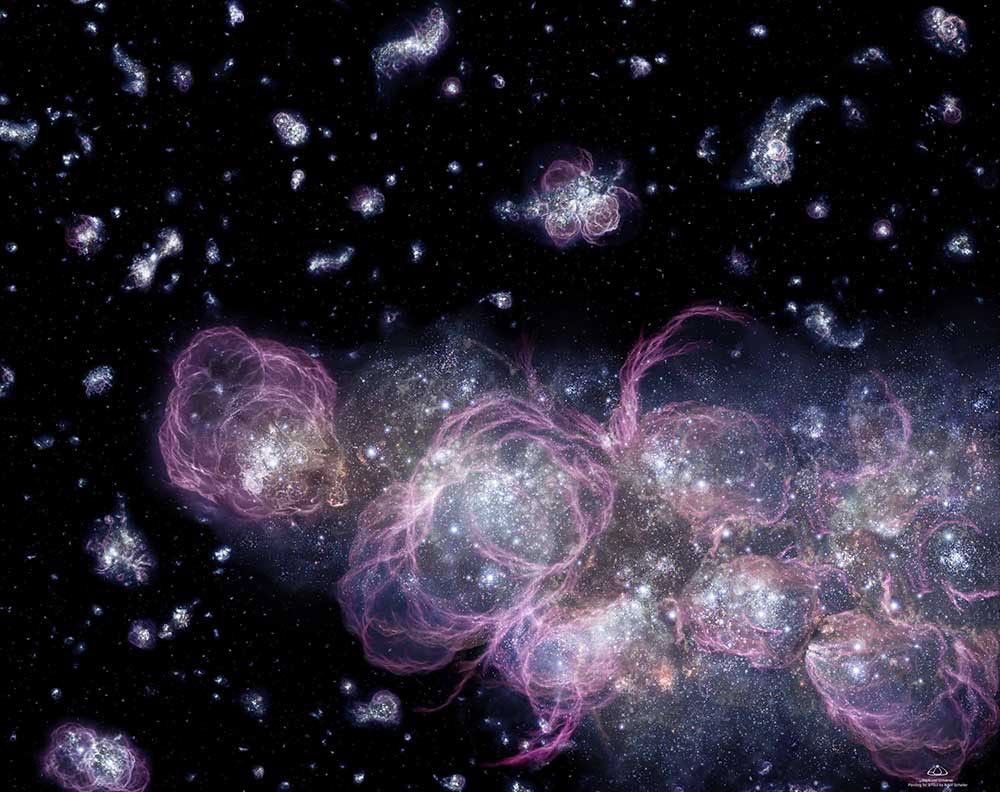
NASA’s greatest telescopes continue to expand our frontiers in both literal and metaphorical ways. They advance the limits of humanity’s views of the cosmos while they address profound questions: How does the universe work? How did we get here? Are we alone? They also advance the frontiers of our technologies and capabilities by making the previously impossible routine, and in the process advancing US strategic interests consistent with the President’s national space policy. NASA’s Astrophysics Division (APD) pursues implementation plans for these frontier-expanding missions with guidance from: decadal surveys by the National Academy of Sciences, Engineering and Medicine including “Pathways to Discovery in Astronomy and Astrophysics for the 2020s” (Astro2020); internal NASA reports, including the Large Strategic Science Missions (LSSM) Report; and independent assessments including the Government Accountability Office’s Assessment of Major Projects (AMP).
To maintain US leadership, APD is launching the Astrophysics Strategic Technology & Research Accelerator (ASTRA) Initiative. ASTRA will:
- identify strategic (flagship/probe) mission concepts that expand our frontier to dramatically advance astrophysics;
- study those concepts at a low fidelity level to inform strategic decisions; and
- advance the concepts ahead of formal pre-Phase A activities for potential projects.
At every stage, NASA will collaborate with industry, academia, and international partners to advance necessary technologies, manufacturing capabilities, and reduce costs. ASTRA aims to reduce the total cost, time-to-science, and schedule risk of future strategic missions, aligning with the guidance from Astro2020, LSSM, and AMP.
Further details, including a timeline, are available in the announcement document [PDF].
Questions regarding this initiative should be submitted to this link:
Stay Connected
Join the Ad ASTRA Email List
For ASTRA Initiative news and announcements delivered straight to your inbox.
To subscribe to the Ad ASTRA email list, send an email to Ad-ASTRA-join@lists.nasa.gov with Subject="join"
To unsubscribe, send an email to Ad-ASTRA-leave@lists.nasa.gov with Subject="leave"
Your email address will be used only for the purpose of subscription to the selected email distribution list. For further information, read the NASA Web Privacy Policy.
News & Events
Stay up-to-date with the latest content from ASTRA Initiative as we explore the universe.

NASA’s greatest telescopes continue to expand our frontiers in both literal and metaphorical ways. They advance the limits of humanity’s views of the cosmos while they address profound questions: How does the universe work? How did we get here? Are…
Registration is now open for NASA’s Innovation for Astrophysics Missions Workshop! The registration site will close on 15 April 2026.
News Straight to Your Inbox
Subscribe to your community email news list
We will never share your email address.