






















AVATAR-Org1
Principal Investigator: Dr. Joel W. Blanchard, Mount Sinai
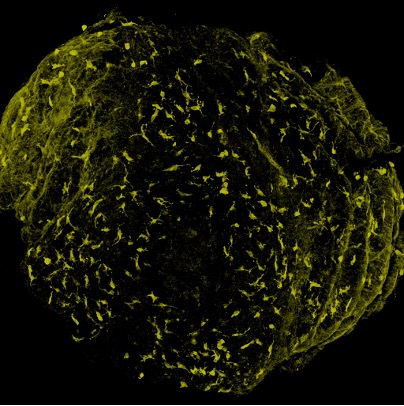
Overview: This investigation will send small, lab-grown models of the human brain, called miBrains, to the International Space Station for five weeks. The tissue that traveled to space will be compared to brain tissue that stayed on Earth to determine how a short spaceflight can impact the human brain at the cellular level.
Science objectives:
- Determine how human brain cells in the miBrains change in space
- Test whether we can reliably grow, monitor, and study human brain tissue in space
- Create the foundation for future missions using miBrains
Potential Earth applications:
- Help understand how the human brain responds to stress
- Use insights from spaceflight data to investigate brain function and disease on Earth
Potential space applications:
- Establish a way to grow, monitor, and study living human brain tissue during spaceflight
- Lay the groundwork for the development of methods that counter risks to brain health that could be faced by astronauts on future missions to the Moon and beyond
Biological & Physical Sciences Division
-
NASA’s Biological and Physical Sciences Division pioneers scientific discovery and enables exploration by using space environments to conduct investigations not possible on Earth. Studying biological and physical phenomena under extreme conditions allows researchers to advance the fundamental scientific knowledge required to go farther and stay longer in space, while also benefitting life on Earth.