

























NASA’s Roman Space Telescope: First-Stage Liquid Oxygen Loading Begins
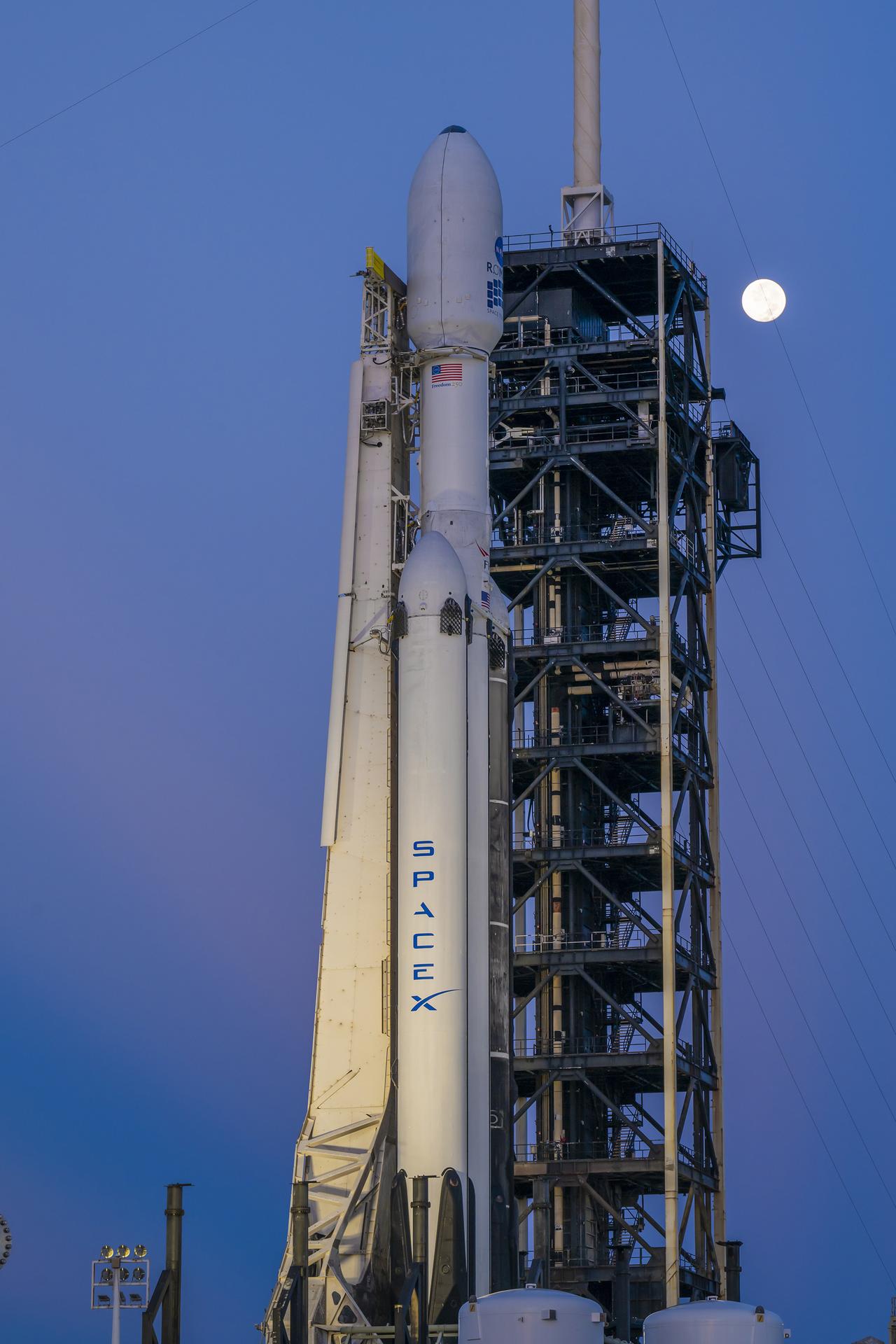
SpaceX confirms that liquid oxygen, or LOX, is now being loaded into Falcon Heavy’s three first-stage cores at NASA’s Kennedy Space Center in Florida.
Falcon Heavy’s engines use LOX as a supercold oxidizer, supplying the oxygen needed to burn RP-1 fuel. Across its center core and two side boosters, a total of 27 Merlin engines will ignite at liftoff.
Second-stage RP-1 loading is scheduled to begin in about 10 minutes. Launch remains targeted for 7:26 a.m. EDT.
The Wide Field Instrument and Coronagraph Instrument are two important science tools designed to help NASA’s Nancy Grace Roman Space Telescope study dark energy, dark matter, and exoplanets.
Many telescopes are designed to focus incoming light toward a central point, so their view is sharpest in the middle. Because of Roman’s optical design, it will instead see the most detail in a ring around the center. The detectors in Roman’s Wide Field Instrument are laid out in an arch shape to sit along part of that ring. This design helps Roman capture a much wider area with equally sharp imaging and also lets both instruments operate simultaneously.
The Wide Field Instrument is a 300-megapixel infrared camera that gives Roman the same angular resolution as NASA’s Hubble Space Telescope, but with a field of view at least 100 times larger. The instrument will capture a patch of the sky bigger than the size of a full Moon and Roman will gather data faster than Hubble. Scientists will be able to quickly conduct research that could take hundreds of years using other telescopes.
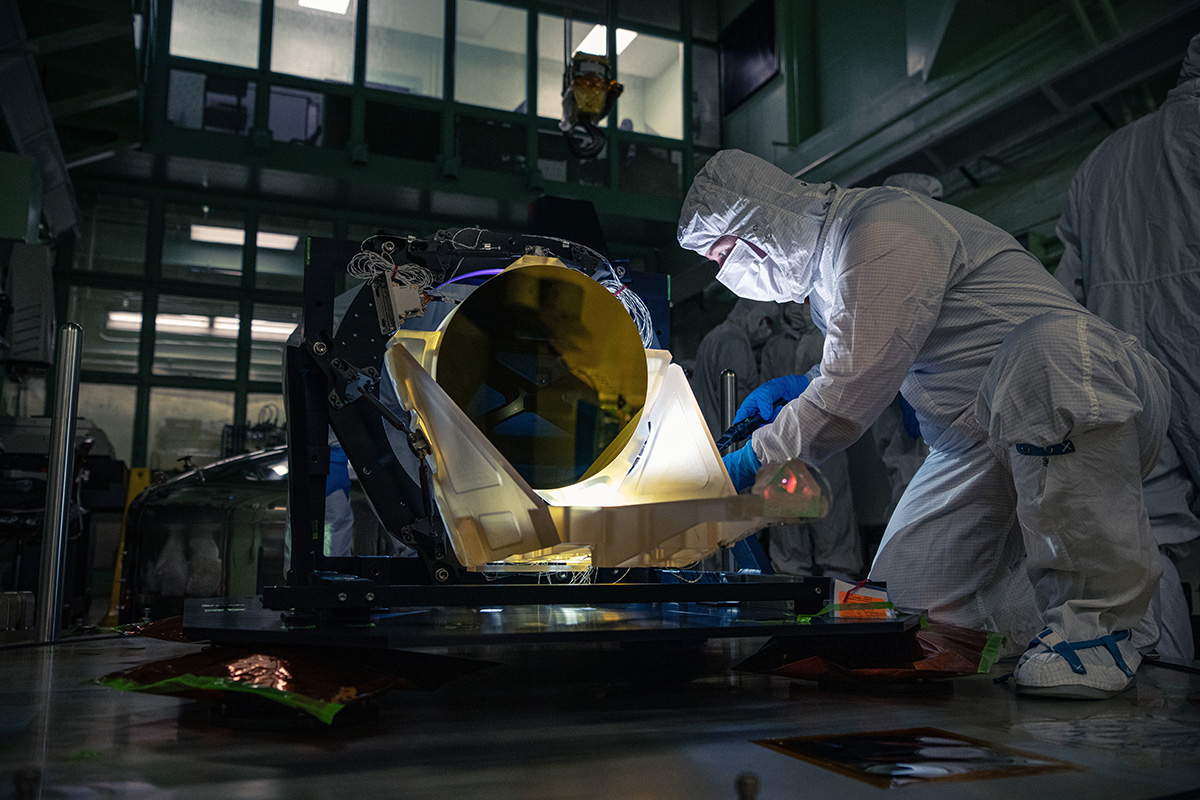
The Coronagraph Instrument will use its system of masks, prisms, detectors, and self-flexing mirrors built to block out the glare from distant stars and reveal the planets in orbit around them. The Coronagraph aims to photograph worlds and dusty disks around nearby stars in visible light to help us see giant worlds that are older, colder, and in closer orbits than the hot, young super-Jupiters direct imaging has mainly revealed so far.
