
























NASA’s IMAP Mission Captures ‘First Light,’ Looks Back at Earth
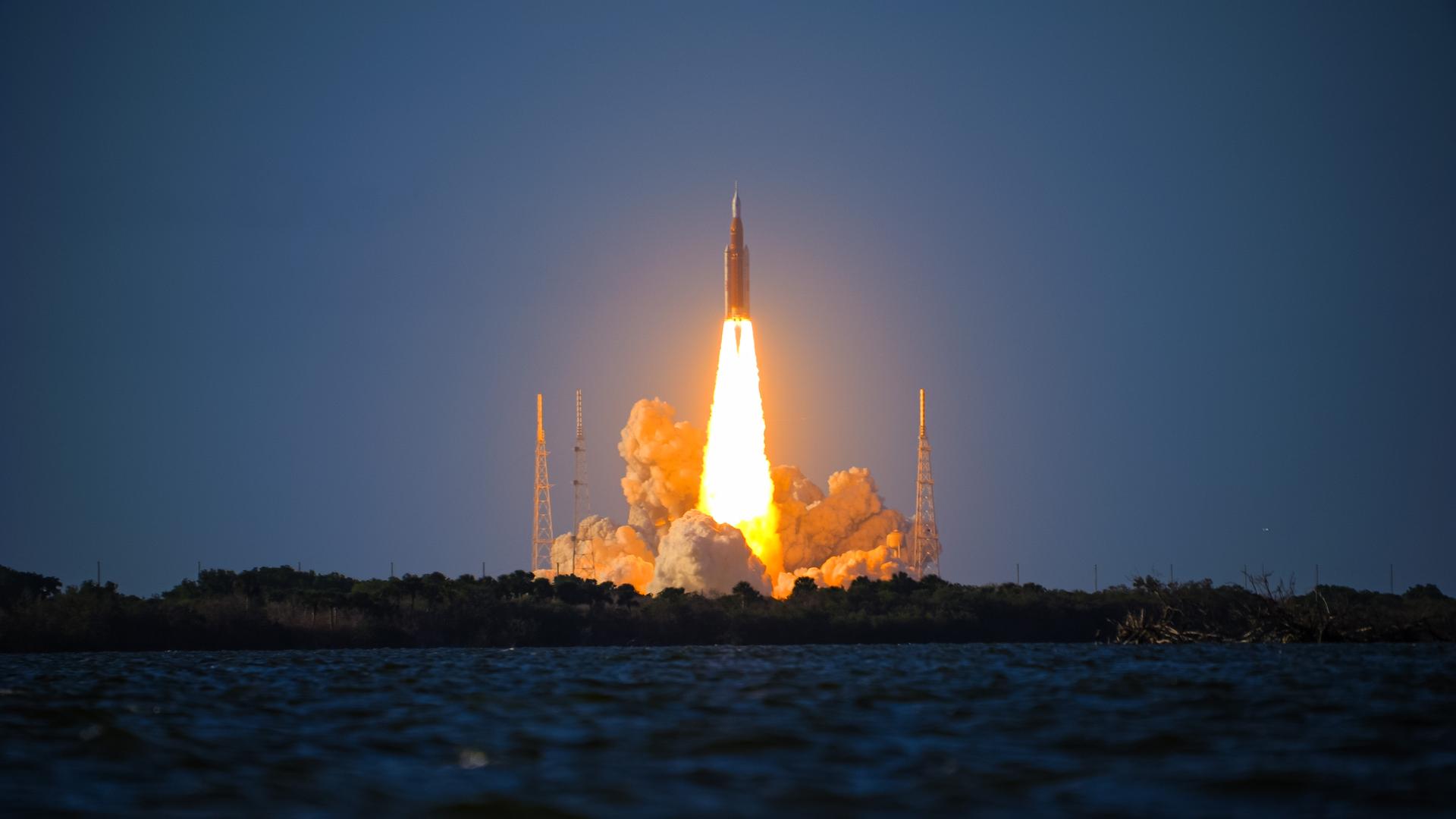
All 10 instruments aboard NASA’s newly launched IMAP (Interstellar Mapping and Acceleration Probe) mission have successfully recorded their first measurements in space. With these “first light” observations, the spacecraft is now collecting preliminary science data as it journeys to its observational post at Lagrange point 1 (L1), about 1 million miles from Earth toward the Sun.
As a modern-day celestial cartographer, IMAP will chart the boundaries of the heliosphere — a huge bubble created by the Sun’s wind that encapsulates our entire solar system — and study how the heliosphere interacts with the local galactic neighborhood beyond.
To map the heliosphere’s boundaries, IMAP is equipped with three instruments that measure energetic neutral atoms: IMAP-Lo, IMAP-Hi, and IMAP-Ultra. These uncharged particles, called ENAs for short, are cosmic messengers formed at the heliosphere’s edge that allow scientists to study the boundary region and its variability from afar.

With all of IMAP’s instruments up and running, the mission has nearly completed its commissioning stage and will arrive at L1 in early January. The mission is now working to complete the final commissioning steps and instrument calibration with the goal of being ready to take operational science data starting Saturday, Feb. 1, 2026.
Learn more and see all the first-light observations here:
By Mara Johnson-Groh
NASA’s Goddard Space Flight Center, Greenbelt, Md.
