

























NASA’s IMAP Mission Reaches Its Destination
NASA’s IMAP (Interstellar Mapping and Acceleration Probe) reached its destination at Lagrange point 1, or L1, approximately 1 million miles from Earth toward the Sun on Jan. 10.
The mission’s operations team sent commands to the spacecraft on the morning of Jan. 9 to begin trajectory maneuvers to enter orbit at L1. Early on the morning of Jan. 10, the team confirmed the spacecraft had successfully entered its final L1 orbit, where it will stay for the duration of its mission.

From L1, IMAP will explore and map the very boundaries of our heliosphere — the protective bubble created by the solar wind that encapsulates our entire solar system — and study how the heliosphere interacts with the local galactic neighborhood beyond.
As a modern-day celestial cartographer, IMAP will also explore and chart the vast range of particles in interplanetary space, investigating two of the most important overarching issues in heliophysics, namely the energization of charged particles from the Sun and the interaction of the solar wind at its boundary with interstellar space. Additionally, IMAP’s real-time observations of the solar wind and energetic particles provide critical data that can help mitigate adverse space weather effects for spacecraft and humans.
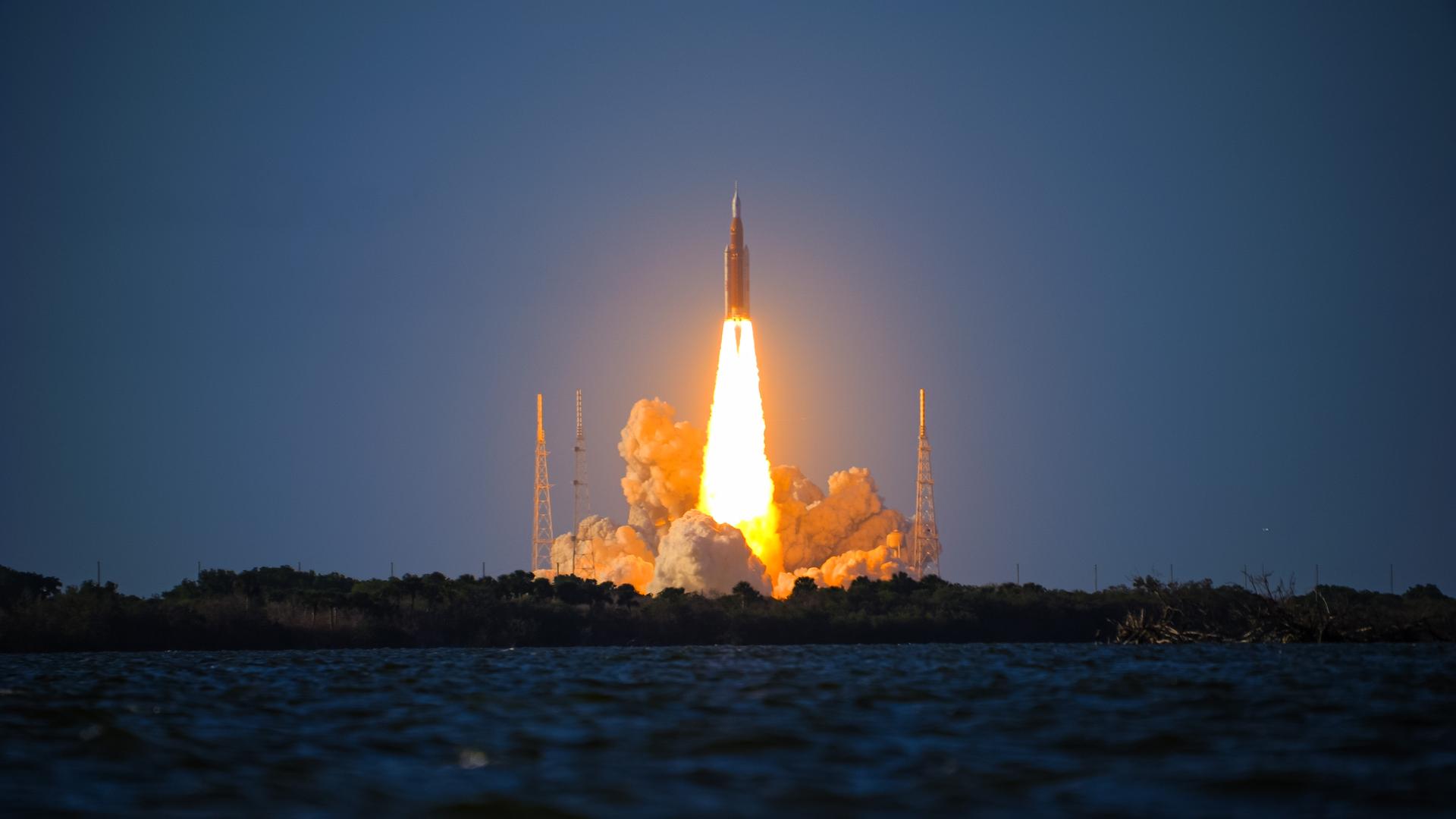
Lagrange point 1 provides IMAP a stable and clear 360-degree view of the heliosphere. This position also allows an unobstructed view of the Sun, which enables the spacecraft to give about a half hour’s warning to voyaging astronauts and spacecraft near Earth of harmful radiation coming their way. The IMAP spacecraft launched on Sept. 24, 2025, and traveled to L1 together with the Carruthers Geocorona Observatory and the National Oceanic and Atmospheric Administration’s (NOAA) SWFO-L1 (Space Weather Follow On-Lagrange 1). There, it joins other spacecraft in orbit, such as NASA’s Wind, ACE (Advanced Composition Explorer), and ESA (European Space Agency)/NASA’s SOHO (Solar and Heliospheric Observatory). Data from IMAP’s state-of-the-art instrumentation will greatly enhance the usefulness of data from these missions.
The mission is nearing completion of its commissioning phase and will begin its science mission on Feb. 1.
Principal investigator and Princeton University professor David McComas leads the IMAP mission, which has an international team of more than 20 partner institutions. Johns Hopkins’ Applied Physics Laboratory (APL) in Laurel, Maryland, managed the development phase, built the spacecraft, and operates the mission, which is the fifth in NASA’s Solar Terrestrial Probes Program portfolio. The Explorers and Heliophysics Projects Division at NASA’s Goddard Space Flight Center in Greenbelt, Maryland, manages the Solar Terrestrial Probes Program for the agency’s Heliophysics Division of NASA’s Science Mission Directorate.
By Mara Johnson-Groh
NASA’s Goddard Space Flight Center, Greenbelt, Md.
