
























RS Extravehicular Activity (EVA) #62: Today, ISS CDR Oleg Kononenko (EV1) and FE-2 Nikolai Chub (EV2) performed RS EVA 62 with FE-17 Aleksandr Grebenkin providing IV operator support. The MRM2 hatch opened at 09:57 AM CDT. Today’s EVA lasted approximately 4 hours and 36 minutes and completed the following tasks: Fully deploy the second panel …
NASA Flight Test Readiness Review Concludes, Teleconference to Follow

NASA concluded its Flight Test Readiness Review for the agency’s Boeing Crew Flight Test and teams are proceeding toward a planned launch at 10:34 p.m. EDT on Monday, May 6, to the International Space Station. The mission will transport NASA astronauts Butch Wilmore and Suni Williams to and from the space station of the first …
NASA Flight Test Readiness Review Concludes, Teleconference to Follow

NASA concluded its Flight Test Readiness Review for the agency’s Boeing Crew Flight Test and teams are proceeding toward a planned launch at 10:34 p.m. EDT on Monday, May 6, to the International Space Station. The mission will transport NASA astronauts Butch Wilmore and Suni Williams to and from the space station of the first …
Cosmonauts Complete Spacewalk to Install Hardware, Science

Roscosmos cosmonauts Oleg Kononenko and Nikolai Chub concluded their spacewalk April 25 at 3:33 p.m. EDT after four hours and 36 minutes. Kononenko and Chub completed their major objectives, which included completing the deployment of one panel on a synthetic radar communications system on the Russian segment of the complex and installing equipment and experiments …
Dreams Become Reality for NASA’s Boeing Flight Test Crew

Momentum is building for NASA’s Boeing Crew Flight Test launch, scheduled for Monday, May 6, 2024. NASA astronauts Butch Wilmore and Suni Williams arrived in a T-38 jet April 25 at the Launch and Landing Facility at the agency’s Kennedy Space Center in Florida after a short flight from Ellington Field near NASA’s Johnson Space …
Dreams Become Reality for NASA’s Boeing Flight Test Crew
Momentum is building for NASA’s Boeing Crew Flight Test launch, scheduled for Monday, May 6, 2024. NASA astronauts Butch Wilmore and Suni Williams arrived in a T-38 jet April 25 at the Launch and Landing Facility at the agency’s Kennedy Space Center in Florida after a short flight from Ellington Field near NASA’s Johnson Space …
NASA, Boeing Crew Lands in Florida for Starliner Mission

NASA astronauts Butch Wilmore and Suni Williams landed April 25, at the Launch and Landing Facility at the agency’s Kennedy Space Center in Florida after a short flight from Ellington Field near NASA’s Johnson Space Center in Houston. Paying homage to their piloting days as retired U.S. Navy captains, they flew to Kennedy in a …
NASA, Boeing Crew Lands in Florida for Starliner Mission

NASA astronauts Butch Wilmore and Suni Williams landed April 25, at the Launch and Landing Facility at the agency’s Kennedy Space Center in Florida after a short flight from Ellington Field near NASA’s Johnson Space Center in Houston. Paying homage to their piloting days as retired U.S. Navy captains, they flew to Kennedy in a …
Dragon Undocking Targeted for No Earlier Than Sunday
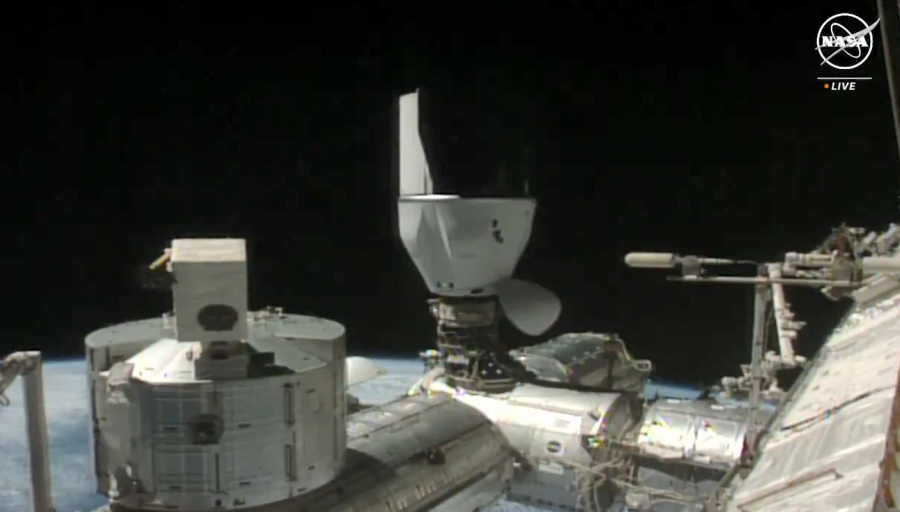
Due to unfavorable weather conditions in the splashdown zones off the coast of Florida, NASA and SpaceX now are targeting no earlier than Sunday, April 28, for the undocking of the Dragon spacecraft from the space-facing port of the International Space Station as part of company’s 30th commercial resupply services mission for the agency. Learn …