

















NASA’s two ESCAPADE (Escape and Plasma Acceleration and Dynamics Explorers) spacecraft have each successfully completed a powered Earth flyby, using Earth’s gravity in combination with a sustained engine burn to slingshot themselves toward Mars. With these successful maneuvers complete, the twin spacecraft are on target to reach the Red Planet in September 2027.
“This is the first time NASA has used a powered Earth flyby to propel a spacecraft toward Mars, and we’ve now executed this maneuver twice, flawlessly, in just two days,” said Asal Naseri, acting associate flight director for the Heliophysics Division at NASA Headquarters in Washington.
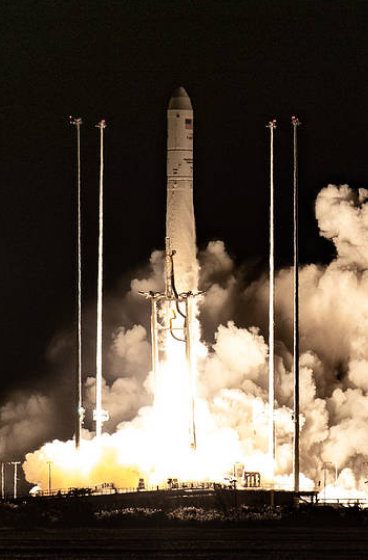
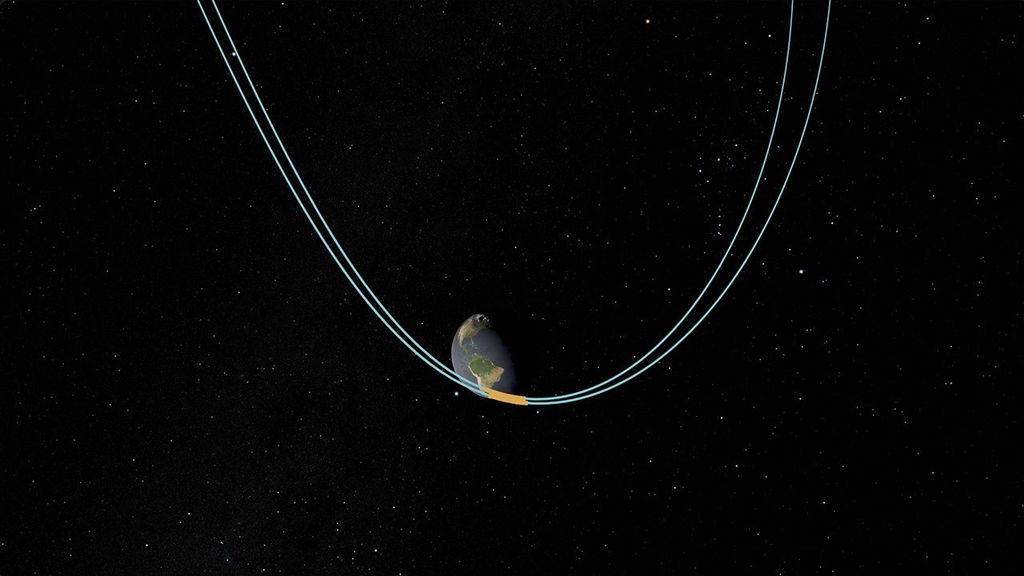
The two ESCAPADE spacecraft launched from Cape Canaveral Space Force Station in Florida on Nov. 13, 2025, when Earth and Mars were on opposite sides of the Sun. So instead of heading straight for the Red Planet, as most other Mars missions have done, both spacecraft entered a “loiter” or “Earth-proximity” orbit. They charted a first-of-its-kind, kidney-bean-shaped course around a place in space about a million miles from Earth called Lagrange point 2, which is a gravitational balancing point on the opposite side of Earth from the Sun. Then they headed back toward Earth to perform this gravitational slingshot maneuver around our planet once Earth and Mars were favorably aligned.
“With this loiter orbit and Earth flyby, ESCAPADE is pioneering a new strategy for getting to Mars,” said Jeff Parker of Advanced Space, lead mission designer. “This method provides the flexibility to launch almost anytime and then use Earth’s gravity to get a boost to Mars, rather than waiting every two years to launch there directly when the planets are aligned.”
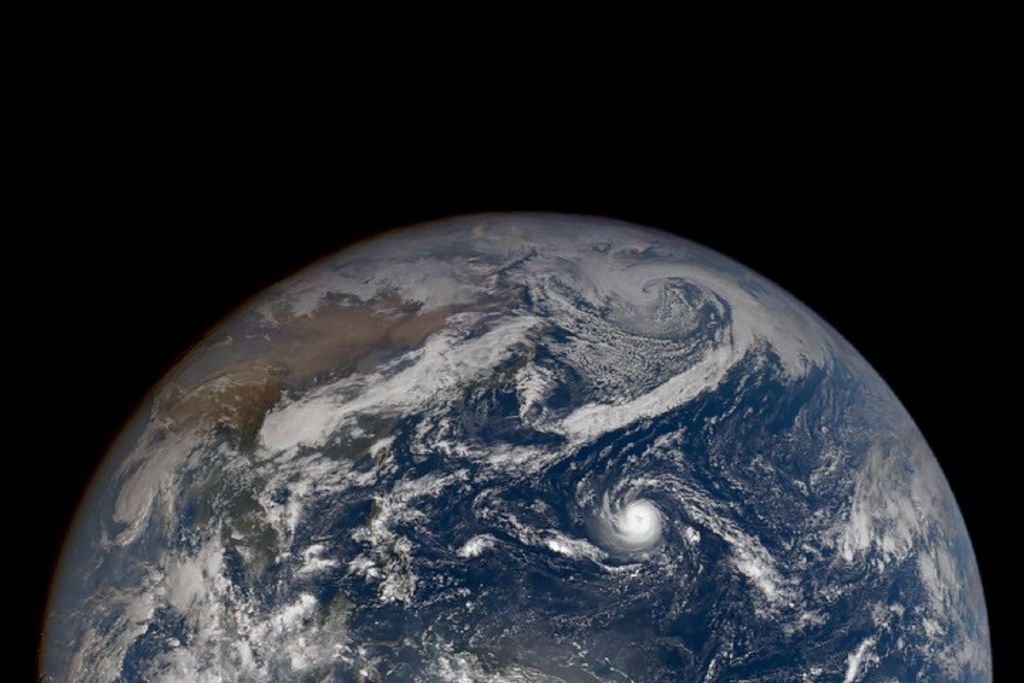
The first ESCAPADE spacecraft completed its close approach to Earth and its approximately 9-minute trans-Mars injection burn — the engine firing that commits the spacecraft to its path to Mars — at 5 a.m. EST on Nov. 7, when it was about 1,000 miles above the planet’s surface. The second spacecraft followed suit two days later, completing its close approach and engine burn at 6 a.m. EST on Nov. 9, when it was about 650 miles above the planet’s surface.
These powered flybys of Earth set both spacecraft on course for their 10-month cruise to Mars, culminating with their Mars orbit insertion burns planned for Sept. 7 and Sept. 9, 2027. Once in orbit around Mars, the two spacecraft will fly in formation to study how a million-mile-per-hour stream of material flowing from the Sun, known as the solar wind, interacts with the Martian environment and how that drives atmospheric loss at Mars.
“By better understanding how the solar wind affects the Martian environment, ESCAPADE’s findings could help us plan and prepare for future human exploration of the Red Planet,” said Michele Cash, ESCAPADE program scientist at NASA Headquarters.
The twin ESCAPADE spacecraft have already taken some science observations during their loiter orbit as they flew multiple times through Earth’s magnetotail, a part of our planet’s magnetic environment that gets stretched away from Earth, opposite the Sun, by the solar wind. During the 10-month trip to Mars, the spacecraft also will be able to study the dynamics of the solar wind between Earth and Mars.
Along the way, the spacecraft will perform a series of trajectory correction maneuvers to adjust their path and ensure they are on a precise course to rendezvous with Mars in September 2027.
When they reach Mars, two days apart, each spacecraft will fire its engine for about 11 minutes to slow down and enter orbit around the planet. The spacecraft then will take several months to maneuver into their first science formation, where they will follow one another in the same orbit to study how the planet’s environment changes with time and location. Science operations are expected to begin in June 2028.
Six months later, the two spacecraft will shift into different orbits, with one traveling farther from Mars to observe the incoming solar wind and the other staying closer to the planet to study how Mars responds to the solar wind in real time. That science campaign is scheduled to last five months.
“This will be the first science mission to choreograph two orbiters around Mars, and the first time we will be able to make coordinated observations of the Martian environment from two different locations simultaneously,” said ESCAPADE’s principal investigator, Rob Lillis of the University of California, Berkeley.
Funded by NASA’s Heliophysics Division, ESCAPADE is part of the agency’s SIMPLEx (Small Innovative Missions for Planetary Exploration) program, which supports missions that explore the solar system in innovative ways with smaller budgets.
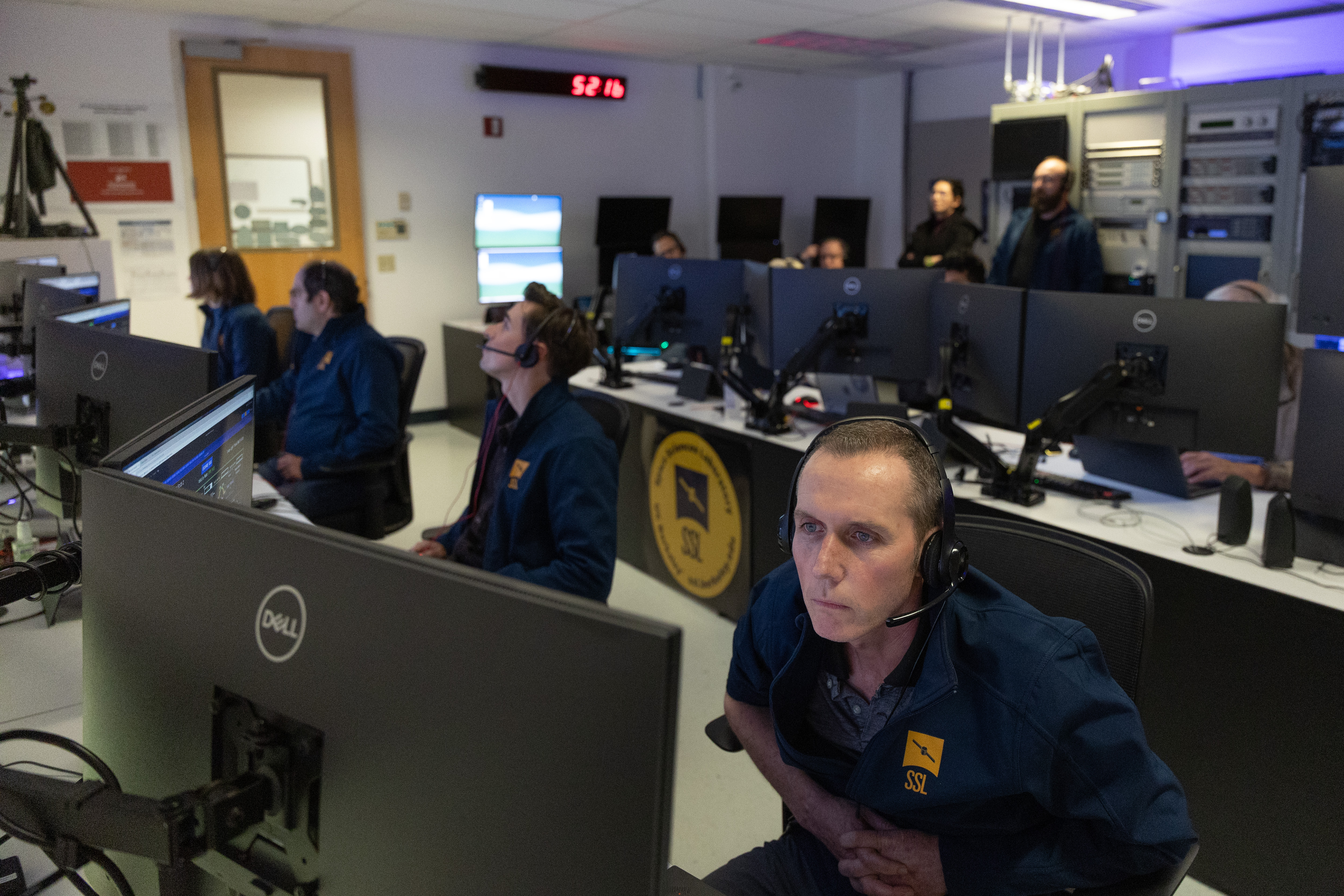
The University of California, Berkeley’s Space Sciences Laboratory leads the mission with key partners Rocket Lab; NASA’s Goddard Space Flight Center in Greenbelt, Maryland; Embry-Riddle Aeronautical University; Advanced Space; and Blue Origin.
“The ESCAPADE mission continues the scientific legacy of historical Mars missions with a dedicated team driving new innovations for its journey to and at the Red Planet,” said Skyler Kleinschmidt, ESCAPADE program executive at NASA Headquarters.