








Suggested Searches

Blogs

    ISS Daily Summary Report – 7/28/2019

    SpX-18 Capture, Berthing and Ingress:  The Dragon vehicle was successfully captured at 8:12 AM CT yesterday. The robotic ground controllers then maneuvered the SSRMS to inspect the Dragon Passive CBM sealing surface and installed/berthed Dragon on the Node 2 Nadir CBM at 11:23 AM CT. The crew also completed vestibule pressurization, leak check and vestibule …

    Read Full Post

    Dragon Captured With New Science Experiments

    While the International Space Station was traveling more than 260 miles over southern Chile, astronauts Nick Hague and Christina Koch of NASA grappled Dragon at 9:11 a.m. EDT using the space station’s robotic arm Canadarm2. Ground controllers will now send commands to begin the robotic installation of the spacecraft on bottom of the station’s Harmony …

    Read Full Post

    The Shady Fire, a Deviation From Plan

    The Shady Fire smoke plume seen from the DC-8 on Thursday, July 25. Credit: Bernadett Weinzierl, University of Vienna

    By Ellen Gray / BOISE, IDAHO/ Thursday, July 25 "It's nice to have a flight plan to deviate from," said DC-8 pilot Tim Vest at the debrief on Thursday night. It was just after 10 p.m. and the DC-8 had just returned from a 6-hour flight over a fire they weren't planning on visiting. The …

    Read Full Post

    Dragon Installed to Station’s Harmony Module for Cargo Operations

    Two days after its launch from Florida, the SpaceX Dragon cargo spacecraft was installed on the Earth-facing side of the International Space Station’s Harmony module at 12:01 p.m. EDT. The 18th contracted commercial resupply mission from SpaceX (CRS-18) delivers more than 5,000 pounds of research, crew supplies and hardware to the orbiting laboratory. A key …

    Read Full Post

    ISS Daily Summary Report – 7/26/2019

    Rodent Research-17 (RR-17):  The crew installed Rodent Habitats in the Lab rack in preparation for upcoming RR-17 operations following SpX-18 arrival.  RR-17 uses younger and older mice as model organisms to evaluate the physiological, cellular and molecular effects of the spaceflight environment. Some responses to spaceflight in humans and model organisms such as mice resemble …

    Read Full Post

    Laying Down with Smoke in the Valley, an Unexpected Camping Trip

    Bruce Anderson and the NASA Langley Mobile Lab in a valley near Stanley, Idaho. July 24, 2019.

    By Ellen Gray / NEAR STANLEY, IDAHO / Wednesday, July 24 We were ready to fly. We'd heard Tuesday evening that there were two seats open on the DC-8 for the communications team on Wednesday, but as often happens in the field, plans change. For the first science flight, requests for extra seats from the …

    Read Full Post

    Machine Learning and the Ionosphere

    By Susannah Darling NASA Headquarters Imagine, if you will, that you are driving to your favorite restaurant. The traffic is bad, so you use your GPS to find the best route. To get your current location, your phone or GPS listens to a satellite in the Earth's upper atmosphere. This satellite sends the GPS system …

    Read Full Post

    Station Gets Ready to Receive Dragon Cargo Craft Saturday Morning

    The SpaceX Dragon space freighter is on its way to the International Space Station following a Thursday launch from Florida. The six-member Expedition 60 crew will be waiting for the commercial cargo craft’s arrival Saturday morning. Dragon will rendezvous with the station Saturday morning reaching a point about 10 meters from the station. Flight Engineer …

    Read Full Post

    Dragon Reaches Orbit, Astronauts Prepare for Saturday Capture

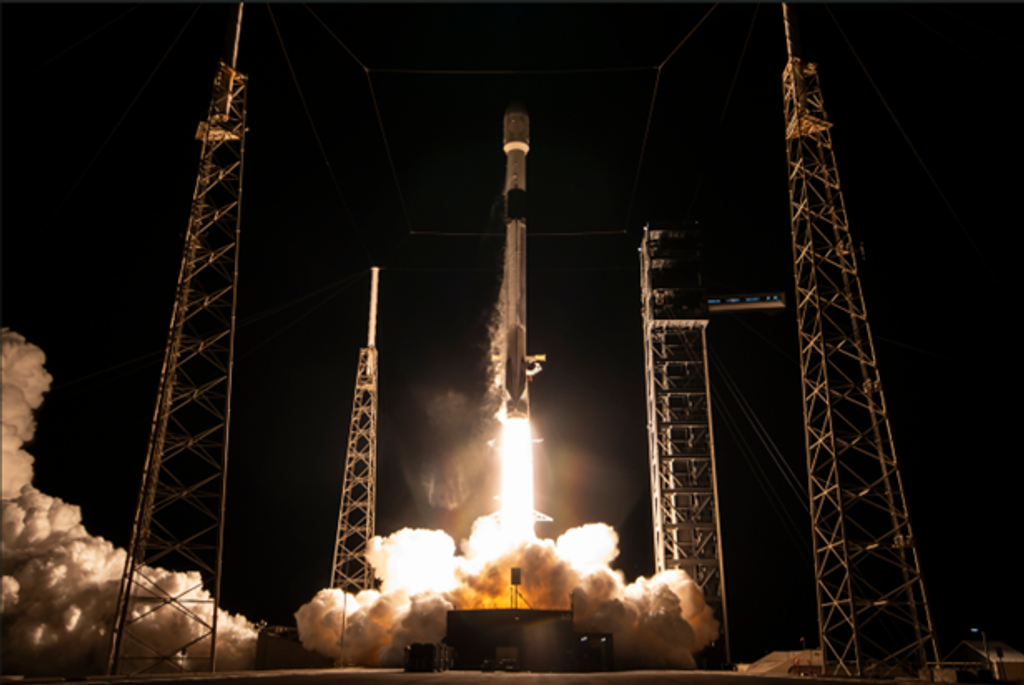
    Dragon’s solar arrays have deployed and the spacecraft is safely in orbit following a launch on the SpaceX Falcon 9 rocket at 6:01 p.m. EDT from Cape Canaveral Air Force Station in Florida, carrying more than 5,000 pounds of research, hardware and supplies to the International Space Station. Dragon is scheduled to arrive at the …

    Read Full Post

    Fires and Smoke with FIREX-AQ: Live from Idaho

    NASA's DC-8 flying laboratory (left) and one of NOAA's Twin Otters (right) overfly fires and smoke during the FIREX-AQ campaign. They are being hosted by the Idaho National Guard's 124th Fighter Wing in Boise, Idaho.

    by Ellen Gray / BOISE, IDAHO/ NASA, NOAA and university researchers are on an Earth expedition this summer studying fires and their smoke in the U.S. West. On July 23 from Boise, Idaho, the Fire Influence on Regional to Global Environments and Air Quality or FIREX-AQ, kicked off its study of fire smoke, what gases …

    Read Full Post