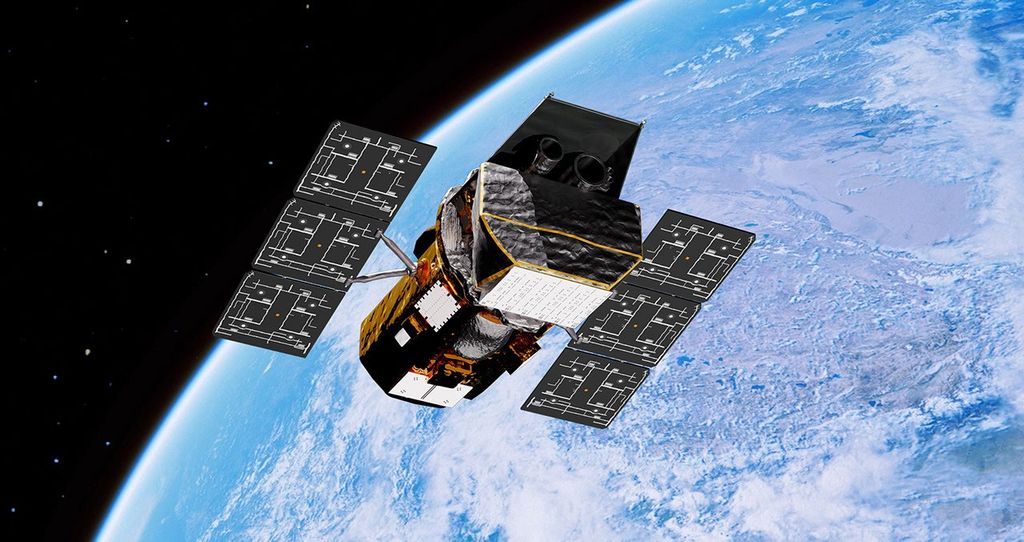













The twin solar arrays on NASA's Transiting Exoplanet Survey Satellite have deployed and are drawing power.

NASA's Transiting Exoplanet Survey Satellite, or TESS, is flying free following an on-time liftoff and successful journey to orbit aboard a SpaceX Falcon 9 rocket. The spacecraft has separated from the rocket's second stage. Once TESS deploys its twin power-producing solar arrays, it will spend the next two months climbing to its final orbit high …
The Falcon 9 rocket's second-stage Merlin engine completed its brief burn – lasting just under a minute – positioning TESS for separation from the vehicle coming up.

The second stage of the SpaceX Falcon 9 rocket and the attached TESS spacecraft are in a coast phase following an on-time liftoff at 6:51 p.m. EDT. Coming up, the second-stage engine will ignite one more time at about 43 minutes into the flight. That burn, lasting only about a minute, will pave the way …

The Falcon 9 first stage completed its burn and has successfully landed on the SpaceX drone ship affectionately called, "Of Course I Still Love You," which waited for it in the Atlantic. Meanwhile, the second stage's first burn is complete and the vehicle has started a 32-minute coast phase. The payload fairing separated from the …

Liftoff of the SpaceX Falcon 9 rocket carrying NASA's TESS spacecraft on a mission to help search for planets outside our solar system that could be capable of harboring life. The Falcon 9's nine Merlin engines are generating more than 1.7 million pounds of thrust – providing the initial boost TESS needs to break the …

NASA's TESS spacecraft is already running on internal power and the rocket will transition to internal power in the next few minutes. There are several other significant milestones coming up between now and launch — the rocket's engines will be chilled and its onboard propellant tanks pressurized, and the gantry-like strongback structure will be retracted …
Weather is expected to cooperate with NASA's and SpaceX's launch plans this evening. According to the U.S. Air Force's 45th Weather Squadron, there is less than a 10 percent chance of conditions violating launch rules, meaning the weather is 90 percent "go" for launch. Launch-watchers gathered at viewing areas across Florida's Space Coast are being …

Countdown clocks are ticking at Cape Canaveral Air Force Station in Florida as NASA's next planet-hunting spacecraft awaits liftoff aboard a Falcon 9 rocket at 6:51 p.m. EDT. The launch window extends for 30 seconds. When a planet crosses in front of the star it's orbiting, that event is called a transit – and the …