
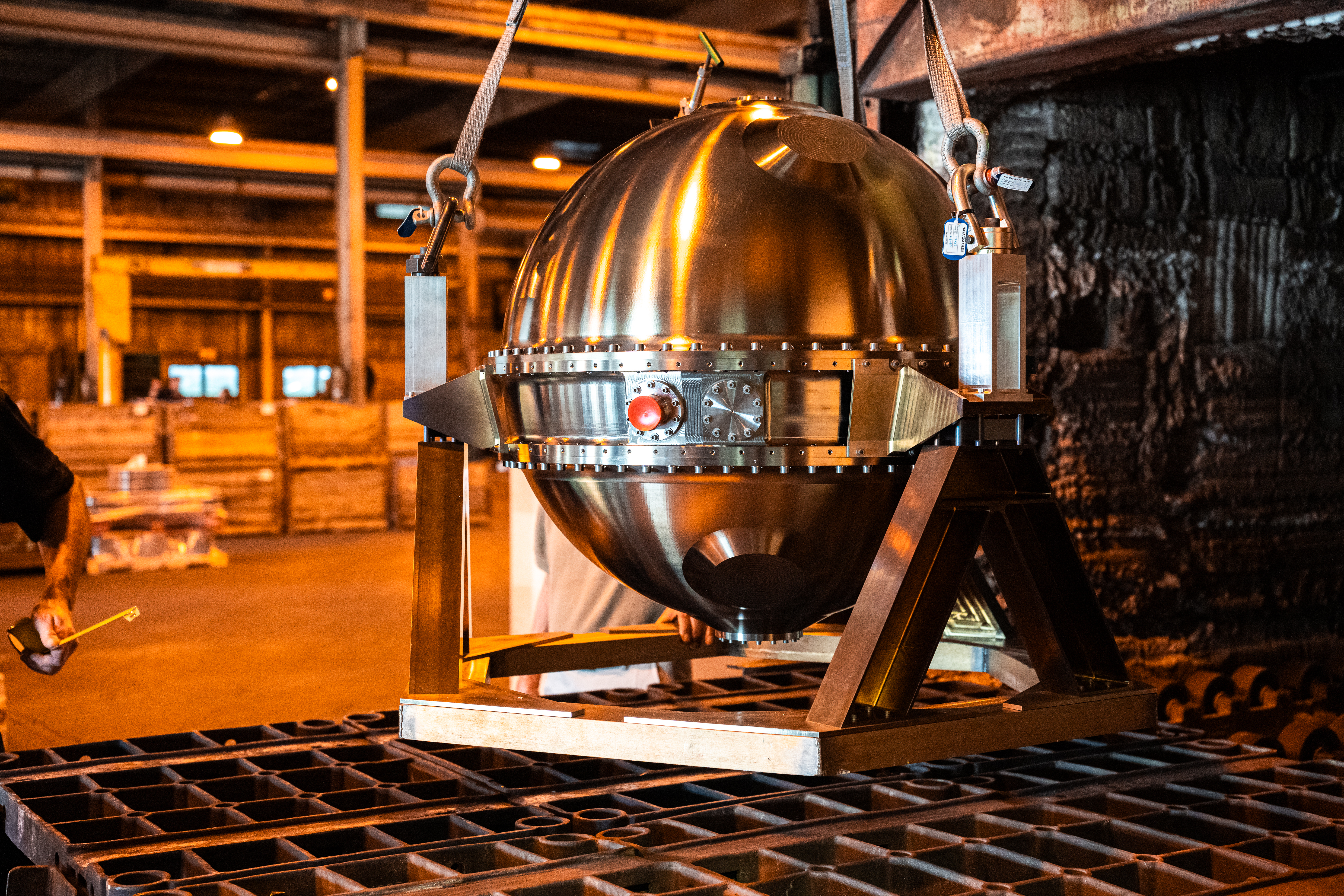


















Electro-static Levitation Furnace (ELF): Today the crew exchanged sample cartridges to prepare for ground-commanded operations in the ELF. The ELF is an experimental facility designed to levitate, melt and solidify materials by containerless processing techniques using the electrostatic levitation method. With this facility, thermophysical properties of high temperature melts can be measured and solidification from deeply …
Station crew investigates quality of space-faring life with studies on cabin air, food systems
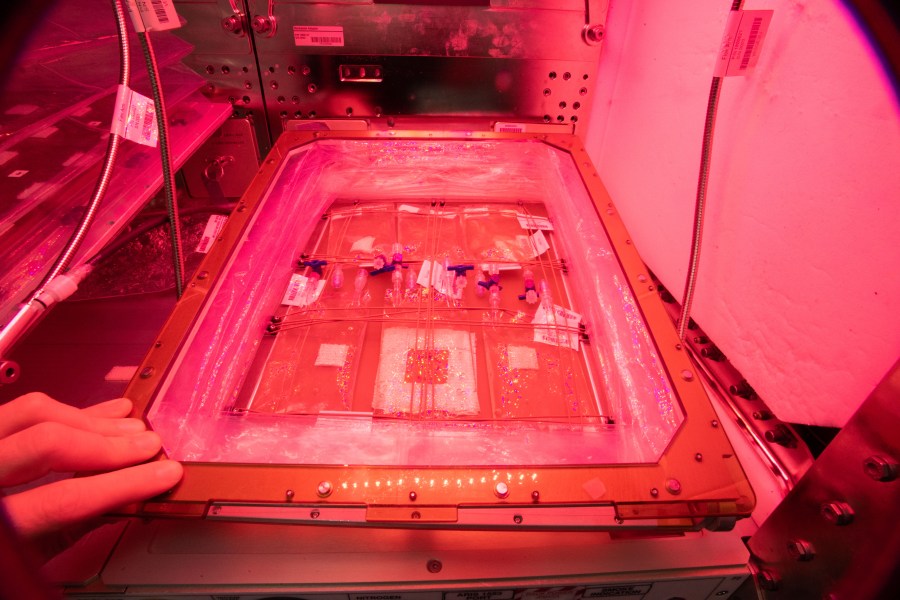
Today, Expedition 56 crewmates balanced work on science investigations in between housekeeping duties aboard the International Space Station. The crew retrieved samplers as part of the Aerosol Sampling Experiment that had been deployed the day before in Nodes 1 and 3. After connecting them to chargers, they were redeployed for a second round of sampling. …
ISS Daily Summary Report – 7/16/2018
Cygnus Unberth: On Saturday, the crew completed the Node1 vestibule depressurization and started the associated vestibule leak checks. On Sunday, once the crew completed leak check activities, robotics ground controllers used the Space Station Remote Manipulator System (SSRMS) to uninstall the Cygnus vehicle from the ISS at 5:04am CDT. At 7:36am CDT, the crew released …
Spruce Beetles in Alaska
This summer, scientists headed to south-central Alaska to collect airborne and ground-based data on the ongoing spruce beetle outbreak.
Astronauts Release U.S. Spacecraft Completing Cargo Mission

Expedition 56 Flight Engineers Alexander Gerst of ESA (European Space Agency) and Serena Auñón-Chancellor of NASA commanded the International Space Station’s Canadarm2 robotic arm to release the Cygnus cargo spacecraft at 8:37 a.m. EDT. At the time of release, the station was flying 253 miles above the Southeastern border of Colombia. Earlier, ground controllers used …
ISS Daily Summary Report – 7/13/2018
Expedite the Processing of Experiments to Space Station (EXPRESS) Racks (ER) Health & Status: Yesterday, the Health & Status telemetry from ER 3, 4, 5, 6, 7 and 8 was reported to be toggling and extended telemetry from ER 7 and 8 was lost. Overnight, the Lab Joint Station LAN (JSL) firewalls were power cycled …
Update to Media Day: Parker Solar Probe Undergoing Additional Processing
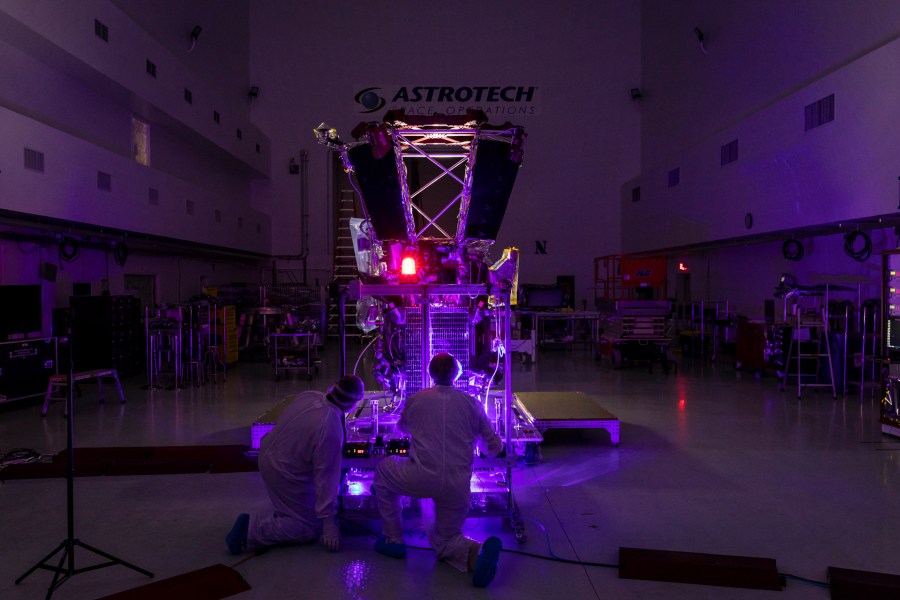
Teams require additional time for processing NASA's Parker Solar Probe spacecraft after discovering a minor tubing leak in the ground support equipment during final processing. The tubing is being repaired, and the spacecraft is healthy. As always, operations take precedence during launch and we needed to cancel media day activities on July 13, 2018. NASA will make every effort to provide updated imagery of the spacecraft prior to encapsulation.
ISS Daily Summary Report – 7/12/2018
Expedite the Processing of Experiments to Space Station (EXPRESS) Racks Health & Status Issues: This morning the Health & Status (H&S) telemetry from EXPRESS Racks (ER) 3, 4, 5, 6, 7 and 8 was reported to be toggling and extended telemetry from ERs 7 and 8 were lost. While a warm reset of the improved Payload …
Cancer, Fertility Research and Cargo Work Fill Crew Schedule

The Expedition 56 crew members explored a variety of microgravity science today potentially improving the lives of people on Earth and astronauts in space. The orbital residents are also unpacking a new resupply ship and getting ready for the departure of another. Cancer research is taking place aboard the International Space Station possibly leading to …