






























NASA Roman Space Telescope’s Antenna, ‘Visor’ Deployed
Roman’s antenna and visor-like sunshade have successfully deployed.
Roman will downlink the highest data volume of any NASA astrophysics mission so far via its high-gain antenna, which measures 5.6 feet wide yet only weighs 24 pounds. It’s made of a carbon composite material that weighs very little but will still withstand the spacecraft’s wide temperature fluctuations. Its large size will help Roman send radio signals across a million miles of intervening space to Earth.
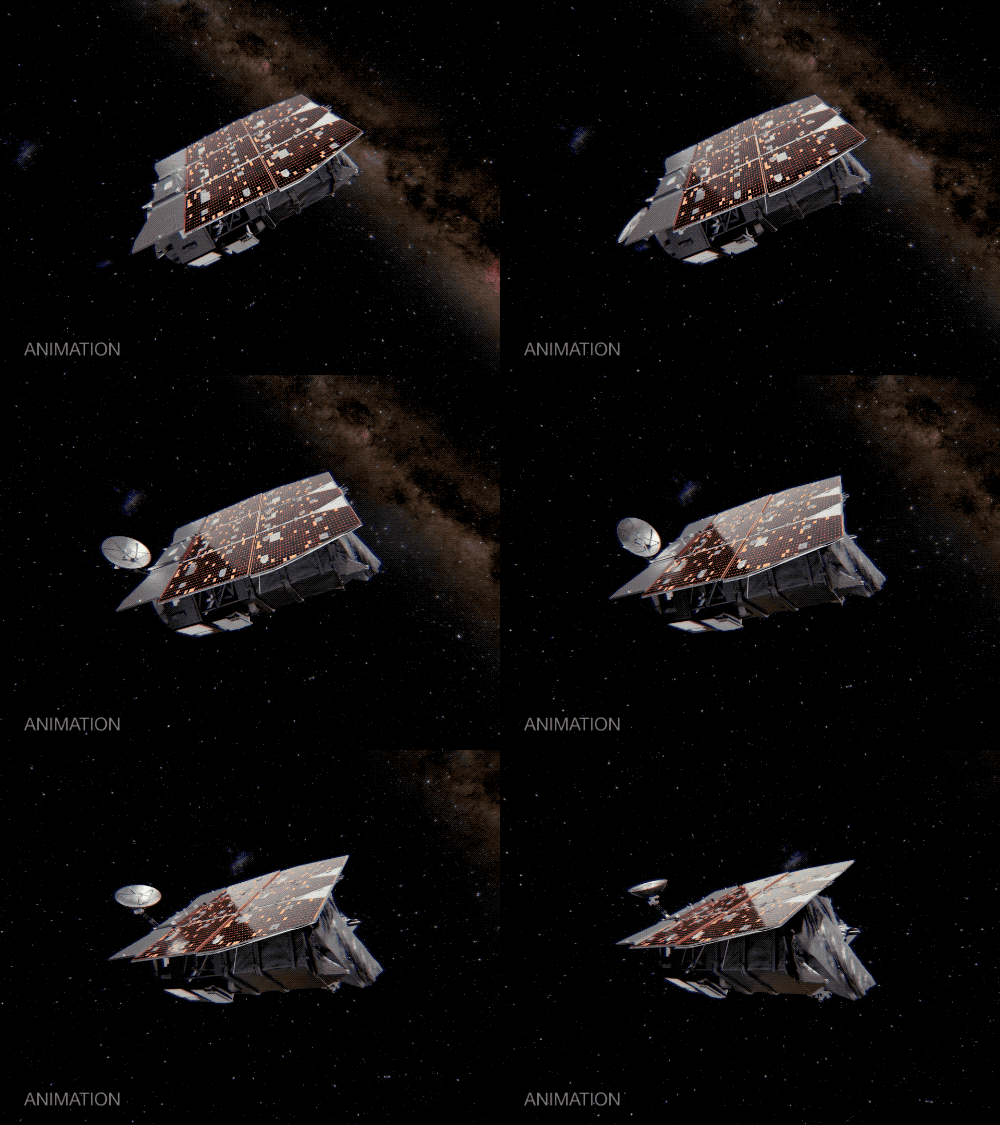
At one frequency, the dual-band antenna will receive commands and send back information about the spacecraft’s health and location. It will use another frequency to transmit a deluge of data at up to 500 megabits per second to ground stations in New Mexico, Australia, and Japan. These locations are spread out so the Roman team will consistently be able to communicate with the spacecraft. The antenna deployment lasted about 4 minutes and concluded at 2:03 p.m. EDT on Aug. 31.
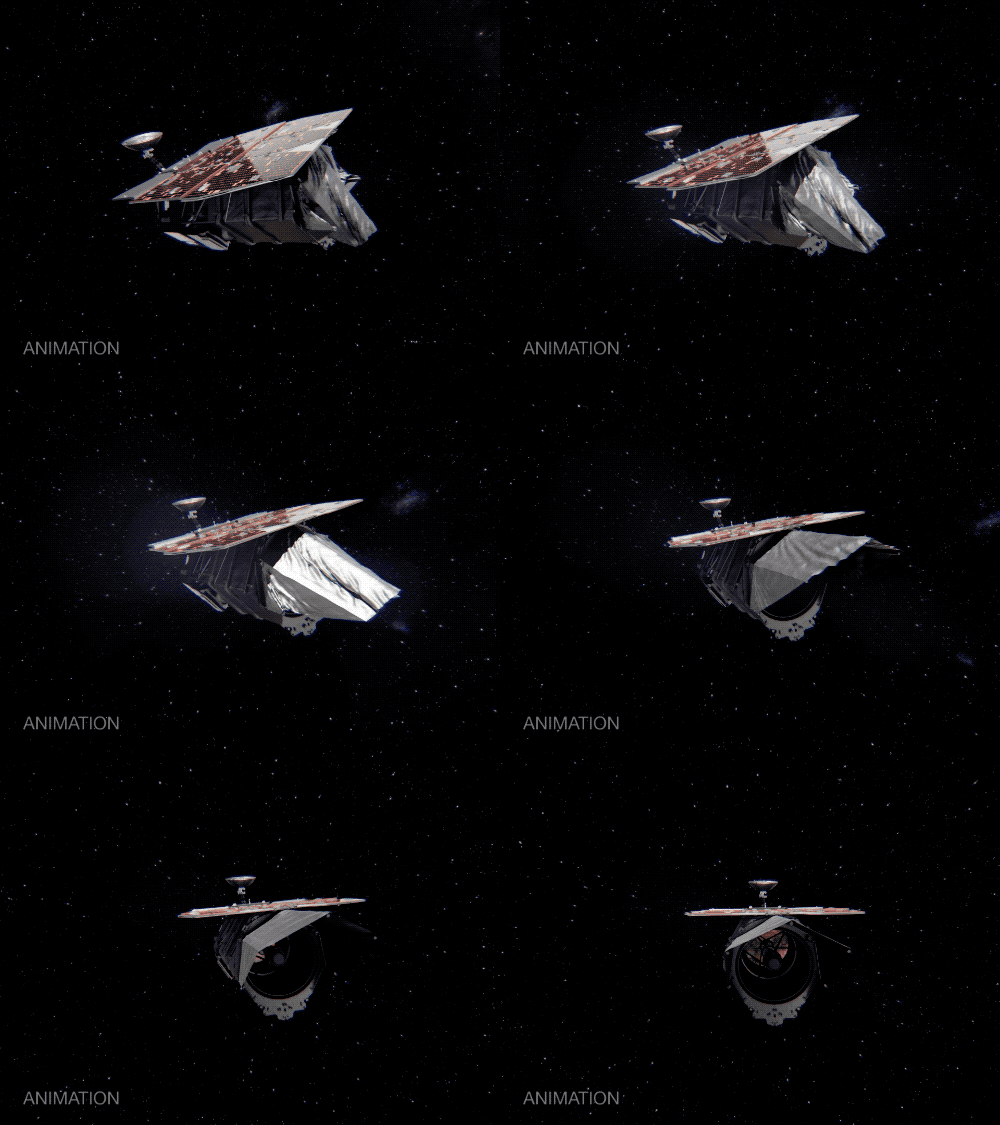
The deployable aperture cover, which is a large sunshade designed to keep unwanted light out of the telescope, was released next. It deployed via three booms that were triggered electronically to spring upward. It lasted about 8 minutes and was successfully completed at 6:05 a.m. EDT on Sept. 1.
Roman’s next major milestone is the Coronagraph Instrument activation. In a couple of weeks, the Wide Field Instrument will power on. Both instruments will run through a series of calibrations and tests throughout the rest of Roman’s three-month commissioning period. NASA anticipates releasing Roman’s first images by early 2027.
To learn more about Roman’s commissioning process, visit:
