

























NASA Missions Help Identify What Powers Auroral ‘Space Battery’
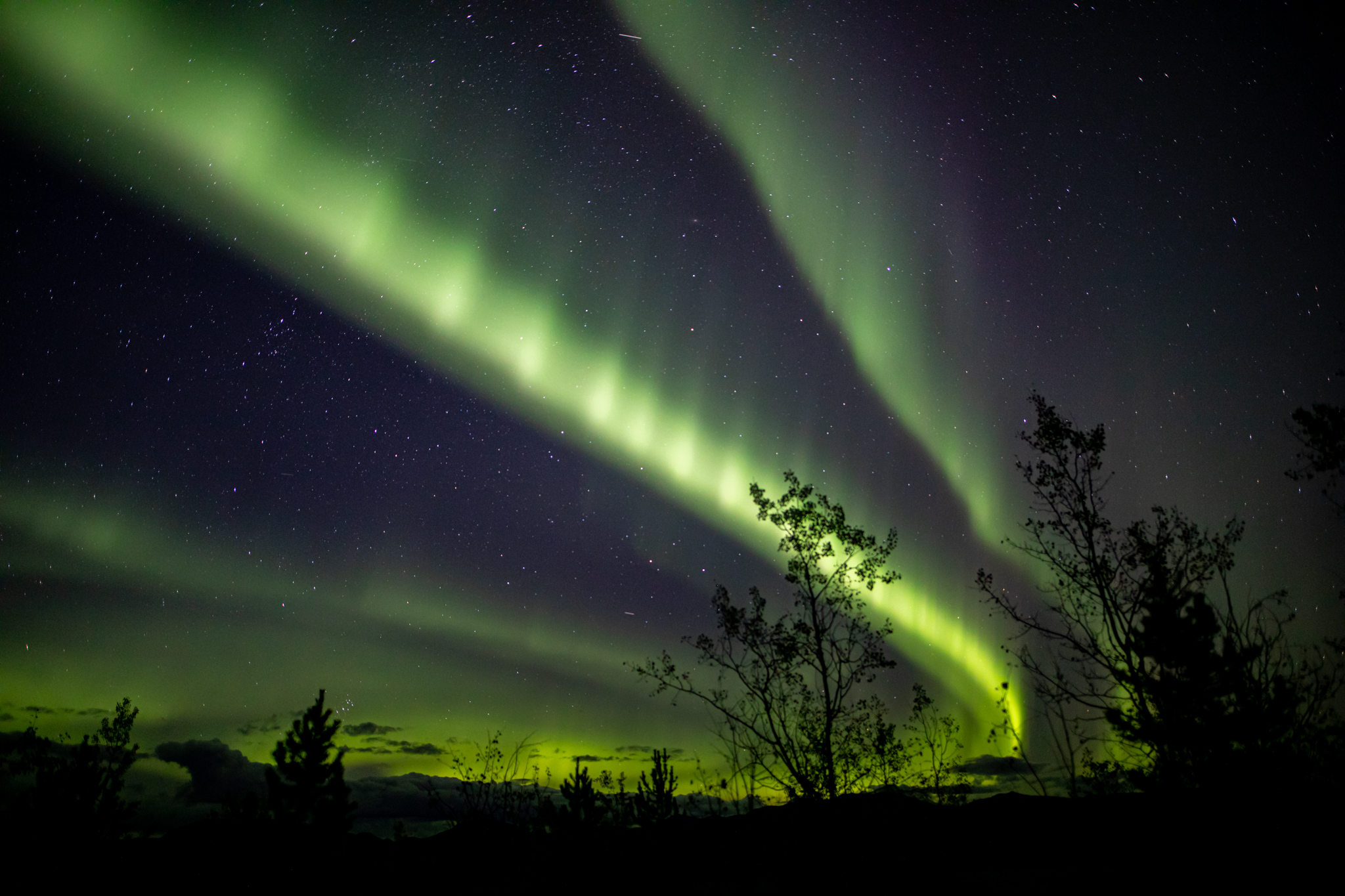
Scouring archived observations from NASA missions, scientists may have solved a mystery about what powers a type of aurora called auroral arcs.
The answer, they say, is space waves.
From the ground, auroral arcs look like green, glowing curtains of light sweeping across the night sky. From space, they appear as thin, green lines — or arcs — slicing across the atmosphere.
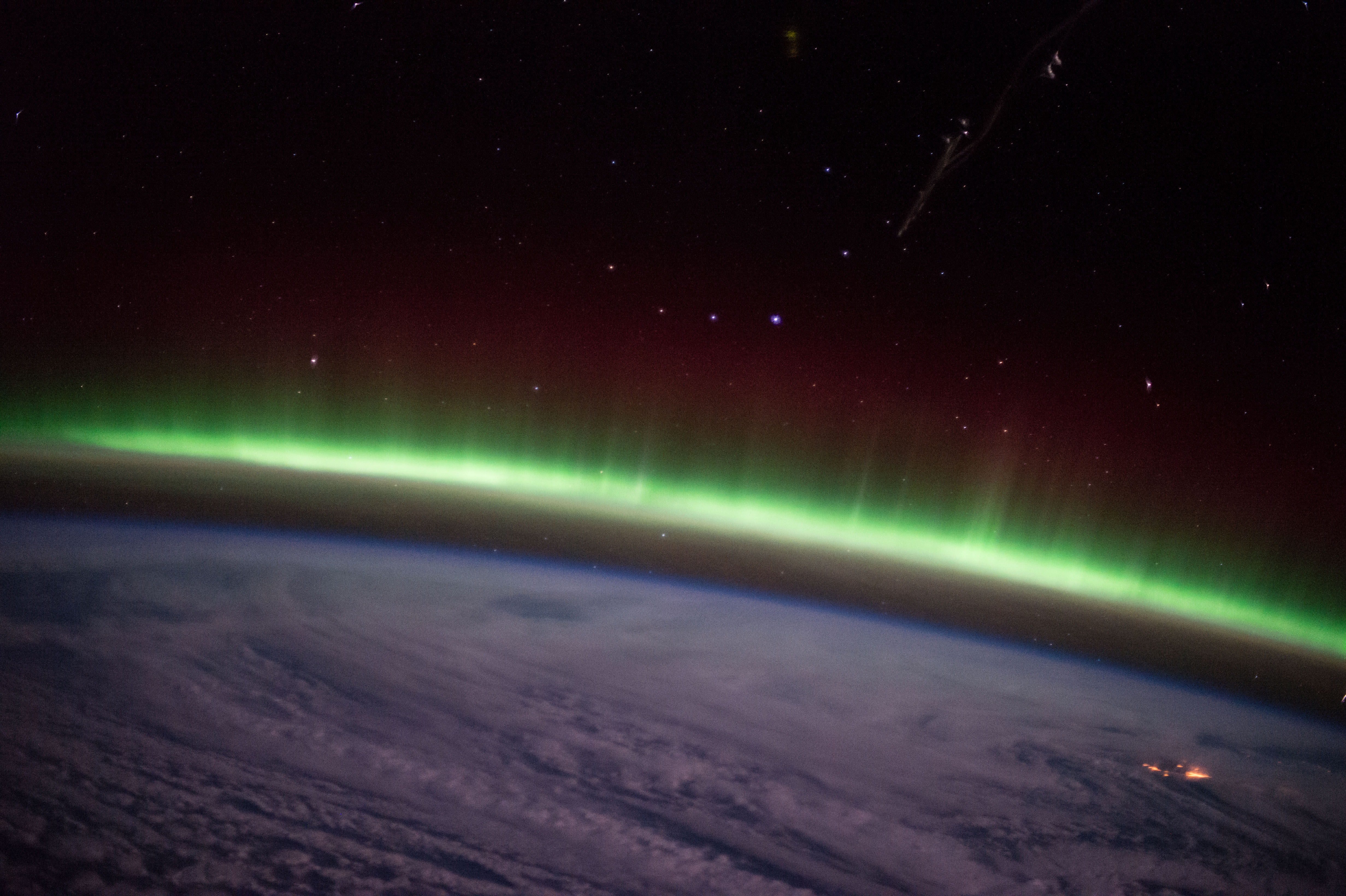
Scientists know that auroral arcs form when electrons, accelerated by electric fields in space, slam into atoms in our atmosphere, releasing light. The electric fields work like a “space battery” for the auroral arcs, but scientists weren’t sure what powers that battery.
Searching for clues, a team led by Sheng Tian of the University of California, Los Angeles, found simultaneous observations of an auroral arc in April 2015 made by NASA’s Van Allen Probes, the U.S. military’s Defense Meteorological Satellite Program F19 spacecraft, and ground-based cameras for NASA’s THEMIS (Time History of Events and Macroscale Interactions during Substorms) mission. These combined observations provided different viewpoints over a long enough time to reveal more about the conditions in space that helped create the arc.
The results, published in Nature Communications on Jan. 13, suggest the electric fields are energized by waves in space called Alfvén waves, which travel along Earth’s magnetic field lines.
Similar particle acceleration has been observed by NASA’s Juno spacecraft around Jupiter. Tian’s team thinks Alfvén waves could also power auroral arcs at Jupiter and other worlds where auroras glow.
– Vanessa Thomas
