

















Exoplanet Watch
Results
No matter how, or how much, you participate, we are grateful to have you in our community. Exoplanets are for everyone, and it's our goal to help you on your astronomical journey!
This Results page is still under revision. Please check back for updates. Thank you!
Exoplanet Watch Results
Results are automatically compiled from data submitted by Exoplanet Watch participants. This process is done using Citizen Initiated Transit Information Survey Enabling NASA Science (CITISENS), a fully-automated pipeline built upon the DAWGIE pipeline framework. It regularly scrapes the AAVSO Exoplanet Database, ingests any new or updated data, fits each transit timeseries with a model light curve generated from priors listed on the NASA Exoplanet Archive, and then calculates new ephemerides and orbital periods for every target submitted to the Exoplanet Watch project. CITISENS runs weekly in early AM hours PST, and data is published the same day. Priors listed in the below table are collected from the NASA Exoplanet Archive.
Citation and Acknowledgement
If you use any Exoplanet Watch data in your publication, you are required to include the observers of those data as co-authors on your paper. To get in touch with your anonymous observer, contact the AAVSO with their observer code.
If you make use of Exoplanet Watch in your work, please cite the papers Zellem et al. 2020 and Pearson et al. 2022 and include the following standard acknowledgment in any published material that makes use of Exoplanet Watch data: “This publication makes use of data products from Exoplanet Watch, a citizen science project managed by NASA's Jet Propulsion Laboratory on behalf of NASA's Universe of Learning. This work is supported by NASA under award number NNX16AC65A to the Space Telescope Science Institute, in partnership with Caltech/IPAC, Center for Astrophysics | Harvard & Smithsonian, and NASA's Jet Propulsion Laboratory.”
What’s In a Name?
-
Where do the names of the exoplanets come from? What does the “b” mean?
If you're new to studying exoplanets, you may wonder why the Planet Name column on the left side of the spreadsheet below has such unusual names for the exoplanets we study. Exoplanets are named after the telescope or survey that found them. For example, exoplanet TrES-2 b orbits its host star, TrES-2, discovered by the Trans-Atlantic Exoplanet Survey (TrES).
Here's a link that explains more: ‘How do exoplanets get their names?’
Where’s My Data?
-
Find your light curve!
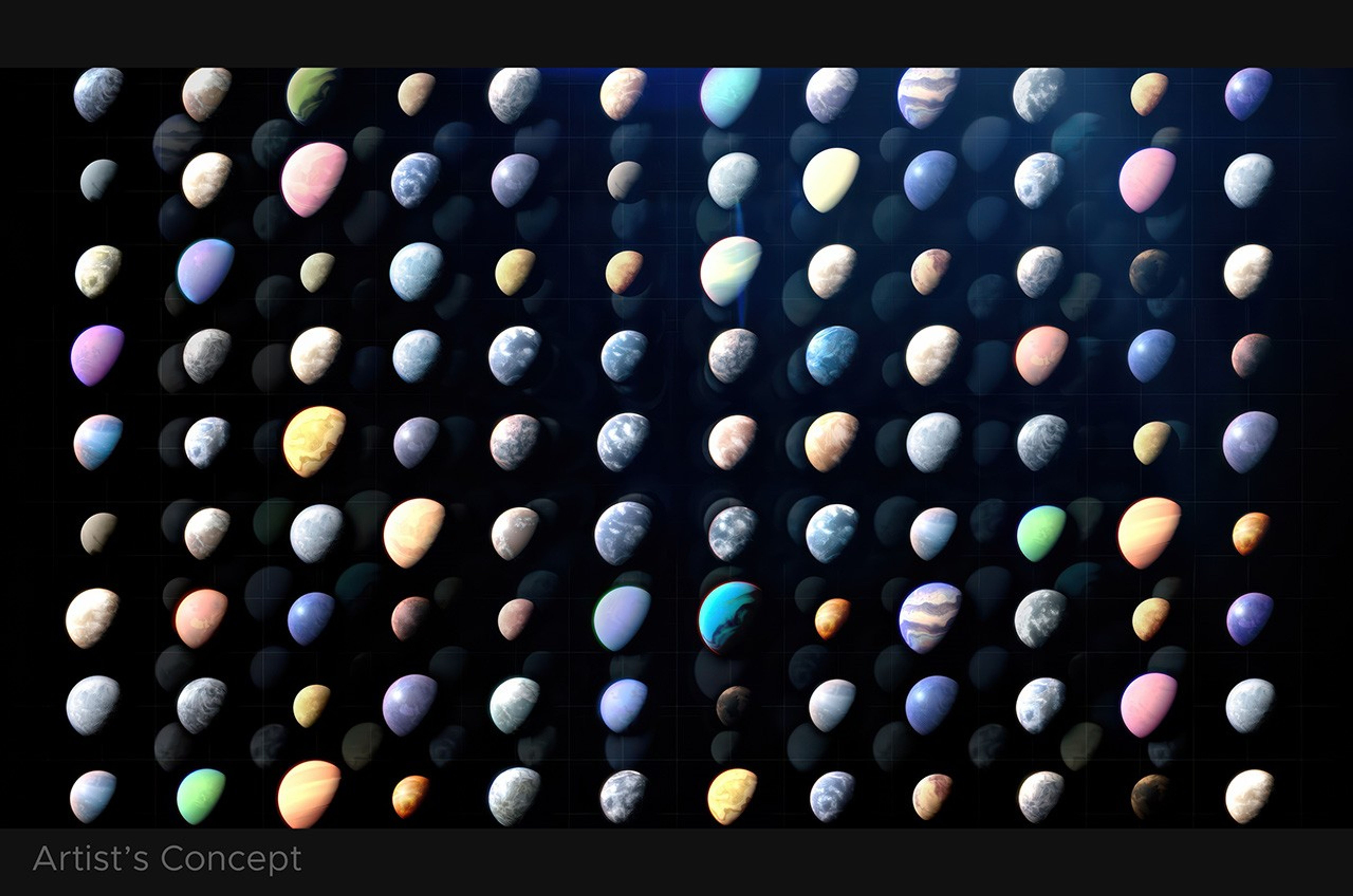
If you have processed a light curve and uploaded it to the American Association of Variable Star Observers (AAVSO), click on the name of the exoplanet you studied in the table below and search for your AAVSO observer code to see the light curve that you contributed to the global body of scientific research about your exoplanet. You can see all of the other light curves contributed by other citizen scientists, too! Each exoplanet listed on the table below has an interactive artist’s concept you can explore once you click on the name of the exoplanet.