



























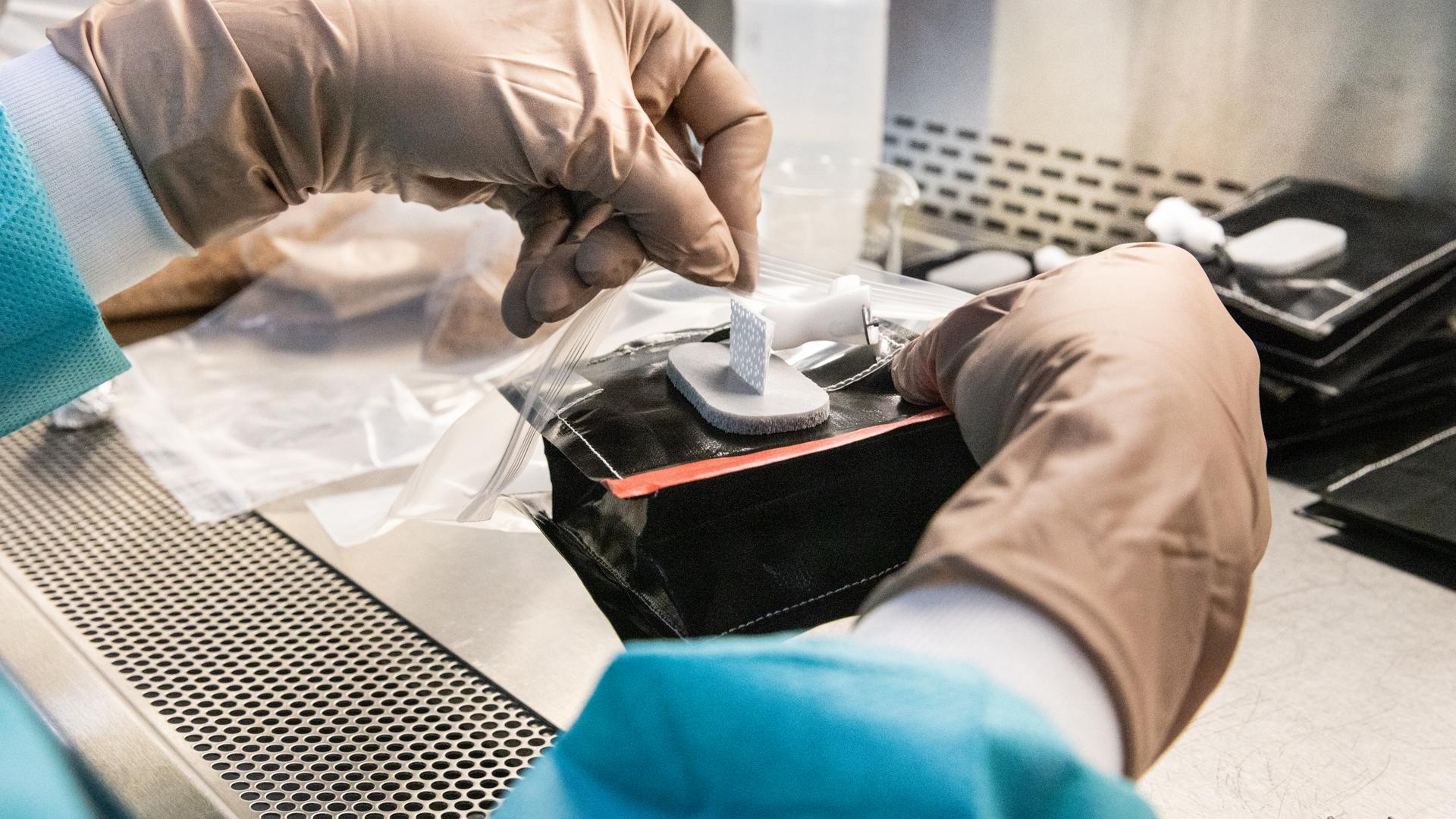
When the Crew-11 astronauts launched to the International Space Station on August 1, 2025, they carried with them another chapter in space farming: the latest VEG-03 experiments, complete with seed pillows ready for planting.
Growing plants provides nutrition for astronauts, as well as psychological benefits that help maintain crew morale during missions.
During VEG-03 MNO, astronauts will be able to choose what they want to grow from a seed library including Wasabi mustard greens, Red Russian Kale, and Dragoon lettuce.
From Seed to Space Salad
Astronauts will grow their plants at locations of their choice within the International Space Station. Veg-03 MNO is one of the first experiments where crew will be able to grow plants outside of controlled plant growth chambers. This will provide insight into the use of novel human habitat capabilities to grow space crops.
Astronauts plant thin strips containing their selected seeds into fabric "seed pillows" filled with a special clay-based growing medium and controlled-release fertilizer. The clay, similar to what's used on baseball fields, helps distribute water and air around the roots in the microgravity environment.
Crew members will monitor the plants, add water as needed, and document growth through regular photographs. At harvest time, astronauts will eat some of the fresh produce while freezing other samples for return to Earth, where scientists will analyze their nutritional content and safety.
How this benefits space exploration
Fresh food will become critical as astronauts venture farther from Earth on missions to the Moon and Mars. NASA aims to validate different kinds of crops to add variety to astronaut diets during long-duration space exploration missions, while giving crew members more control over what they grow and eat.
How this benefits humanity
The techniques developed for growing crops in space's challenging conditions may also improve agricultural practices on Earth. Indoor crop cultivation approaches similar to what astronauts do in Veggie might also be adapted for horticultural therapy programs, giving elderly or disabled individuals new ways to experience gardening when traditional methods aren't accessible.
Related Resources
VEG-03 MNO on the Space Station Research Explorer
About BPS
NASA’s Biological and Physical Sciences Division pioneers scientific discovery and enables exploration by using space environments to conduct investigations not possible on Earth. Studying biological and physical phenomenon under extreme conditions allows researchers to advance the fundamental scientific knowledge required to go farther and stay longer in space, while also benefitting life on Earth.