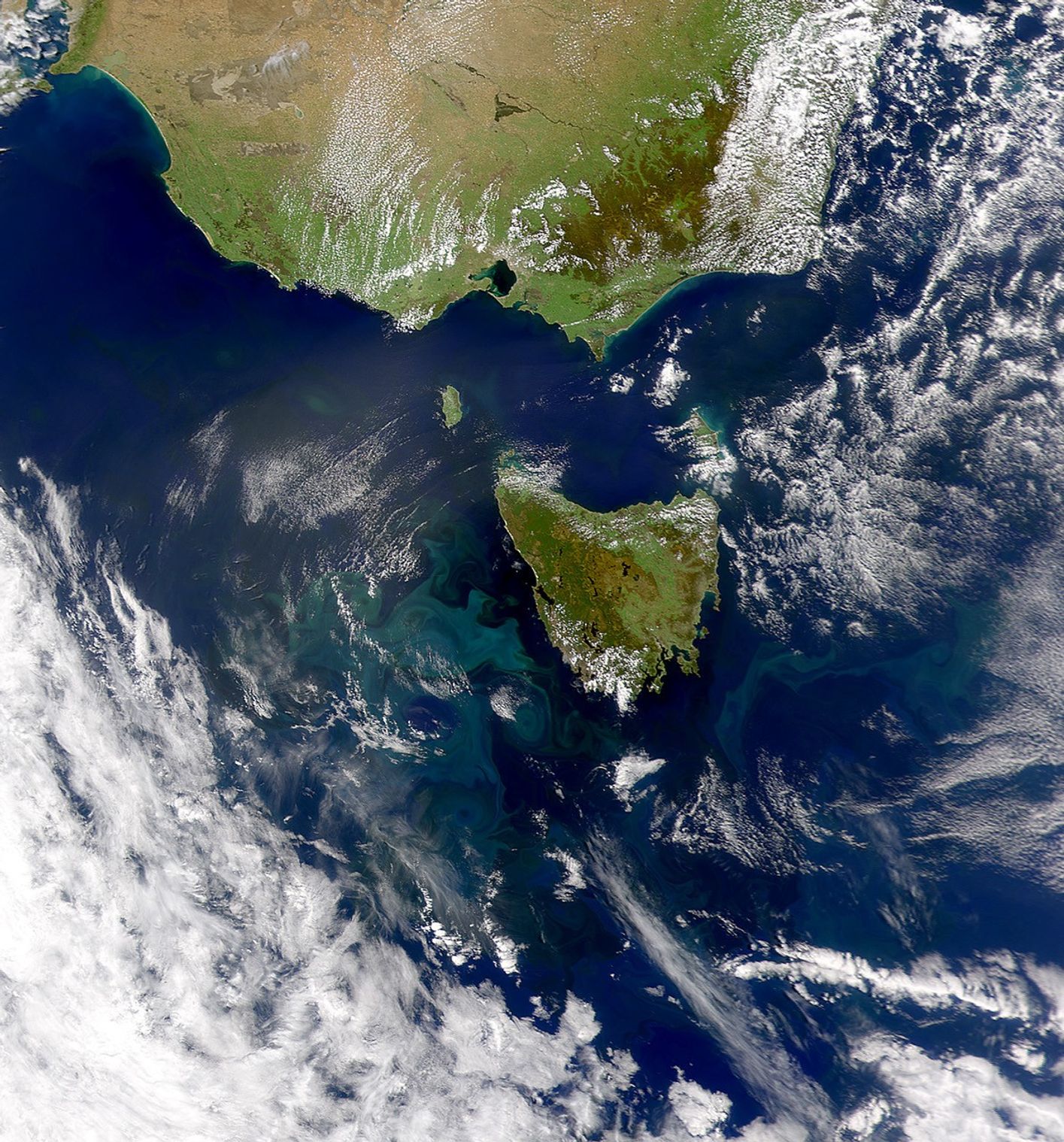



















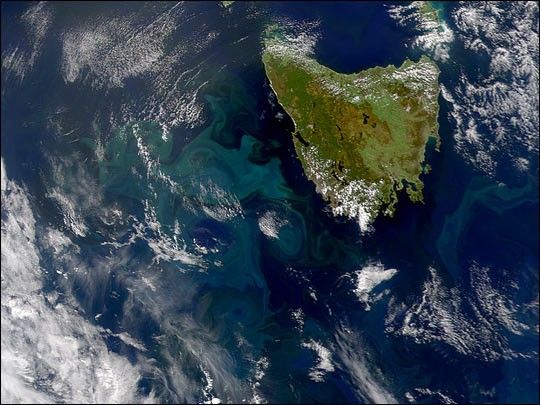
This true-color satellite image shows a large phytoplankton bloom,several hundred square kilometers in size, in the Indian Ocean off thewest coast of Tasmania. In this scene, the rich concentration ofmicroscopic marine plants gives the water a lighter, more turquoiseappearance which helps to highlight the current patterns there. Noticethe eddies, or vortices in the water, that can be seen in severalplaces. It is possible that these eddies were formed by convergingocean currents flowing around Tasmania, or by fresh river runoff fromthe island, or both.
Often, eddies in the sea serve as a means for stirring the water, thusproviding nutrients that help support phytoplankton blooms, which inturn provide nutrition for other organisms. Effectively, these eddieshelp feed the sea (click to read an article on this topic).
This image was acquired November 7, 2000, by the Sea-viewing WideField-of-view Sensor (SeaWiFS) flying aboard the Orbview-2 satellite.Tasmania is located off Australia's southeastern coast.
References & Resources
Image courtesy SeaWiFS Project, NASA/Goddard Space Flight Center, and ORBIMAGE