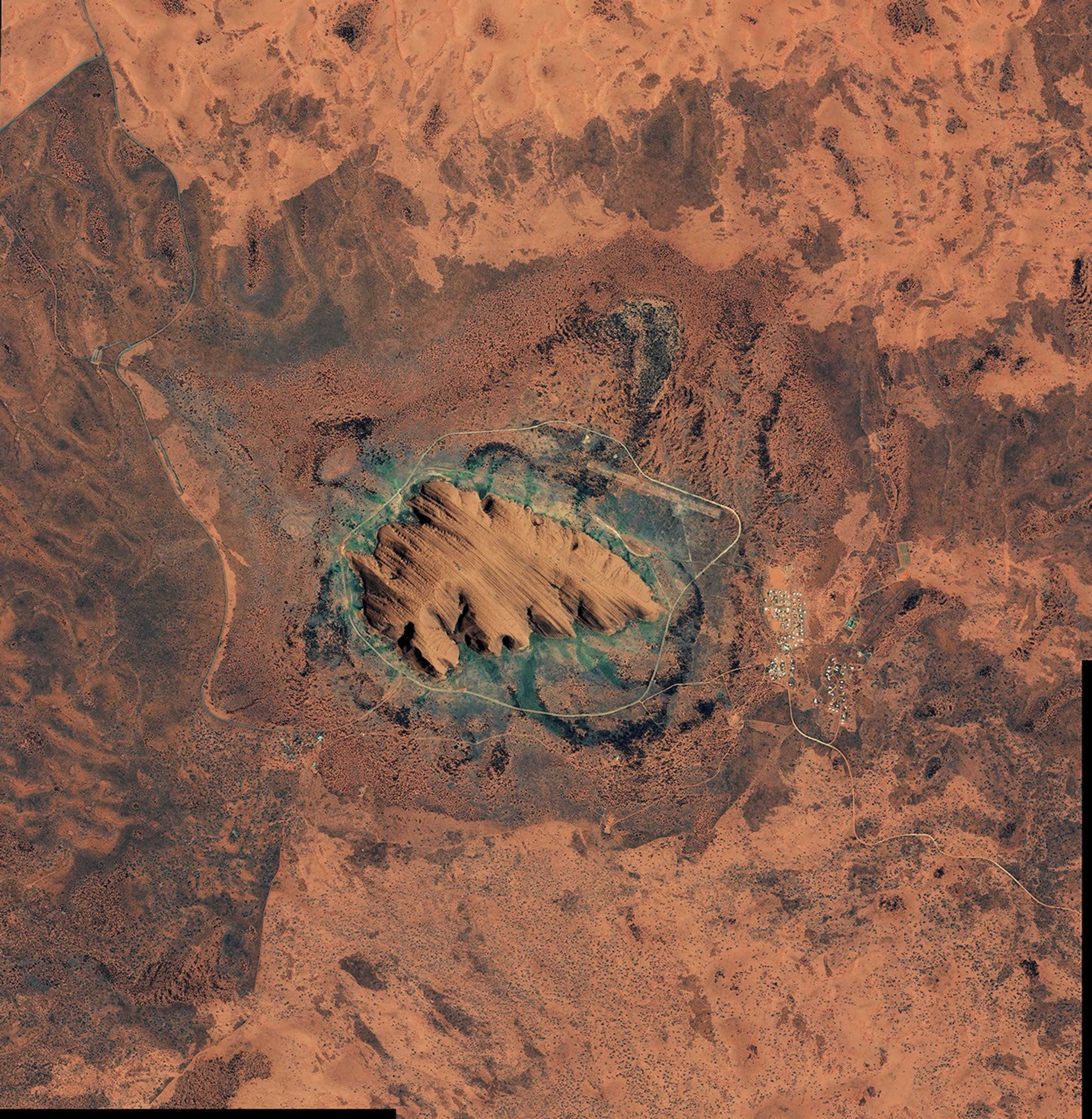























In the heart of the Australian Outback, a massive block of red sandstone rises up out of the near-perfect flatness of the eroded landscape. Called Uluru, or Ayer’s Rock, this giant is a monolith 348 meters (1,142 feet) high, 3.6 kilometers (2.2 miles) long, and 9.4 kilometers (5.8 miles) around. It is the largest single rock known in the world. Tourists come from all over the country and the world to watch sunrise and sunset bring the colors of the rock to life. Some also make the challenging ascent to the top, despite the disapproval of the local Aboriginal people, to whom Uluru is a sacred site.
This awe-inspiring image of Uluru and the surrounding terrain was captured by Space Imaging’s Ikonos satellite on January 17, 2004. Centered in the scene, Uluru appears a more subdued orange-red than the surrounding desert soils. These reddish soils and their location in the heart of the Outback give rise to the region’s nickname as Australia’s “Red Center.” Trees and other vegetation surround the base of the rock, giving the impression of streams of turquoise waters flowing out of the rock. The rock is carved and scoured by eons of erosion by wind and water. To the Aboriginal people, many of these features are part of the religious mythology through which they describe their existence and history in the region.
References & Resources
© All Rights Reserved: Use of IKONOS, GeoEye, QuickBird and WorldView imagery must be coordinated with Maxar.
Image copyright DigitalGlobe © All Rights Reserved: Use of IKONOS, GeoEye, QuickBird, WorldView, and Digital Globe imagery must be coordinated with Maxar .