























ELISA MABL (Enzyme-Linked Immunosorbent Assay Microgravity Associated Bone Loss)
Principal Investigator: Dr. Abba Zubair, Mayo Clinic
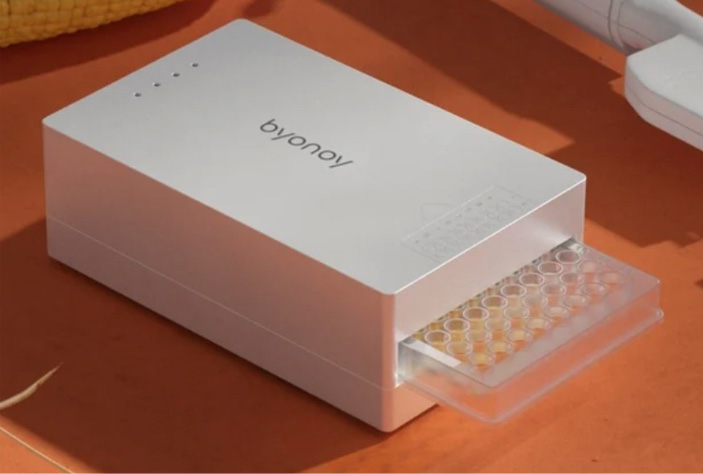
Overview: As a part of the Commercially Enabled Rapid Space Science initiative, ELISA MABL will conduct a technology demonstration of a compact microplate reader aboard the International Space Station. The use of the plate reader to detect and measure antibodies, antigens, and proteins in biological samples would enable scientists to analyze their samples on the space station and obtain data in a timely manner, rather than wait for samples to be returned to Earth for analysis. This advancement will enhance our scientific capabilities on future long-duration missions. Furthermore, it provides automated sample analyses using a variety of methods that were previously not possible on the space station. Additionally, it would remove the need for chemicals and other preservation methods for the space-flown specimens that could impact the data.
Science objectives:
- Validate the feasibility and reliability of performing enzyme-linked immunosorbent assay on biomarkers under microgravity
- Check the performance of the plate reader to produce the required data for scientific investigations
Potential Earth applications:
- Facilitate use of portable diagnostic platforms in remote areas
Potential space applications:
- Progress spaceflight health monitoring capabilities for future long-duration space missions
- Support the advancement of automated scientific investigations in space and on the Moon
Biological & Physical Sciences Division
-
NASA’s Biological and Physical Sciences Division pioneers scientific discovery and enables exploration by using space environments to conduct investigations not possible on Earth. Studying biological and physical phenomena under extreme conditions allows researchers to advance the fundamental scientific knowledge required to go farther and stay longer in space, while also benefitting life on Earth.