


























APOD
Astronomy Picture of the Day
Discover the cosmos! Each day a different image or photograph of our fascinating universe is featured, along with a brief explanation written by a professional astronomer.
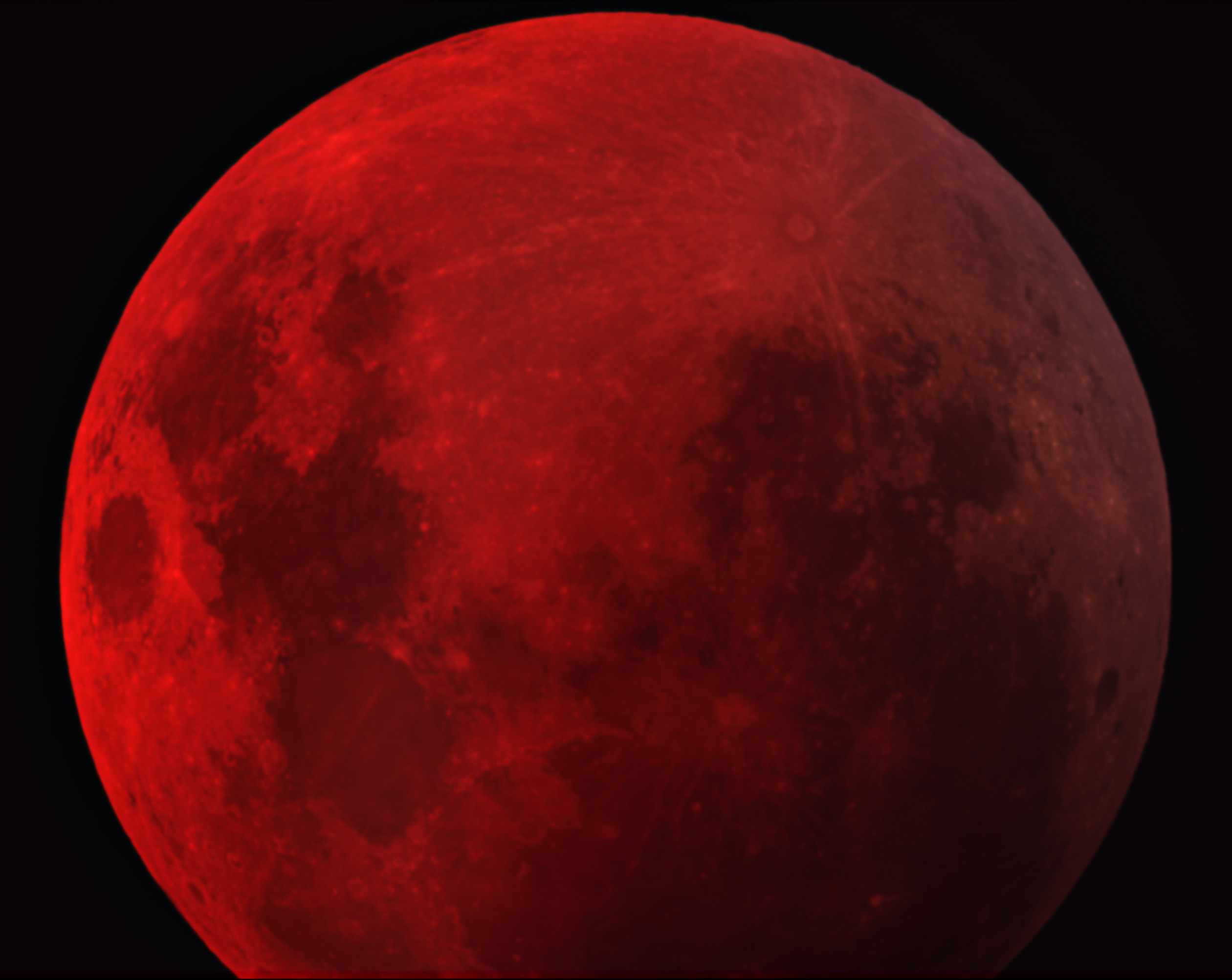
Dark Lunar Eclipse
Explanation: The Moon passed close to the center of Earth's shadow on August 28th . Seen best by skywatchers in western North America, and the Pacific region, the resulting total lunar eclipse was a dark one, lasting about 90 minutes. In this telescopic image taken near mid totality from Yass, NSW Australia , the 85 kilometer wide ray crater Tycho lies near the top right of the shadowed lunar surface. Of course, even during a total lunar eclipse,the Moon is not completely dark. Instead the Moon remains visible during totality, reflecting reddened light filtering into the Earth's shadow. The light comes from all the sunsets and sunrises , as seen from the lunar perspective , around the edges of a silhouetted Earth .
| Date | August 30, 2007 |
|---|---|
| Credit | Credit & Copyright: Martin Pugh |
| Authors & editors: | Robert Nemiroff (MTU) & Jerry Bonnell (UMCP) |
| A service of: |
ASD at NASA / GSFC, NASA Science Activation & Michigan Tech. U. |