



























APOD
Astronomy Picture of the Day
Discover the cosmos! Each day a different image or photograph of our fascinating universe is featured, along with a brief explanation written by a professional astronomer.
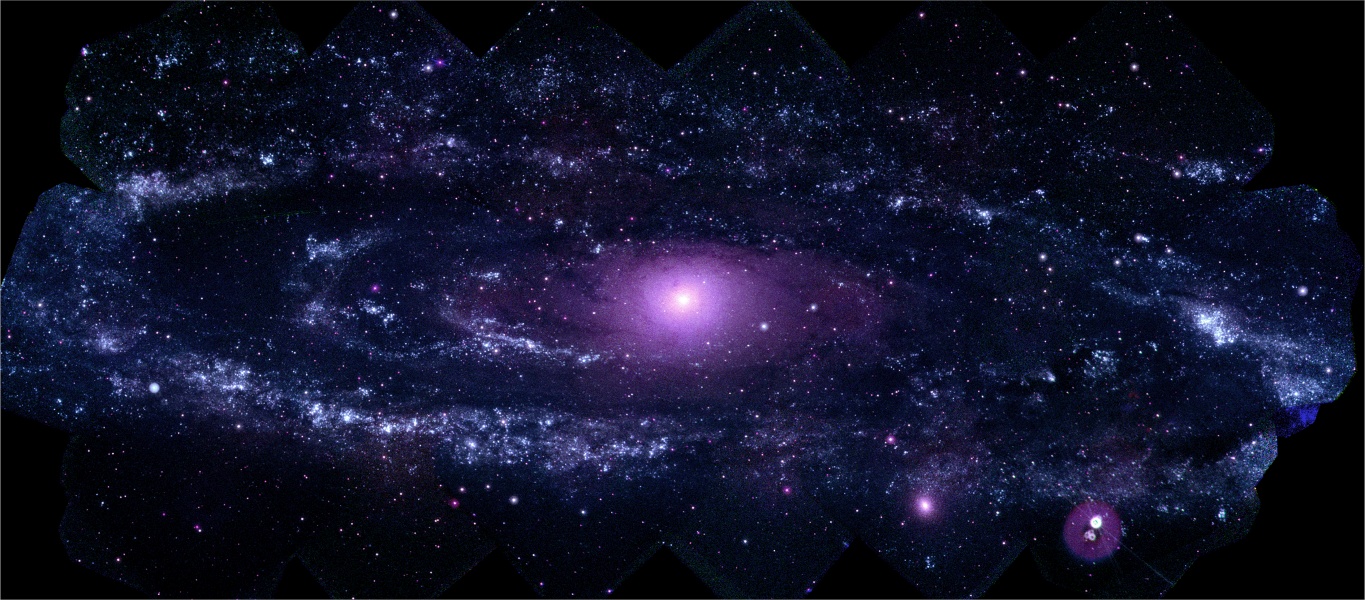
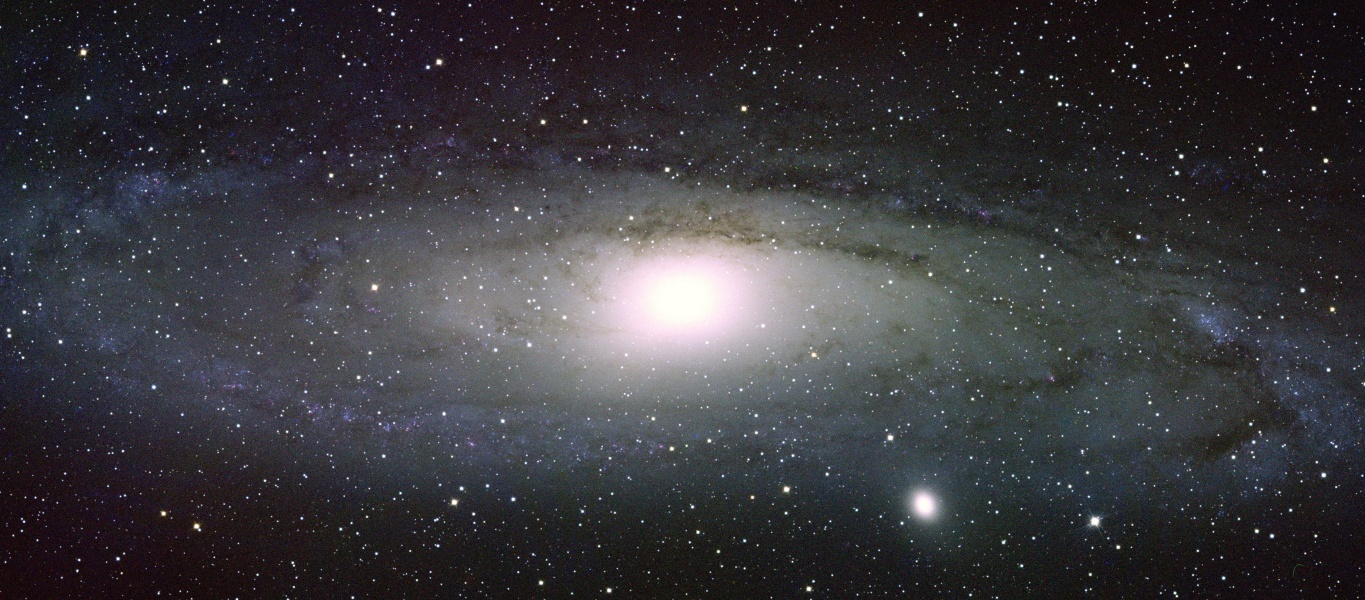
Ultraviolet Andromeda
Explanation: Taken by a telescope onboard NASA's Swift satellite , this stunning vista represents the highest resolution image ever made of the Andromeda Galaxy (aka M31) - at ultraviolet wavelengths . The mosaic is composed of 330 individual images covering a region 200,000 light-years wide. It shows about 20,000 sources , dominated by hot, young stars and dense star clusters that radiate strongly in energetic ultraviolet light. Of course, the Andromeda Galaxy is the closest large spiral galaxy to our own Milky Way, at a distance of some 2.5 million light-years. To compare this gorgeous island universe's appearance in optical light with its ultraviolet portrait, just slide your cursor over the image.
| Date | September 17, 2009 |
|---|---|
| Credit |
Credit: UV - NASA /Swift/Stefan Immler ( GSFC ) and Erin Grand (UMCP) Optical - Bill Schoening, Vanessa Harvey/REU program/NOAO/AURA/NSF |
| Authors & editors: | Robert Nemiroff (MTU) & Jerry Bonnell (UMCP) |
| A service of: |
ASD at NASA / GSFC, NASA Science Activation & Michigan Tech. U. |