



























APOD
Astronomy Picture of the Day
Discover the cosmos! Each day a different image or photograph of our fascinating universe is featured, along with a brief explanation written by a professional astronomer.
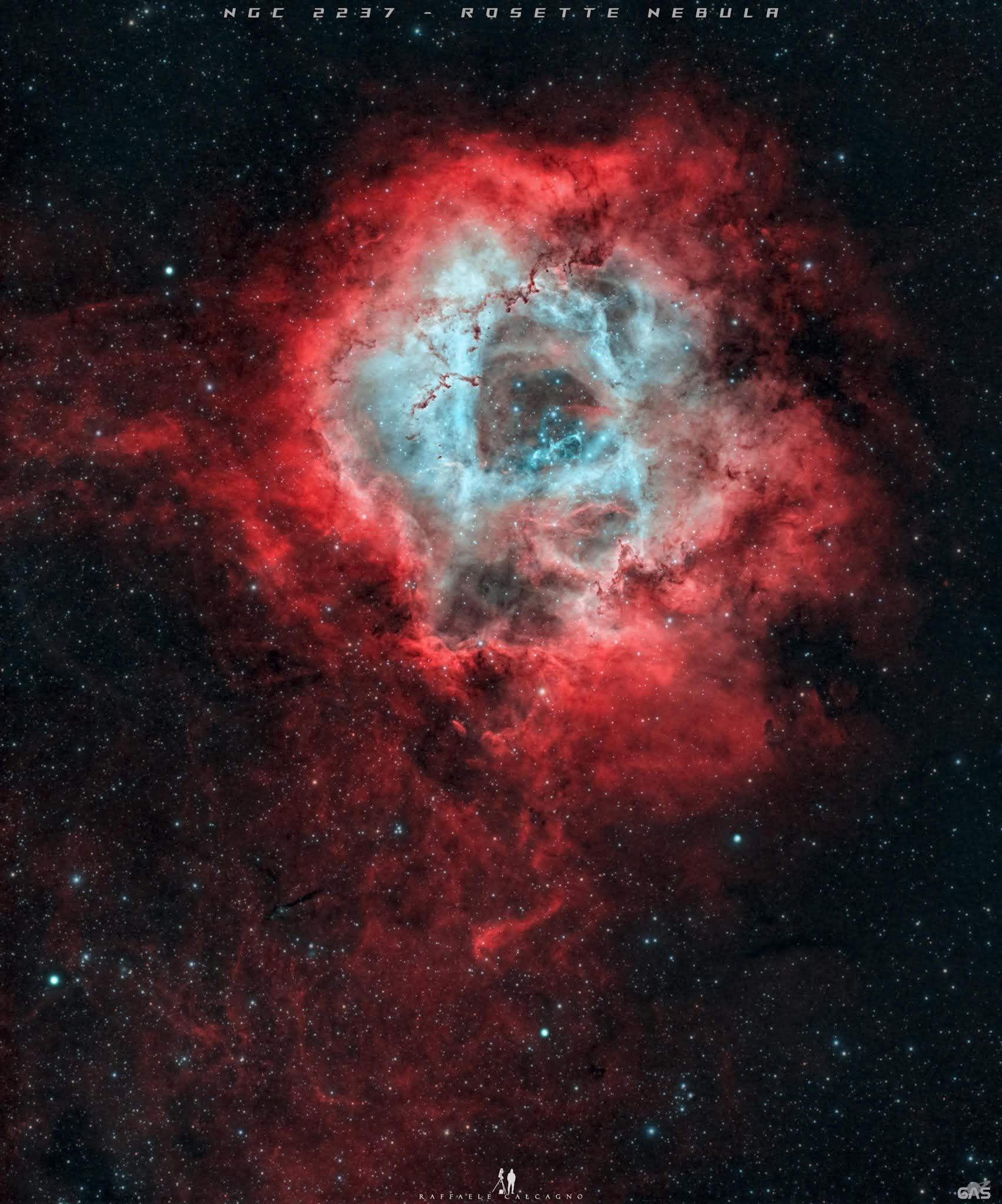
Roses are Red
Explanation: Roses are red, nebulas are too, and this Valentine's gift is a stunning view! Pictured is a loving look at the Rosette Nebula ( NGC 2237 ): a cosmic bloom of bright young stars sitting atop a stem of glowing hot gas. The rose’s blue-white speckles are among the most luminous stars in the galaxy , with some burning millions of times brighter than the Sun. Their stellar winds sculpt the famed rose shape by pushing gas and dust away from the center. Though only a few million years old, these massive stars are already nearing the end of their lives , while dimmer stars embedded in the nebula will burn for billions of years to come. The vibrant red hue comes from hydrogen gas , ionized by the ultraviolet light from the young stars . The rose’s blue-white center is color-mapped to indicate the presence of similarly ionized oxygen. The Rosette Nebula reminds us of the beauty and transformation woven into the fabric of the universe.
| Date | February 14, 2026 |
|---|---|
| Credit |
Image Credit & Copyright: Raffaele Calcagno Text: Keighley Rockcliffe ( NASA GSFC , UMBC CSST , CRESST II ) |
| Authors & editors: | Robert Nemiroff (MTU) & Jerry Bonnell (UMCP) |
| A service of: |
ASD at NASA / GSFC, NASA Science Activation & Michigan Tech. U. |