



















Nature’s Coronagraph
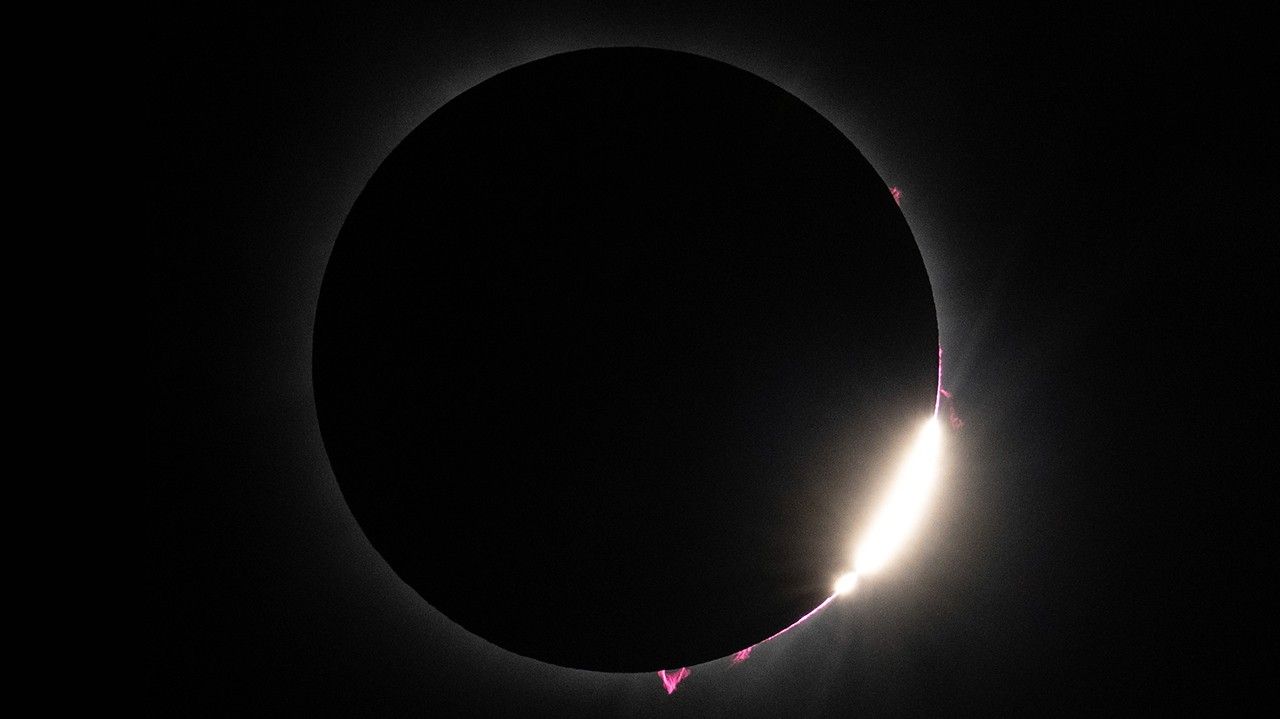
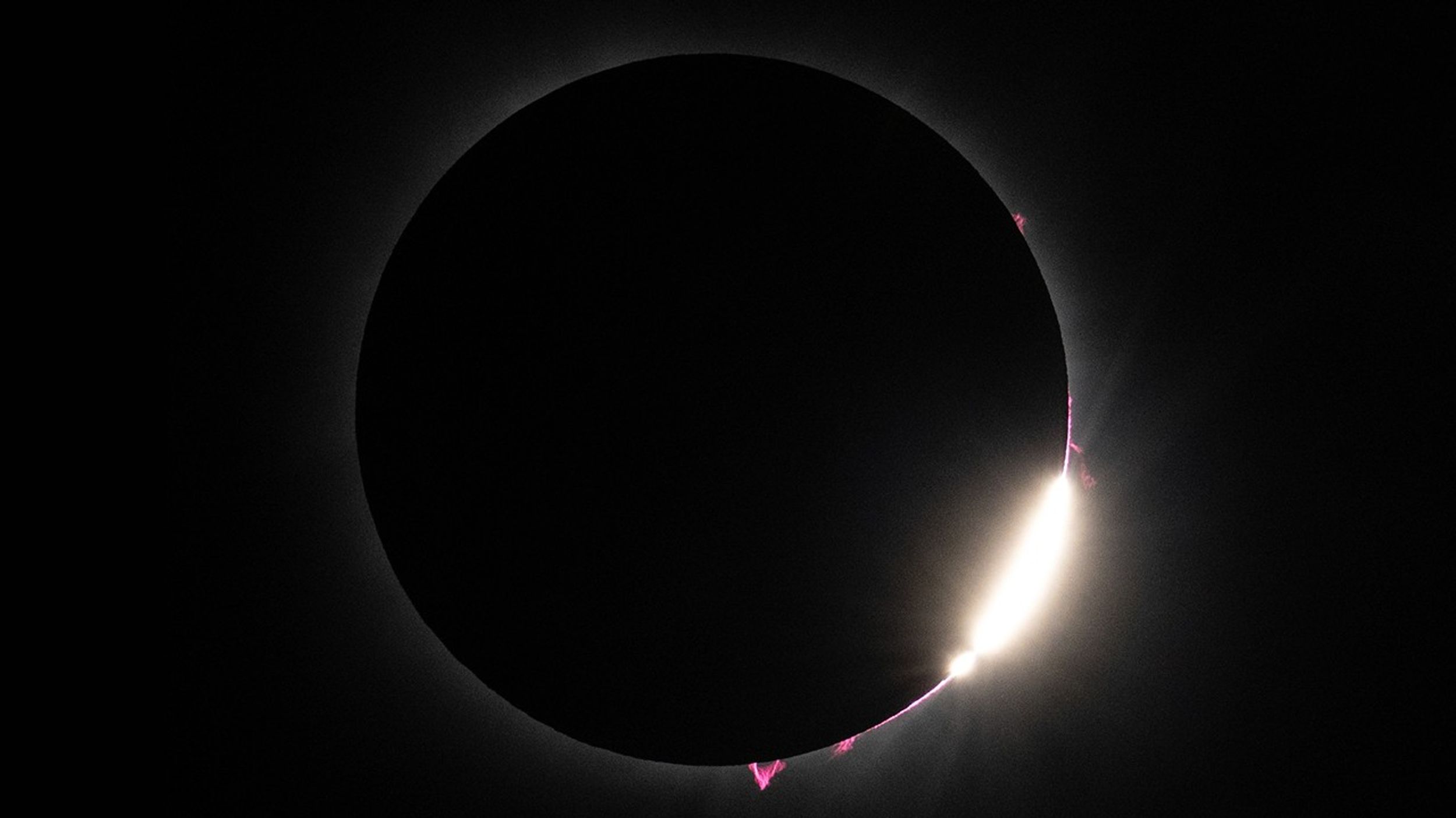
The Moon blocks the bright light of the Sun, revealing a glimpse of its corona just after totality in Dallas, Texas, on Monday, April 8, 2024. The bright pink features seen here, called solar prominences, are jets of plasma extending from the Sun’s surface, visible during an eclipse. “Baily’s Beads” appear as white slivers of sunlight pass through valleys on the Moon. The total solar eclipse swept across a narrow portion of the North American continent, with scientists and citizen scientists collecting data along the path of totality to help researchers study the innermost part of the corona that is visible only during total solar eclipses. These data provide insights into fundamental questions about how heat and energy are transferred from the Sun out into the solar system, which can impact humans and technology in its path.
Image Credit: NASA/Keegan Barber
- X
https://science.nasa.gov/image-detail/amf-45b067af-bf9d-4370-a6fc-f0cd9709dd56/
Image CreditNASA/Keegan Barber
Size2500x1406px