




















Active Galaxy Centaurus A
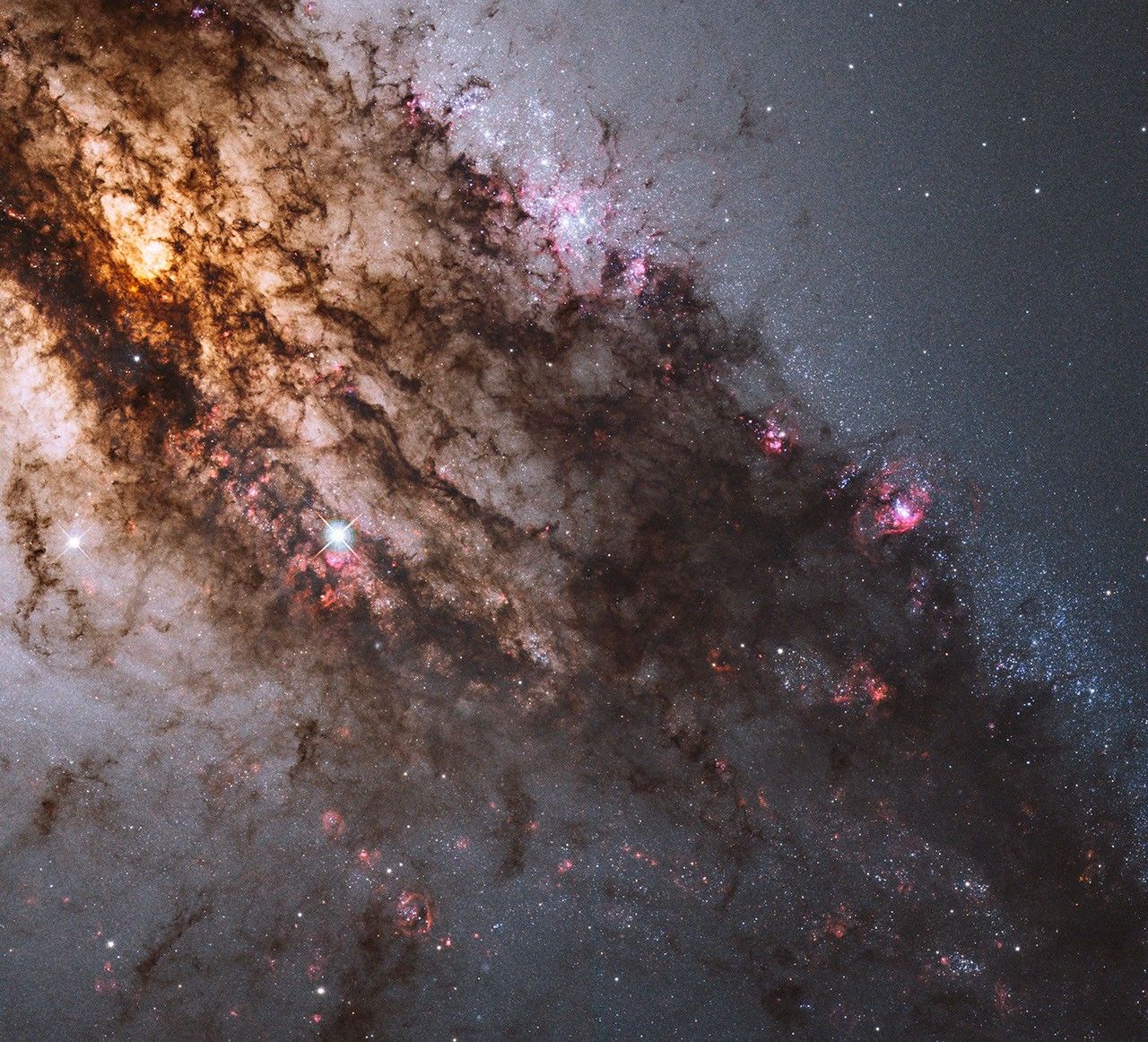
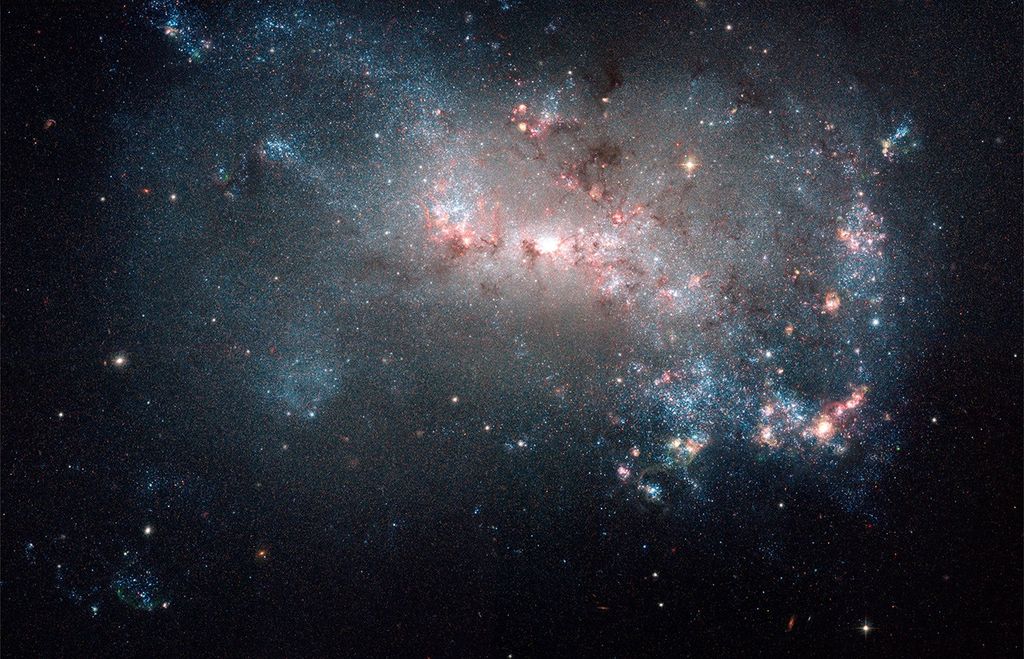
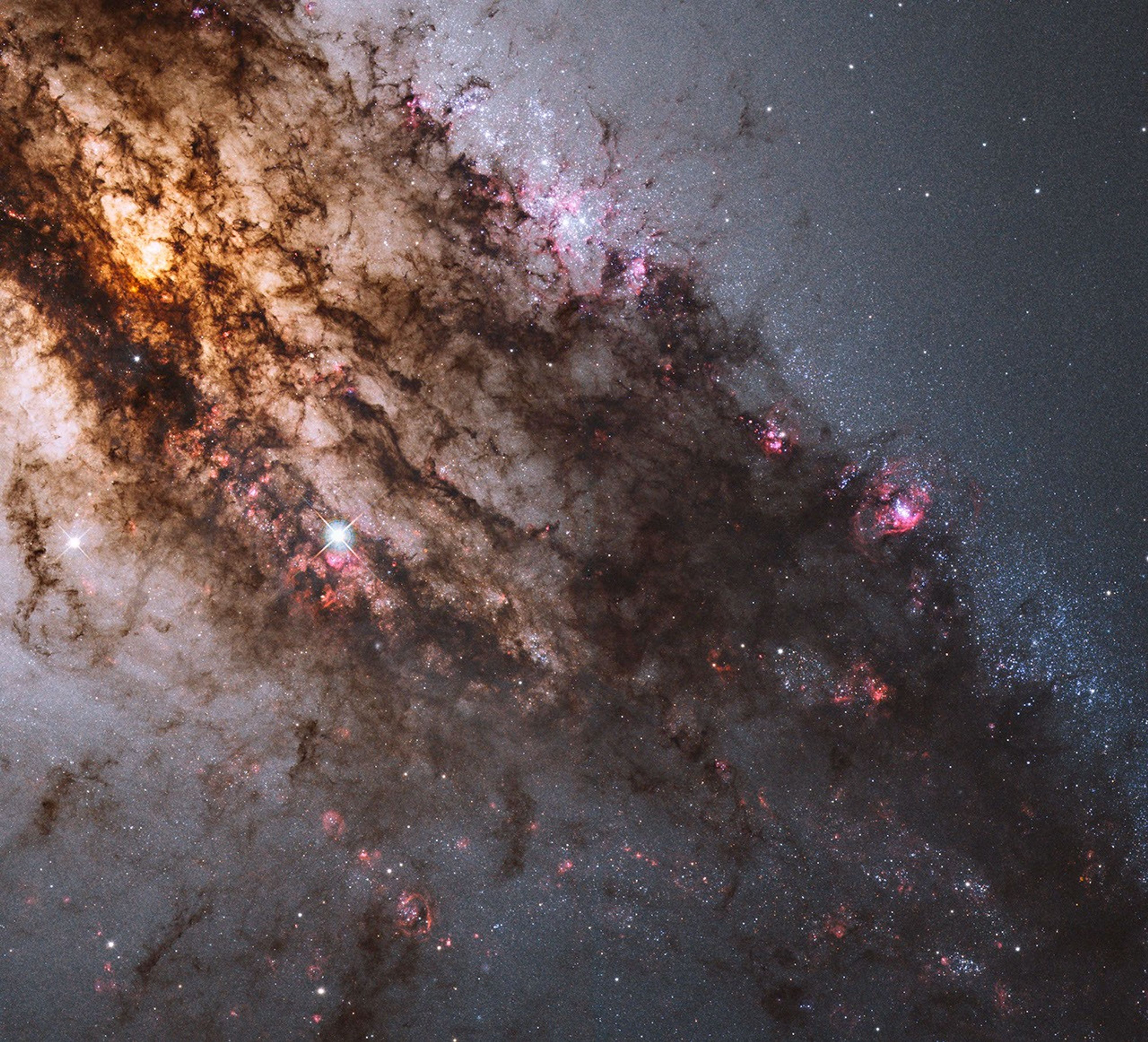
Resembling looming rain clouds on a stormy day, dark lanes of dust crisscross the large and unusual galaxy Centaurus A (NGC 5128) as seen in this close-up of one portion of the strange celestial object. Astronomers describe Centaurus A as having a “peculiar morphology,” very likely the result of a collision between a giant elliptical and a smaller galaxy. At its center, NGC 5128 hosts a supermassive black hole with a mass totaling 55 million suns. Perhaps more notably, Centaurus A was one of the first extragalactic radio sources ever identified. Subsequent studies have found a powerful twin-lobed jet emanating from its core at extraordinary velocities. The inner parts of the jet have been clocked at moving approximately half the speed of light. While the jet is not visible in this picture, Hubble’s panchromatic vision — stretching from ultraviolet through near-infrared wavelengths — reveals the vibrant glow of young, blue star clusters, red patches of glowing hydrogen clouds, and a glimpse into regions normally obscured by dust.
Image Credit: NASA, ESA, and the Hubble Heritage (STScI/AURA)-ESA/Hubble Collaboration; Acknowledgment: R. O'Connell (University of Virginia) and the WFC3 Scientific Oversight Committee
- X
https://science.nasa.gov/image-detail/amf-4fc64039-5253-46b8-802c-0ef193831cfb/
Image CreditNASA, ESA, and the Hubble Heritage (STScI/AURA)-ESA/Hubble Collaboration; Acknowledgment: R. O'Connell (University of Virginia) and the WFC3 Scientific Oversight Committee
Size3989x3624px