
























NGC 7027
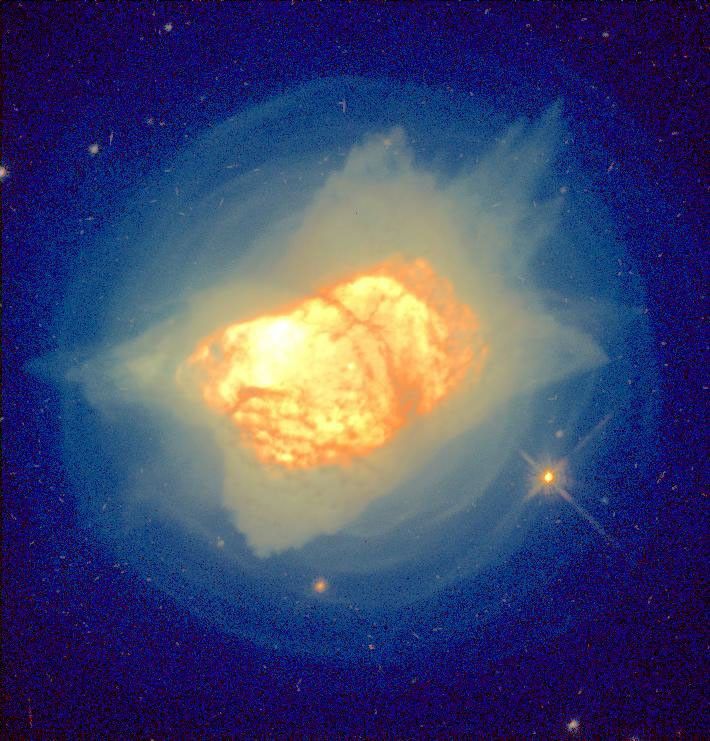
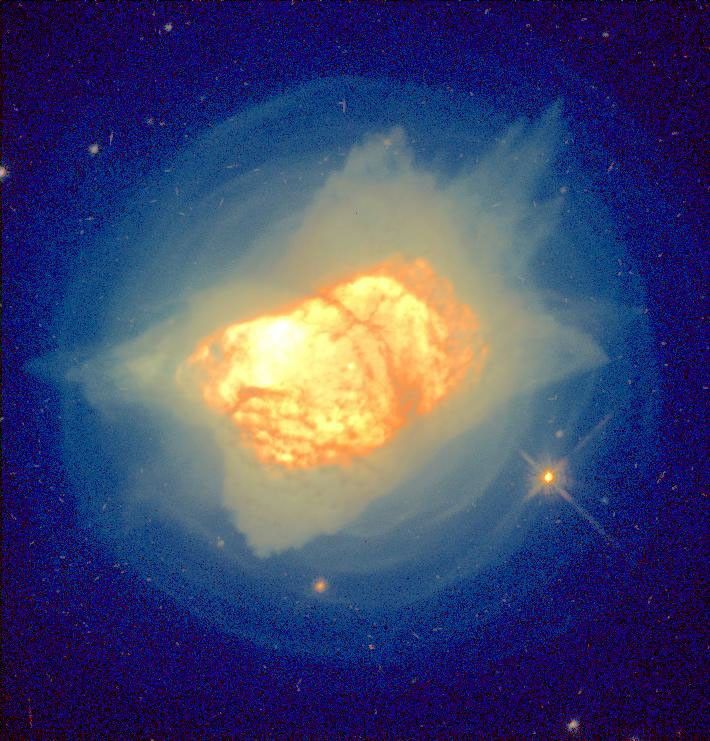
This Hubble Space Telescope image of planetary nebula NGC 7027 shows remarkable details of the process by which a star like the Sun dies. Features include faint, blue, concentric shells surrounding the nebula; an extensive network of red dust clouds throughout the bright inner region; and the hot central white dwarf, visible as a white dot at the center. The nebula is a record of the star's final death throes. Initially the ejection of the star's outer layers, when it was at its red-giant stage of evolution, occurred at a low rate and was spherical. The Hubble photo reveals that the initial ejections occurred episodically to produce the concentric shells. This culminated in a vigorous ejection of all of the remaining outer layers, which produced the bright inner regions. At this later stage the ejection was non-spherical, and dense clouds of dust condensed from the ejected material.
Image Credit: H. Bond (STScI) and NASA
- X
https://science.nasa.gov/image-detail/amf-54f6ff6f-4403-4efa-bcb9-f70fec750056/
Image CreditH. Bond (STScI) and NASA
Size710x741px