





















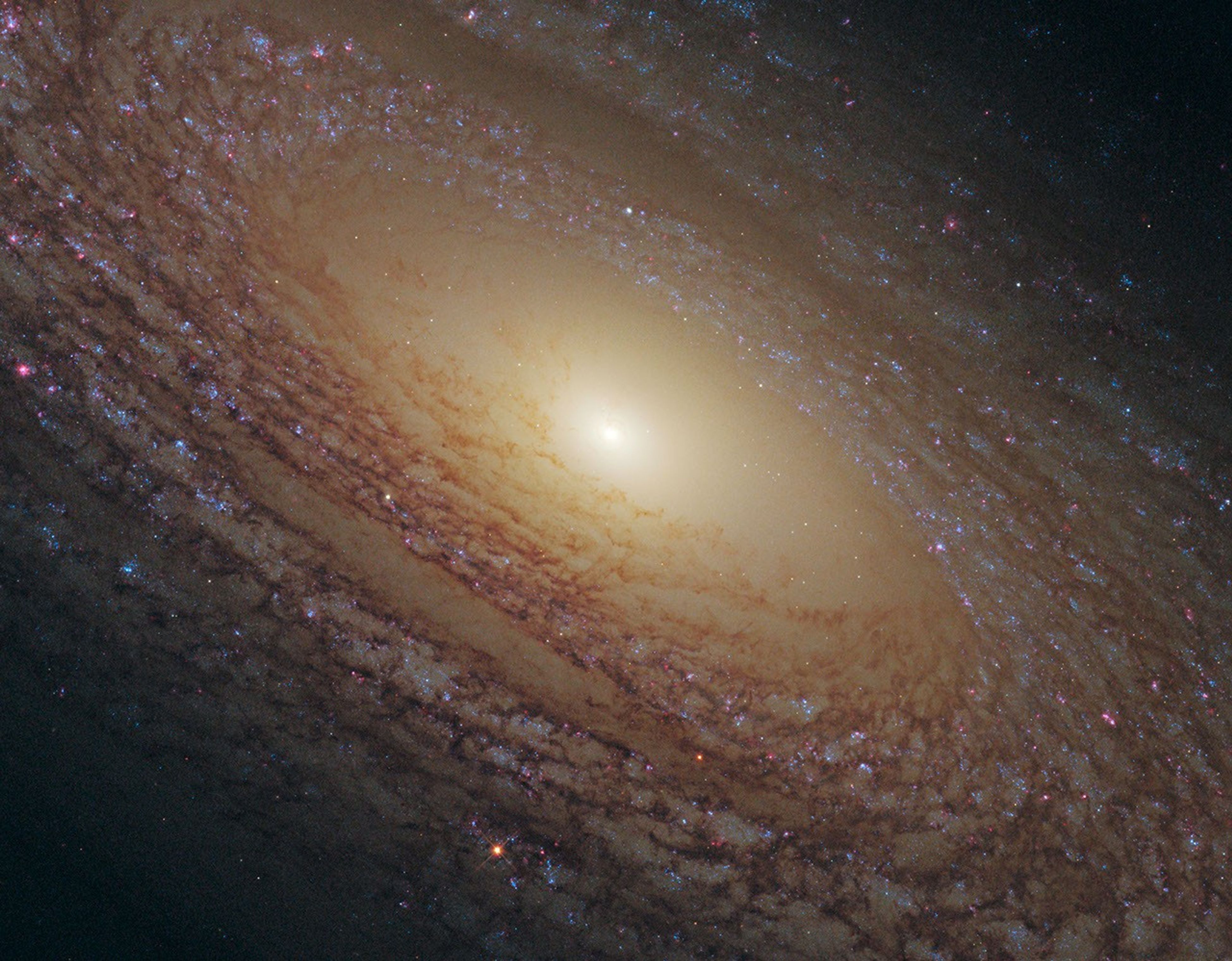
Flocculent Spiral Galaxy NGC 2841
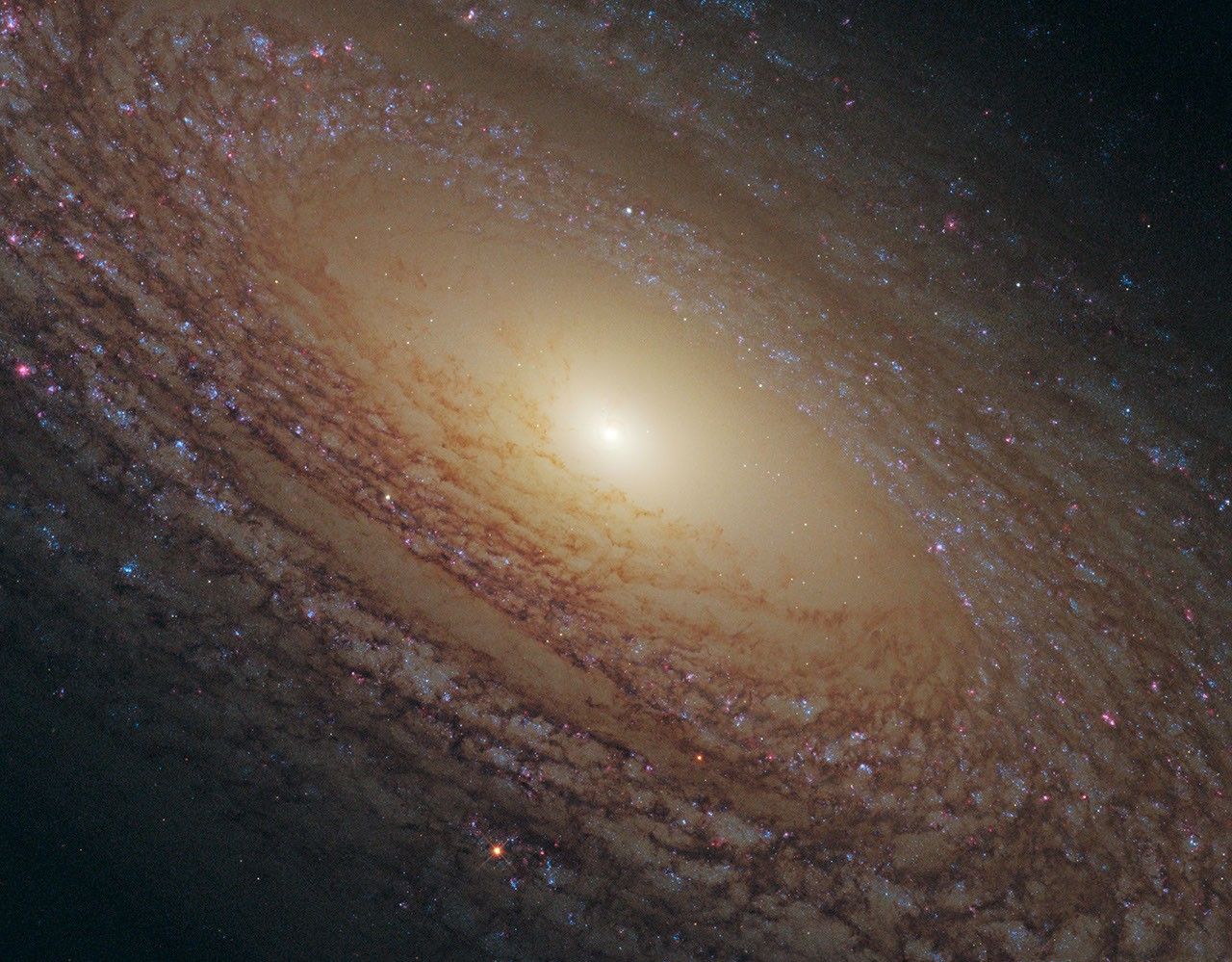
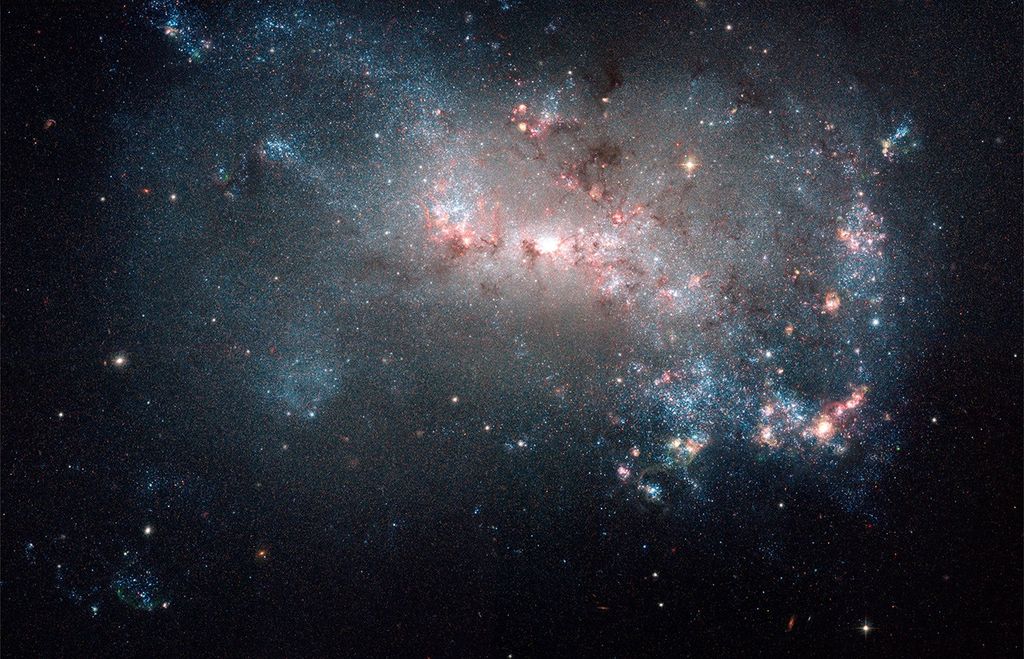
The majestic galaxy NGC 2841, located in the constellation Ursa Major, was discovered by William Herschel in 1788. Astronomers consider it a prototypical flocculent spiral galaxy, a type whose arms are discontinuous and patchy. A bright cusp of starlight marks the galaxy's center. Spiraling outward are dust lanes that are silhouetted against the population of whitish middle-aged stars. Much younger blue stars trace the spiral arms. Notably missing in this detailed image are pinkish emission nebulas indicative of new star birth. It is likely that the radiation and supersonic winds from fiery, super-hot, young blue stars cleared out the remaining gas (which glows pink), and hence shut down further star formation in the regions in which they were born. NGC 2841 currently has a relatively low star-formation rate compared to other spirals that are ablaze with emission nebulae.
Image Credit: NASA, ESA, and the Hubble Heritage (STScI/AURA)-ESA/Hubble Collaboration; Acknowledgment: M. Crockett and S. Kaviraj (Oxford University, UK), R. O'Connell (University of Virginia), B. Whitmore (STScI), and the WFC3 Scientific Oversight Committee
- X
https://science.nasa.gov/image-detail/amf-63e4d557-5966-4e99-badb-4b5441e85ddc/
Image CreditNASA, ESA, and the Hubble Heritage (STScI/AURA)-ESA/Hubble Collaboration; Acknowledgment: M. Crockett and S. Kaviraj (Oxford University, UK), R. O'Connell (University of Virginia), B. Whitmore (STScI), and the WFC3 Scientific Oversight Committee
Size3897x3044px