





















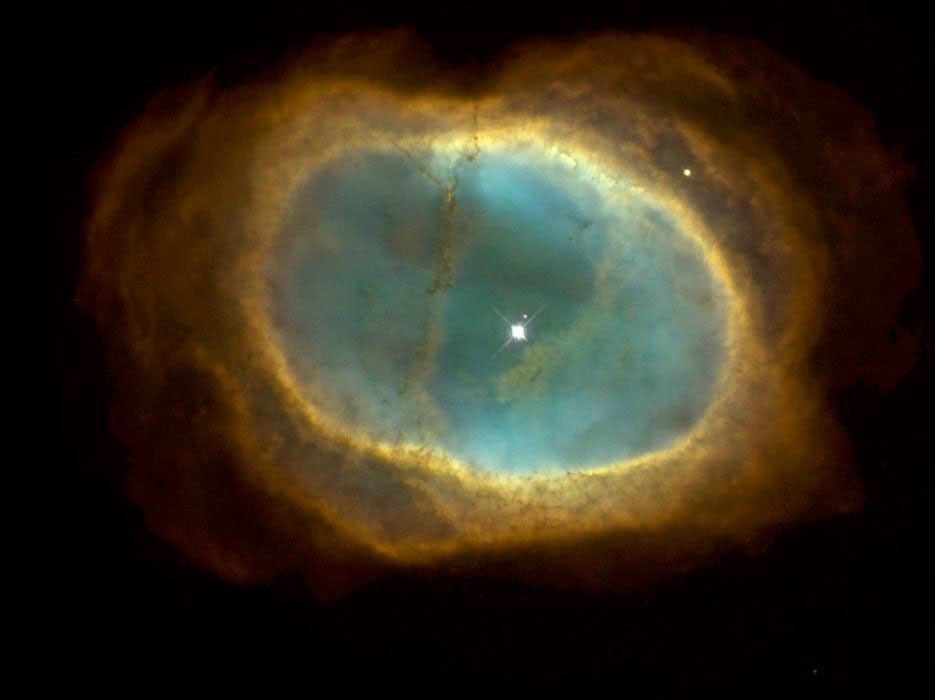
NGC 3132
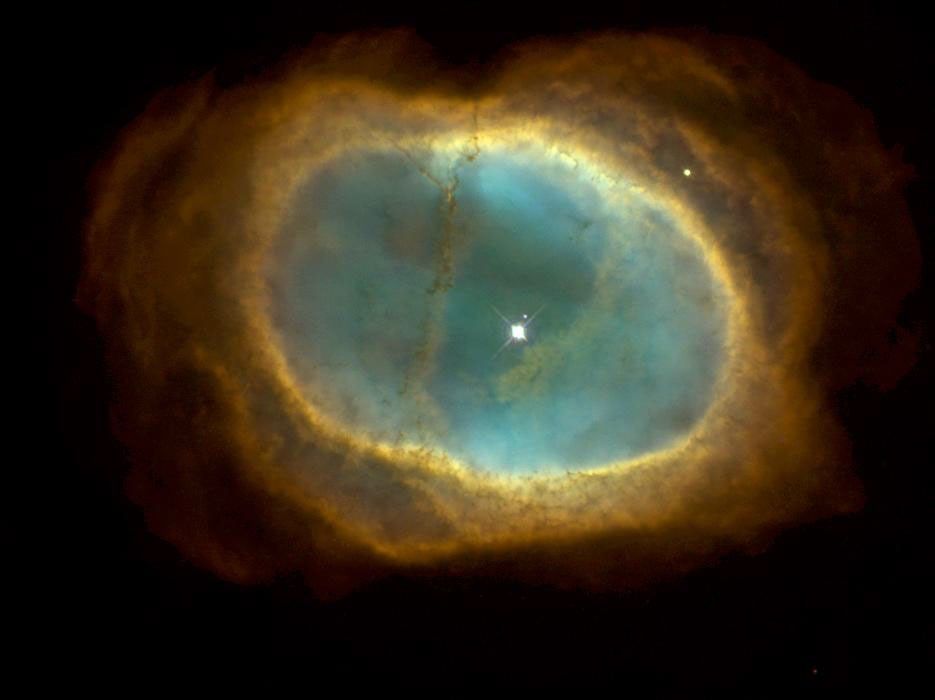
NGC 3132 is a striking example of a planetary nebula. This expanding cloud of gas, surrounding a dying star, is known to amateur astronomers in the southern hemisphere as the "Eight-Burst" or the "Southern Ring" Nebula. The name "planetary nebula" refers to the round shape that many of these objects show when examined through a small telescope. In reality, these nebulae have little or nothing to do with planets, but are instead huge shells of gas ejected by stars as they near the ends of their lifetimes. NGC 3132 is nearly half a light-year in diameter, and at a distance of about 2,000 light-years is one of the nearer known planetary nebulae. The gases are expanding away from the central star at a speed of 9 miles per second. The colors in this image were chosen to represent the temperature of the gases. Blue represents the hottest gas, which is confined to the inner region of the nebula. Red represents the coolest gas, at the outer edge.
Image Credit: The Hubble Heritage Team (STScI/AURA/NASA)
- X
https://science.nasa.gov/image-detail/amf-6b561bca-b7a1-42a6-9776-6ce9474cbf26/
Image CreditThe Hubble Heritage Team (STScI/AURA/NASA)
Size935x700px