

















Arrested Star Formation in Galaxy NGC 1277
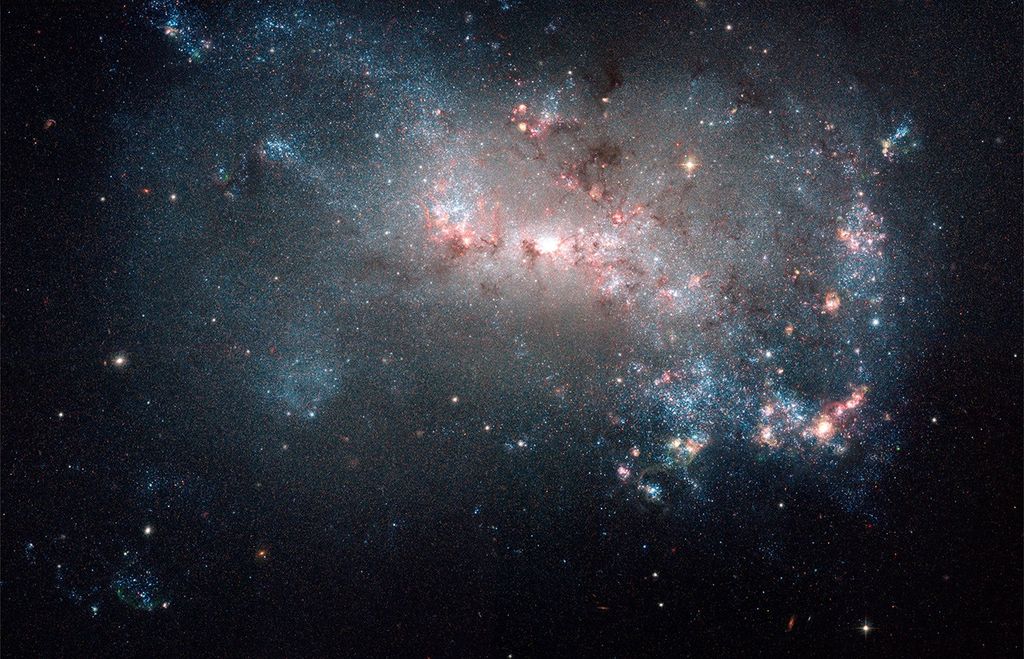
This is an image of the lenticular galaxy NGC 1277. The galaxy is found in the constellation Perseus and is a member of the Perseus cluster of galaxies located approximately 220 million light-years from the Milky Way. The galaxy is composed exclusively of aging stars that were formed 10 billion years ago. But unlike other galaxies in the local universe, it has not undergone any further star formation. Because of this, many astronomers consider it a relic of what galaxies were like in the early universe. NGC 1277 is moving so fast through the Perseus cluster, at 2 million miles per hour, that it cannot merge with other galaxies to collect stars or pull in gas to fuel star formation. In addition, near the galaxy cluster's center, intergalactic gas is so hot it cannot cool to condense and form stars. The ancient, reddish globular clusters that swarm around the galaxy are the strongest evidence that the galaxy went out of the star-making business long ago. There is a distinct lack of blue globulars that, if present, would signal that NGC 1277 possibly merged with other galaxies over its lifetime, initiating secondary rounds of star formation.
Image Credit: NASA, ESA, and M. Beasley (Instituto de Astrofísica de Canarias)
- X
https://science.nasa.gov/image-detail/stsci-h-p1817c-f-1184x1184-1/
Image CreditNASA, ESA, and M. Beasley (Instituto de Astrofísica de Canarias)
Size1184x1184px