
























Biome: Rainforest
Temperature
The rainforest biome remains warm all year and must stay frost-free. The average daily temperatures range from 20°C (68°F) to 25°C (77°F).
Precipitation
Rainforests receive the most rain of all of the biomes in a year! A typical year sees 2,000 to 10,000 millimeters (79 to 394 inches) of rain per year.
Vegetation
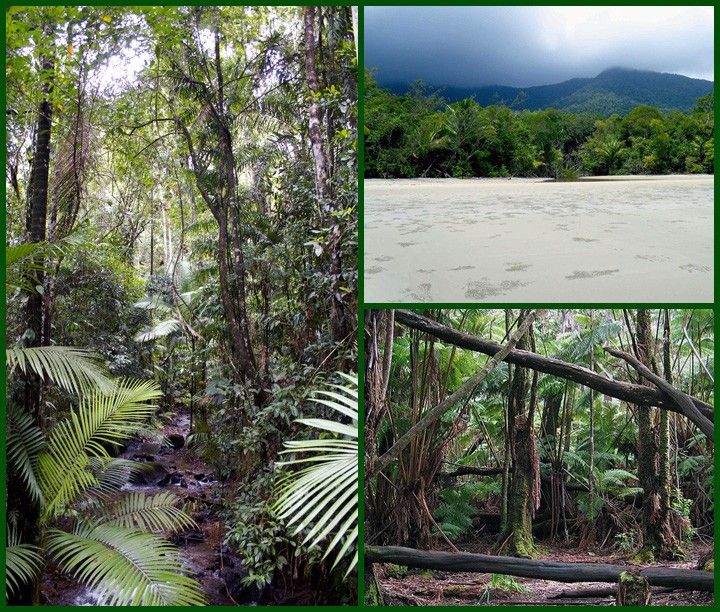
Vines, palm trees, orchids, ferns

Location

Between the Tropic of Cancer and the Tropic of Capricorn
Other
There are two types of rainforests, tropical and temperate. Tropical rainforests are found closer to the equator and temperate rainforests are found farther north near coastal areas. The majority of common houseplants come from the rainforest.
Example: Manaus, Brazil
Monthly Temperature and Precipitation from 1970 - 2000
| Month | Average Monthly Precipitation (mm) | Average Monthly Temperature (°C) |
| January | 288 | 27 |
| February | 289 | 27 |
| March | 308 | 27 |
| April | 310 | 27 |
| May | 245 | 27 |
| June | 122 | 27 |
| July | 92 | 27 |
| August | 68 | 28 |
| September | 88 | 28 |
| October | 122 | 28 |
| November | 174 | 28 |
| December | 217 | 27 |
| Sum Annual Precip. | 2323 |
Climograph

Location Map

Description
There are two types of rainforests, tropical and temperate. Tropical rainforests are found closer to the equator where it is warm. Temperate rainforests are found near the cooler coastal areas further north or south of the equator.
The tropical rainforest is a hot, moist biome where it rains all year long. It is known for its dense canopies of vegetation that form three different layers. The top layer or canopy contains giant trees that grow to heights of 75 m (about 250 ft) or more. This layer of vegetation prevents much of the sunlight from reaching the ground. Thick, woody vines are also found in the canopy. They climb trees in the canopy to reach for sunlight. The middle layer, or understory, is made up of vines, smaller trees, ferns, and palms. A large number of plants from this level are used as common houseplants. Because of the small amount of sunlight and rainfall these plants receive, they adapt easily to home environments. The bottom layer or floor of the rainforest is covered with wet leaves and leaf litter. This material decomposes rapidly in the wet, warm conditions (like a compost pile) sending nutrients back into the soil. Few plants are found on the floor of the forest due to the lack of sunlight. However, the hot, moist atmosphere and all the dead plant material create the perfect conditions in which bacteria and other microorganisms can thrive.
Related links
Making Sense of Amazon Deforestation Patterns
Tracking Peruvian Forest Loss from Space