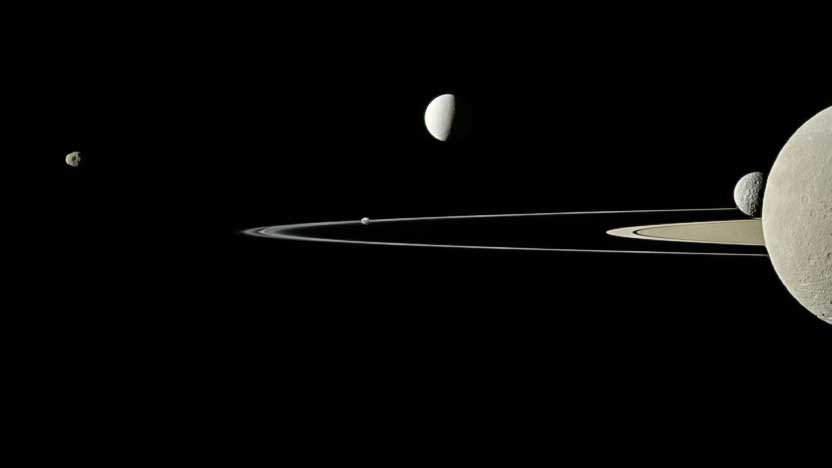
Dragonfly on Titan: Images
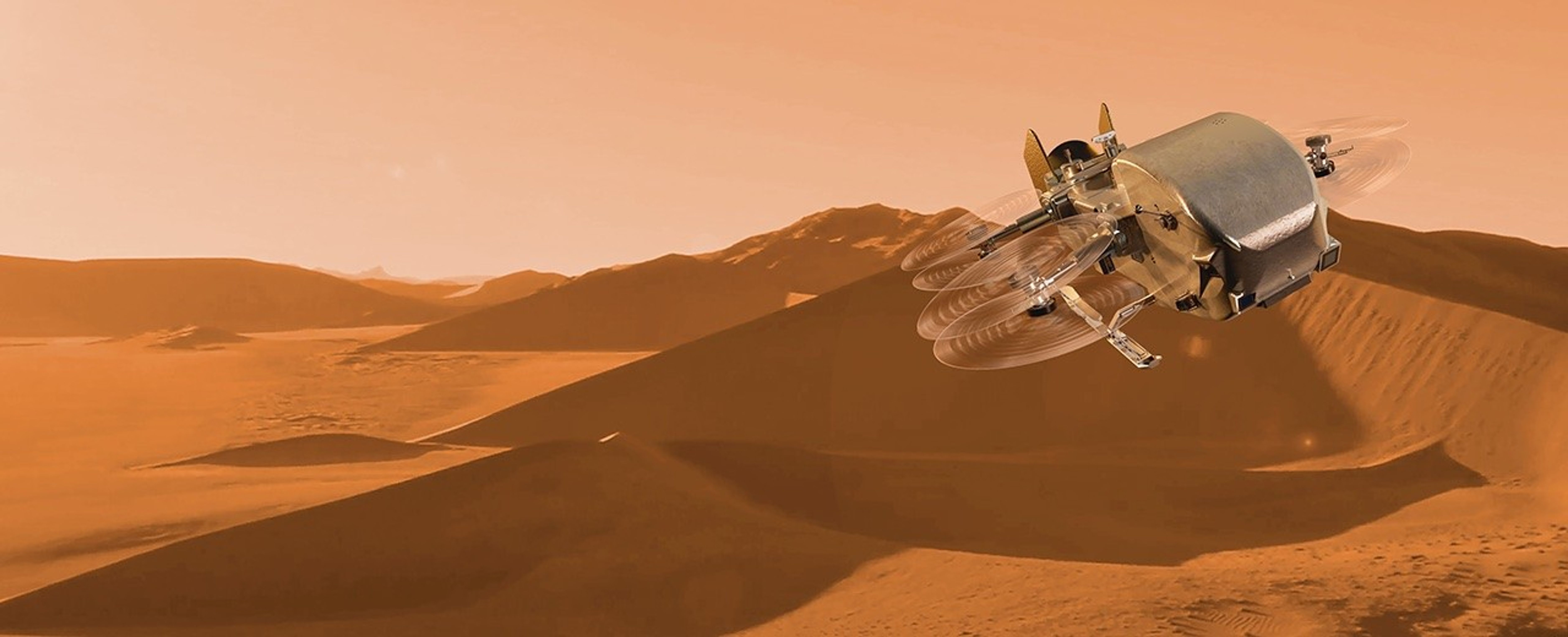
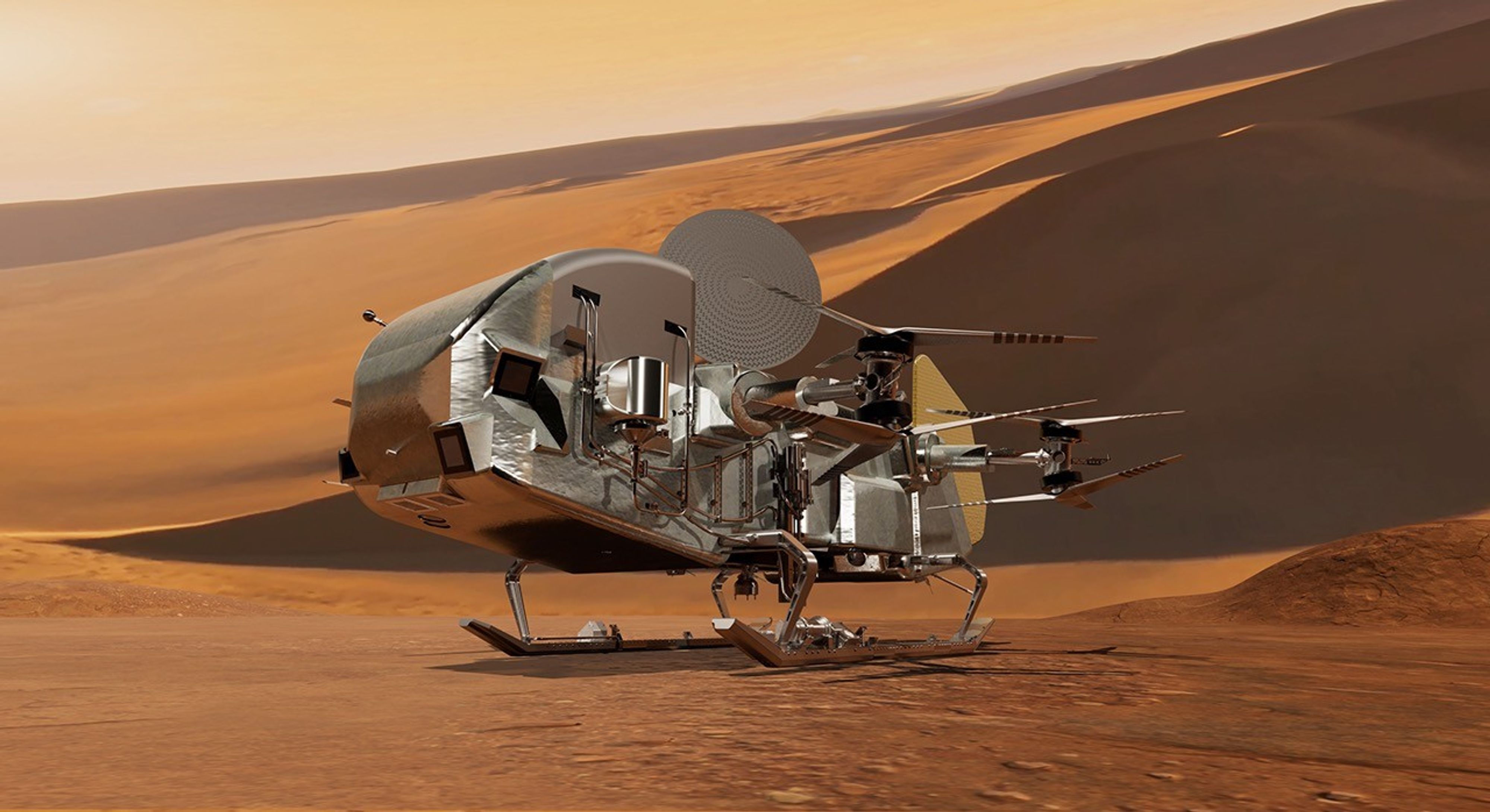
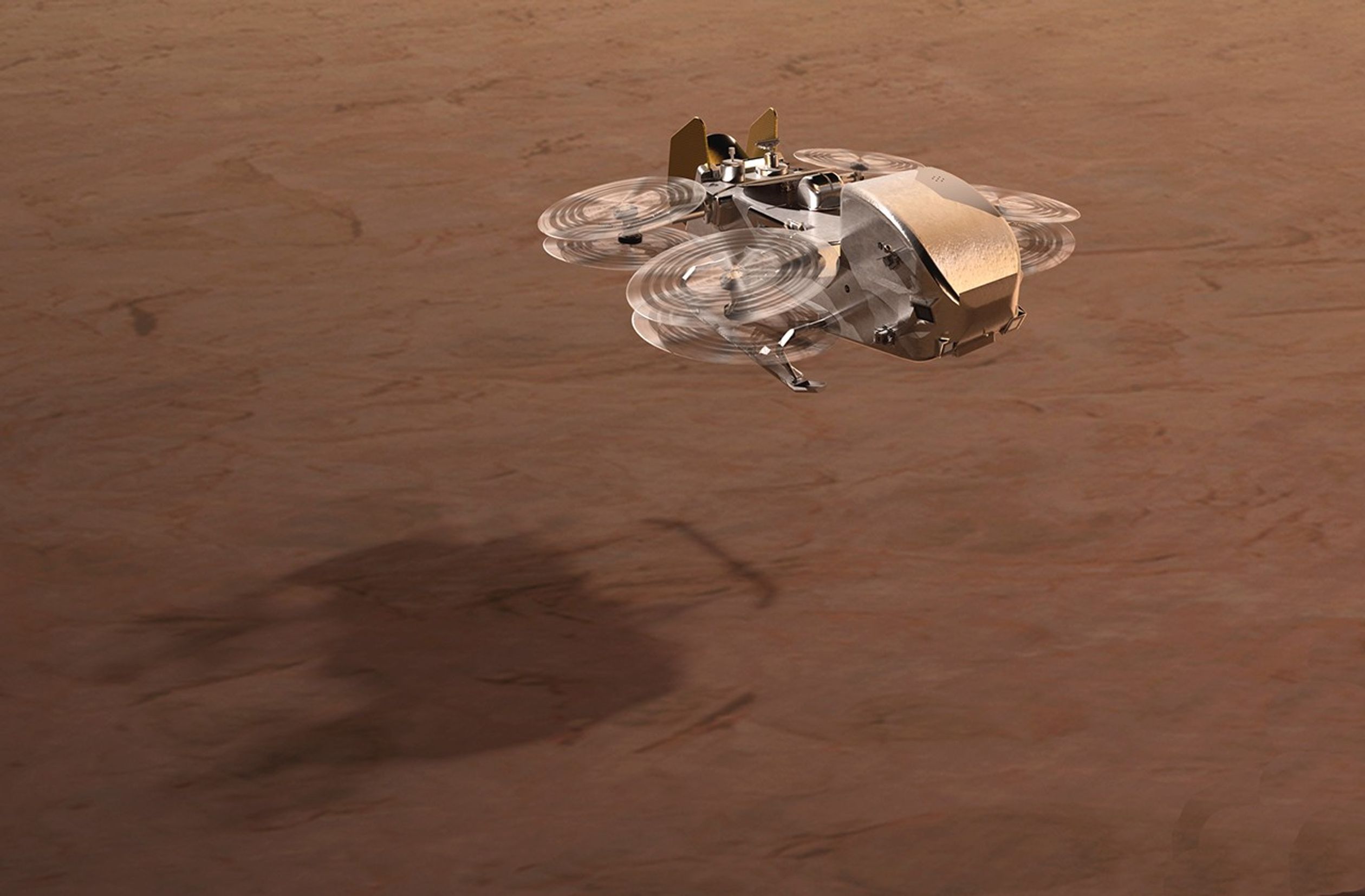
Artist's concepts of Dragonfly exploring Titan. (Credit all: NASA/Johns Hopkins APL)
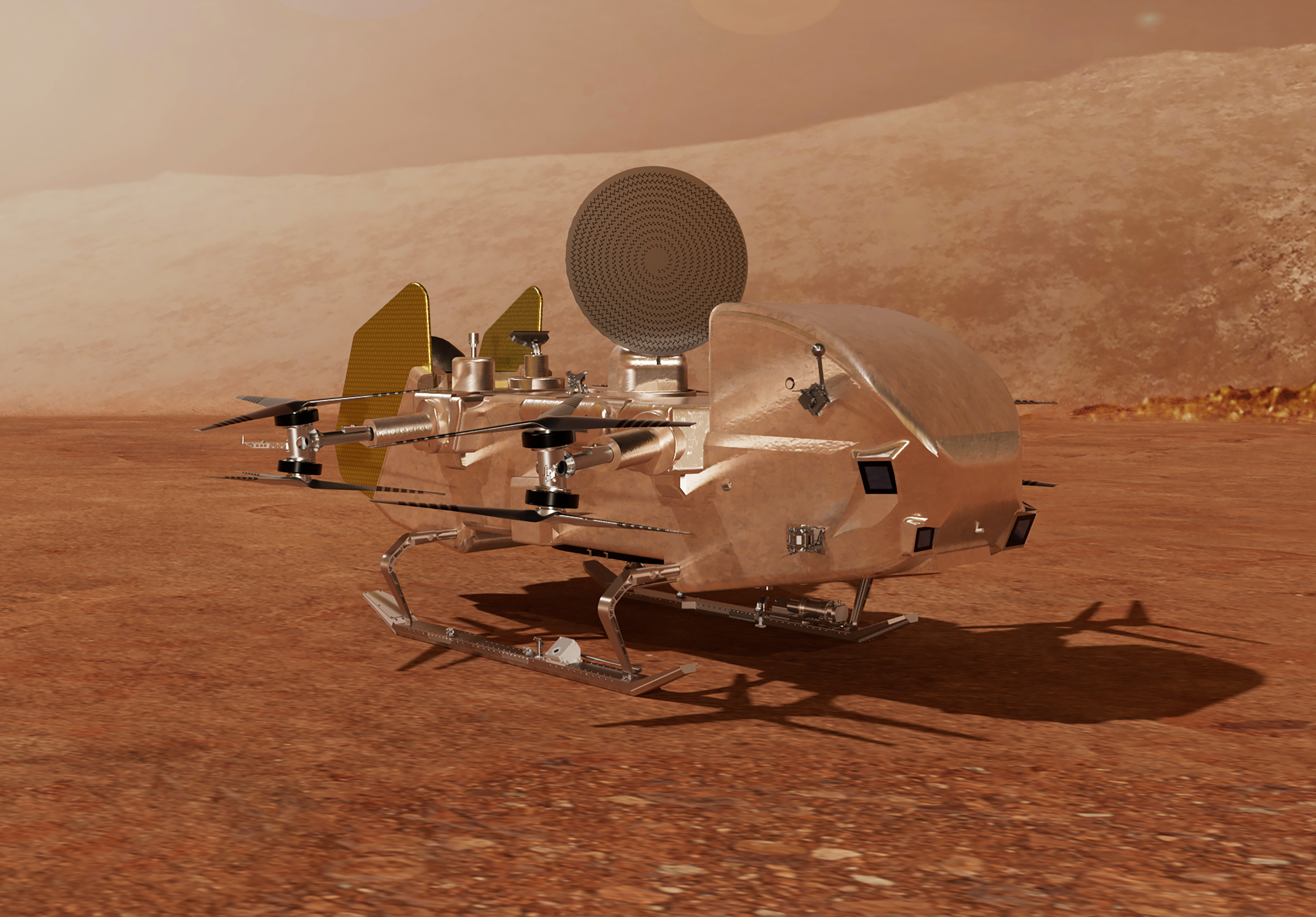
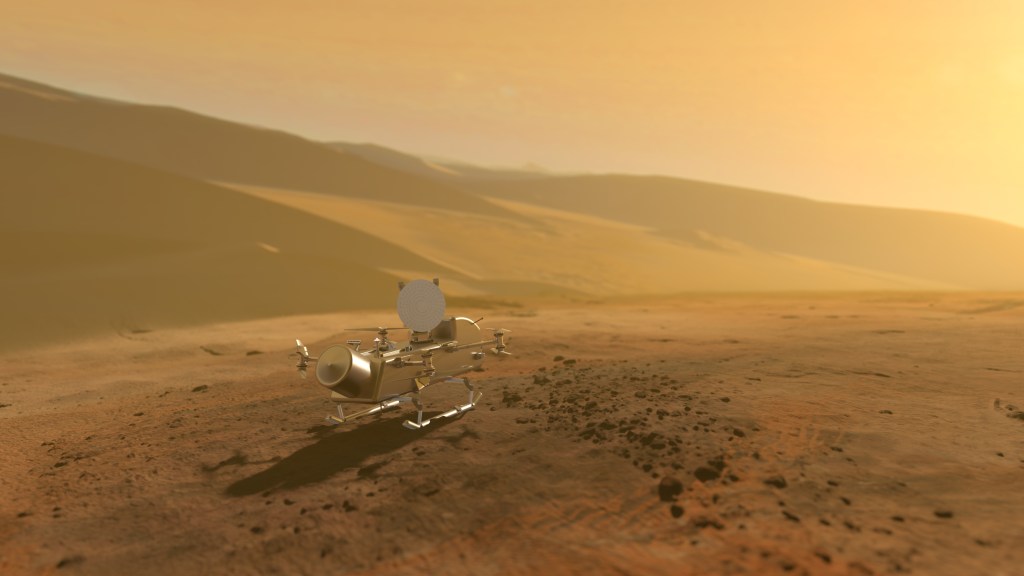
Dragonfly Ready for Liftoff
Artist's concept of Dragonfly as it prepares to gather data at Titan.
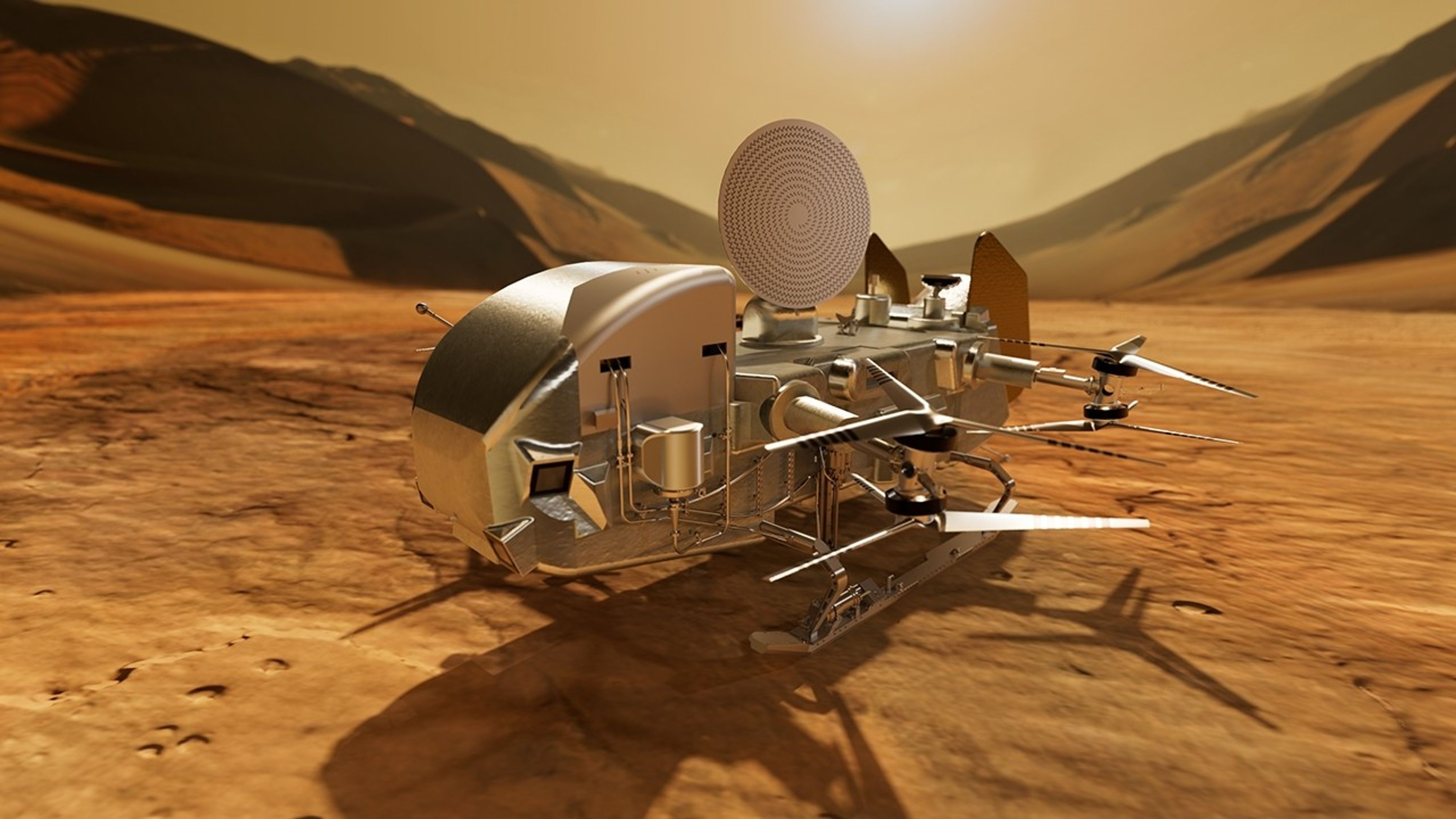
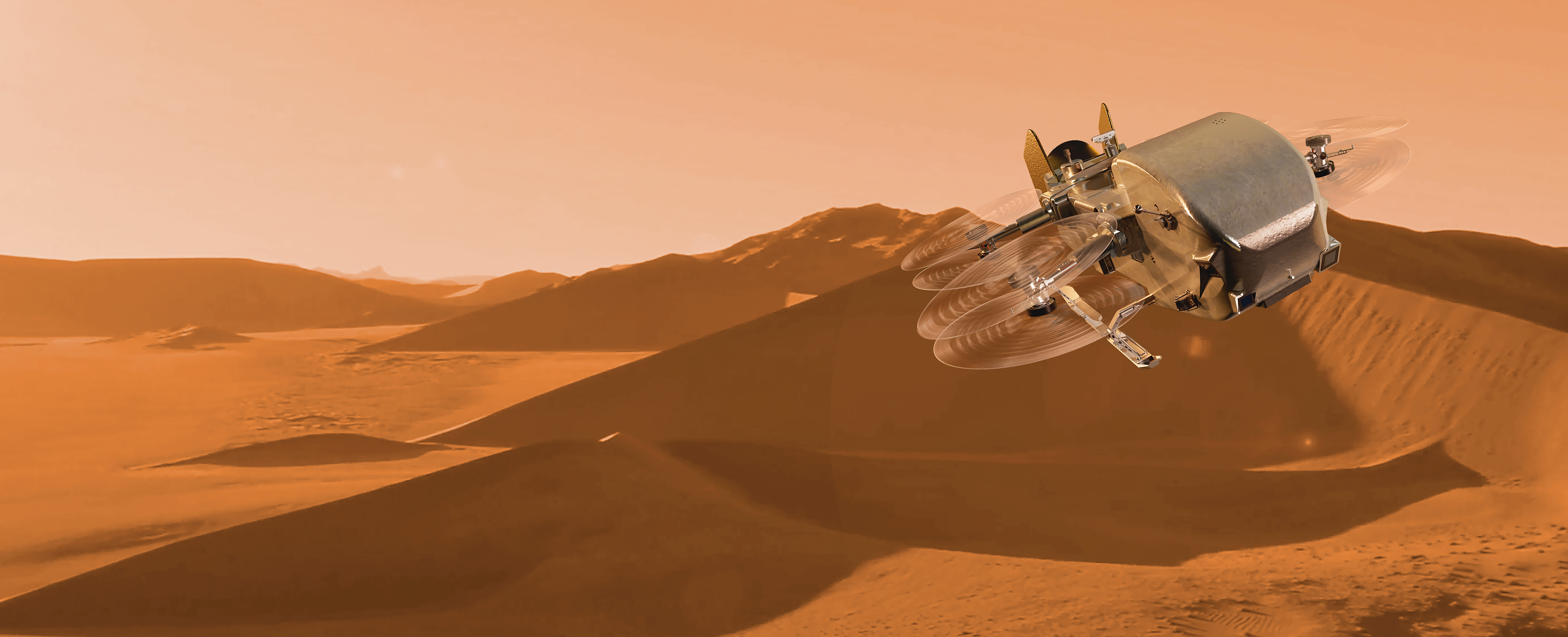
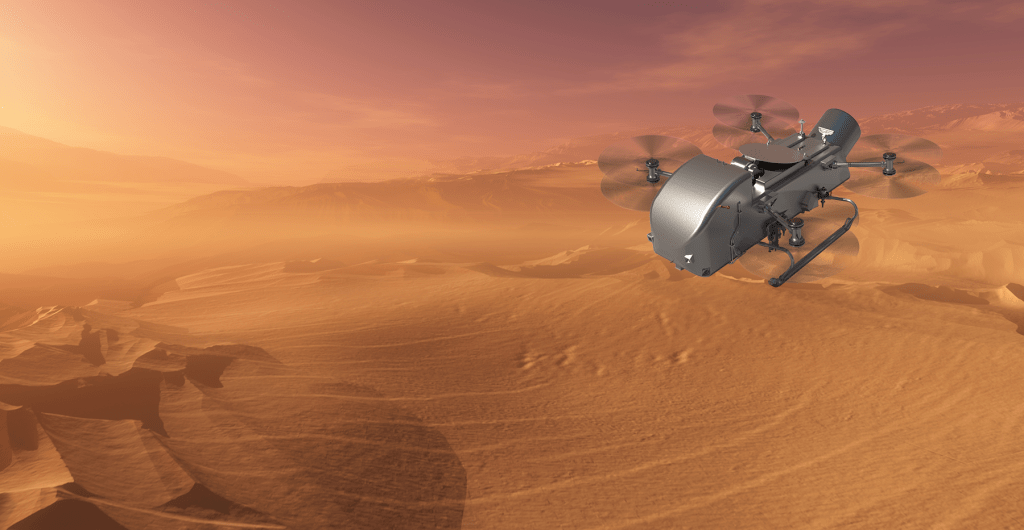
Dragonfly Explores Titan
Artist's concept of Dragonfly crossing the skies of Titan to collect data.
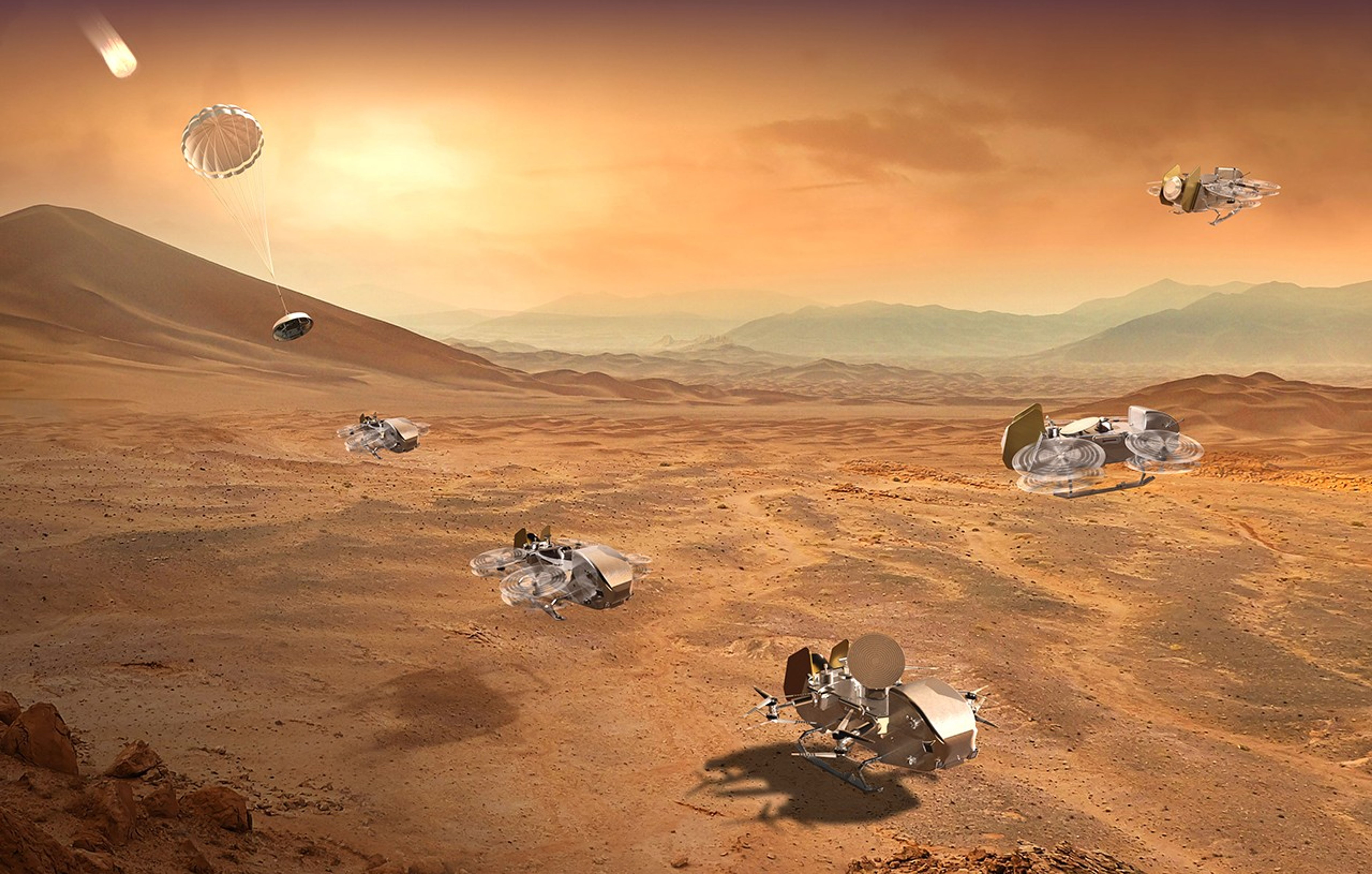
Dragonfly Lands on Titan
Artist's concept of Dragonfly's landing on Titan and taking off for exploration.
Dragonfly at Titan: Animations
Artist's animations of Dragonfly as it arrives at and explores Titan. (Credit all: NASA/Johns Hopkins APL)
Touchdown on Titan
In this animation, experience NASA’s Dragonfly mission as it enters Titan’s atmosphere, descends through the moon’s thick haze, and lands on the surface of Saturn’s largest moon.
Spacecraft Separation
Animation of Dragonfly's aeroshell separating from the spacecraft as it arrives at Titan.
Aeroshell Descends
Animation showing the Dragonfly aeroshell heading towards Titan's atmosphere with its cargo.
Heat Shield Drops
Animation of the heat shield separating from the backshell once through the rough Titan upper atmosphere.
Rotorcraft Flies
Animation shows Dragonfly's first flight as it releases from the backshell and parachute.
Small Steps, Giant Leaps: Dragonfly Mission
On this episode of the NASA podcast "Small Steps, Giant Leaps," host Andres Almeida talks to Dragonfly Principal Investigator Zibi Turtle of APL about this unique mission to Titan.
Listen Here
Rotorcraft and Instruments
Animations featuring the various components of Dragonfly. (Credit all: NASA/Johns Hopkins APL)
Spacecraft and Aeroshell
Animation of spacecraft (top) separating from the aeroshell, which includes the backshell, heat shield on the bottom, and the Dragonfly rotorcraft within.
Dragonfly From the Inside Out
Animation of Dragonfly builds a rotating 3D model of the rotorcraft, showing its components from the inner instruments to the outer shell.
Dragonfly X-ray
Animation of translucent rotorcraft features DraMS mass spectrometer in orange and DrACO drill for organics collection in red.
Dragonfly Testing

Testing Dragonfly's "Brain"
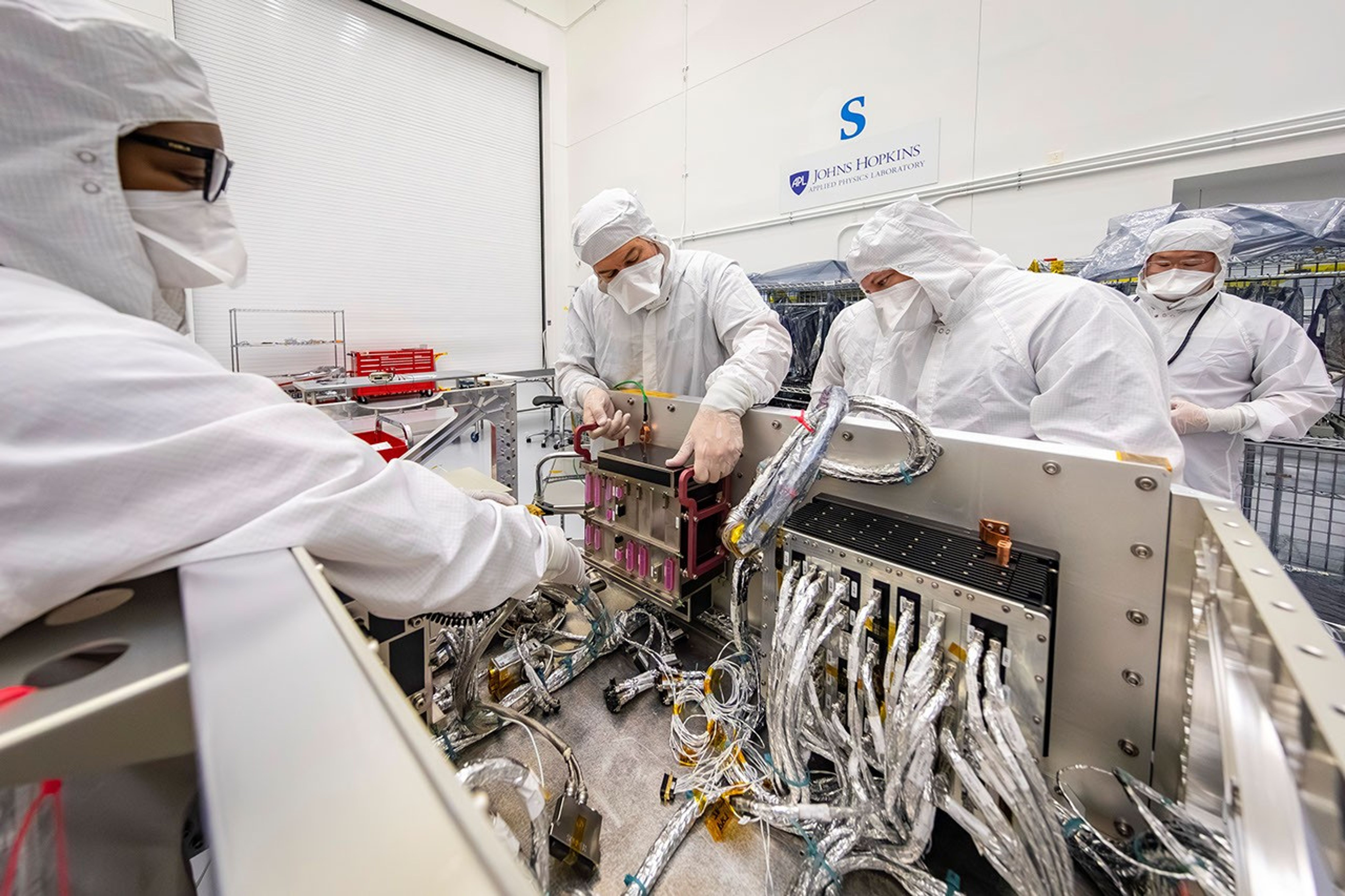
In the cleanroom at APL, Emory Toomey (left) and Hunter Reeling integrate the engineering model of Dragonfly’s IEM, which contains the spacecraft’s core avionics, with the lander’s electrical harness, which is the bundled assembly of wires, cables and connectors that will transmit power and data throughout the rotorcraft. (NASA/Johns Hopkins APL)
Powering up the Electronics
From left, Carlisa Drew, Seth Harvey, Anthony Fanelli, Emory Toomey and TJ Lee conduct power and functional testing on Dragonfly’s Integrated Electronics Module (IEM) and Power Switching Unit (PSU) in the cleanroom at the Johns Hopkins Applied Physics Laboratory (APL) in Laurel, Maryland. The IEM is Dragonfly’s “brain,” containing the spacecraft’s core avionics; the PSUs control the flow of power to Dragonfly’s instruments and systems. (NASA/Johns Hopkins APL/Ed Whitman)

Dragonfly Wind Tunnel Set Up
Engineers install and adjust the rotors on the full-scale test model representing half of the Dragonfly lander in the Transonic Dynamics Tunnel facility at NASA’s Langley Research Center. (NASA)
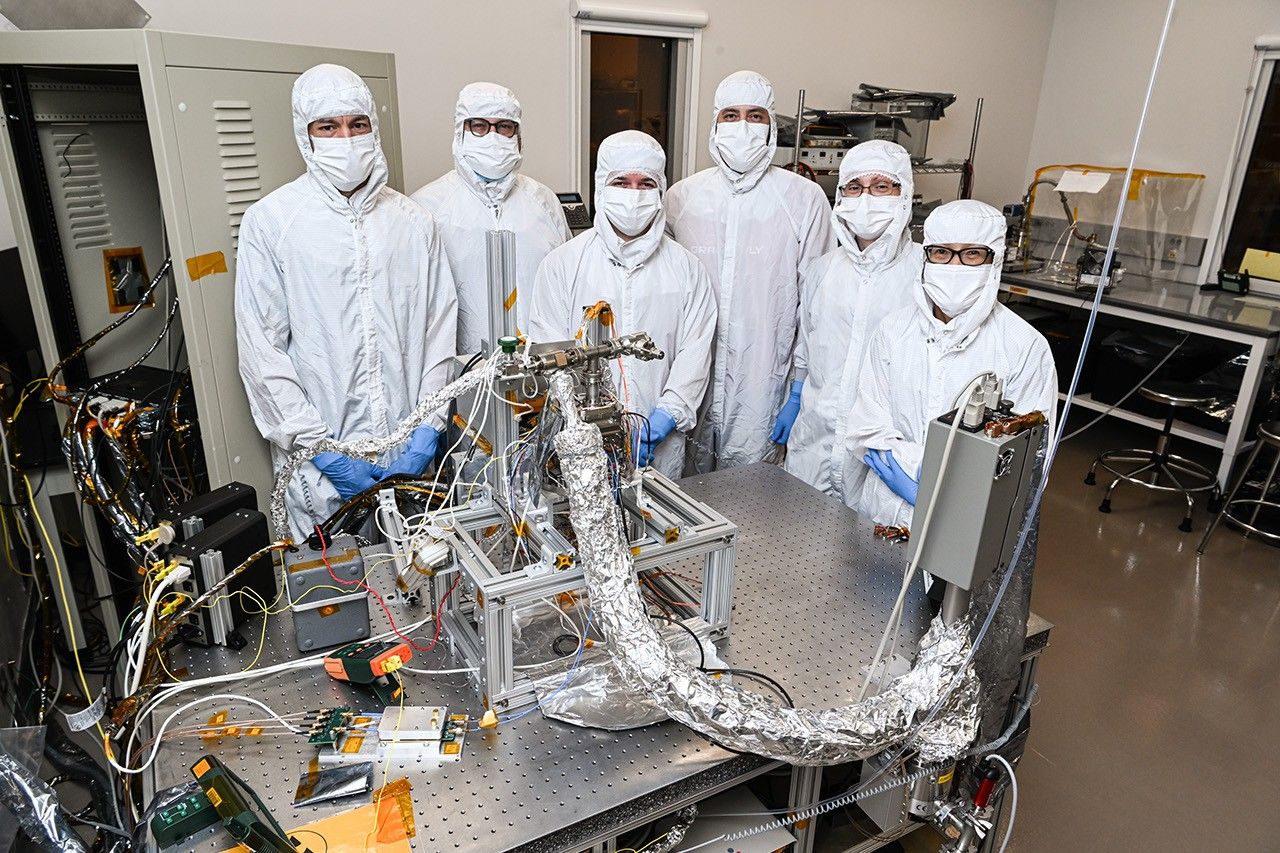
Goddard ITMS Test Team
Members of the Ion Trap Mass Spectrometer team inspect their device, part of the Dragonfly Mass Spectrometer (DraMS) instrument package, at NASA’s Goddard Space Flight Center. (NASA)
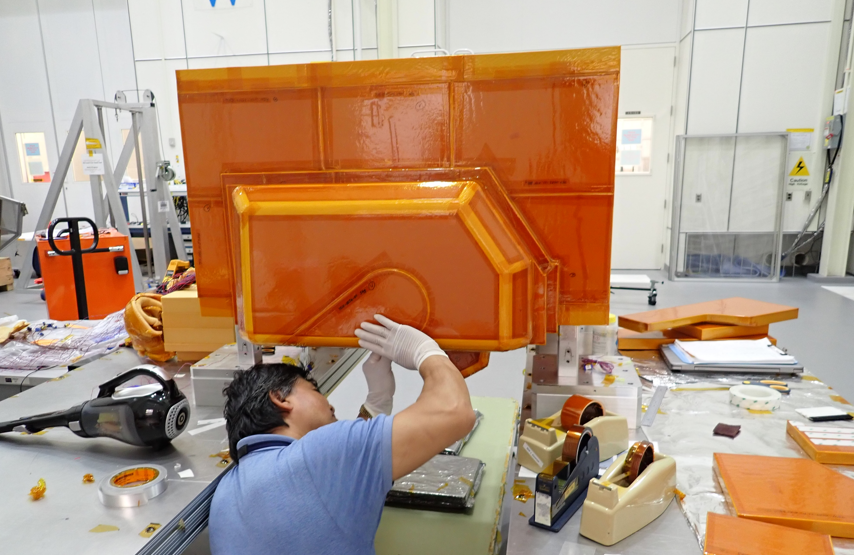
DragonCam Insulation
A section of Dragonfly’s foam insulation is prepared for testing in the Titan Chamber at Johns Hopkins Applied Physics Laboratory. (Johns Hopkins APL/Justin Artis)
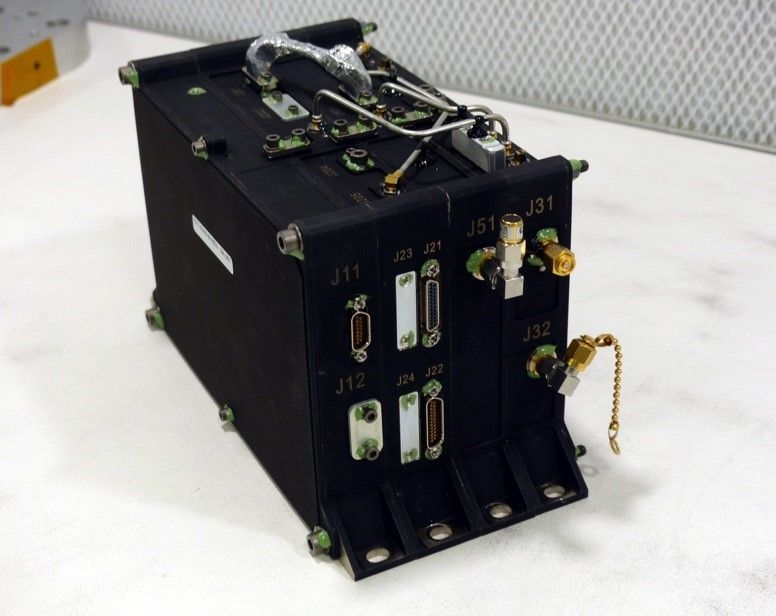
Frontier Radio
Dragonfly is using Frontier radio, which is smaller and needs less power than other deep-space radios, and can send and receive signals in a wide range of frequencies. (Johns Hopkins APL)
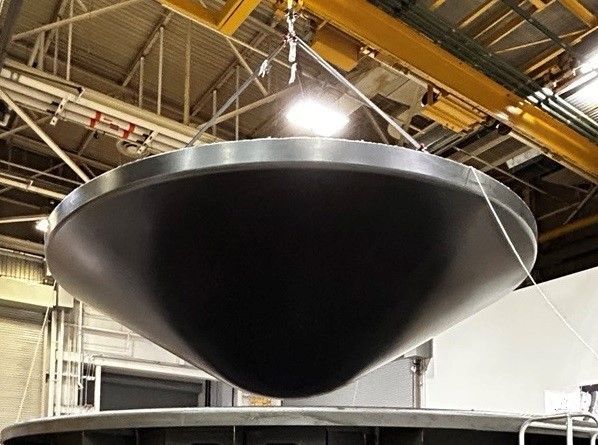
Dragonfly Heat Shield
Engineers at Lockheed Martin have completed the fabrication, cure and thermal cycle testing of Dragonfly’s aeroshell heat shield and backshell structures. (Lockheed Martin)
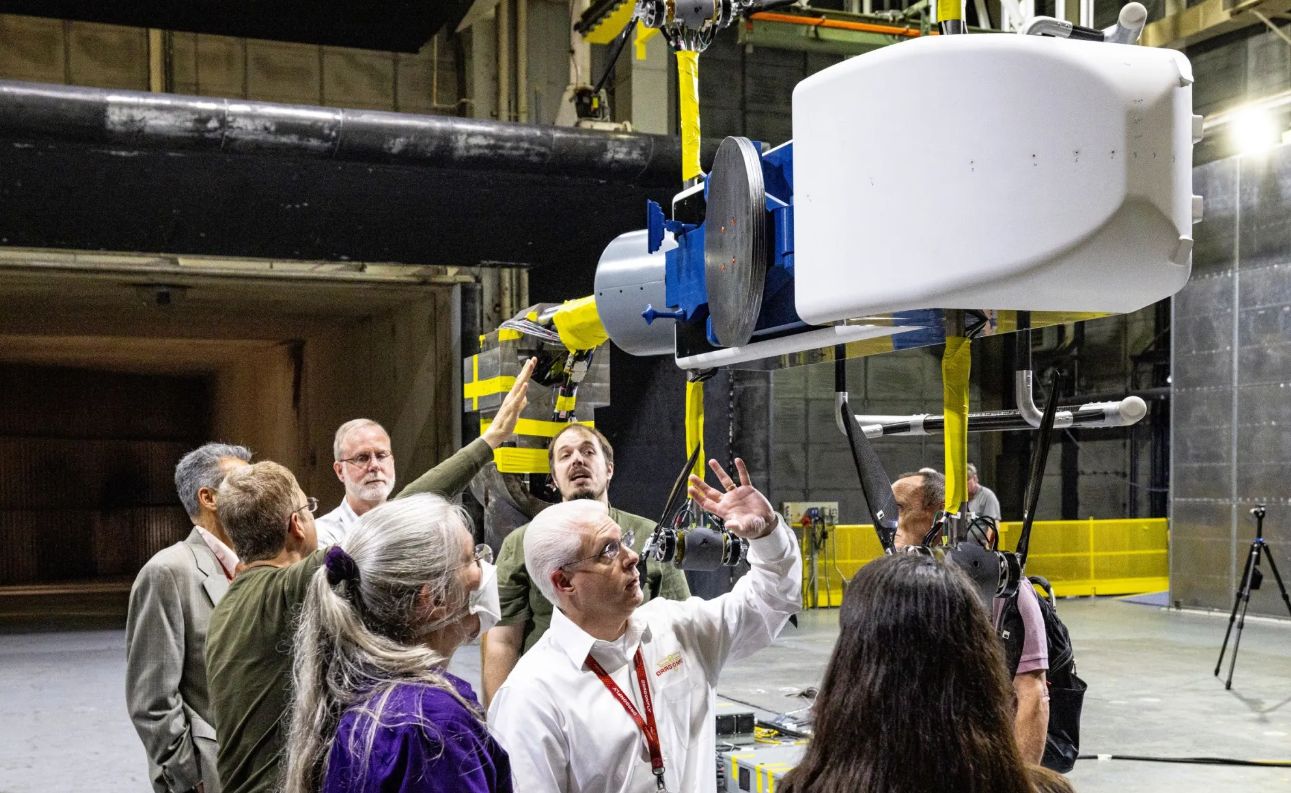
Dragonfly Testing
Dragonfly team members review the half-scale lander model after it underwent wind tunnel testing at NASA's Langley Research Center. (Johns Hopkins APL/Ed Whitman)
Dragonfly Mission Identifiers
Please review the Design Guidelines to ensure proper use of the mission identifier and related artwork. Then scroll through to see the options available for download.







"Travel" to Titan
-
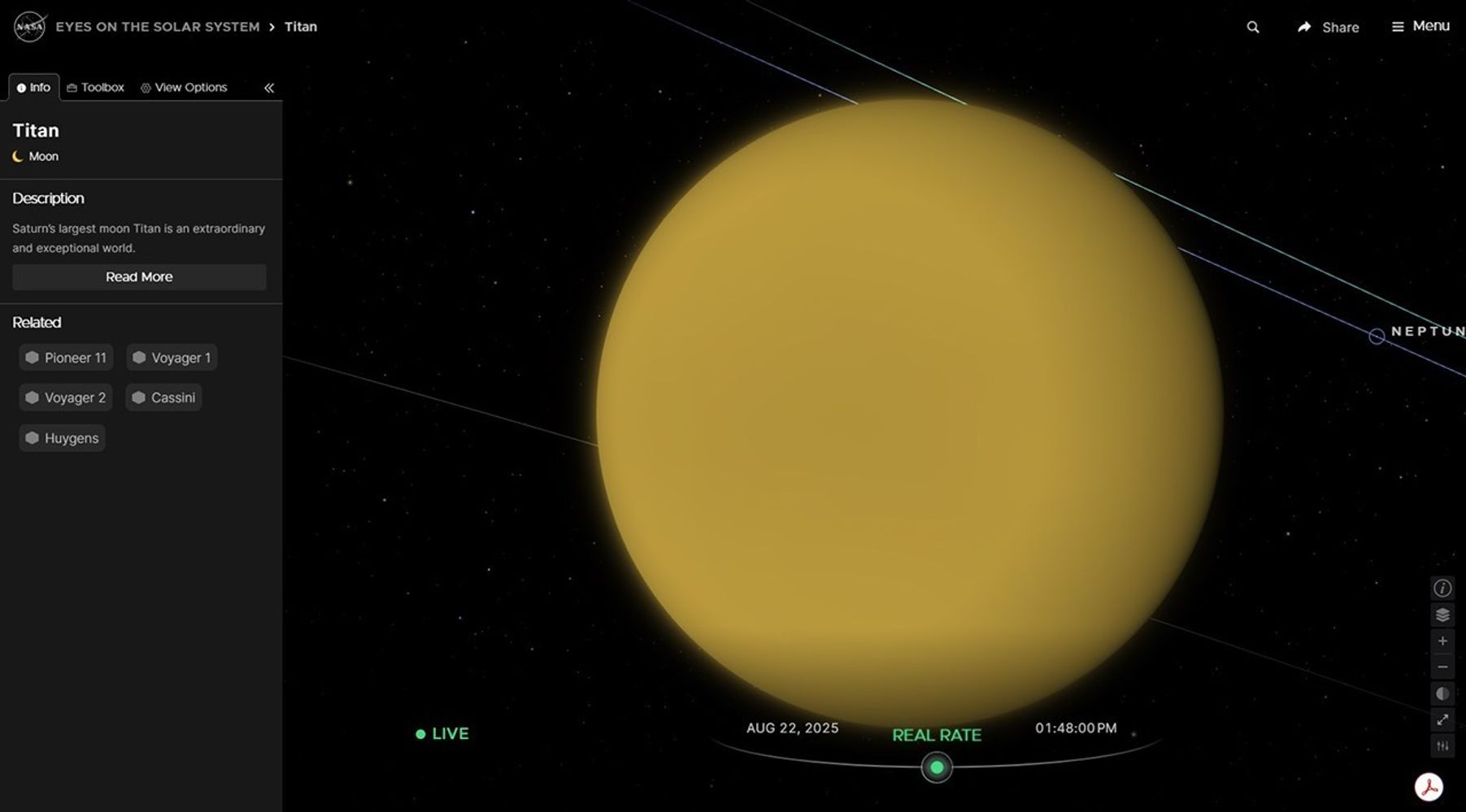
Eyes on the Solar System
The interactive "Eyes" desktop app takes you along with NASA spacecraft past, present, and future, as they explore Titan and other bodies of our solar system.
-
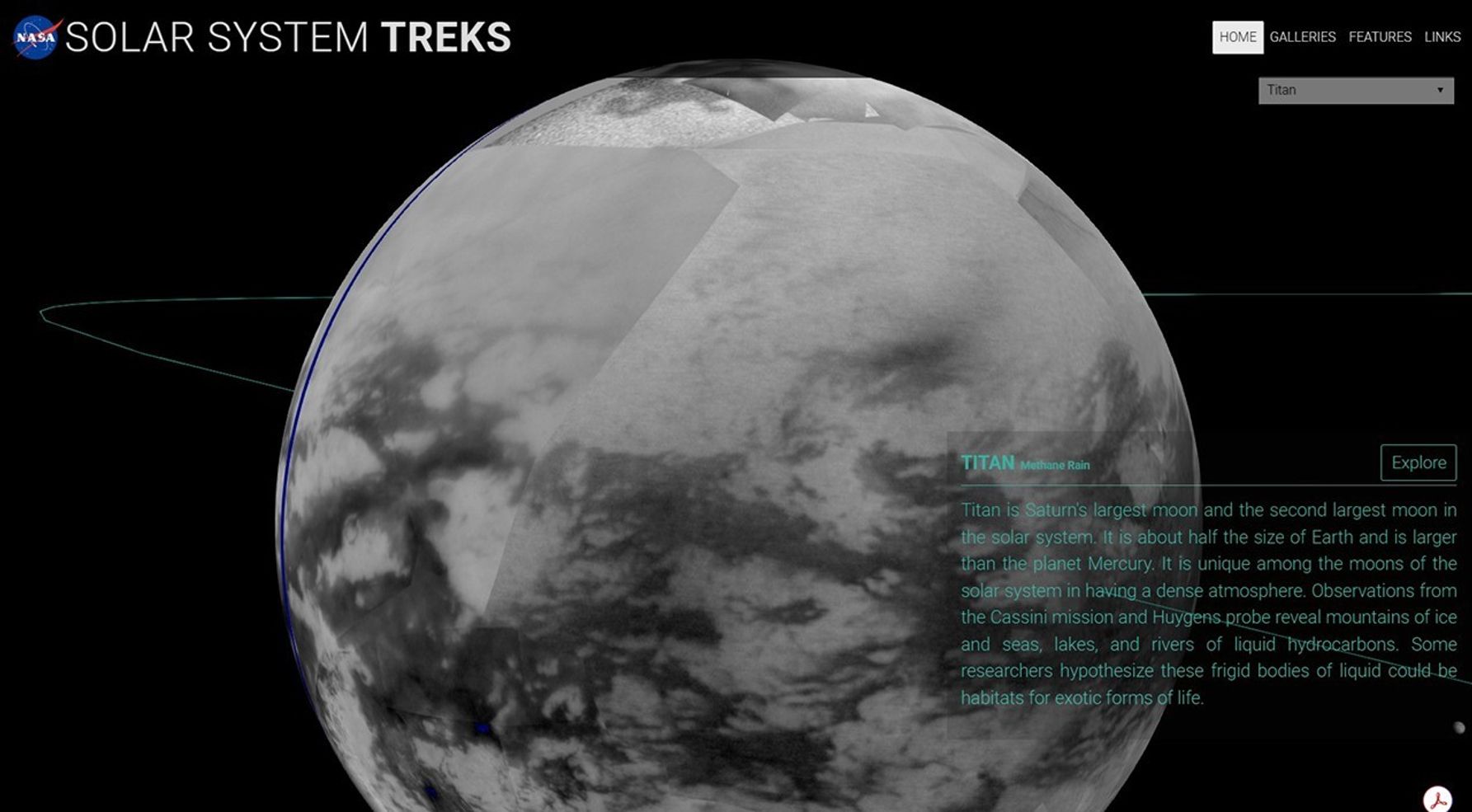
Solar System Treks
Explore the surface of Titan with this desktop app that allows users to zoom in and out, take measurements, search for specific geologic features, download images, and learn more about this moon of Saturn while traversing its landscape. Images are based on data collected by the Cassini spacecraft.
Dragonfly Video Library
-
Revolutionary Rotors
Jan. 9, 2026
Learn more about the critical technical trials conducted at the Transonic Dynamics Tunnel (TDT) facility at NASA’s Langley Research Center in Hampton, Virginia. -
Exploring the Potential Chemistry of Titan Using Mass Spectrometry
Nov. 20, 2024
Learn more about the DraMS (Dragonfly mass spectrometer) instrument in this recorded talk from NASA Goddard Space Flight Center's Senior Living Community Outreach Series. -
Dragonfly Team Tests Rotorcraft Designs in Unique NASA Facilities
Oct. 20, 2023
Watch engineers from NASA and Johns Hopkins APL test the rotors on a half-scale model of Dragonfly in the Subsonic Wind Tunnel at NASA's Langley Research Center. -
Dragonfly Mission to Saturn's Moon Titan
Feb. 24, 2022
Mission leaders discuss Dragonfly in a panel from Space Center Houston's Thought Leadership Series. -
The Science of Dragonfly
Feb. 25, 2020
Animation of Dragonfly at Titan, showing how it will explore and collect data. -
Entry, Descent and Landing on Titan
June 27, 2019
Animation of Dragonfly as it goes through Titan's atmosphere, separating from its backshell and heat shield.

Saturn and Titan Resources
Dive into this collection of activities, videos, animations, posters, and online interactives for educators, students, and anyone interested in Saturn and Titan.
Learn More