



















General Astrophysics Surveys
In addition to the mission's three core surveys, Roman will conduct a suite of observations that enable a wide range of science.
Scientists are invited to propose additional surveys dedicated to science that can’t be done with the mission’s core surveys. For example, astronomers could conduct a survey tuned to find things like stellar novae or other kinds of outbursts, or take a mega-exposure similar to but far larger than Hubble’s celebrated Ultra Deep Field image. And when observatories like the Hubble or Webb space telescopes find something strange, Roman could follow-up to provide a big-picture view that puts the discovery into context. Astronomers from all over the world can propose cutting-edge research, such as surveys of nearby galaxies or our own, enabling the astronomical community to utilize the full potential of Roman’s capabilities to conduct extraordinary science.
A handful of surveys have now been selected, including the Galactic Plane Survey announced near the end of 2025 and the remaining five announced summer 2026. The Roman team will issue calls for proposals each year of Roman's five-year primary mission, giving astronomers more opportunities to submit new observations and research for consideration.
Kepler Revisited
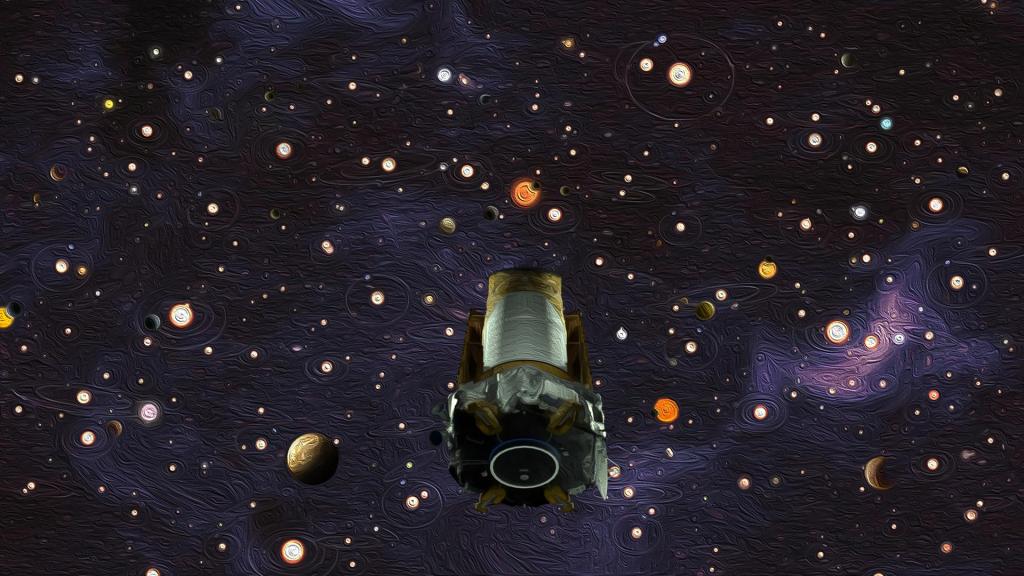
As NASA's first dedicated planet-hunting mission, the Kepler space telescope searched a slice of our galaxy for Earth-sized planets. Now, Roman is set to retrace Kepler's footsteps, covering the same area in even sharper detail.
Roman's sharper vision will help answer questions about Kepler’s findings and make the entire Kepler dataset more powerful. The Roman-Kepler Legacy Survey will capture detailed images of all 200,000 objects Kepler observed, including over 4,000 stars that may host planets. And Roman’s more powerful view will reveal things Kepler was unable to see, adding up to about 17 million stars and brown dwarfs — in-between objects that are too heavy to be classified as planets, but not quite massive enough to become stars. The survey will also probe Tatooine worlds that orbit pairs of stars. These stellar couples are so close that they easily blur together, which is why we need a crisp view like Roman’s to distinguish them.
Globular Cluster Survey
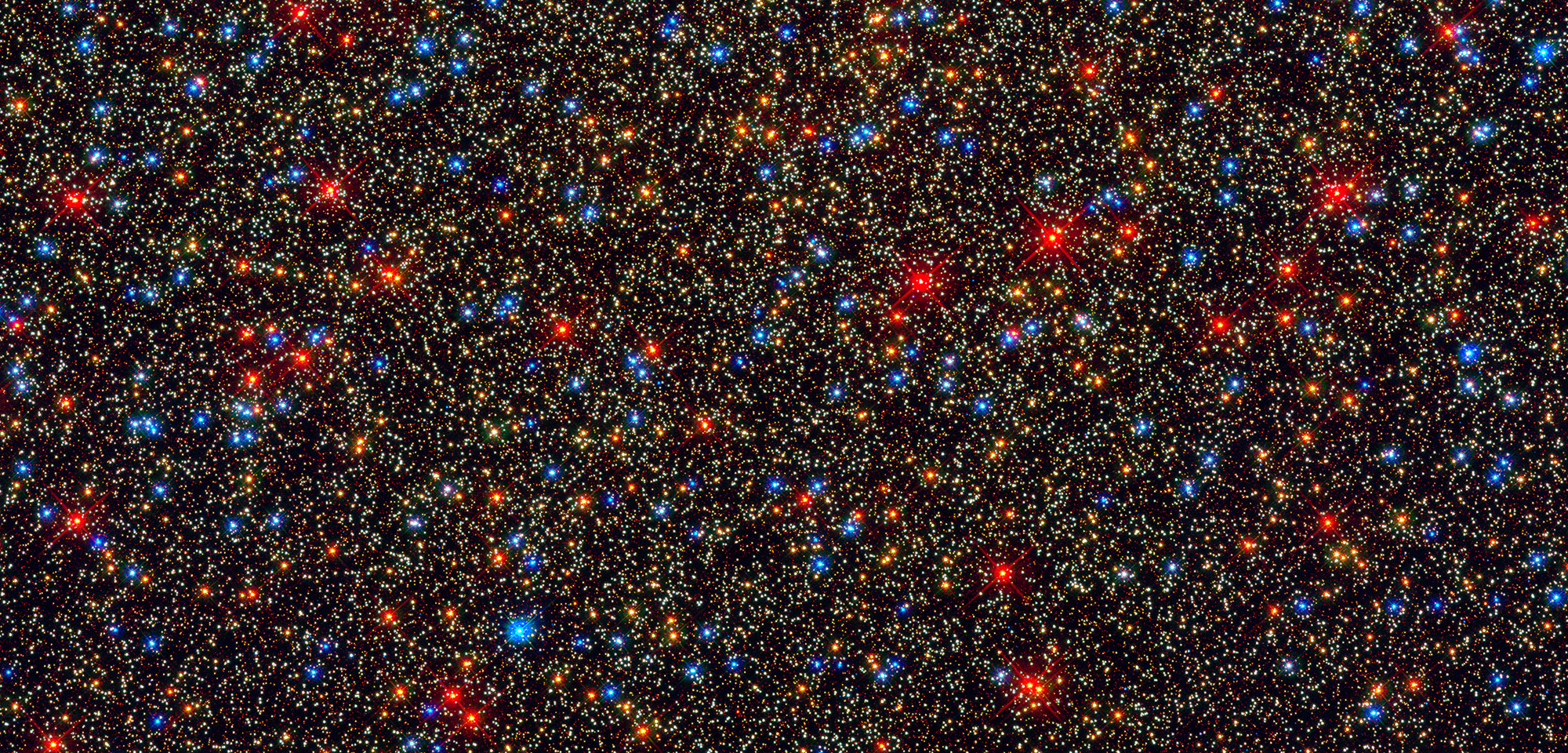
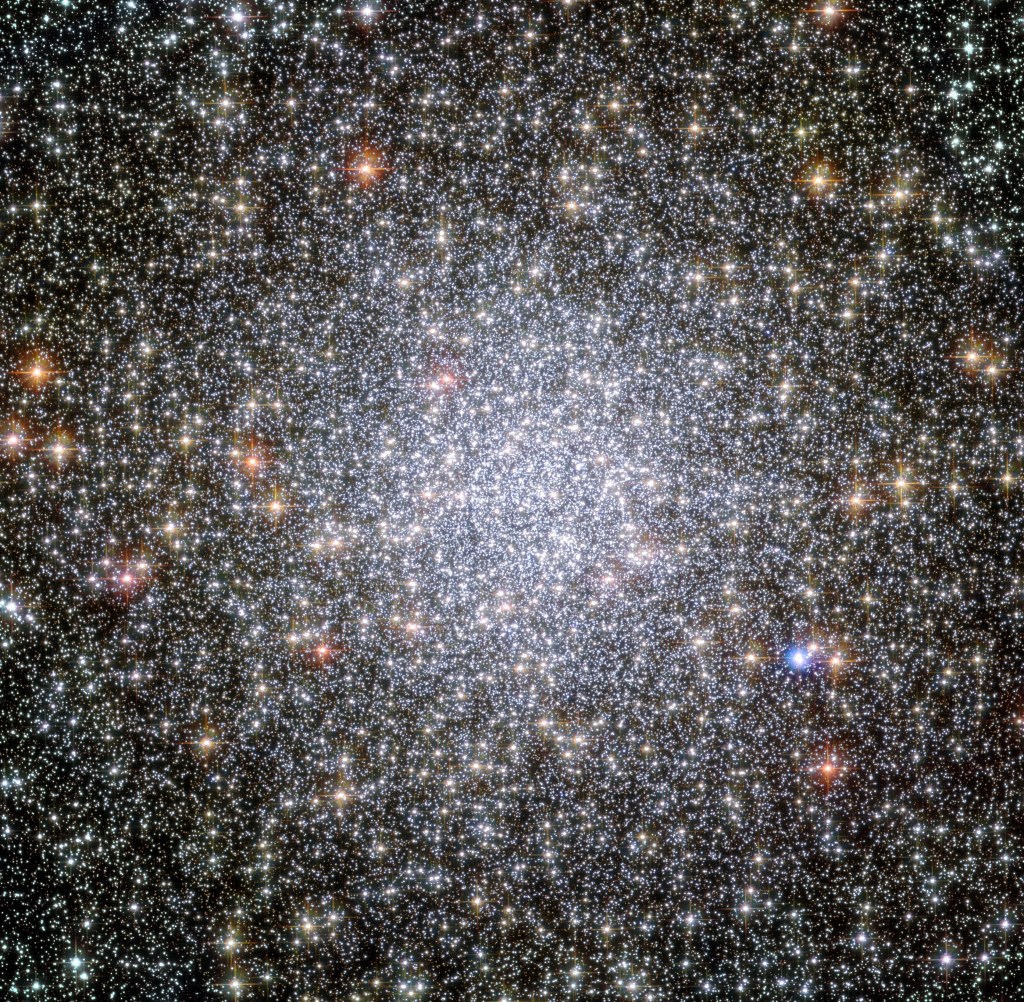
Over the course of 167 hours, Roman will home in on four of these ancient, densely packed groups of stars: M4, NGC 6397, 47 Tucanae, and Omega Centauri.
This survey will take the most complete inventory ever of stars in four relatively nearby globular clusters. In about one week of observation time, Roman will survey a total area that would take NASA’s Hubble Space Telescope around 18 years to cover, while matching its resolution. That will help astronomers tally up and map their hundreds of thousands of stars while identifying very faint objects, like brown dwarfs.
Mapping Andromeda & Triangulum
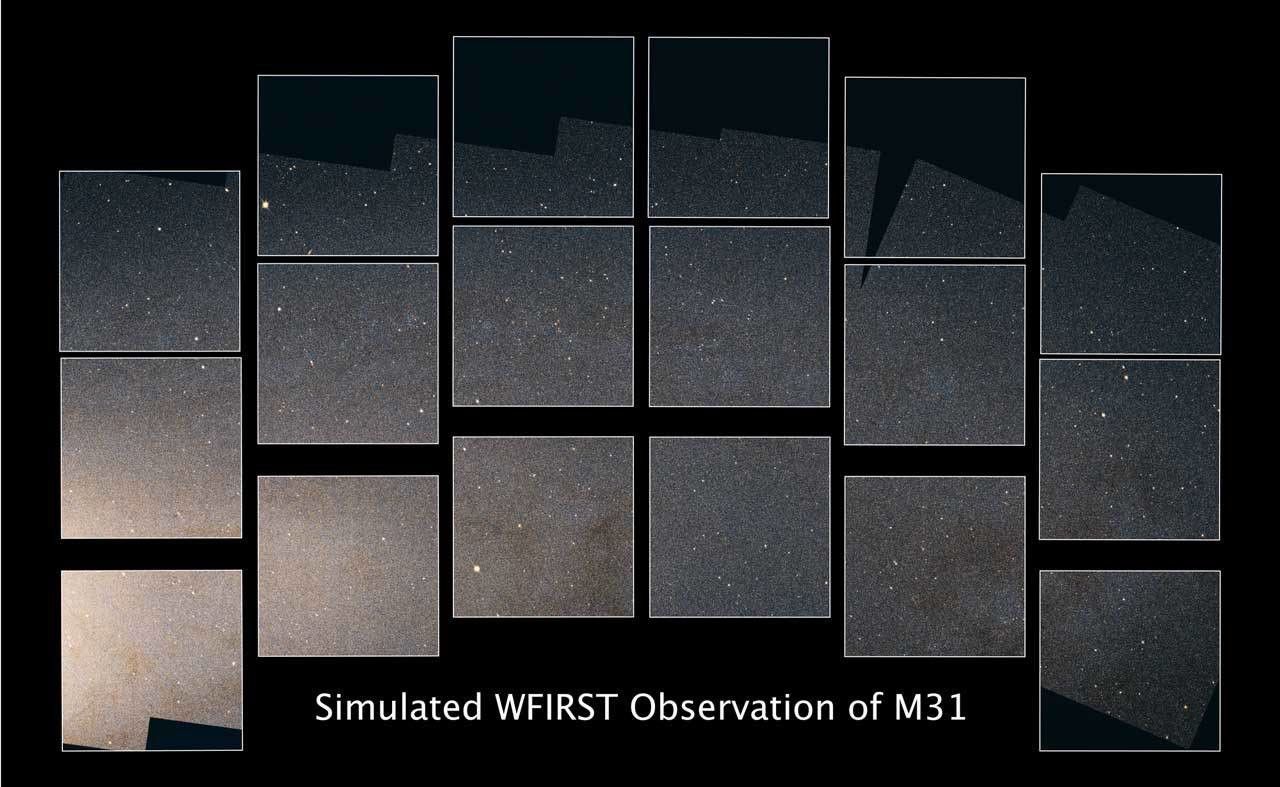
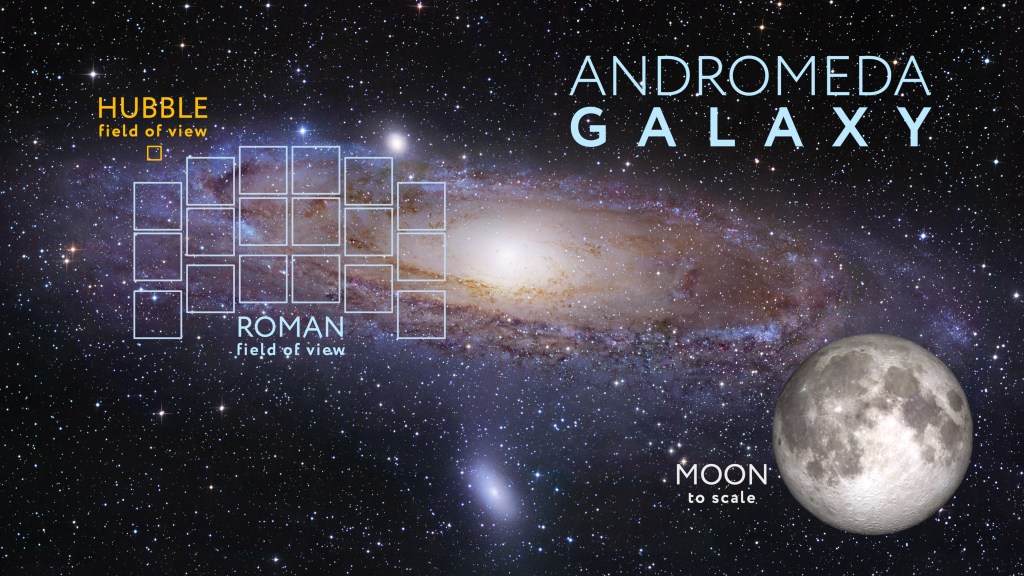
This survey will take spying on the neighbors to an extreme, creating the most detailed mosaics ever of two of the closest big galaxies to the Milky Way: Andromeda and Triangulum.
Roman will observe each galaxy repeatedly, ultimately mapping more than half a billion stars in 3D and monitoring how they move and change over time. That will help astronomers reconstruct how the galaxies formed and evolved, including how they’ve interacted with each other over the course of billions of years. It will also illuminate everything from large galactic structures to the gas and dust that fuel star formation. Astronomers will better understand how stars are born, live, and die in galaxies beyond our own.
The survey will also probe each galaxy’s dark matter underpinnings. This mysterious material doesn’t emit light or interact with normal matter except gravitationally, yet it accounts for the vast majority of the universe’s mass. Watching how gravity guides the movement of stars in these galaxies will help astronomers trace the distribution of both normal and dark matter in exquisite detail. That could reveal whether dark matter behaves exactly as expected based on current physical models, or whether there are small discrepancies that could hint at new physics.
GRACE Survey
The GRACE (Grism Reionization and Cosmic Evolution) Survey will peer far into the universe’s past to hunt for some of the earliest galaxies. Its main goal is to shed light on how the cosmos transitioned from being filled with an opaque gas to becoming crystal clear, allowing light to travel across the universe.
This is the era when the first galaxies began lighting up the cosmos. The GRACE survey aims to find ten times more of the earliest known galaxies than all other telescopes have discovered to date. Studying them will help astronomers figure out exactly when and how quickly the early universe “fog” cleared. Since scientists will also be able to see the space between the universe’s far reaches and nearby, they’ll be able to see how galaxies, stars, black holes, and the cosmic web evolved from the dawn of the universe to “cosmic noon” to the present day.
Connecting the dots between the early universe and now will help fill in some major gaps. That includes a “desert” where galaxies are plentiful but measuring their distances has historically been difficult, creating a blind spot in our maps of the universe. The GRACE survey will result in a massive catalog containing the distances of hundreds of thousands of galaxies, and it will take just 17.5 days of observing time.
Extreme Deep Field
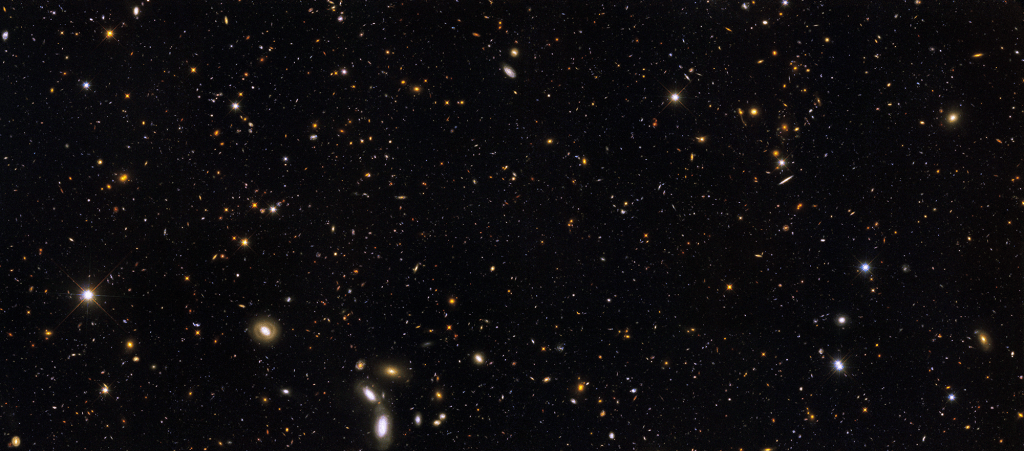
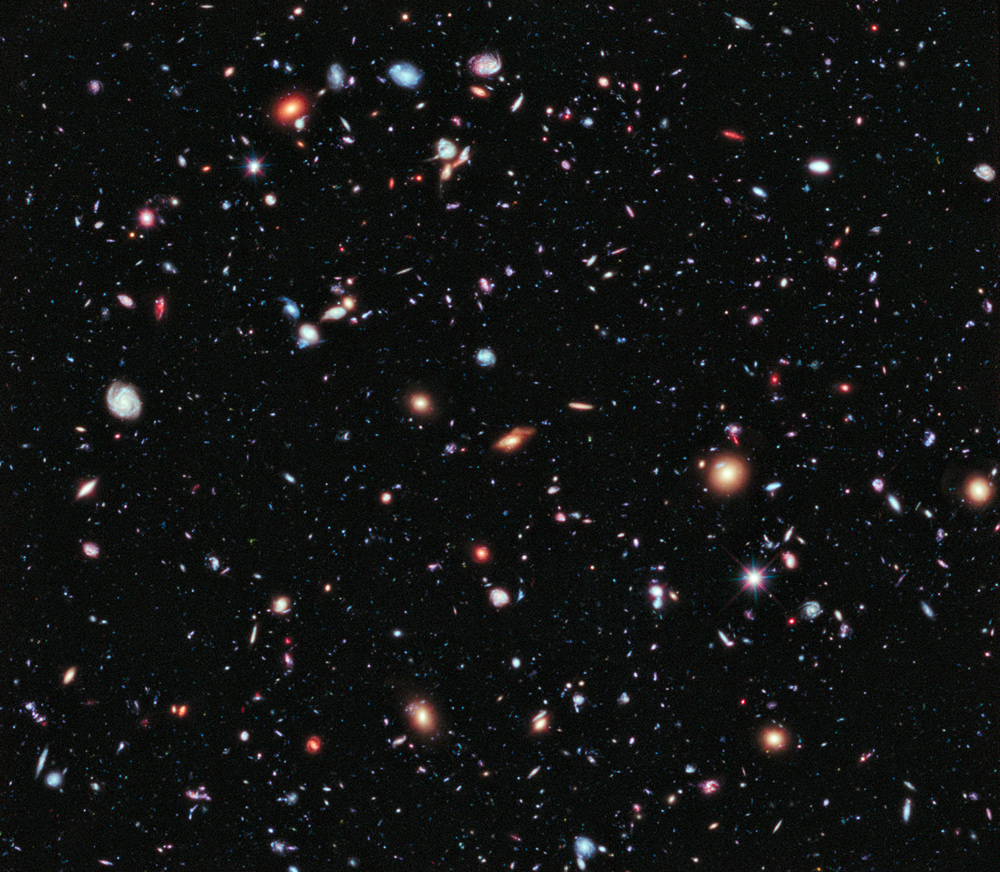
The RXDF (Roman eXtreme Deep Field) will stare deep into a small patch of sky, essentially collecting a cosmic core sample. This mega-exposure will be similar to but more than 140 times larger than Hubble’s eXtreme Deep Field.
Instead of taking a single snapshot, Roman will repeat the observations over time. Stitching together a detailed time-lapse of a relatively large chunk of the early universe will help astronomers track how the earliest galaxies, black holes, and other structures formed and changed across cosmic history. The observations could also catch some of the first supernova explosions and show how they shaped the early cosmos.
Galactic Plane Survey
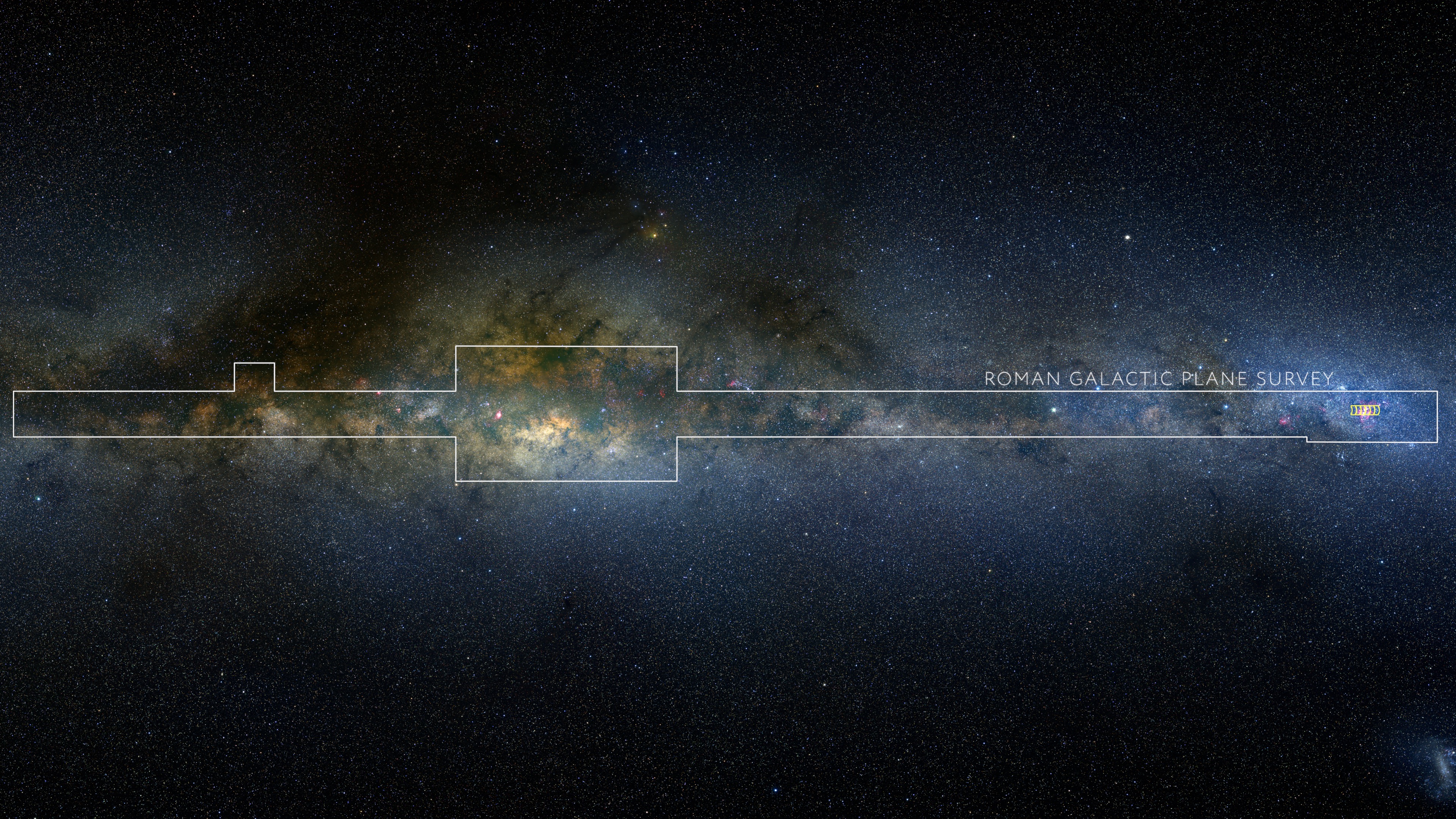
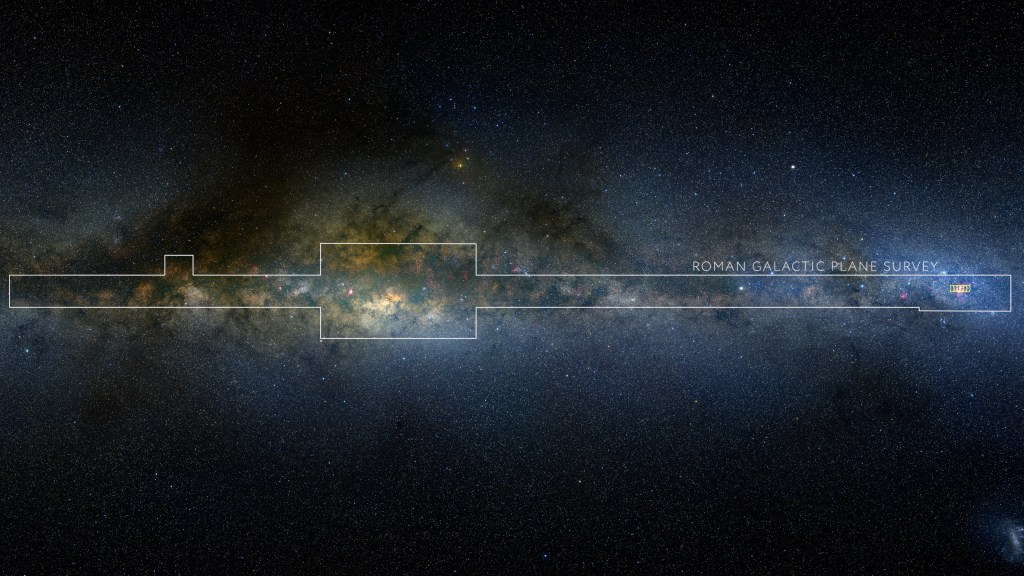
This survey that will reveal our home galaxy, the Milky Way, in unprecedented detail. In one month of observations spread across two years, the survey will unveil tens of billions of stars and explore previously uncharted structures.
The survey will cover nearly 700 square degrees (a region of sky as large as about 3,500 full moons) along the glowing band of the Milky Way — our edge-on view of the disk-shaped structure containing most of our galaxy’s stars, gas, and dust. Scientists expect the survey to map up to 20 billion stars and detect tiny shifts in their positions with repeated high-resolution observations. And it will only take 29 days spread over the course of the mission’s first two years.
Roman will study nearly 2,000 young, loosely bound open clusters to see how the galaxy’s spiral arms trigger star formation. The survey will also map dozens of ancient, densely packed globular clusters near the center of the galaxy that could help astronomers reconstruct the Milky Way’s early history. Roman’s repeated observations will also monitor stars that flicker. Ground-based surveys detect thousands of bright stellar outbursts, but often can’t see the faint, dust-obscured stars that produce them. Roman will pinpoint the culprits plus take high-resolution snapshots of the aftermath.
NASA Announces Plan to Map Milky Way With Roman Space Telescope
NASA’s Nancy Grace Roman Space Telescope team has released detailed plans for a major survey that will reveal our home…
Read the Story