















Missions Exploring Our Sun
NASA and other international space agencies monitor the Sun 24/7 with a fleet of solar observatories, studying everything from the Sun’s atmosphere to its surface.
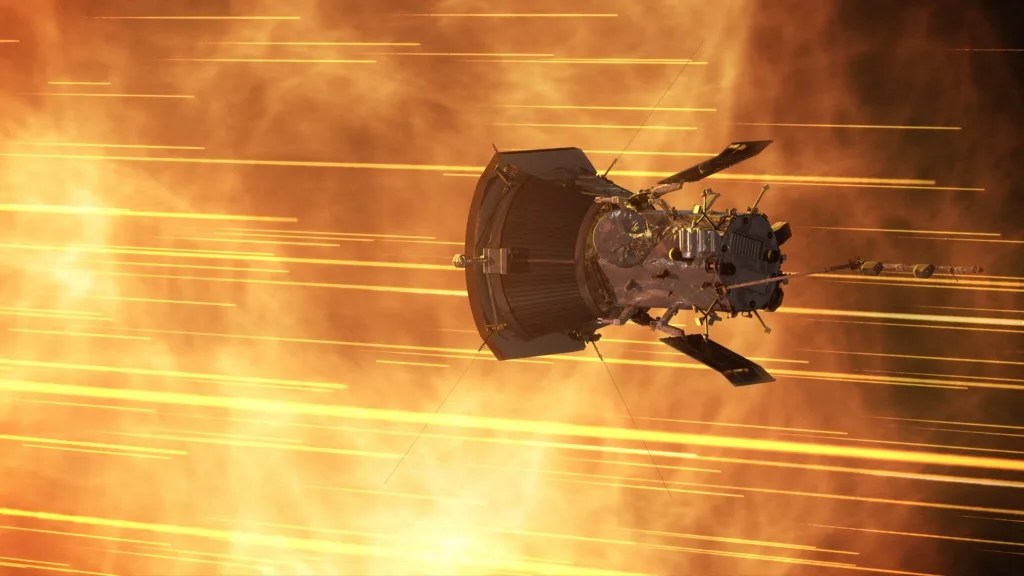
NASA’s Parker Solar Probe is studying our star from closer than any previous spacecraft. On Dec. 14, 2021, NASA announced that Parker had flown through the Sun’s upper atmosphere – the corona – the first time in history that a spacecraft had touched the Sun.
Other active spacecraft monitoring the Sun include: Solar Orbiter, SOHO, ACE, Wind, Hinode, the Solar Dynamics Observatory, and STEREO.
Location
Center of the Solar System
First solar mission
March 25, 1951 (Explorer 10)
Active missions
22
Future Missions
8
Heliosphere
The Sun sends out a constant flow of charged particles called the solar wind, which ultimately travels past all the planets, extending out three times the distance to Pluto before being impeded by the interstellar medium. This forms a giant bubble around the Sun and its planets, known as the heliosphere. NASA studies the heliosphere to better understand the fundamental physics of the space surrounding us—which, in turn, teaches us more about the nature of space throughout the rest of the universe, as well as regarding how it drives planetary atmospheres that contribute to planet habitability.
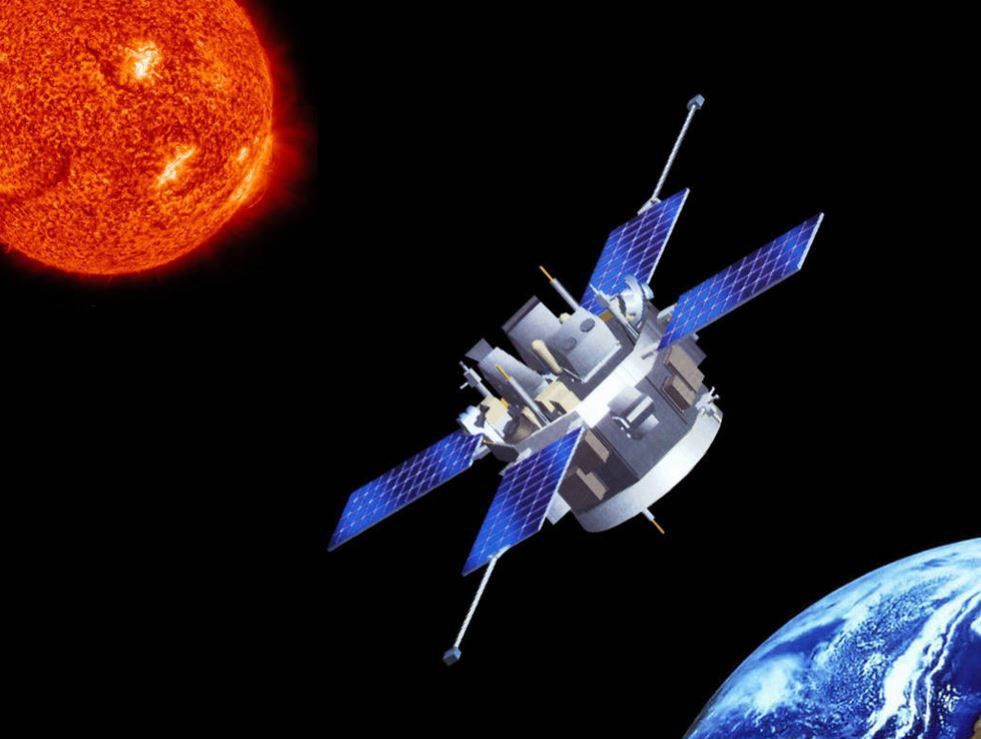
ACE
The Advanced Composition Explorer collects and analyzes particles of solar, interplanetary, interstellar, and galactic origins. The data contributes to our understanding of the Sun, its interaction with Earth, and the evolution of the solar system.
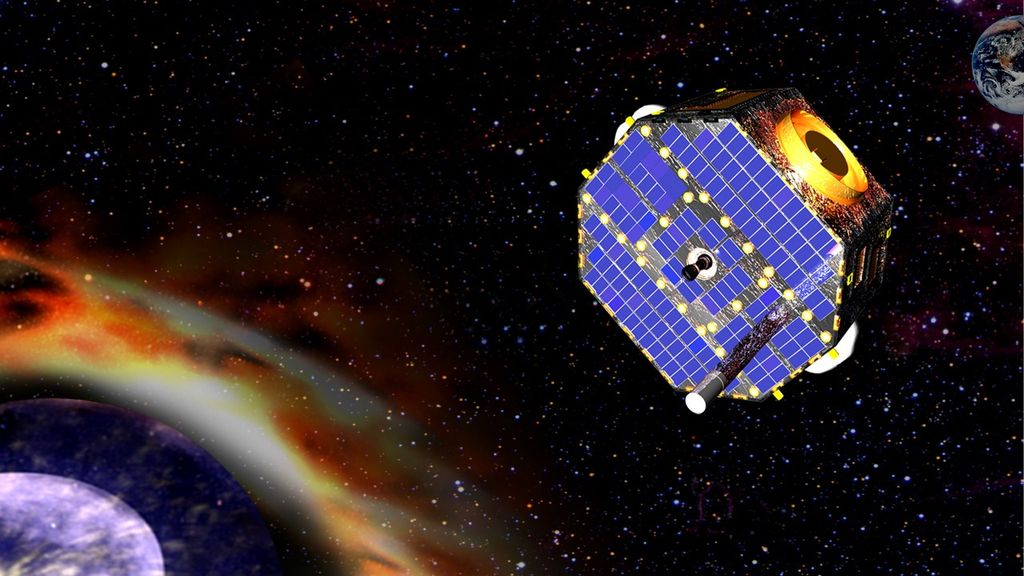
IBEX
The Interstellar Boundary Explorer is a NASA spacecraft studying how our heliosphere, the magnetic bubble surrounding our Sun and planets, interacts with interstellar space.
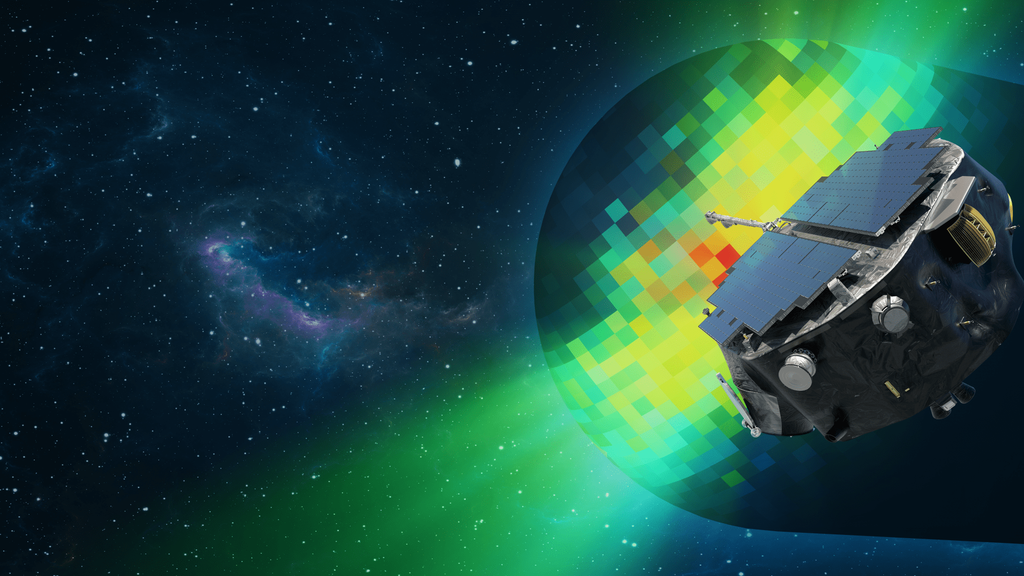
IMAP
The Interstellar Mapping and Acceleration Probe studies the boundary of the heliosphere, a huge bubble created by the Sun surrounding and protecting our solar system.
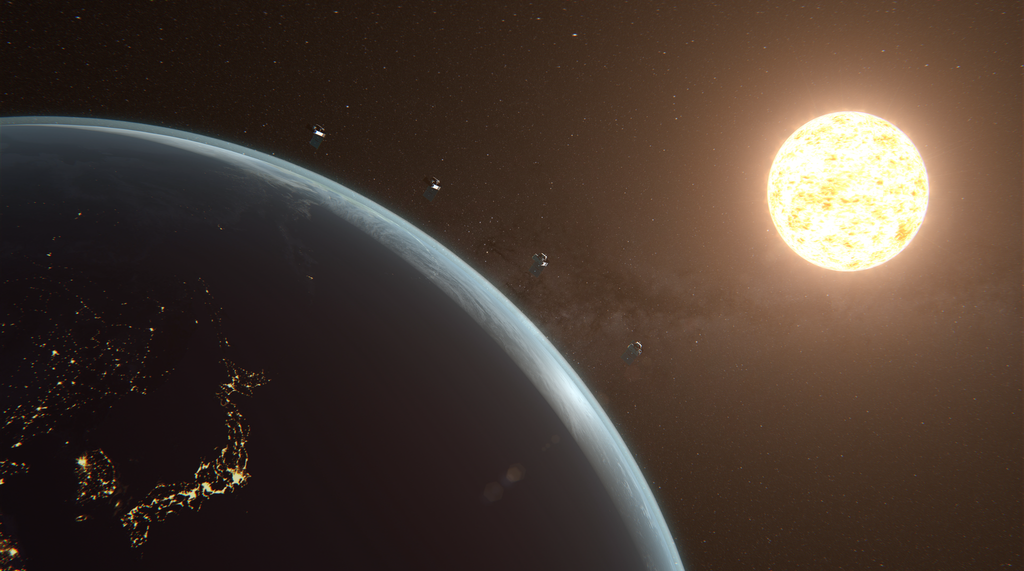
PUNCH
The Polarimeter to Unify the Corona and Heliosphere mission is a constellation of four small satellites in low Earth orbit that will make global, 3D observations of the entire inner heliosphere to learn how the Sun's corona becomes the solar wind.
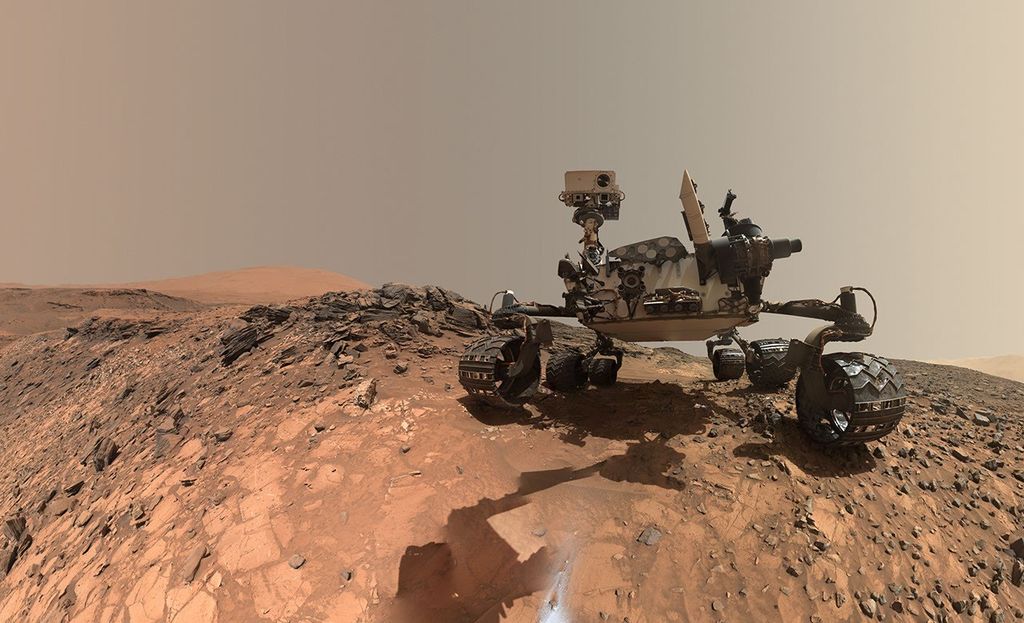
RAD
The Radiation Assessment Detector is mounted on NASA's Mars Curiosity Rover and measures and identifies all high-energy radiation on the Martian surface, such as protons, energetic ions of various elements, neutrons, and gamma rays.
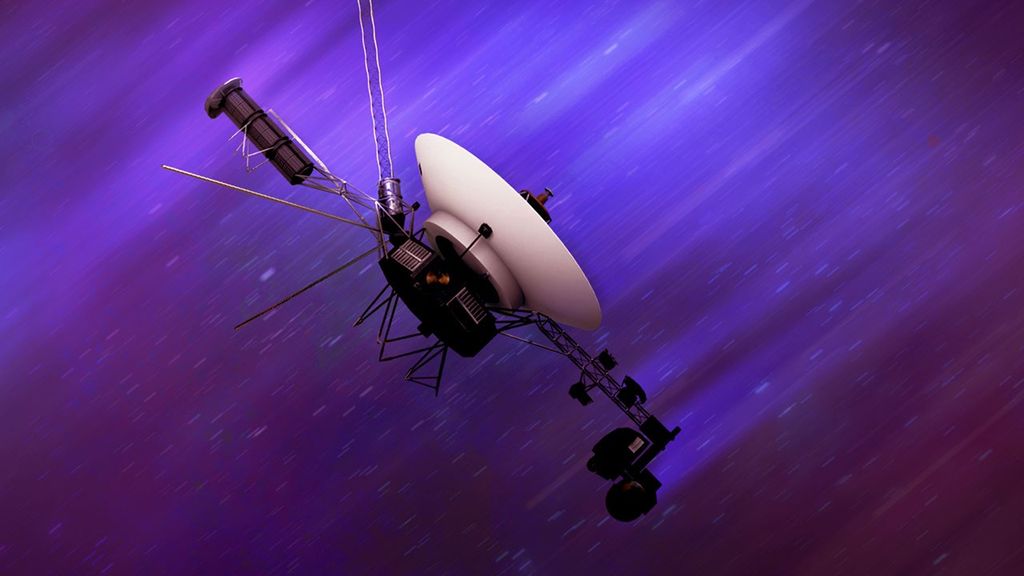
Voyager
Voyager 1 and its twin Voyager 2 are the only spacecraft ever to operate outside the heliosphere, the protective bubble of particles and magnetic fields generated by the Sun. Voyager 1 reached the interstellar boundary in 2012, while Voyager 2 (traveling slower and in a different direction than its twin) reached it in 2018.
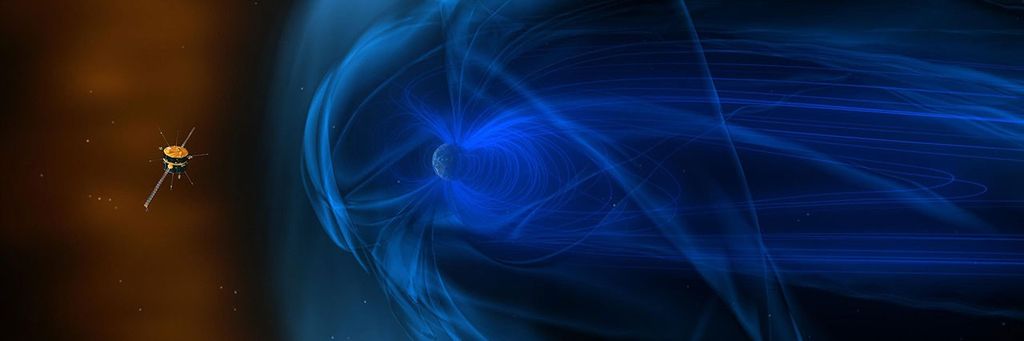
Wind
Wind is a spin-stabilized spacecraft that observes the solar wind that is about to impact the magnetosphere of Earth.
Ionosphere, Thermosphere, Mesosphere
NASA studies the layers of the atmosphere, such as the ionosphere-thermosphere-mesosphere system where aurora and other space weather events manifest. The ionosphere is a layer in Earth's atmosphere that extends from about 50 to 300 miles above the surface of the planet. The layer is filled with electrically charged particles and overlaps with the neutral particles of the mesosphere and thermosphere. The ionosphere is sensitive to incoming material from the Sun, so it can respond dramatically to space weather. Since the ionosphere is home to low Earth-orbiting spacecraft, as well as the region of space through which radio communications travel, unexpected changes in the region can have a dramatic effect on human technology.
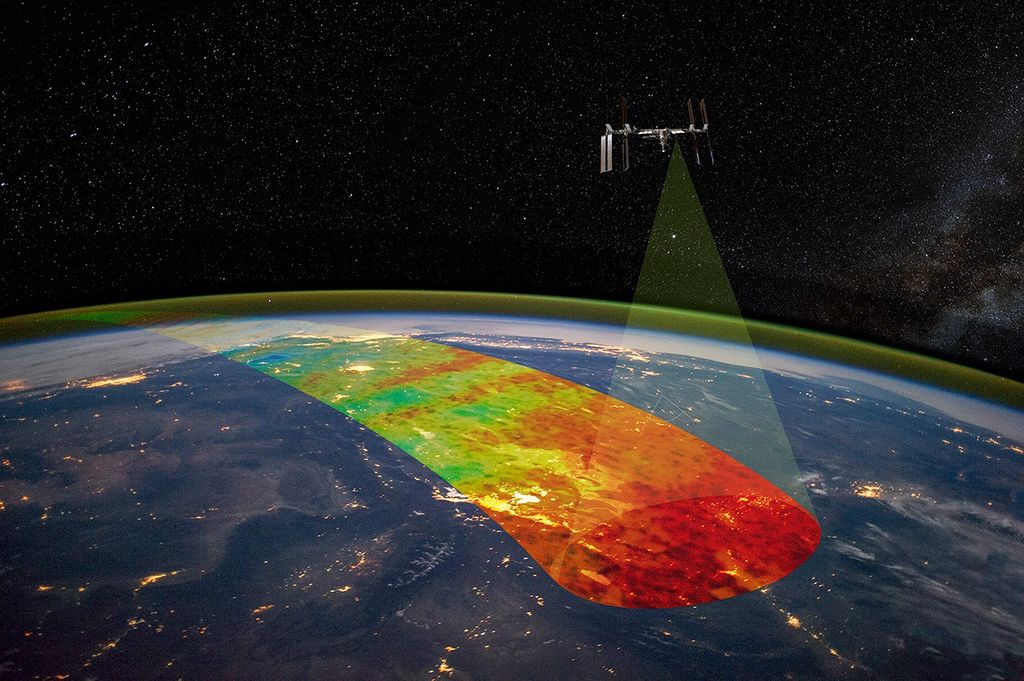
AWE
The Atmospheric Waves Experiment was installed on the exterior of the International Space Station in November 2023. From its space station perch, AWE is studying colorful bands of light in Earth’s atmosphere, called airglow.
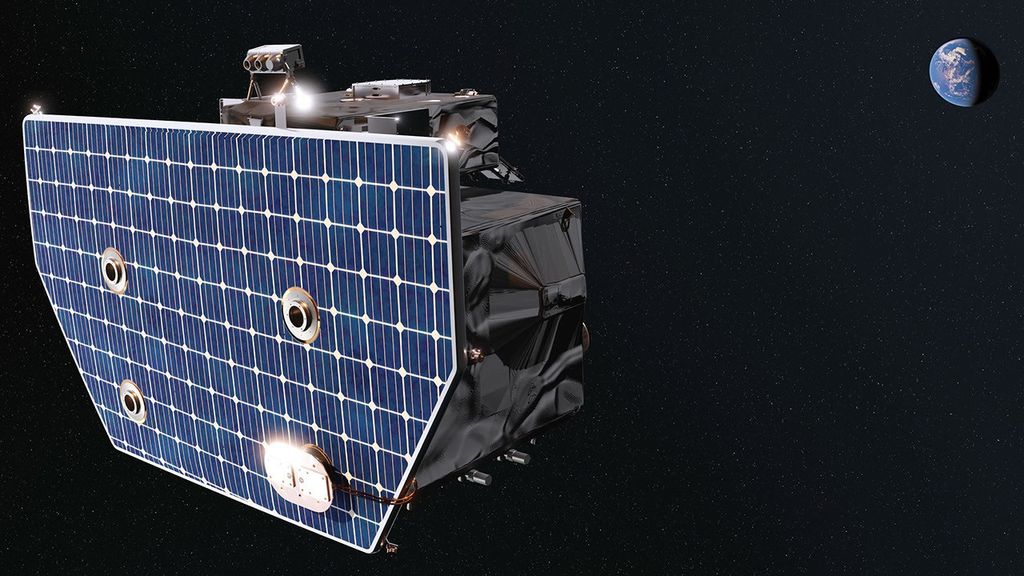
Carruthers Geocorona Observatory
The Carruthers observatory studies Earth’s geocorona, the ultraviolet glow emitted by Earth's exosphere, our planets outermost atmospheric layer.
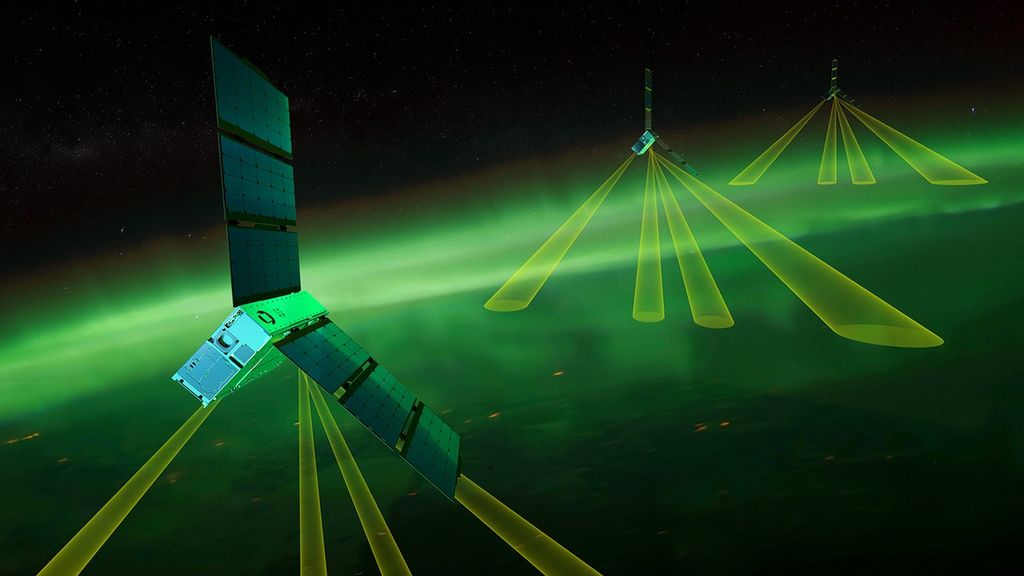
EZIE
The Electrojet Zeeman Imaging Explorer
is a trio of satellites comprising the first mission dedicated to studying auroral electrojets.
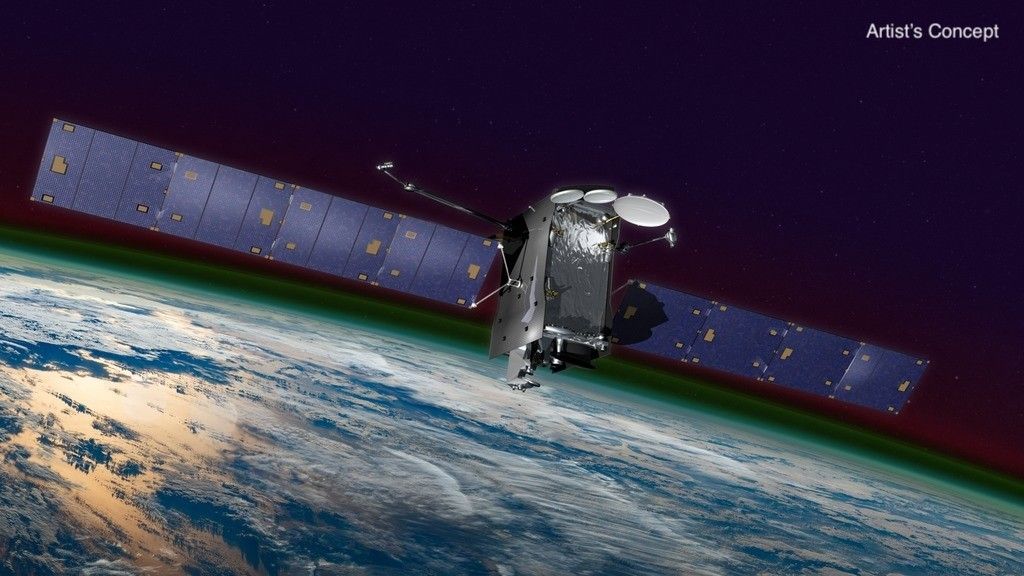
GOLD
The Global-scale Observations of the Limb and Disk mission measures densities and temperatures in Earth’s thermosphere and ionosphere.
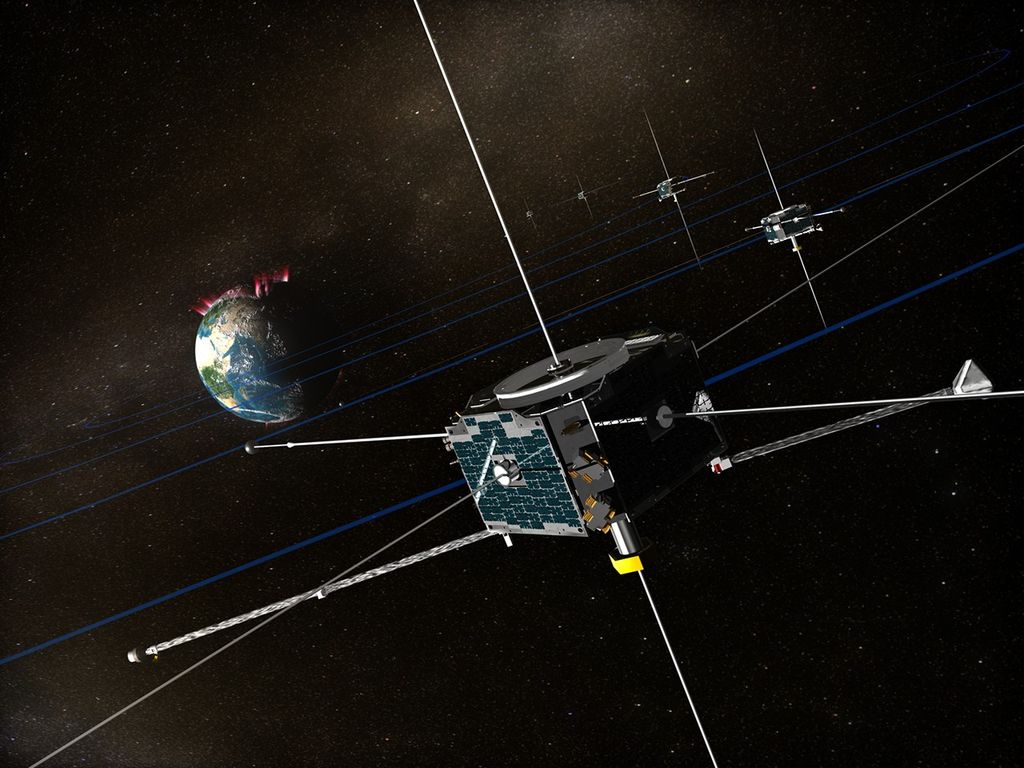
THEMIS
The Time History of Events and Macroscale Interactions During Substorms mission studies how mass and energy move through the near-Earth space environment, to determine what initiates the dancing lights of auroras near the poles.
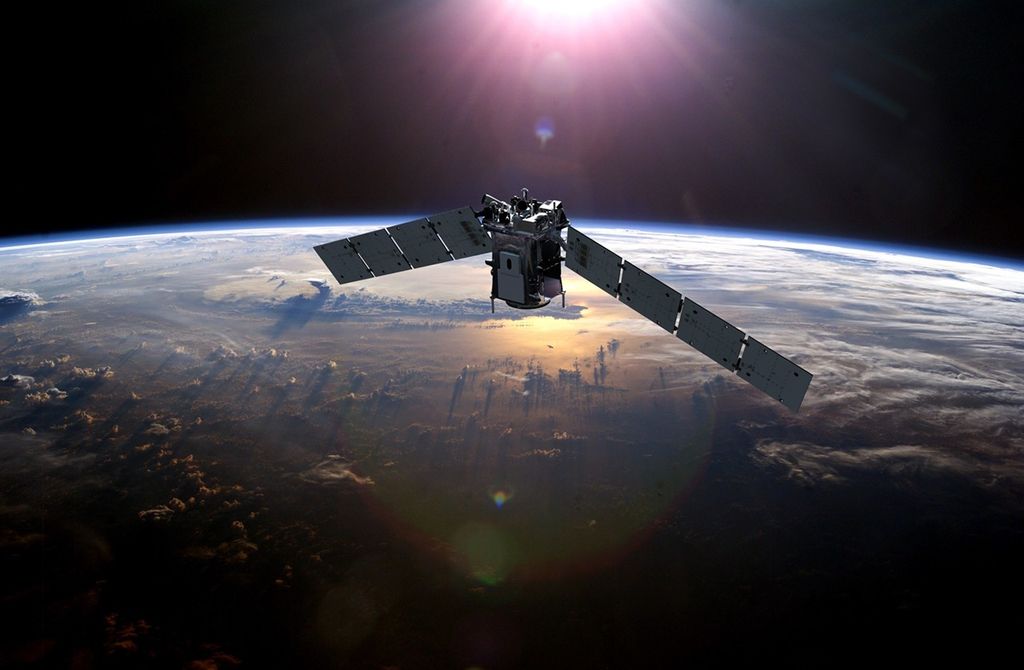
TIMED
The Thermosphere Ionosphere Mesosphere Energetics and Dynamics mission is studying the influence of the Sun and humans on the least explored and understood region of Earth's atmosphere — the mesosphere and lower thermosphere / ionosphere.
Magnetosphere
The magnetosphere is a bubble of magnetic fields that surrounds Earth, created by the natural magnetism of the planet. The magnetosphere protects humans on Earth from incoming energy from the Sun, however it does change shape and size in response to such space weather, and these fluctuations can degrade communication signals and cause unexpected electrical surges in power grids. NASA studies the magnetosphere to better understand its role in our space environment.

ESCAPADE
The Escape and Plasma Acceleration and Dynamics Explorers mission uses two identical spacecraft to investigate how the solar wind interacts with Mars’ magnetic environment and how this interaction drives the planet’s atmospheric escape.
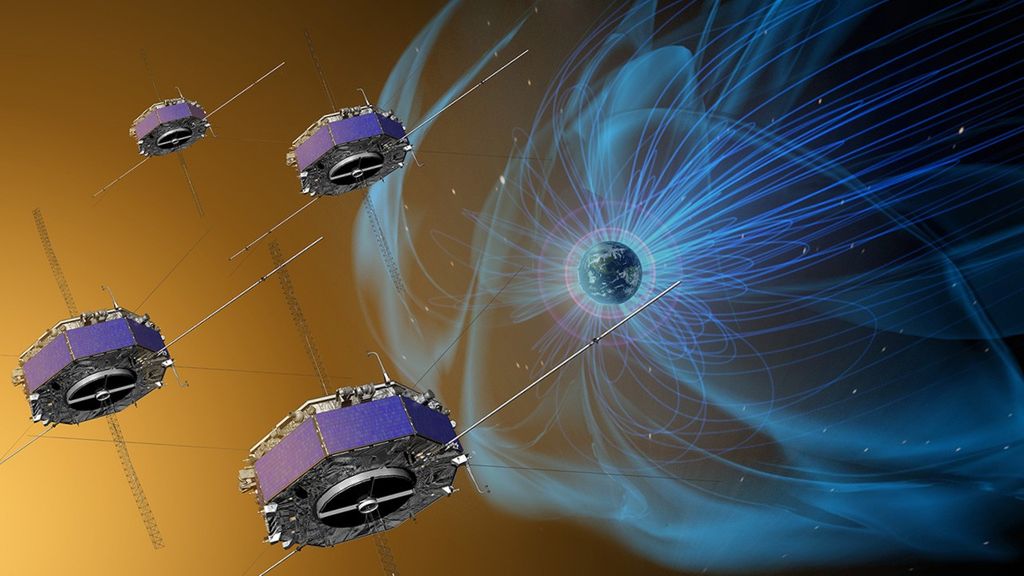
MMS
The Magnetospheric Multiscale mission investigates how the Sun's and Earth's magnetic fields connect and disconnect, explosively transferring energy from one to the other. This process occurs throughout the universe and is known as magnetic reconnection.
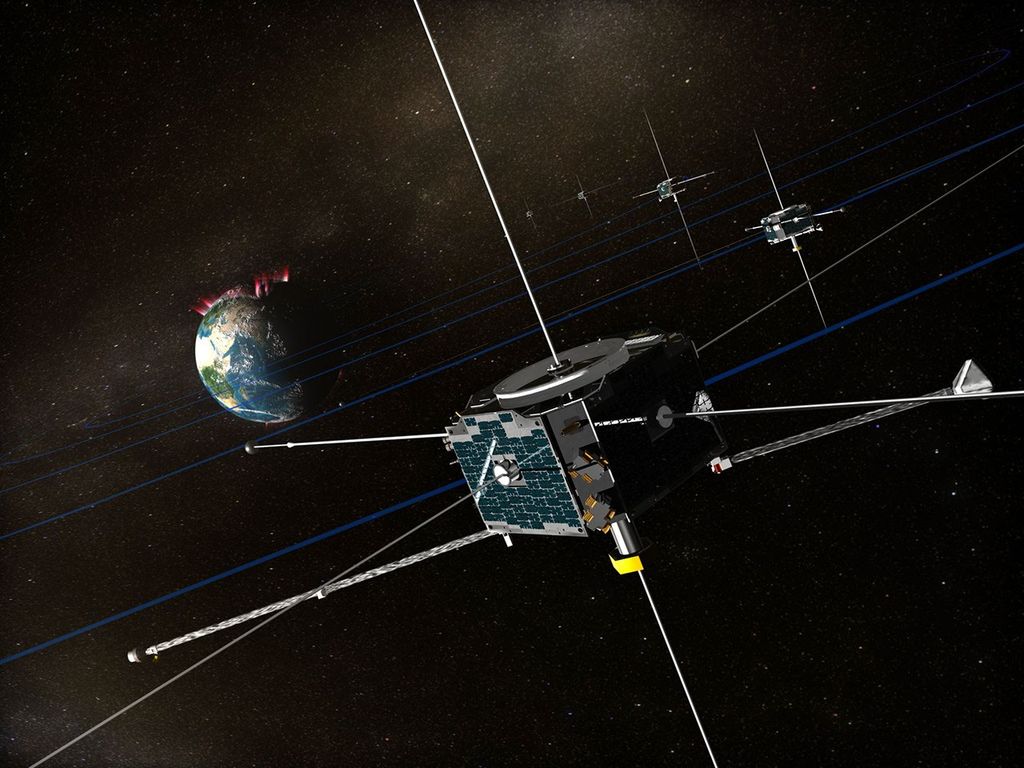
THEMIS-ARTEMIS
Two spacecraft originally part of the five comprising the THEMIS constellation, the THEMIS-ARTEMIS (Acceleration, Reconnection, Turbulence and Electrodynamics of Moon's Interaction with the Sun) duo were redirected to the Moon to provide the first 3D measurements of the Moon’s magnetic field to determine its regional influence on solar wind particles.
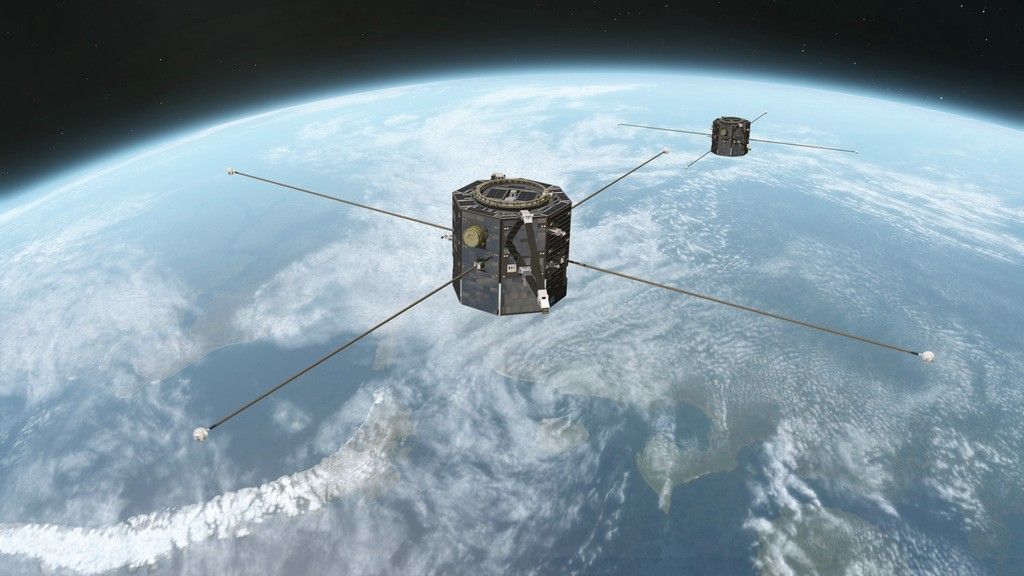
TRACERS
The Tandem Reconnection and Cusp Electrodynamics Reconnaissance Satellites mission studies magnetic reconnection and its effects in Earth’s atmosphere. Magnetic reconnection occurs when activity from the Sun interacts with Earth’s magnetic field.
The Sun
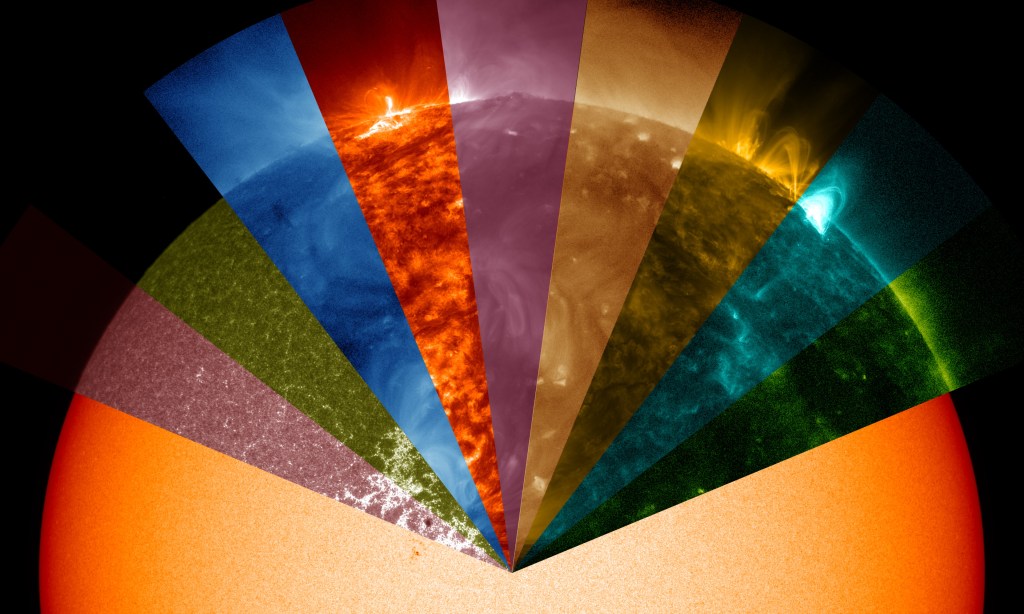
NASA keeps a close watch on the Sun because it’s much more than just a source of light. While its radiation makes Earth habitable, that energy is constantly shifting, hurling energy and plasma our way, creating space weather that doesn't just stay in space. These solar storms can slam into our magnetic field, potentially scrambling GPS signals, interfering with the satellites we rely on for communication, and even threatening power grids on the ground.
Hinode (Solar-B)
Hinode explores the magnetic fields of the Sun to improve understanding of what powers the solar atmosphere and drives solar eruptions.
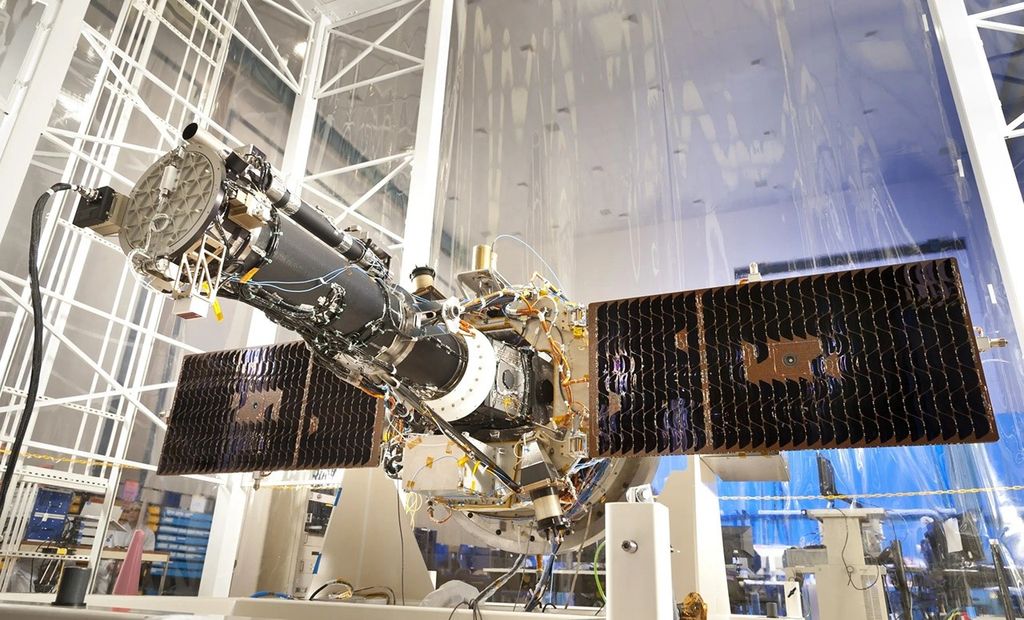
IRIS
The Interface Region Imaging Spectrograph observes how solar material moves, gathers energy, and heats up as it travels through a little-understood region in the Sun's lower atmosphere.
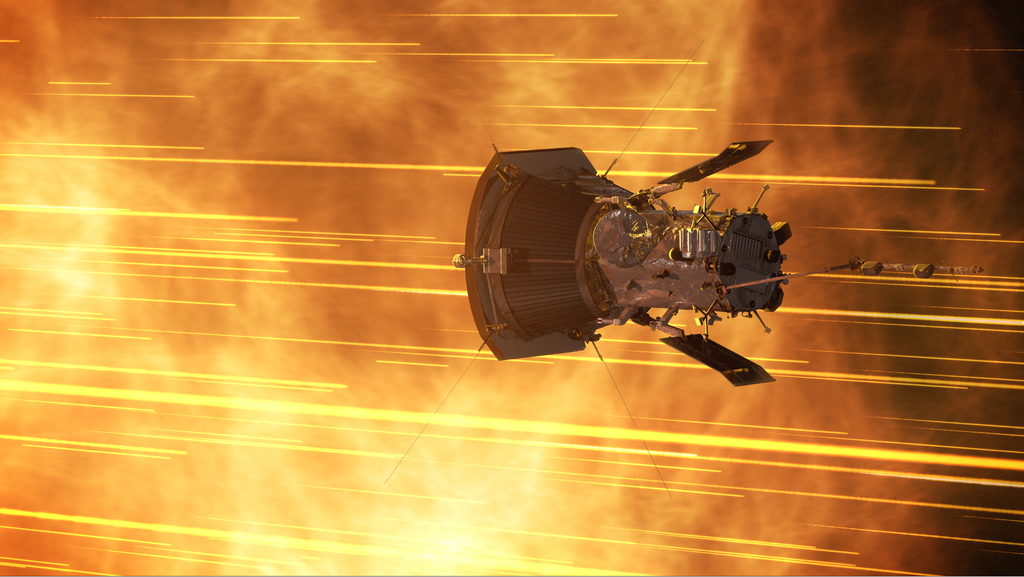
Parker Solar Probe
On a mission to “touch the Sun,” NASA's Parker Solar Probe became the first spacecraft to fly through the corona — the Sun’s upper atmosphere — in 2021.
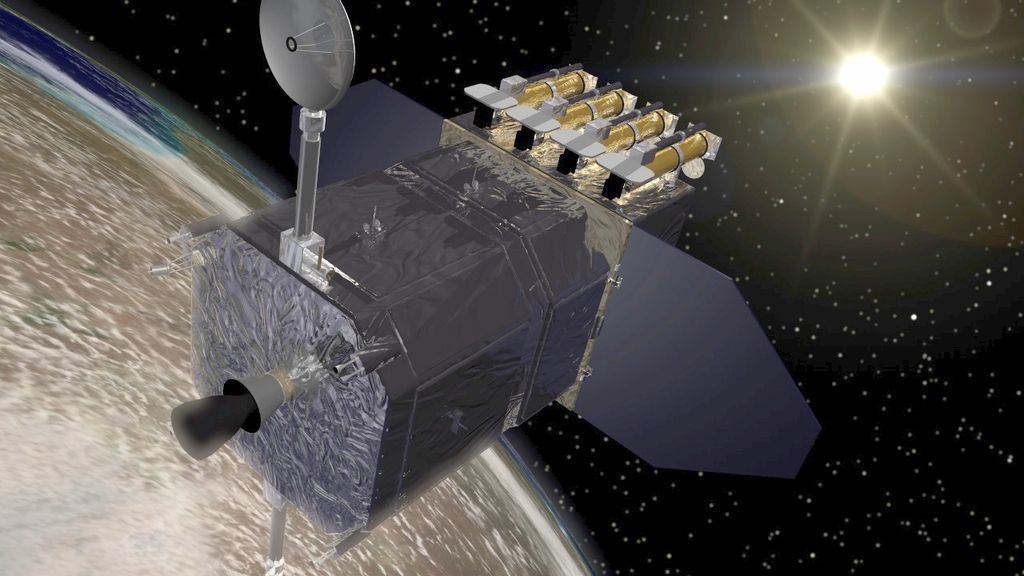
Solar Dynamics Observatory
The Solar Dynamics Observatory studies how solar activity is created and drives space weather, by monitoring the Sun’s interior, atmosphere, magnetic field, and energy output.
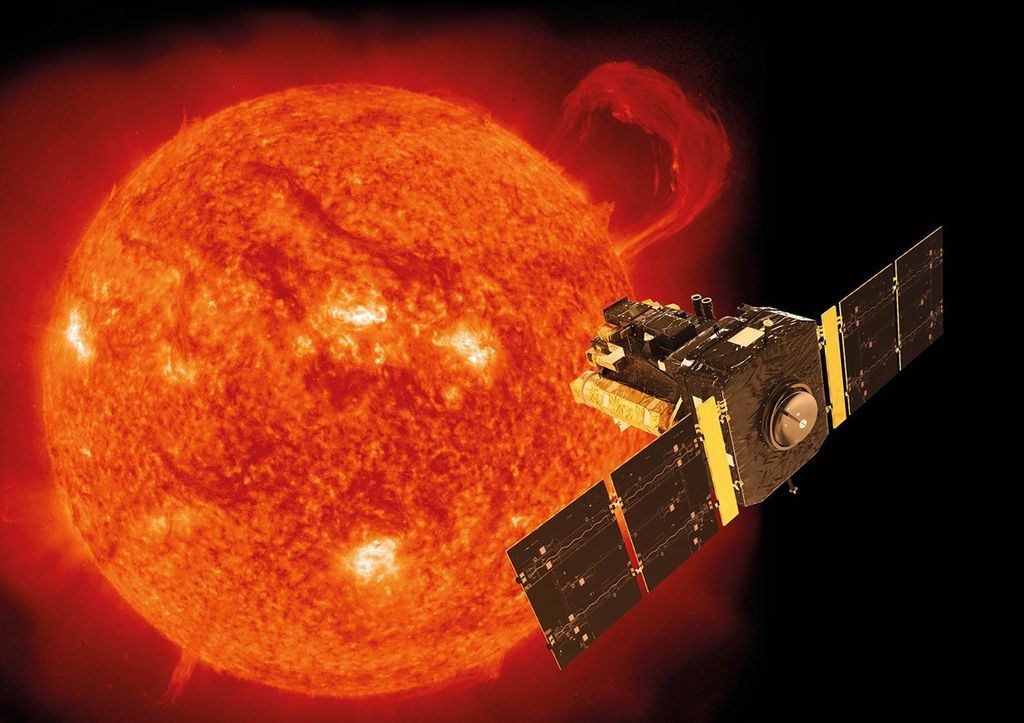
SOHO
The Solar and Heliospheric Observatory was designed to study the Sun inside out. Launched in 1995 and scheduled to run until only 1998, it has continued collecting data, adding to scientists' understanding of our closest star, and making many new discoveries, including more than 5,000 comets.
![[Artist’s impression] ESA's Solar Orbiter mission will face the Sun from within the orbit of Mercury at its closest approach. Credit: ESA/ATG medialab](https://assets.science.nasa.gov/dynamicimage/assets/science/cds/svs/a010000/a013500/a013528/Solar_Orbiter_artist_impression_20190916_1.jpg?w=1024&h=724&fit=clip)
Solar Orbiter
An international cooperative mission between the European Space Agency (ESA) and NASA, Solar Orbiter is a Sun-observing satellite with 10 science instruments, all designed to provide unprecedented insight into how our local star "works."
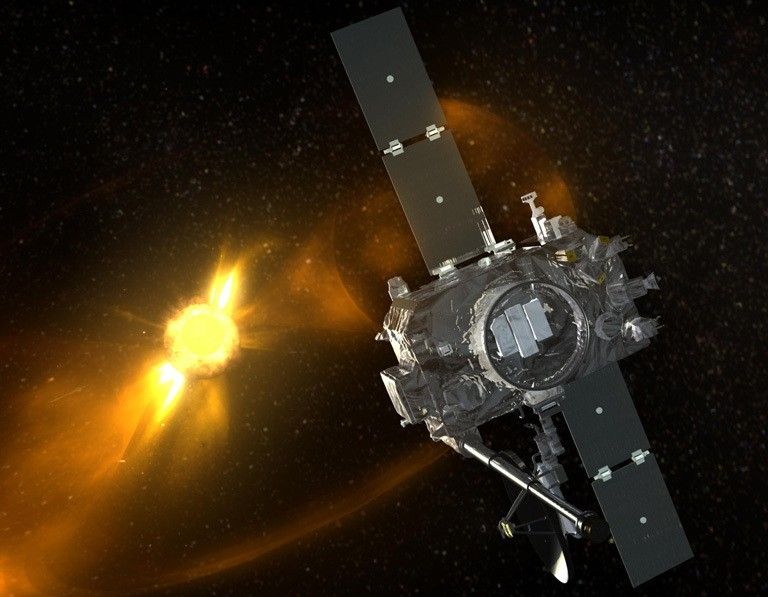
STEREO
NASA’s Solar TErrestrial RElations Observatory launched in 2006 with two nearly identical observatories to study the Sun and obtain stereoscopic observations revealing the 3D structure of the Sun’s largest coronal mass ejections. The STEREO-A spacecraft continues to study the Sun to this day and is a key source of unique space weather information.