
























Provide Community Input on BPS Sunsetting & Emerging Science
NASA Biological & Physical Sciences Division invites community input on Sunsetting & Emerging Science topics until Oct 17, 2025. To provide input to NASA:
- Provide input using the templates at the end of this deck
- Send completed templates (or written feedback in same categories) by Oct 17 to:
hq-bps-road-map@mail.nasa.gov - NASA will review community inputs in October and November, 2025
Biological & Physical Sciences.
Our Goals At-A-Glance.
BPS Scientific Goals Overview
Revolutionary Research in Extraordinary Places.
NASA research contributes to breakthroughs that advance national priorities and maintain U.S. leadership in science and technology.
Studying the fundamental effects of space stressors (such as radiation and microgravity) on biological and physical phenomena promotes mission success and benefits life on Earth.
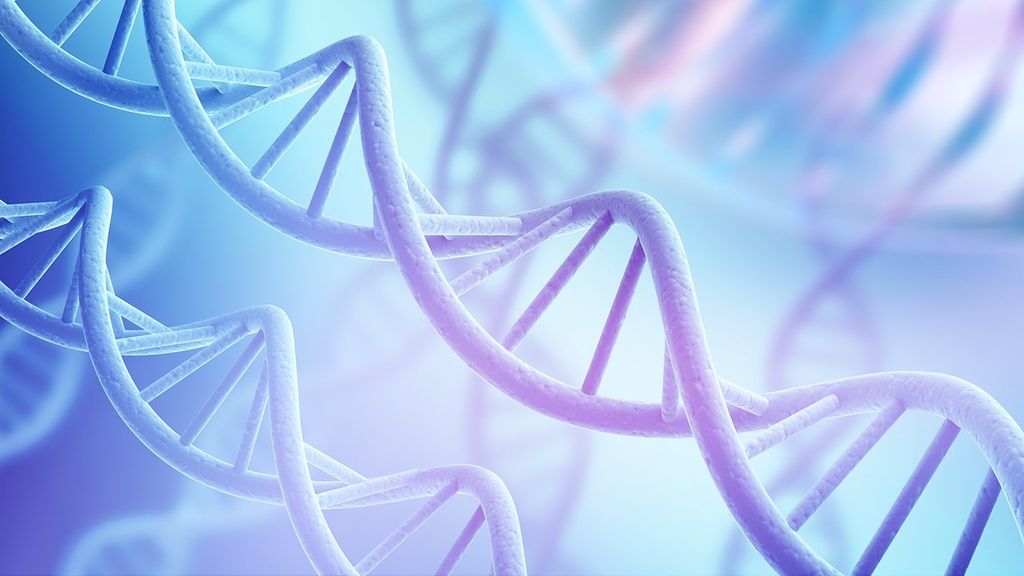
Precision Health
Leveraging space to unlock the secrets of aging and disease
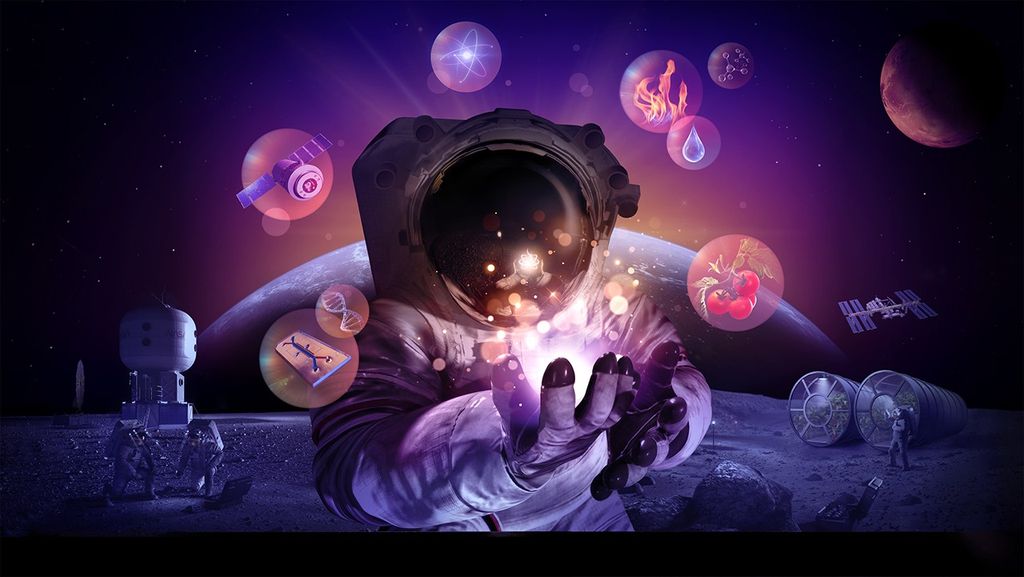
Stressors encountered during space travel can affect human health, including bone and muscle loss, immune system function, microbes, and other biological responses. NASA research could provide vital information needed to help protect astronauts during future deep-space missions and advance the prevention and treatment of disease for people on Earth.
Quantum Leaps
Unraveling mysteries of the universe
While modern physics has led to numerous scientific breakthroughs, many aspects of quantum phenomena remain unexplained. NASA’s research conducted in space offers unique opportunities to advance quantum science in ways that Earth-based studies cannot. Technologies like smartphones, computers, GPS, and medical imaging all stem from quantum research. Continued exploration in this field could contribute to innovations beyond our most imaginative theories.
Foundations
Revealing the novel behaviors of fluids, fire, and materials in space
Physical phenomena behave differently in space: how flames burn, fluids flow, and materials react to extreme conditions. Research in these areas can lead to scientific breakthroughs and new technologies that enable safe, sustained missions to the Moon, Mars, and beyond. It can also contribute to everyday life, including improvements in fire safety, manufacturing, commercial products, and more.
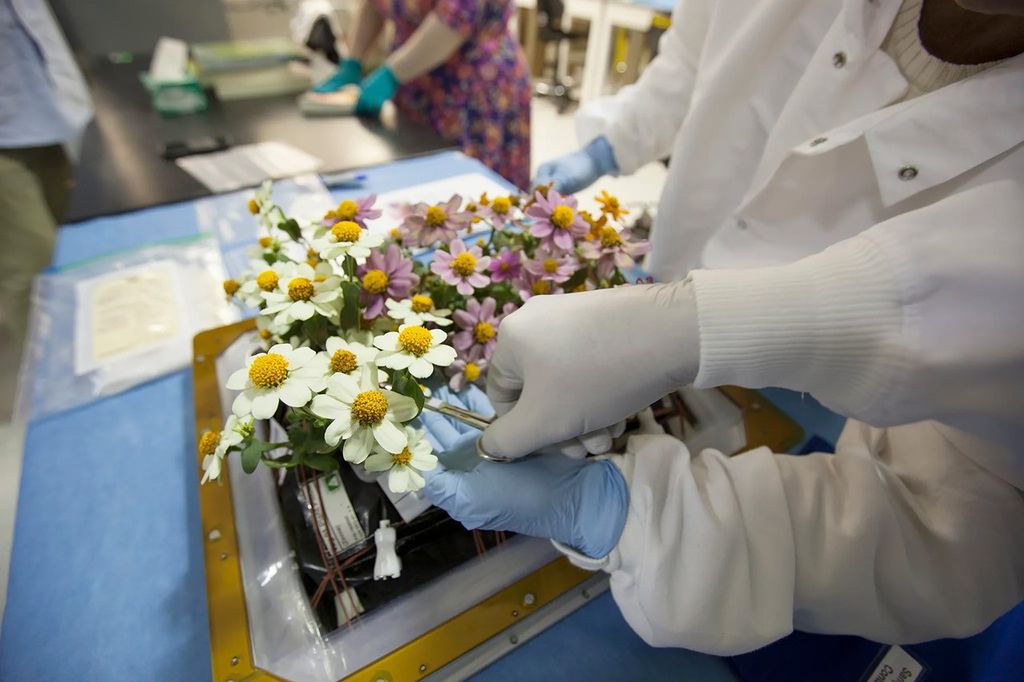
Space Crops
Boldly growing where no one has grown before
To go farther and stay longer in space, crew will need sustainable sources of nutrition. Crops can provide fresh food, benefit astronaut mental well-being, and improve space habitats. Studying how plants adapt to harsh conditions in space can lead to agricultural innovations that support deep-space exploration and improve farming in austere environments on our home planet.
Space Labs
Advancing research in space, on any platform, anywhere
Conducting experiments in space reveals phenomena impossible to observe on Earth. Space Labs enable the use research capabilities across a spectrum of spaceflight environments — suborbital, low Earth orbit, Moon, Mars, and distant destinations — to push the boundaries of scientific knowledge.
Biological & Physical Sciences Division
-
NASA’s Biological and Physical Sciences Division pioneers scientific discovery and enables exploration by using space environments to conduct investigations not possible on Earth. Studying biological and physical phenomenon under extreme conditions allows researchers to advance the fundamental scientific knowledge required to go farther and stay longer in space, while also benefitting life on Earth.