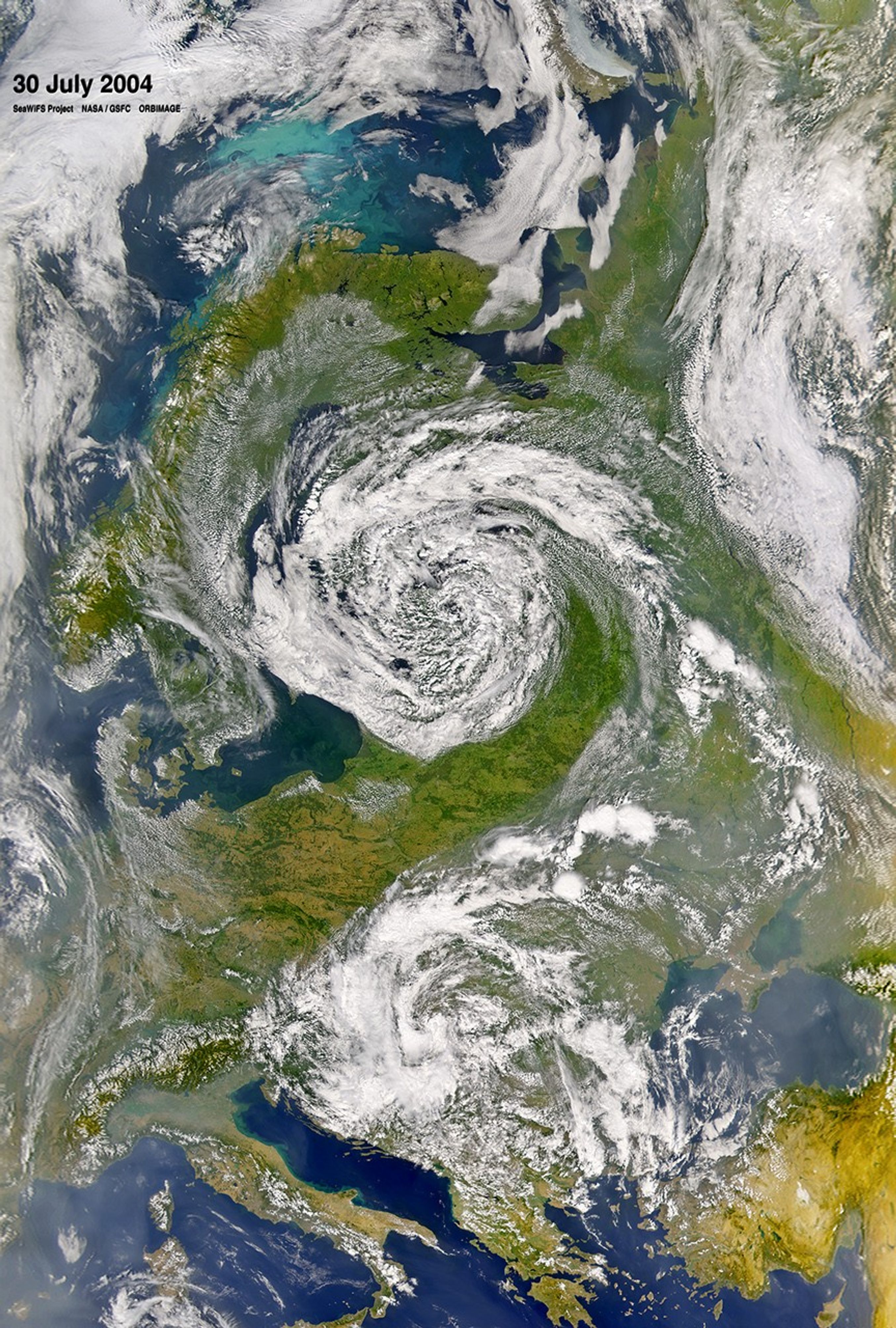




















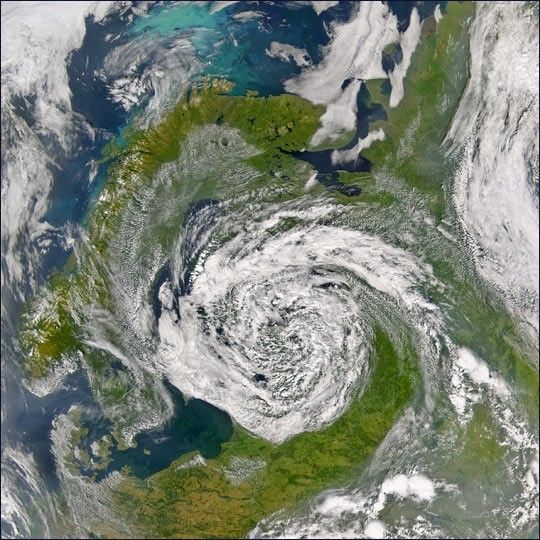
An extra-tropical low pressure system swirls over the Baltic States in this image, captured by the Sea-viewing Wide Field-of-View Sensor (SeaWiFS) on July 30, 2004. Along the top of the image, a splash of bright blue colors the waters of the Barents Sea, north of Norway. The color is caused by a large phytoplankton bloom, which are common in the region during the summer. It’s not clear what kind of plant is causing the bloom, but the brightness of the color suggests coccolithophores, a type of microscopic plant coated in calcium carbonate (chalk). Their white, chalky exteriors reflect light through the blue ocean water, making bright swirls of turquoise in satellite imagery.
References & Resources
Image provided by the SeaWiFS Project, NASA/Goddard Space Flight Center, and ORBIMAGE