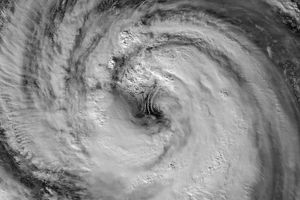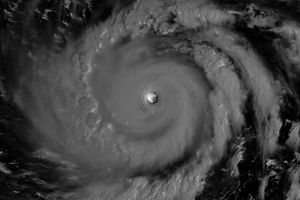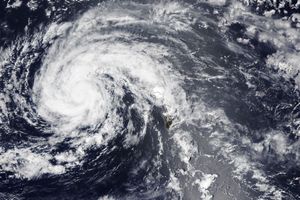





















A thin veil of haze hangs over much of eastern China as Typhoon Megi moves up the coast towards Korea in the above image, captured by the Moderate Resolution Imaging Spectroradiometer (MODIS) on NASAâs Aqua satellite on August 18, 2004. The haze, which might otherwise have been blown out over the Pacific Ocean, has been stuck over eastern Asia, hemmed in place by Typhoon Megi. Hong Kong, shown in the lower left corner of the image, issued a health alert on August 17 and 18 as air pollution levels soared into the âvery highâ category. For another example of how tropical storms can affect air quality, see A New Idea in Air Quality Monitoring.
The Joint Typhoon Warning Center expected Typhoon Megi to weaken into a tropical storm as it moves northeast into the Pacific. Early on August 19, the storm glanced by South Korea and Japanâs southern islands, drenching both countries with heavy rains. The weakened storm was forecast to head east over Japan and the northwest Pacific Ocean.
References & Resources
NASA image created from data provided by the MODIS Rapid Response System at GSFC.