




















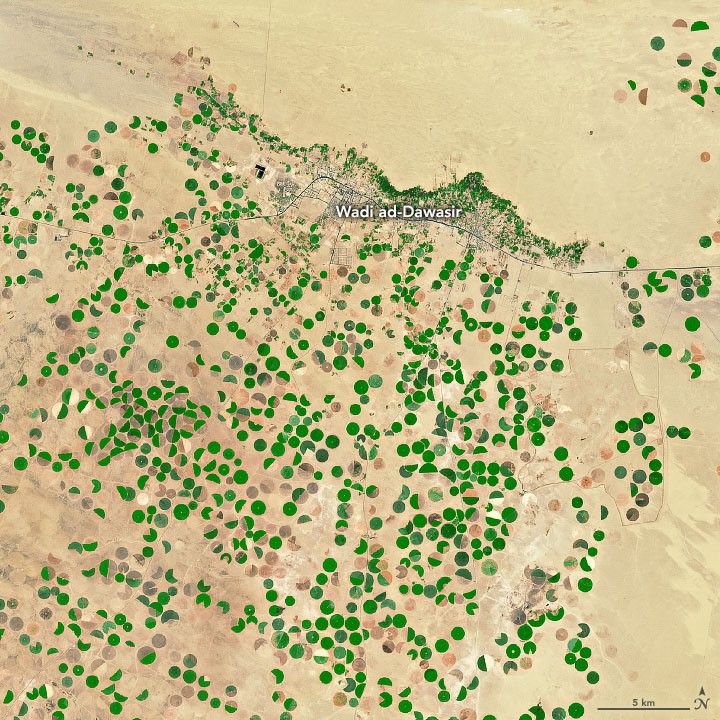
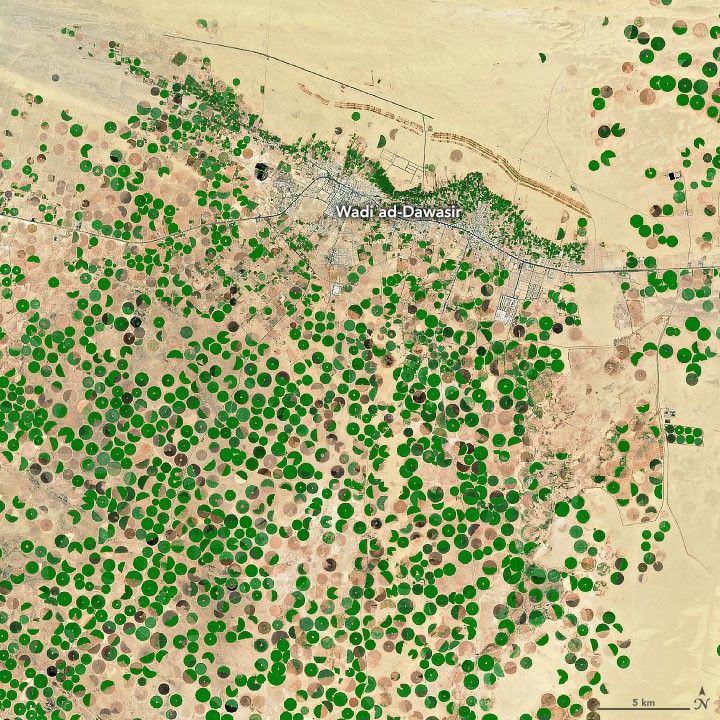

June 30, 2000-April 26, 2017
Desert Crops Thrive as the Aquifer Shrinks
The kingdom of Saudi Arabia spans 2.1 million square kilometers (830,000 square miles)—an area larger than Alaska and Texas combined—yet it has no permanent rivers or standing lakes. What it does have are wadis, valleys that are transformed into ephemeral rivers after storms, and aquifers with groundwater.
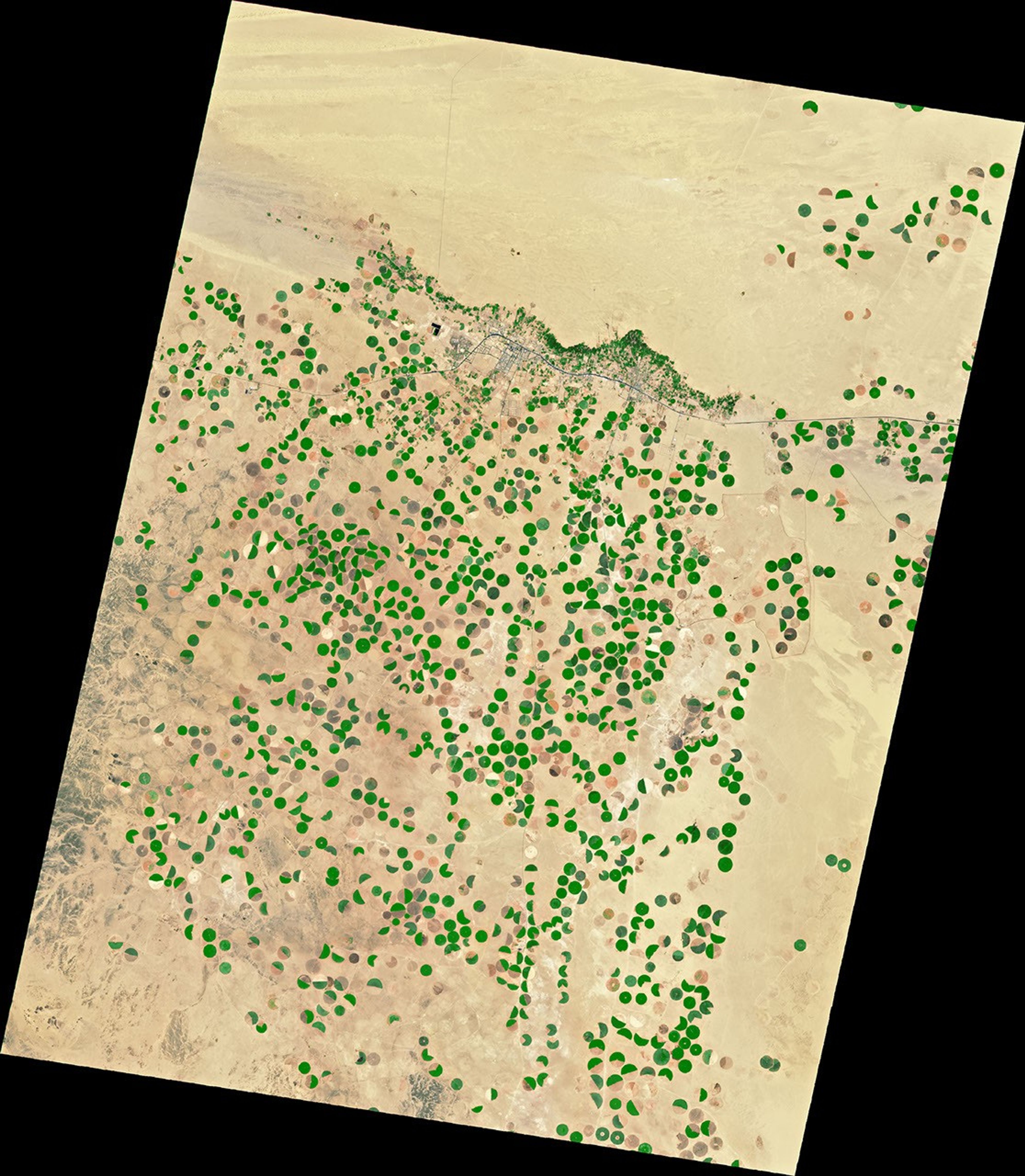
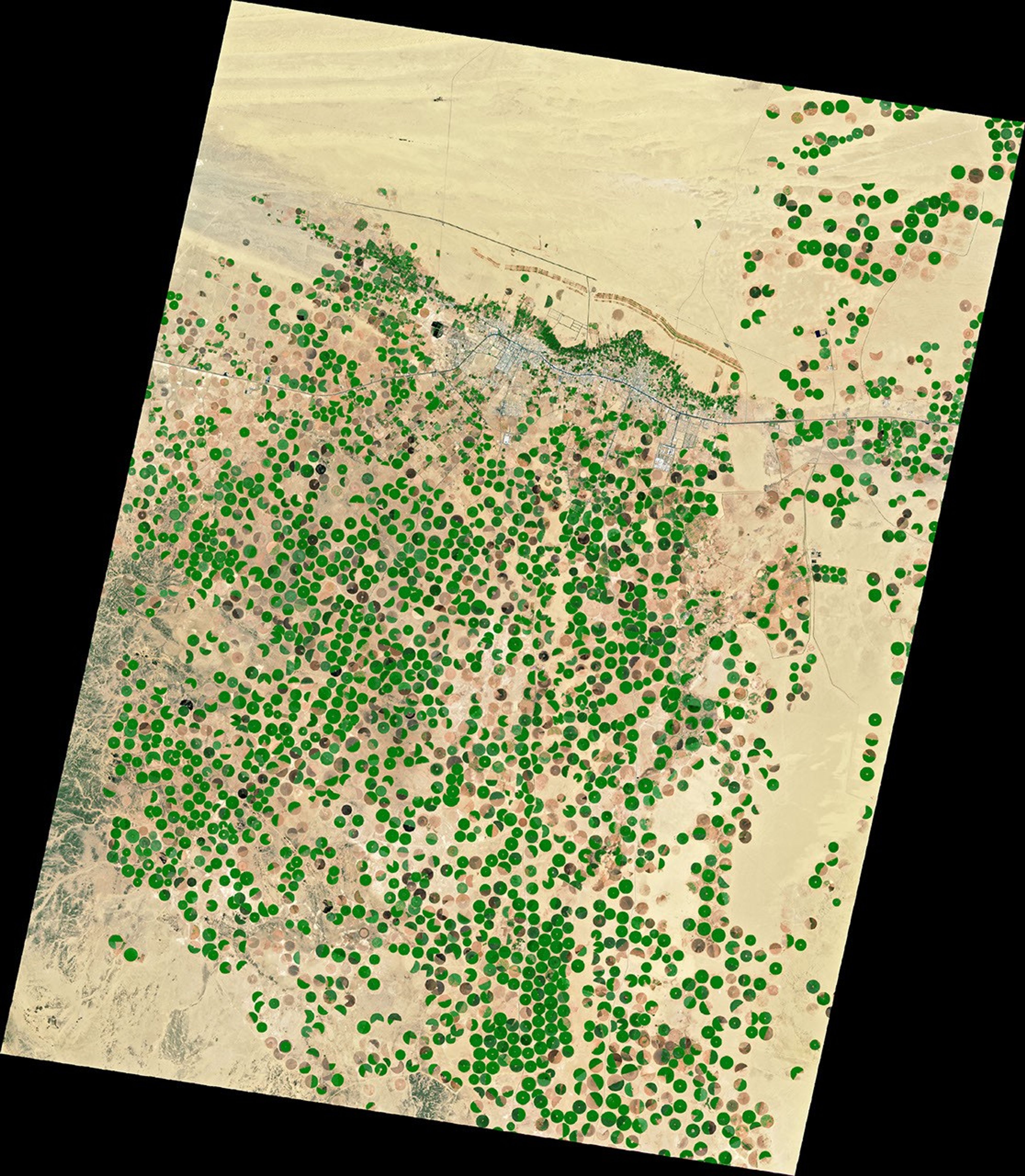
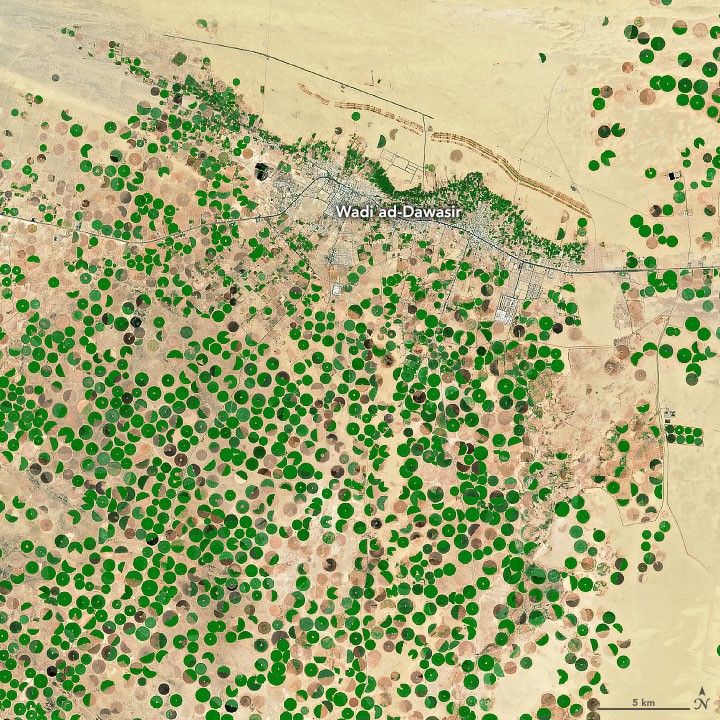
This pair of images captures the spread of agriculture around the town of Wadi ad-Dawasir. Groundwater and irrigation have been used to green-up portions of the desert in Saudi Arabia. The images were acquired by the Advanced Spaceborne Thermal Emission and Reflection Radiometer (ASTER) on NASA's Terra satellite in 2000 and 2017. Since the area receives less than 200 millimeters (8 inches) of rain per year, farmers make use of pumped groundwater and center-pivot irrigation systems to grow crops—mainly wheat, alfalfa, and vegetables.
Carbon-14 dating indicates that the groundwater being used is more than 30,000 years old; hydrologists consider it to be paleowater or “fossil water.” The sustained pumping of this water has had a major impact on the aquifer beneath Wadi ad-Dawasir. According to one United Nations report, the water table in this area has dropped by as much as 6 meters (20 feet) per year since the 1980s, fast enough that hydrologists think the aquifer could be depleted within a few decades.
In 2015, researchers used GRACE satellite data and other sources to show that the Arabian Peninsula ranked as the most stressed of the world's 37 largest aquifers. In September 2019, another GRACE-based study pointed out that the problem is particularly severe in the central and northern part of the aquifer, which includes Wadi ad-Dawasir.
References & Resources
- EOS (2019, November 5) Arid Arabian Peninsula Is Tapping into Vast Groundwater Reserves. Accessed December 12, 2019.
- Foreign Affairs (2015, November 10) The Other Liquid Gold. Accessed December 12, 2019.
- Inventory of Shared Water Resources in Western Asia (2013) Wajid Aquifer System. Accessed December 12, 2019.
- NASA Earth Observatory (2015, July 24) Global Groundwater Basins in Distress. Accessed December 12, 2019.
- National Geographic (2015, November 10) Saudi Arabiaâs Great Thirst. Accessed December 12, 2019.
- Richey, A. et al. (2015) Quantifying renewable groundwater stress with GRACE. Water Resources Research, 51 (7), 5217-5238.
- Smart Water Magazine Saudi Arabiaâs groundwater to run dry. Accessed December 12, 2019.
- Sultan, M. et al. (2019) Assessment of age, origin, and sustainability of fossil aquifers: A geochemical and remote sensing-based approach. Journal of Hydrology, 576, 325-341.
NASA Earth Observatory images by Joshua Stevens, using data from NASA/METI/AIST/Japan Space Systems, and U.S./Japan ASTER Science Team. Story by Adam Voiland.