


















May 8-June 22, 2022
Floods Swamp Bangladesh
Torrential monsoon rains, lightning, and landslides are common in Bangladesh and the northeastern Indian states of Assam and Meghalaya during the summer. But the intensity of the severe weather that pummeled the low-lying region in mid-June 2022 stands out.
After weeks of downpours, flooding has swamped millions of homes and displaced hundreds of thousands of people in India and Bangladesh, according to reports from humanitarian agencies. Officials from the hard-hit Sylhet region of Bangladesh have called the floods the worst to hit the area in more than a century.
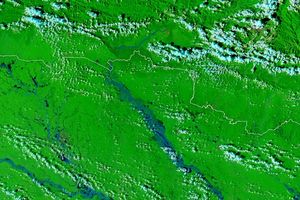
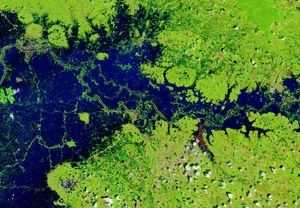
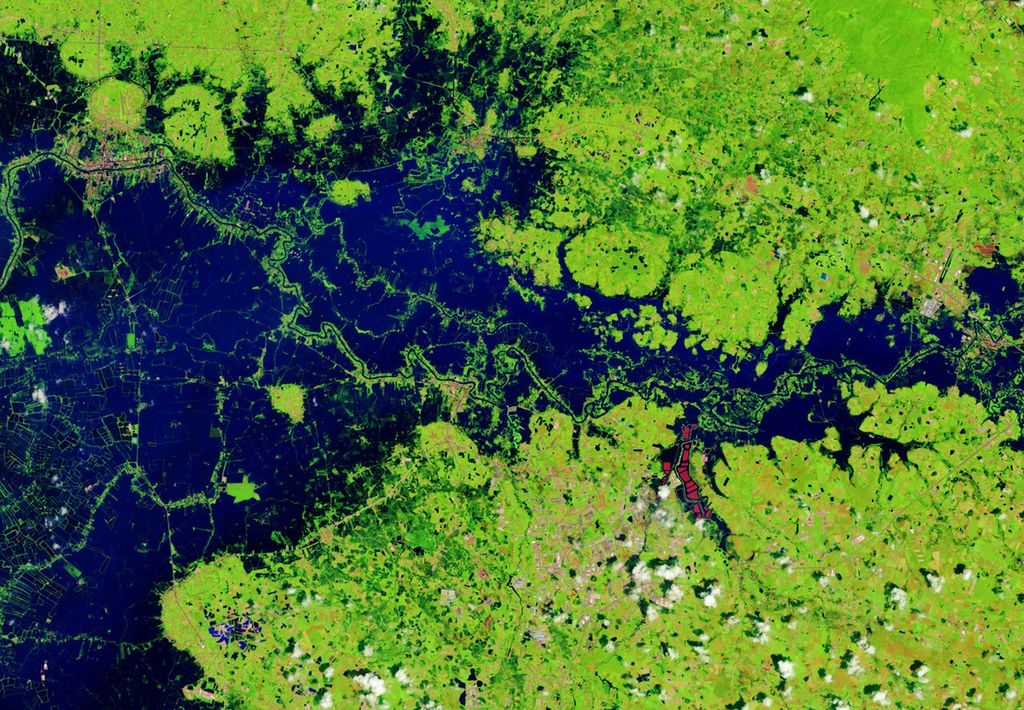
The images above show northeast Bangladesh and India on May 8 (left) and June 22 (right). These false-color images, acquired with the Moderate Resolution Imaging Spectroradiometer (MODIS) on NASA’s Aqua satellite, combine infrared and visible light (bands 7-2-1) to make it easier to see the boundary between water and land. Water appears navy blue and black; clouds are white or cyan; and vegetation is bright green.
On June 22, the Bangladesh Flood Forecasting and Warning Centre reported water levels along the Surma River in Sylhet were at or above “danger level” at several locations. About half of the croplands in Sylhet have flooded, according to the Dhaka Times.
References & Resources
- Dhaka Tribune (2022, June 18) State Minister: Sylhet, Sunamganj floods worst in 122 years. Accessed June 23, 2022.
- Floodlist (2022, June 21) Bangladesh â Severe Floods in North Affect 4.2 Million and Displace 90,000. Accessed June 23, 2022.
- Floodlist (2022, June 21) India â Floods Affect Nearly 5 Million in Assam, Over 200,000 Displaced. Accessed June 23, 2022.
- Floodlist (2022, June 15) India â Deadly Landslide and Flash Floods in Guwahati, Assam. Accessed June 23, 2022.
- ReliefWeb (2022, June 23) Bangladesh: Floods and Landslides â May 2022. Accessed June 23, 2022.
- ReliefWeb (2022, June 23) India: Floods and Landslides â May 2022. Accessed June 23, 2022.
NASA Earth Observatory images by Joshua Stevens , using MODIS data from NASA EOSDIS LANCE and GIBS/Worldview . Story by Adam Voiland .