






Tsunamis and the Open Ocean
As many of you probably heard, there was an 8.2-magnitude earthquake off the coast of Northern Chile on Tuesday night. As with any earthquake around a coastal region or on the ocean floor, there is great concern about the formation of a tsunami. A Tsunami is series of waves with a very large wavelength. Think of a series of waves hitting a beach. The distance between each wave hitting the shore is the wavelength. Now picture a wavelength that is 100s of miles long! Because the wavelengths are so long, the waves travel at very high speeds, around 600 miles per hour, in the deep ocean. This is the speed at which a commercial jet plane travels! However, the wave height (the height from the base of the wave at the water line to the top of the wave) is very small, maybe a few feet tall. As you can imagine, a boat or ship in the open ocean wouldn’t even notice such a tiny wave.
Below is a screen shot from a CNN video report about the earthquake. In this video you can see how the waves propagate out from the source of the earthquake out into the ocean (red arrow).
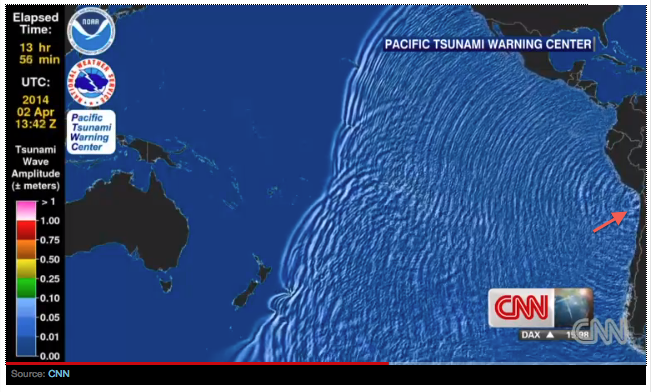
The story changes, however, when the depth of the ocean decreases, such as when approaching land. All of that energy in that fast wave gets slowed down and subsequently the height of the wave gets bigger, and sea level near shore can rise at least 50 feet! Thankfully, our colleagues are out of harms way from tsunamis because they are in the middle of the deep, open ocean.
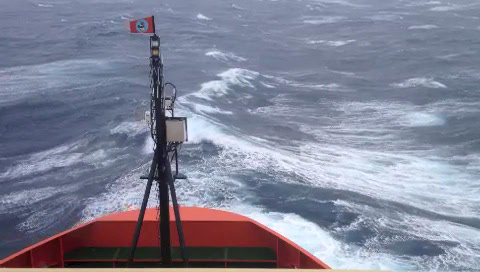
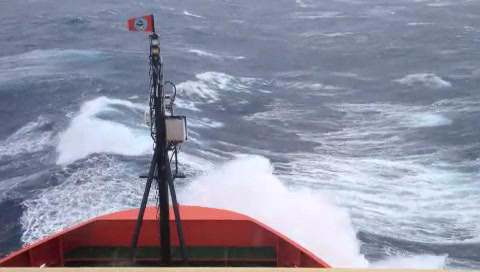
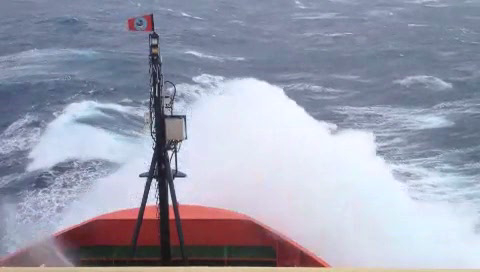
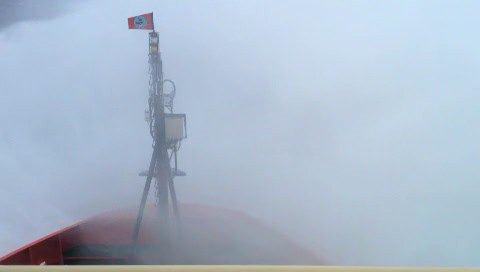
The ship and its inhabitants ARE, however, subject to waves that are created by storms and strong winds. Joaquin made a video of the wave action that you can see below. Here are some freeze frame ‘action shots’ from the video.
https://www.youtube.com/watch?v=cBTORY0aalE&feature=youtu.be
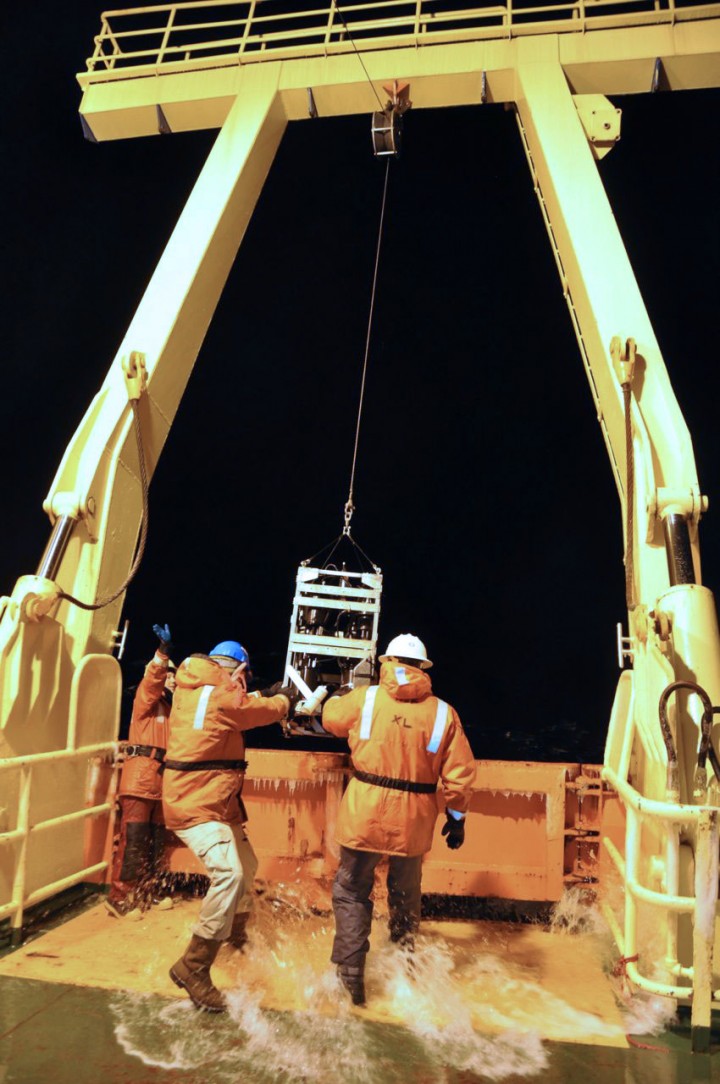
And, lastly, I thought it would be good to show some pictures of how cold it is that far south and how challenging it can be to work outside on deck in the cold. In this picture you can see icicles hanging off the ship during recovery of an IOP package deployment.
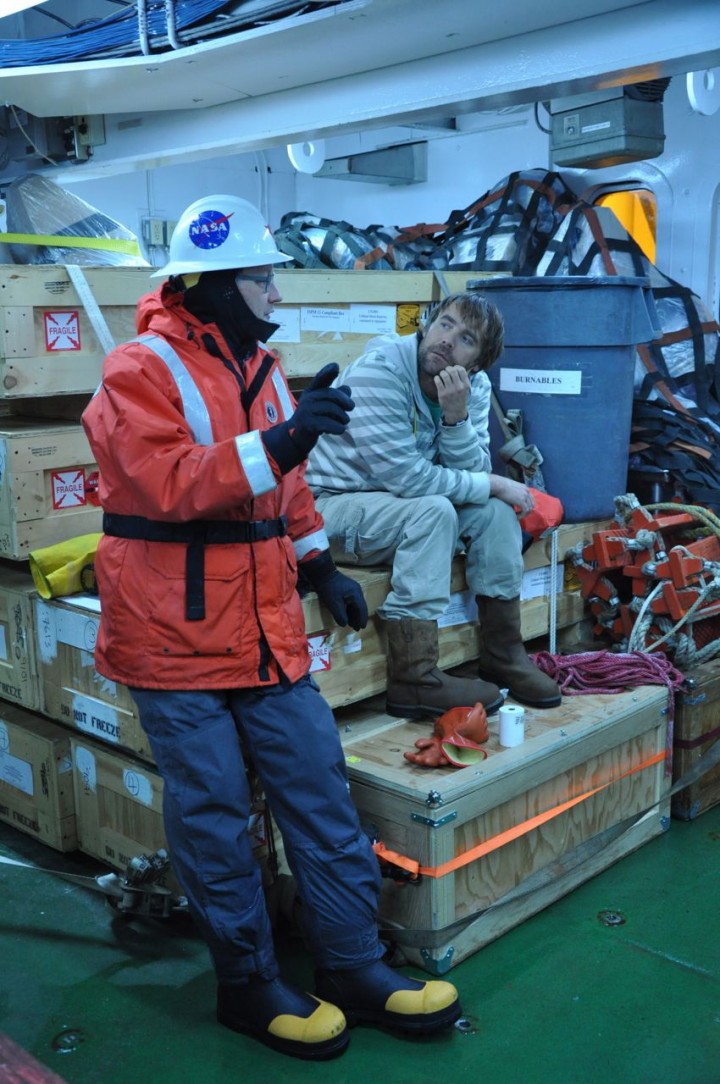
Mike and Scott are having a conversation as they wait for the IOP package to return to the surface of the ocean. I wonder what they are talking about???
You can watch an entire IOP deployment below.
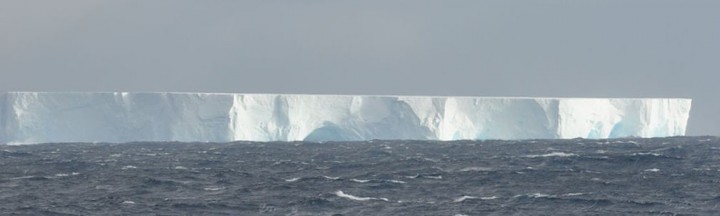
Lastly, when working so close to the continent of Antarctica, there must be a sighting of an iceberg.
Sources:
http://www.nws.noaa.gov/om/brochures/tsunami.htm
http://www.cnn.com/2014/04/01/world/americas/chile-earthquake/
